Quick Verdict: The Tesla Hotspot and Model Y Package
If you've searched for "Tesla hotspot" recently, you're likely asking one of two things: does the Tesla Model Y provide a Wi-Fi hotspot for your devices, and how does the vehicle's own connectivity affect your ownership experience? The short answer is that Tesla vehicles do not offer a traditional built-in Wi-Fi hotspot for passenger devices the way some competitors do. Instead, Tesla relies on its embedded cellular connection for vehicle functions—navigation, streaming, over-the-air updates—and expects you to use your phone's hotspot or home Wi-Fi for larger downloads and passenger internet.
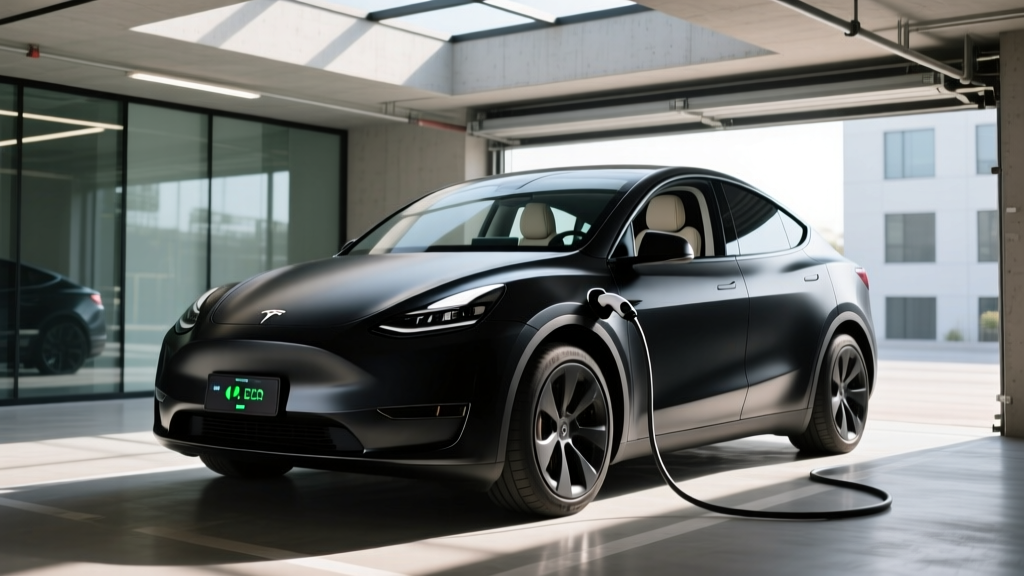
But connectivity is just one piece of the 2026 Tesla Model Y puzzle. As the best-selling EV in the U.S. for several consecutive years, the refreshed Model Y (codenamed "Juniper") brings updated styling, a refined interior, improved ride quality, and the same industry-leading Supercharger network access. Here's the full breakdown of what matters for buyers: range, charging speed, pricing, tax credit eligibility, and whether this EV still earns its top-of-list position in 2026.
| Spec | 2026 Model Y Long Range AWD | 2026 Model Y Performance |
|---|---|---|
| EPA Range | 320 miles | 295 miles |
| Battery (usable) | ~75 kWh (NMC) | ~75 kWh (NMC) |
| MPGe (combined) | 111 MPGe | 104 MPGe |
| Efficiency | 30 kWh/100 mi | 32 kWh/100 mi |
| 0-60 mph | 4.8 seconds | 3.5 seconds |
| Horsepower | 384 hp | 456 hp |
| Drivetrain | Dual-motor AWD | Dual-motor AWD |
| Max DC Fast Charge | 250 kW | 250 kW |
| 10-80% DC Time | ~27 minutes | ~27 minutes |
| Level 2 Home Rate | 11.5 kW (~44 mi/hr) | 11.5 kW (~44 mi/hr) |
| Cargo (rear seats up) | 30.2 cu ft | 30.2 cu ft |
| Cargo (rear seats folded) | 72.1 cu ft | 72.1 cu ft |
| Base MSRP | $48,990 | $53,990 |
What the Tesla Hotspot Actually Means for Owners
Tesla's connectivity model differs from legacy automakers. Every Model Y includes Standard Connectivity at no extra cost, which provides:
- Basic navigation with traffic data
- Over-the-air (OTA) software updates via Wi-Fi or cellular
- Remote app access (climate control, location, charging status)
- Bluetooth and USB media playback
Upgrading to Premium Connectivity ($10/month or $99/year as of 2026) adds:
- Live traffic visualization and satellite-view maps
- Music and media streaming (Spotify, Tidal, YouTube, Netflix, Disney+)
- Caraoke and internet browser
- Dashcam and Sentry Mode remote viewing (where supported)
However, none of these tiers create a Wi-Fi hotspot for your phone or laptop. Tesla's embedded SIM handles vehicle data only. If you need passenger Wi-Fi on a road trip, you'll use your smartphone's personal hotspot or a dedicated mobile hotspot device. For large OTA updates, Tesla strongly recommends connecting the car to your home Wi-Fi network—cellular updates work but are significantly slower and may be incomplete on Standard Connectivity.
Real-World Range: EPA vs. What You'll Actually Get
The 2026 Model Y Long Range AWD carries an EPA-estimated 320 miles of range. That's a strong figure, but as with every EV, real-world results depend heavily on conditions.
Real-World Highway (70-75 mph): ~255-275 miles
Cold Weather (below 32°F): ~220-250 miles (30-35% reduction is normal for NMC chemistry)
City/Mixed Driving: ~290-310 miles (regen braking recovers more energy in stop-and-go)
The Juniper refresh brought modest aerodynamic improvements and updated thermal management, which help preserve range in cold conditions compared to the pre-2025 Model Y. Tesla's heat pump is standard and significantly reduces cabin-heating energy draw in winter. Still, if your commute involves sustained 80 mph highway driving in January, budget for 220-240 usable miles between charges.
For context, the EPA's fueleconomy.gov listing confirms the 111 MPGe combined rating for the Long Range AWD variant, translating to roughly 30 kWh per 100 miles—a competitive efficiency figure for a dual-motor crossover.
Charging Speed: DC Fast, Level 2, and the Supercharger Advantage
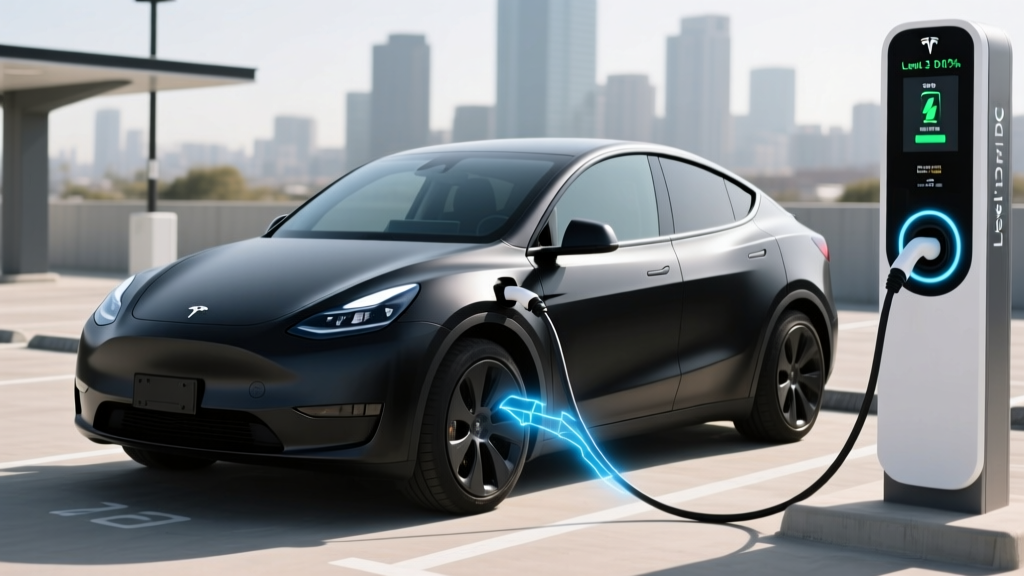
Charging speed is where the Tesla ecosystem still sets the benchmark. The 2026 Model Y supports up to 250 kW on DC fast chargers, which includes Tesla's V3 and V4 Superchargers as well as third-party CCS and NACS-equipped stations.
| Charging Level | Power / Rate | Miles Added per Hour | Notes |
|---|---|---|---|
| Level 1 (120V outlet) | ~1.4 kW | ~5 mi/hr | Emergency/trickle only |
| Level 2 (240V home) | 11.5 kW max | ~44 mi/hr | Full charge in ~7-8 hours |
| DC Fast (Supercharger V3/V4) | 250 kW peak | ~1,000+ mi/hr (peak) | 10-80% in ~27 min |
| DC Fast (350 kW CCS w/ adapter) | ~250 kW max | ~1,000+ mi/hr (peak) | Adapter may be needed |
Charging curve reality: The 250 kW peak rate applies between roughly 10-30% state of charge. From 30-60%, expect sustained rates around 150-180 kW. Above 80%, the rate tapers sharply to protect battery longevity—often dropping below 50 kW. This is why Tesla (and every other manufacturer) quotes 10-80% times rather than full-charge times. Plan your road trips around 20-25 minute stops at 10-80%, not full charges.
For home charging, a Wall Connector or equivalent Level 2 station on a 60-amp circuit delivers the full 11.5 kW (48 amps continuous). Expect a complete charge from near-empty overnight. If your home has a standard NEMA 14-50 outlet on a 50-amp circuit, you'll get about 9.6 kW—still enough for a full overnight charge for nearly all daily driving needs.
Performance and Driving Dynamics
The 2026 Model Y Long Range AWD pairs dual permanent-magnet motors producing a combined 384 horsepower, launching the crossover to 60 mph in 4.8 seconds. That's brisk for a family vehicle and quicker than most gas-powered competitors in the segment.
The Performance trim bumps output to 456 hp with a 3.5-second 0-60 time, rivaling sports sedans while carrying five passengers and cargo. Both trims feature Tesla's dual-motor all-wheel-drive system with torque vectoring and a low center of gravity from the under-floor battery pack.
The Juniper refresh meaningfully improved ride quality. Revised suspension tuning, acoustic glass, and additional sound deadening reduce cabin noise and harshness over rough pavement—a frequent criticism of the pre-refresh Model Y. Steering remains quick and direct, though the lack of a traditional instrument cluster and the reliance on the central touchscreen for nearly all controls still divides opinion.
Interior, Cargo, and Standout Technology
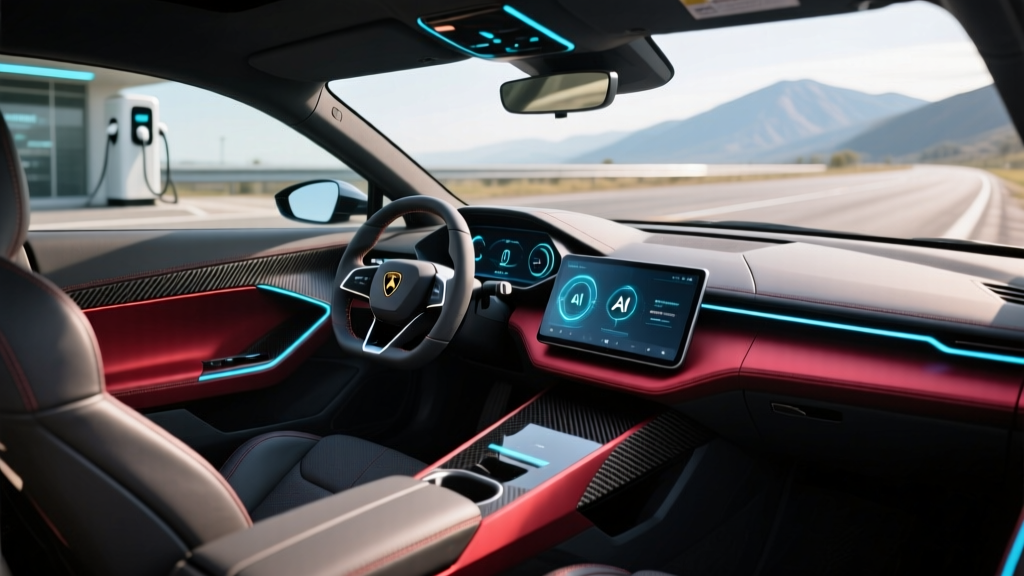
The refreshed Model Y interior adopts design cues from the Model 3 Highland, including ambient lighting, ventilated front seats, a rear-seat touchscreen for climate and media control, and higher-quality materials. The minimalist approach remains: no physical buttons, no traditional gauge cluster—everything routes through the 15.4-inch central display.
Cargo capacity: 30.2 cubic feet behind the second row, expanding to 72.1 cubic feet with the 60/40 split rear seats folded. The front trunk (frunk) adds roughly 4.1 cubic feet for charging cables or a small bag. Rear legroom measures 38.4 inches—adequate for adults on longer trips, though the sloping roofline limits headroom for passengers over six feet.
Standout tech features:
- Autopilot (standard): SAE Level 2 adaptive cruise control and lane centering. Requires active driver supervision at all times.
- Full Self-Driving Supervised ($8,000 or $99/month): Enhanced lane changes, navigation-guided driving, and traffic light/stop sign recognition. Still Level 2—you must monitor the road and keep hands available.
- Sentry Mode: Cameras record surroundings when parked, with alerts sent to your phone.
- Dog Mode / Camp Mode: Climate control stays active with a display message for passersby.
- OTA updates: Regular feature additions and refinements delivered wirelessly.
Pricing, Tax Credit Eligibility, and Ownership Costs
The 2026 Model Y Long Range AWD starts at $48,990 (including destination). The Performance trim begins at $53,990. Popular add-ons include FSD Supervised ($8,000), premium paint colors ($1,000-$2,500), and 20-inch wheels ($2,000), which reduce range by approximately 10-15 miles.
| Trim | Base MSRP | Federal §30D Credit | Effective Price (if eligible) |
|---|---|---|---|
| Long Range AWD | $48,990 | Up to $7,500* | ~$41,490 |
| Performance | $53,990 | Up to $7,500* | ~$46,490 |
*Eligibility depends on buyer income, battery sourcing, and MSRP caps under IRS §30D rules. See IRS.gov for current requirements.
§30D Tax Credit Checklist for 2026:
- MSRP cap: SUVs/crossovers must be under $80,000 MSRP (both trims qualify)
- Income cap: Modified AGI ≤ $150,000 (single), $225,000 (head of household), $300,000 (joint)
- Battery sourcing: Critical minerals and battery component requirements phase in annually — the full $7,500 requires meeting both thresholds; partial credit ($3,750) may apply if only one is met
- Point-of-sale transfer: You can transfer the credit to the dealer at purchase, reducing your out-of-pocket cost immediately rather than waiting for tax filing
- Assembly: Must be assembled in North America (Model Y is built in Fremont, CA and Austin, TX)
Warranty: Tesla covers the Model Y with a 4-year/50,000-mile basic warranty and an 8-year/120,000-mile battery and drive unit warranty, retaining at least 70% capacity during that period. This is competitive with Hyundai's 10-year/100,000-mile battery warranty but stronger than some legacy automakers' 8-year/100,000-mile coverage.
Pros and Cons: The Honest Assessment
- Supercharger network access — the most reliable DC fast-charging ecosystem in North America
- 320-mile EPA range covers most road trips with a single brief stop
- 250 kW peak charging delivers ~170 miles in 15 minutes
- Class-leading efficiency (30 kWh/100 mi) keeps charging costs low
- OTA updates continuously add features and refinements
- Strong resale value relative to most EVs
- Spacious cargo area (72.1 cu ft) with practical frunk
- No built-in Wi-Fi hotspot for passenger devices
- All controls on a single touchscreen — no physical buttons or stalks
- FSD Supervised costs $8,000 and remains Level 2 (not autonomous)
- Rear visibility limited by sloping roofline and no rear wiper
- Insurance premiums tend to run 15-30% higher than segment average
- Ride quality improved but still firm over sharp bumps vs. competitors
- Tax credit eligibility depends on evolving battery-sourcing rules
Who Should Buy the 2026 Model Y?
The Model Y remains the default recommendation for buyers who want a do-everything electric crossover with minimal charging hassle. It's best suited for:
- Daily commuters who can charge at home and want a 300+ mile buffer for errands and detours
- Families needing cargo space for strollers, groceries, and road-trip luggage
- Frequent road trippers who value Supercharger network reliability over third-party charging networks
- Tech-forward buyers who appreciate OTA updates, app integration, and Sentry Mode
It's less ideal for buyers who prioritize physical controls, need a built-in passenger Wi-Fi hotspot, or want a plush luxury ride over sporty handling. If rear-seat comfort and traditional controls matter, the Hyundai Ioniq 5 or Kia EV6 deserve comparison test drives.
Frequently Asked Questions
Does the Tesla Model Y have a Wi-Fi hotspot for my phone?
No. The Model Y's embedded cellular connection handles vehicle functions (navigation, streaming, updates) but does not create a passenger Wi-Fi hotspot. Use your smartphone's personal hotspot or a dedicated mobile hotspot device for passenger internet.
What is the real-world range of the 2026 Model Y?
The EPA rates the Long Range AWD at 320 miles. In real-world highway driving at 70-75 mph, expect 255-275 miles. In cold weather below freezing, range can drop to 220-250 miles due to battery chemistry and cabin heating demands.
How fast does the Model Y charge at home and on the road?
On a Level 2 home charger (11.5 kW), the Model Y adds approximately 44 miles of range per hour, fully charging overnight. On a DC fast charger, it peaks at 250 kW and charges from 10-80% in about 27 minutes.
Does the 2026 Model Y qualify for the federal EV tax credit?
The Model Y is assembled in North America and priced under the $80,000 SUV MSRP cap, making it potentially eligible for up to $7,500 under IRS §30D. However, eligibility depends on your income (AGI limits apply), and the battery must meet critical-mineral and component sourcing thresholds that change annually. Check IRS.gov or consult a tax professional before purchasing.
Is the Model Y worth it vs. the Hyundai Ioniq 5 or Kia EV6?
The Model Y wins on Supercharger network access, efficiency, and software integration. The Ioniq 5 and EV6 offer faster peak charging (up to 350 kW on 800V architecture), physical controls, and a more comfortable ride. If Supercharger reliability matters most, choose Tesla. If you prefer traditional controls and a smoother ride, test-drive the Korean competitors.
What battery does the 2026 Model Y use?
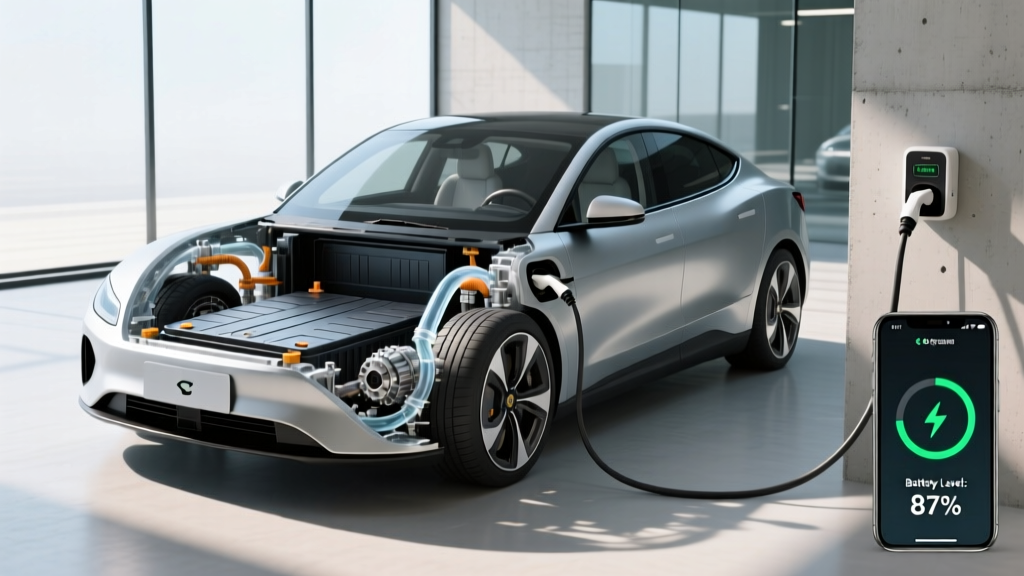
The Model Y Long Range uses an NMC (nickel manganese cobalt) lithium-ion pack with approximately 75 kWh of usable capacity. Tesla's structural battery pack design integrates the cells into the vehicle chassis for rigidity and efficiency. The battery is warrantied for 8 years/120,000 miles with at least 70% capacity retention.
Is Tesla's Full Self-Driving actually self-driving?
No. FSD Supervised is an SAE Level 2 driver-assistance system. It can navigate highways, change lanes, and recognize traffic controls, but you must remain fully attentive and ready to take over at any moment. It is not autonomous driving.