The Software That Defines the Hardware
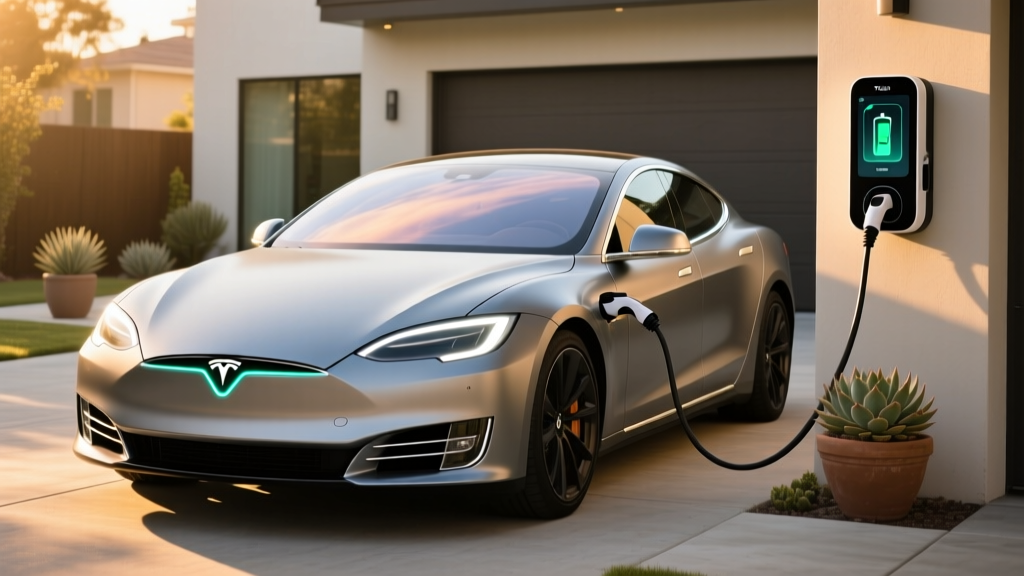
Tesla's over-the-air (OTA) updates are a core part of the ownership experience, often adding significant utility to vehicles years after purchase. The annual Tesla Holiday Update is typically the most substantial of these, arriving in Q4 and introducing features that can range from entertainment apps to fundamental changes in battery management and driver assistance. For 2026, the Holiday Update (Software Version 2026.44) focuses heavily on refining the thermal management systems and enhancing the visualization capabilities of the FSD (Supervised) stack.
While the hardware of the Model 3 'Highland' and Model Y 'Juniper' remains the benchmark for efficiency, this software release aims to squeeze out additional real-world range and improve cold-weather charging speeds—two critical metrics for modern EV buyers.
2026 Model 3 & Y: The Baseline Specs
To understand the impact of the software, we must first look at the hardware it runs on. The 2026 Tesla Model 3 Long Range AWD and Model Y Long Range AWD continue to utilize a mix of NMC (Nickel Manganese Cobalt) and LFP (Lithium Iron Phosphate) chemistries depending on the trim and production batch. The Long Range models typically feature NMC for higher energy density, while RWD models often use LFP for longevity and lower cost.
| Specification | 2026 Model 3 LR AWD | 2026 Model Y LR AWD |
|---|---|---|
| EPA Est. Range | 341 miles | 320 miles |
| Battery Capacity (Usable) | ~75 kWh (NMC) | ~75 kWh (NMC) |
| Peak DC Fast Charge | 250 kW | 250 kW |
| 10-80% Charge Time | ~27 minutes | ~29 minutes |
| Home Level 2 Rate | 11.5 kW (44 mi/hr) | 11.5 kW (44 mi/hr) |
| 0-60 mph | 4.2 seconds | 4.8 seconds |
| Drivetrain | Dual Motor AWD | Dual Motor AWD |
| Base MSRP | $47,740 | $50,240 |
Holiday Update 2026: Feature Breakdown
The 2026 Holiday Update introduces several key improvements that directly address owner feedback regarding long-distance travel and winter usability.
- Adaptive Thermal Preconditioning: The vehicle now uses real-time weather data and terrain mapping to more aggressively warm the battery when a Supercharger is added to the route, potentially increasing peak charge rates in sub-40°F weather by up to 20%.
- FSD (Supervised) v13.5 Integration: Improved handling of 'unprotected left turns' and better lane-centering in faded-marking construction zones. Note that this remains a SAE Level 2 system requiring full driver attention.
- Battery Health 'State of Health' (SoH) Dashboard: A new granular view in the service menu showing individual cell-brick balance and degradation curves, previously only accessible via third-party apps.
- High-Fidelity Dashcam Sentry: Utilizes the AI4 hardware's processing to provide higher-resolution clips and 'smart tagging' of events based on audio cues (breaking glass, collisions).
Charging Infrastructure & Speed
Tesla's Supercharger network remains its strongest competitive advantage, especially as more non-Tesla EVs gain access via NACS adapters, potentially increasing congestion at popular stalls. However, the 250 kW peak rate on V3 stalls is now being outpaced by competitors utilizing 800V architectures (like the Hyundai Ioniq 5 or Porsche Macan EV) which can sustain higher rates deeper into the charge curve.
| Charging Level | Power Output | Speed / Notes |
|---|---|---|
| Level 1 (120V) | 1.4 kW | ~4 miles per hour (Emergency use only) |
| Level 2 (240V) | 11.5 kW | ~44 miles per hour (Standard home wall connector) |
| DC Fast (V3) | 250 kW Peak | 10-80% in ~27 min; tapers significantly after 80% |
| DC Fast (V4) | 350 kW Capable | Current Model 3/Y limited by vehicle architecture to ~250 kW |
Pricing & Federal Tax Credit Eligibility
For 2026, the federal EV tax credit (IRS §30D) remains a complex landscape. While Tesla vehicles are assembled in the US, eligibility for the full $7,500 credit depends on strict battery component and critical mineral sourcing requirements that shift annually.
| Model / Trim | MSRP | Est. Tax Credit | Effective Price |
|---|---|---|---|
| Model 3 RWD | $38,990 | $3,750 (Partial) | $35,240 |
| Model 3 LR AWD | $47,740 | $3,750 (Partial) | $43,990 |
| Model Y LR AWD | $50,240 | $3,750 (Partial) | $46,490 |
Note: Income caps apply ($150k single / $300k joint). MSRP caps apply ($55k for sedans, $80k for SUVs). Always verify current sourcing rules on IRS.gov as battery supply chains are subject to change.
Ownership Economics & Warranty
Tesla's warranty remains standard for the luxury segment but trails the 10-year powertrain warranties offered by Hyundai/Kia. The basic vehicle warranty is 4 years/50,000 miles, while the battery and drive units are covered for 8 years/120,000 miles (Long Range) with a minimum 70% retention guarantee.
Efficiency is where Tesla still leads. The Model 3 LR achieves roughly 130 MPGe combined (25 kWh/100mi), making it significantly cheaper to fuel than the Ford Mustang Mach-E or the BMW i4, especially when charging at home on off-peak rates.
Verdict: Who is this for?
The 2026 Holiday Update reinforces Tesla's position as the 'safe' but highly capable choice in the EV market. It is best suited for:
- The High-Mileage Commuter: Unmatched efficiency and the reliability of the Supercharger network make it the best tool for 200+ mile daily round trips.
- Tech-Forward Buyers: Those who value frequent software improvements and a minimalist, screen-centric interface over physical buttons or traditional luxury materials.
It is less ideal for those seeking the absolute fastest charging speeds on the market (look to 800V platforms) or those who prefer a more traditional, button-heavy cockpit layout.
Pros and Cons
Pros
- Industry-leading energy efficiency (MPGe)
- Access to the NACS Supercharger network
- Continuous OTA improvements (Holiday Update)
- Massive cargo capacity (Model Y) and frunk storage
Cons
- Peak DC charge speed limited to 250 kW
- Minimalist interior lacks physical controls for some
- Partial tax credit eligibility vs. some rivals
- FSD (Supervised) requires constant vigilance
Frequently Asked Questions
Does the Holiday Update cost extra?
No, all standard features included in the Holiday Update are free for all Tesla owners. Premium features like FSD (Supervised) or Acceleration Boost remain paid upgrades.
How long does the update take to install?
Installation typically takes between 30 and 60 minutes, but the download phase can take several hours depending on your Wi-Fi connection. The car cannot be driven during installation.
Can I downgrade if I don't like the new interface?
No, Tesla does not provide a rollback option for software updates. However, most interface changes can be customized via the 'Display' and 'Controls' menus.
Is the Model 3 or Y better for cold weather?
The Model 3 sedan is generally more efficient due to its lower drag coefficient, but both utilize the same highly effective heat pump system, which is further optimized by the 2026 Holiday Update's thermal logic.