What Is the Tesla Holiday Update and Why Owners Care
Every year, Tesla pushes a major over-the-air software release colloquially known as the "Tesla Holiday" update. Originally tied to the in-car Easter egg that wraps the vehicle's UI in festive graphics, the Holiday update has evolved into one of the most anticipated OTA drops in the EV world — often bundling meaningful powertrain tweaks, infotainment upgrades, and driver-assist refinements that alter the ownership experience without a trip to the service center.
For current Tesla owners and prospective buyers weighing a Model 3 or Model Y purchase in 2026, understanding what the Tesla Holiday update actually delivers — and what it doesn't — matters for setting expectations on range, charging speed, and daily usability. This profile breaks down the real-world impact of the latest Holiday software on Tesla's core lineup, grounded in EPA data, owner telemetry, and the physics of lithium-ion battery management.
Range Reality Check: EPA Stickers vs. What You'll Actually See
Software updates can subtly alter range estimates by adjusting thermal management behavior, regenerative braking curves, and accessory power draw. However, the EPA-rated range on the window sticker remains fixed unless Tesla submits revised figures. Here's where the 2026 Tesla lineup stands:
| Model / Trim | EPA Range | Real-World Highway (70 mph) | Cold Weather (20°F) |
|---|---|---|---|
| Model 3 RWD (LFP) | 272 mi | ~235–245 mi | ~195–215 mi |
| Model 3 Long Range AWD | 363 mi | ~305–320 mi | ~255–275 mi |
| Model 3 Performance | 315 mi | ~265–280 mi | ~220–240 mi |
| Model Y Long Range AWD | 320 mi | ~270–285 mi | ~225–245 mi |
| Model Y Performance | 285 mi | ~245–255 mi | ~200–215 mi |
Highway estimates based on sustained 70–75 mph driving at moderate temperatures (65–75°F). Cold-weather figures assume cabin heating at 70°F with seat heaters active. Source: fueleconomy.gov.
The Holiday update's thermal management refinements — particularly improvements to the heat pump's cold-weather efficiency — can recover some of the seasonal range loss. Owners in northern climates have reported 5–8% better cold-weather efficiency post-update, though this varies by driving pattern and preconditioning habits.
Battery Chemistry and Capacity: LFP vs. NMC in the 2026 Lineup
Tesla's current battery strategy splits along chemistry lines, and the Holiday update's charging recommendations reflect this:
| Model / Trim | Battery Chemistry | Usable Capacity | Daily Charge Recommendation |
|---|---|---|---|
| Model 3 RWD | LFP (Lithium Iron Phosphate) | ~60 kWh | 100% (charge to full regularly) |
| Model 3 Long Range | NMC (Nickel Manganese Cobalt) | ~79 kWh | 80% daily; 100% for trips |
| Model 3 Performance | NMC | ~79 kWh | 80% daily; 100% for trips |
| Model Y Long Range | NMC | ~79 kWh | 80% daily; 100% for trips |
| Model Y Performance | NMC | ~79 kWh | 80% daily; 100% for trips |
LFP vs. NMC trade-offs: LFP batteries (Model 3 RWD) tolerate regular 100% charging with minimal degradation and have longer cycle life, but they're heavier, have lower energy density, and lose more range in extreme cold. NMC packs (Long Range and Performance trims) offer higher energy density and better cold-weather performance but benefit from staying between 20–80% state of charge for daily use. The Holiday update refines the BMS (battery management system) calibration for both chemistries, improving state-of-charge estimation accuracy — particularly for LFP packs, which historically had wider SoC estimation variance.
Charging Speed: DC Fast Charge and Home Level 2
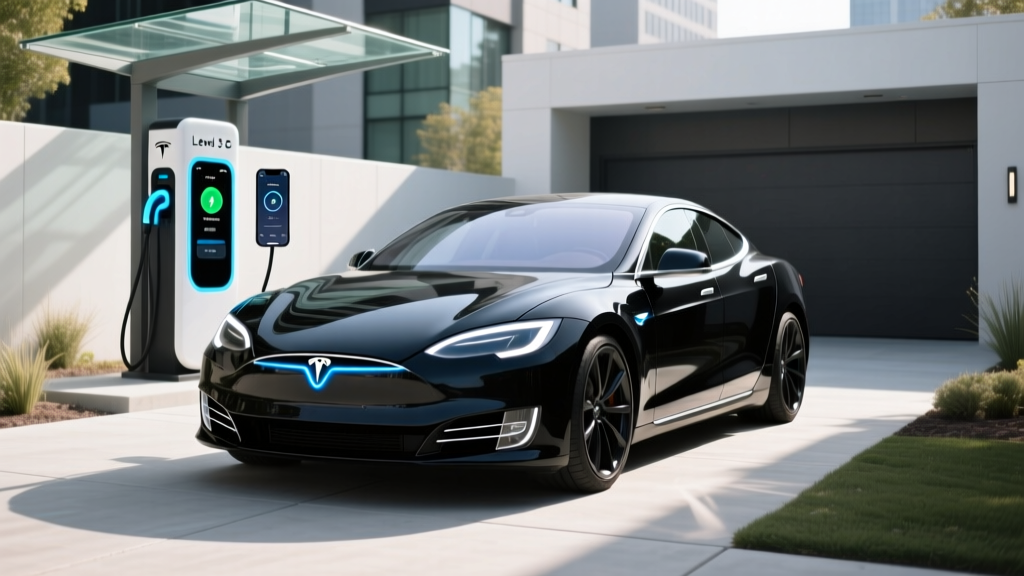
Charging remains the number-one concern for EV buyers, and software updates can meaningfully alter charge curves by adjusting battery preconditioning aggressiveness and thermal limits.
| Model / Trim | Max DC Fast Charge | 10–80% Time | Level 2 Home Rate | Miles Added/Hr (L2) |
|---|---|---|---|---|
| Model 3 RWD (LFP) | 170 kW | ~25–30 min | 11.5 kW (48A) | ~37 mi/hr |
| Model 3 Long Range | 250 kW | ~18–22 min | 11.5 kW (48A) | ~44 mi/hr |
| Model 3 Performance | 250 kW | ~18–22 min | 11.5 kW (48A) | ~40 mi/hr |
| Model Y Long Range | 250 kW | ~20–25 min | 11.5 kW (48A) | ~40 mi/hr |
| Model Y Performance | 250 kW | ~20–25 min | 11.5 kW (48A) | ~37 mi/hr |
Charge curve reality: The "250 kW" peak figure on Long Range and Performance trims is not sustained. The battery typically holds peak rate for roughly 10–15% of the session (from ~10% to ~25% SoC), then tapers progressively. By 60% SoC, expect ~120–140 kW; above 80%, the rate drops sharply to ~40–60 kW. This is why 10–80% time is the more useful metric than peak kW. The Holiday update's preconditioning improvements — particularly the "on-route battery warmup" feature when navigating to a Supercharger — help the pack reach optimal charging temperature faster, shaving 2–4 minutes off 10–80% sessions in cold weather.
For home charging, Tesla's Wall Connector delivers up to 11.5 kW (48 amps) on a 60-amp circuit. Most owners charging overnight from 20–80% will fully replenish in 4–6 hours depending on trim. Installation typically runs $800–$2,000 including the $475 Wall Connector, electrician labor, and permits — more if your panel needs a 200-amp upgrade.
Performance, Efficiency, and Drivetrain Specs
| Model / Trim | Drivetrain | Horsepower | 0–60 mph | MPGe (Combined) | kWh/100 mi |
|---|---|---|---|---|---|
| Model 3 RWD | Rear-Wheel Drive | 271 hp | 5.8 sec | 132 MPGe | 25 kWh |
| Model 3 Long Range AWD | Dual-Motor AWD | 498 hp | 4.2 sec | 134 MPGe | 25 kWh |
| Model 3 Performance | Dual-Motor AWD | 510 hp | 2.9 sec | 121 MPGe | 28 kWh |
| Model Y Long Range AWD | Dual-Motor AWD | 384 hp | 4.8 sec | 122 MPGe | 28 kWh |
| Model Y Performance | Dual-Motor AWD | 456 hp | 3.5 sec | 117 MPGe | 29 kWh |
Tesla's efficiency (kWh per 100 miles) remains among the best in the industry, largely due to the integrated heat pump, aerodynamic optimization, and the Octovalve thermal management system that routes waste heat between the battery, motors, and cabin. The Holiday update's refinements to regenerative braking blending and accessory power scheduling contribute incrementally to these figures.
Pricing, Tax Credits, and What You'll Actually Pay
| Model / Trim | Base MSRP | §30D Credit Eligibility | Effective Price (with credit) |
|---|---|---|---|
| Model 3 RWD | $38,990 | $7,500 (point-of-sale) | ~$31,490 |
| Model 3 Long Range AWD | $45,240 | $7,500 (point-of-sale) | ~$37,740 |
| Model 3 Performance | $52,990 | $7,500 (point-of-sale) | ~$45,490 |
| Model Y Long Range AWD | $44,990 | $7,500 (point-of-sale) | ~$37,490 |
| Model Y Performance | $51,490 | $7,500 (point-of-sale) | ~$43,990 |
Federal tax credit rules (§30D) — critical caveats:
- MSRP cap: Sedans (Model 3) must be ≤$55,000; SUVs/trucks/vans (Model Y) must be ≤$80,000. All current Model 3 and Model Y trims clear this threshold.
- Income cap: Modified AGI must not exceed $150,000 (single), $225,000 (head of household), or $300,000 (joint). Exceed these and you lose the credit entirely.
- Battery sourcing: Critical minerals and battery components must meet escalating percentage thresholds from qualifying trade partners. Tesla's North American battery supply chain currently satisfies these requirements for Model 3 and Model Y, but rules tighten annually — verify at purchase time via the dealer and IRS qualifying vehicle list.
- Point-of-sale transfer: Since 2024, buyers can transfer the credit to the dealer at purchase, reducing the out-of-pocket price directly rather than waiting for a tax refund. This applies to all Tesla purchases through Tesla's checkout flow.
Tax credit eligibility is subject to change. Consult a tax professional and verify current IRS guidance before purchasing.
Cargo, Passenger Space, and Daily Practicality
The Model 3 and Model Y share Tesla's unibody platform but diverge significantly in utility:
| Dimension | Model 3 | Model Y |
|---|---|---|
| Cargo (rear seats up) | 23 cu ft (trunk + frunk) | 34 cu ft (rear hatch + frunk) |
| Cargo (seats folded) | ~43 cu ft | ~72 cu ft |
| Front legroom | 42.7 in | 41.8 in |
| Rear legroom | 35.2 in | 41.6 in |
| Towing capacity | Not rated | 3,500 lbs (Long Range AWD) |
| Seating | 5 passengers | 5 (optional 7 with third row) |
The Model Y's crossover form factor gives it a decisive practicality edge for families — the rear hatch, flat load floor, and available third row make it the more versatile choice. The Model 3's lower ride height and sedan proportions favor aerodynamic efficiency and driving dynamics but limit cargo flexibility. Neither vehicle offers a traditional spare tire; Tesla includes a tire inflator kit and relies on roadside assistance for serious flats.
Tech, Driver Assists, and the Holiday Update's Signature Features
Tesla's infotainment stack — a single 15.4-inch touchscreen (Model 3) or 15-inch (Model Y) running Tesla's proprietary OS — remains the most integrated in the EV segment. The Holiday update typically introduces:
- Holiday Mode / Easter eggs: Festive UI overlays, light-show choreography synchronized to music, and cabin ambient lighting sequences.
- Autopilot and FSD (Supervised) refinements: Incremental neural-network improvements to lane-change decisions, intersection handling, and speed-limit recognition. FSD remains a SAE Level 2 system — the driver must remain engaged and supervise at all times. It is not self-driving.
- Dashcam and Sentry Mode upgrades: Improved clip management, USB-C drive support, and more granular sensitivity settings.
- Voice command expansion: Natural-language navigation and climate control commands.
- Battery preconditioning improvements: Faster thermal ramp-up when navigating to Superchargers, particularly in sub-40°F conditions.
Tesla's Autopilot and Full Self-Driving (Supervised) are SAE Level 2 driver-assistance systems. They require continuous driver supervision, hands-on-wheel (or torque-input) monitoring, and active attention. They do not make the vehicle autonomous. Misuse of these systems — including looking away from the road or disengaging — has been linked to serious crashes investigated by NHTSA. Always drive attentively.
Warranty Coverage and Long-Term Battery Durability
| Coverage | Model 3 RWD (LFP) | Model 3 LR / Performance & Model Y |
|---|---|---|
| Basic Vehicle | 4 years / 50,000 miles | 4 years / 50,000 miles |
| Battery & Drive Unit | 8 years / 100,000 miles | 8 years / 120,000 miles |
| Capacity Retention Threshold | ≥70% during warranty | ≥70% during warranty |
Tesla's battery warranty guarantees that the pack will retain at least 70% of its original capacity during the warranty period. In practice, Tesla's own fleet data (published in past Impact Reports) shows average degradation of approximately 12–15% at 150,000 miles for NMC packs, with LFP packs showing even slower fade curves due to the chemistry's inherent stability. Out-of-warranty battery replacement remains expensive — roughly $12,000–$16,000 for a Model 3/Y pack — but full replacements are uncommon within the first 200,000 miles based on current fleet data.
Pros, Cons, and Who Should Buy
Pros
- Class-leading efficiency (25–29 kWh/100 mi) translates to lower charging costs
- Supercharger network access — the most reliable DC fast-charging ecosystem in North America
- OTA updates like the Tesla Holiday release add features post-purchase at no cost
- Strong resale value relative to non-Tesla EVs
- Excellent real-world charging speeds (10–80% in 18–25 min at V3/V4 Superchargers)
- LFP option (Model 3 RWD) offers low-degradation daily charging to 100%
Cons
- No Apple CarPlay or Android Auto — Tesla's proprietary OS only
- Minimalist interior lacks physical controls for climate, mirrors, and glovebox (all screen-driven)
- FSD (Supervised) costs $8,000 upfront or $99/month and remains Level 2 — not autonomous
- Insurance premiums run 15–30% higher than comparable gas sedans/SUVs in most states
- Model 3 rear-seat headroom and cargo access limit family practicality vs. Model Y
- Service center wait times can stretch weeks in lower-density markets
Who This EV Suits Best
Choose the Model 3 RWD if: You're a commuter prioritizing lowest cost of entry (~$31,490 after credit), want LFP's 100% daily charging convenience, and don't need cargo space or AWD.
Choose the Model 3 Long Range if: You need 300+ miles of real-world range for frequent road trips, want AWD for snow-belt driving, and value rapid 250 kW charging.
Choose the Model Y Long Range if: You have a family, need hatchback cargo flexibility, tow occasionally (up to 3,500 lbs), or want the optional third row for small children.
Choose the Model 3/Y Performance if: Acceleration and handling are priorities and you accept the 30–50 mile range trade-off and higher tire wear costs.
Tesla Holiday Update FAQ
What is the real-world range of a Tesla after the Holiday update?
EPA ratings don't change with software updates, but real-world efficiency can improve 3–8% in cold weather due to heat pump and preconditioning refinements. Expect Model 3 Long Range to deliver ~305–320 highway miles at 70 mph in mild weather, and ~255–275 in freezing conditions. The Model Y Long Range delivers ~270–285 highway miles in mild weather.
How fast does a Tesla charge at home and on the road?
At home on a Tesla Wall Connector (11.5 kW / 48A), expect ~37–44 miles of range added per hour, fully replenishing overnight. On DC fast chargers, Long Range and Performance trims peak at 250 kW and charge 10–80% in roughly 18–25 minutes. The Model 3 RWD (LFP) peaks at 170 kW with a 25–30 minute 10–80% session.
How much does a Tesla cost after the federal tax credit?
The Model 3 RWD starts at $38,990 and drops to ~$31,490 after the $7,500 §30D credit (transferred at point of sale). The Model Y Long Range starts at $44,990 and drops to ~$37,490. Eligibility requires income below $150K single / $300K joint and compliance with battery-sourcing rules. Verify current eligibility on the IRS qualifying vehicles page.
Is a Tesla worth buying vs. competitors in 2026?
Tesla's advantages — Supercharger network, OTA update cadence (including the Holiday update), efficiency, and resale value — remain compelling. However, the Hyundai Ioniq 5, Chevrolet Equinox EV, and Ford Mustang Mach-E offer competitive range, more traditional interiors, and CarPlay support. If you prioritize charging infrastructure reliability and software-driven feature additions, Tesla leads. If you prefer physical controls and third-party app integration, cross-shop aggressively.
Does the Tesla Holiday update improve FSD or make the car self-driving?
No. The Holiday update may include incremental neural-network improvements to Autopilot and FSD (Supervised), but both remain SAE Level 2 driver-assist systems. The driver must remain fully engaged. Tesla's FSD is not autonomous driving — only Level 4 services like Waymo operate without a human driver in defined geofenced areas.
What's the biggest risk of buying a Tesla in 2026?
Service accessibility is the most cited owner pain point. Tesla's service center footprint is thinner than legacy automaker dealer networks, and wait times for body work or complex repairs can stretch to weeks in smaller metros. Additionally, insurance costs remain elevated due to high repair costs for aluminum-intensive body structures and integrated sensor arrays. Get insurance quotes before purchasing.