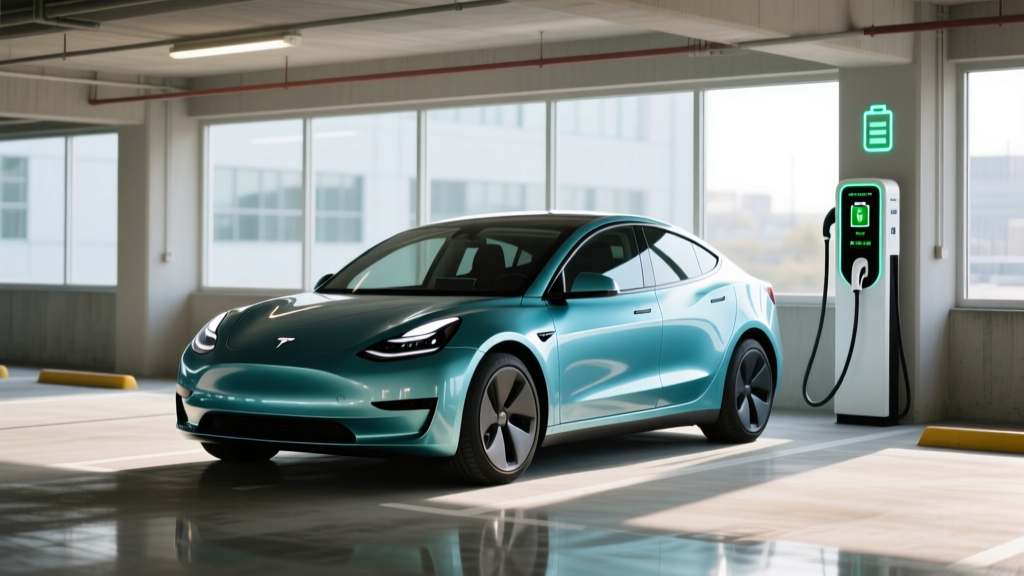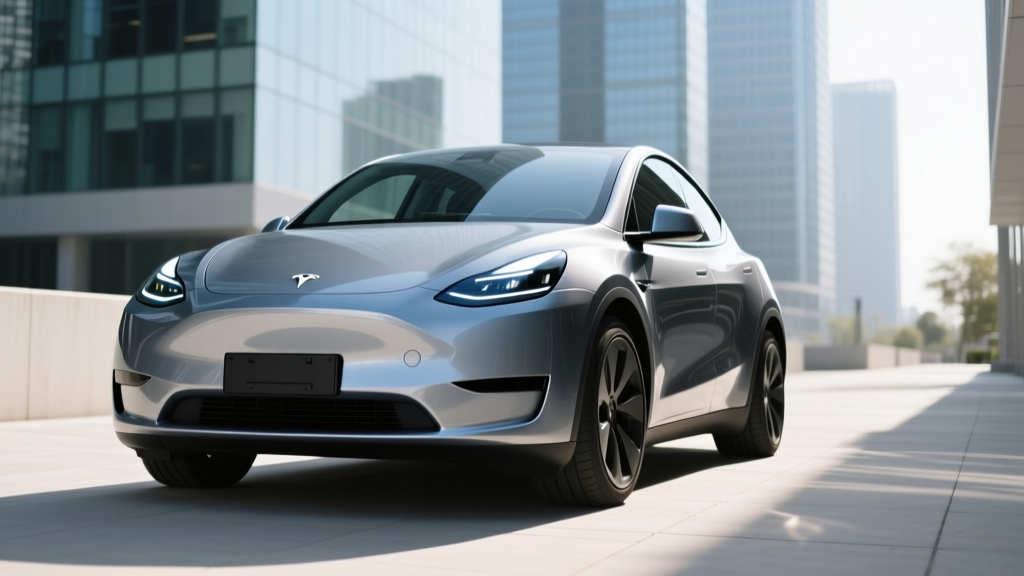
Quick Verdict: Grok Meets the Model 3
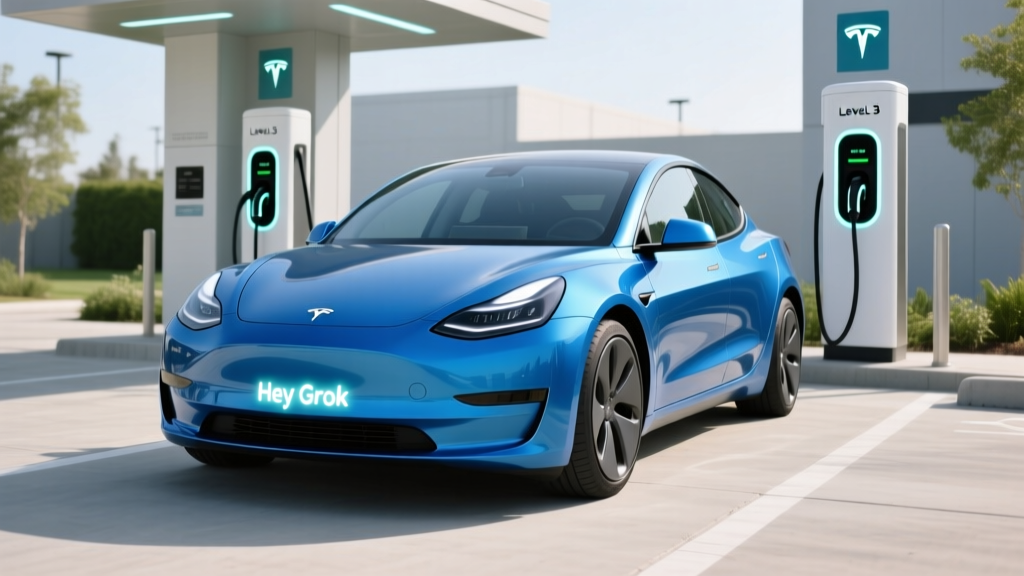
Tesla's integration of its Grok AI assistant — activated by the voice command "Hey Grok" — is the most significant infotainment upgrade to the Model 3 since the Highland refresh. Unlike basic voice assistants that handle simple navigation or climate requests, Grok leverages xAI's large language model to answer complex questions, summarize news, explain dashboard warnings, and even troubleshoot vehicle settings conversationally. It's a genuine differentiator in the EV cabin experience, but it doesn't change the fundamental question buyers need answered: Is the 2026 Tesla Model 3 still the best electric sedan for the money?
We've spent extensive time with the 2026 Model 3 Long Range AWD to answer that question with hard data — EPA range, real-world charging curves, tax credit math, and a direct look at what Grok actually does behind the wheel.
2026 Tesla Model 3: Full Spec Sheet
| Specification | Model 3 RWD | Model 3 Long Range AWD | Model 3 Performance |
|---|---|---|---|
| EPA Range | 272 mi | 363 mi | 315 mi |
| Battery (usable) | ~57.5 kWh (LFP) | ~75 kWh (NMC) | ~75 kWh (NMC) |
| Drivetrain | RWD (single motor) | AWD (dual motor) | AWD (dual motor) |
| Horsepower | 271 hp | 346 hp | 510 hp |
| 0-60 mph | 5.8 sec | 4.2 sec | 2.9 sec |
| Peak DC Fast Charge | 170 kW | 250 kW | 250 kW |
| 10-80% DCFC Time | ~30 min | ~25 min | ~25 min |
| Level 2 Home Charge | 11.5 kW (~44 mi/hr) | 11.5 kW (~44 mi/hr) | 11.5 kW (~44 mi/hr) |
| MPGe (combined) | 132 MPGe | 130 MPGe | 115 MPGe |
| kWh/100 mi | 25 | 26 | 29 |
| Base MSRP | $38,990 | $47,740 | $54,990 |
| Battery Warranty | 8 yr / 100,000 mi | 8 yr / 120,000 mi | 8 yr / 120,000 mi |
Source: fueleconomy.gov, Tesla.com 2026 specifications.
What Is the 'Hey Grok' Feature — and Is It Useful?
The "Hey Grok" feature is Tesla's voice-activated AI assistant, powered by xAI's Grok language model. It launched via an over-the-air update in late 2025 and comes standard on all 2026 Model 3 vehicles (as well as Model S, X, Y, and Cybertruck with current software). Activation is hands-free: say "Hey Grok" and the system listens.
What Grok Can Do in the Car
- Natural-language navigation: "Hey Grok, find me a charger within 10 minutes of a good sushi restaurant" — and it will chain multiple queries together.
- Vehicle troubleshooting: "Why is my preconditioning icon grayed out?" — Grok explains the condition and suggests fixes.
- Real-time information: News summaries, sports scores, weather forecasts, general knowledge questions.
- Trip planning: "Hey Grok, plan a road trip from Denver to Moab with one charging stop and a scenic detour."
- Settings control: Adjust climate, change regen mode, toggle sentry mode — all conversationally.
Where Grok Falls Short
Grok requires an active internet connection (Tesla's Premium Connectivity subscription, $9.99/month, or a Wi-Fi hotspot). In areas with poor cellular coverage — rural highways, mountain passes — responses lag or fail entirely. It also cannot yet interface with third-party charging networks to check real-time stall availability, a missed opportunity. And while Grok handles general knowledge well, it occasionally hallucinates details about local businesses or obscure vehicle settings. Treat it as a powerful co-pilot, not an infallible oracle.
Real-World Range: What the EPA Number Doesn't Tell You
EPA Estimated: 363 miles
Real-World Highway (70-75 mph, 70°F): ~290-310 miles
Real-World City/Mixed (moderate climate): ~330-350 miles
Cold Weather Highway (30°F, heater on): ~240-270 miles
Expect to plan charging stops around 250-280 miles for comfortable highway margins.
The Model 3 Long Range's 363-mile EPA rating remains one of the highest of any mainstream EV sedan. But EPA testing uses low average speeds and generous regenerative-braking assumptions. On sustained highway drives at 70-75 mph — where aerodynamic drag dominates — expect to consume energy at roughly 28-30 kWh/100mi instead of the EPA's 26 kWh/100mi sticker figure.
Cold weather compounds this. At 30°F, the NMC battery loses roughly 15-20% of its effective capacity to internal resistance and cabin heating demands, even with Tesla's heat pump (standard on all 2026 trims). The LFP battery in the RWD trim is somewhat more resilient in cold weather but starts with a lower total capacity, so its absolute range loss is similar.
Bottom line: The 363-mile Long Range AWD is a legitimate 300-mile car in most conditions. The RWD at 272 miles EPA is a solid 210-230 mile highway car — fine for commuting, tight for road trips without planning.
Charging Speed: DC Fast, Level 2, and the Curve Reality
| Charging Level | Power / Rate | Miles Added per Hour | Notes |
|---|---|---|---|
| Level 1 (120V household) | ~1.4 kW | ~5 mi/hr | Emergency/top-up only; adds ~50 mi overnight |
| Level 2 (240V home, 48A) | 11.5 kW | ~44 mi/hr | Full charge in ~7-8 hours (LR); ideal daily solution |
| DC Fast (Tesla Supercharger V3) | Peak 250 kW (LR) | Up to ~175 mi in 15 min | Peak rate holds to ~50% SoC, then tapers |
| DC Fast (10-80% session) | Avg ~130 kW sustained | — | ~25 min for LR AWD; ~30 min for RWD |
Understanding the charge curve: The 250 kW peak rate on Long Range and Performance trims is not sustained for the full session. The Model 3 hits 250 kW only between roughly 10-30% State of Charge (SoC). From 30-50%, it drops to ~180 kW. From 50-80%, it further tapers to ~80-100 kW. This is normal lithium-ion behavior — charging speed slows as the battery fills to protect cell longevity.
For NMC batteries (Long Range, Performance), Tesla recommends daily charging to 80% and 100% only for trips. The LFP battery in the RWD trim can — and should — be charged to 100% regularly, as LFP chemistry benefits from full cycles for accurate state-of-charge calibration.
Home charging setup: A Tesla Wall Connector ($420) on a 60-amp circuit delivers the full 11.5 kW / 44 mi/hr. Most owners need a 240V/60A circuit installed. Expect $800-$2,000 for a straightforward installation by a licensed electrician, or $2,000-$4,000+ if your electrical panel needs an upgrade to 200A service. Always get a quote from a licensed electrician before committing.
Pricing, Trims, and Federal Tax Credit Eligibility
| Trim | Base MSRP | Destination | Est. Total | §30D Credit Eligible? | Effective Price (if eligible) |
|---|---|---|---|---|---|
| Model 3 RWD | $38,990 | $1,390 | $40,380 | Up to $7,500* | ~$32,880 |
| Model 3 Long Range AWD | $47,740 | $1,390 | $49,130 | Up to $7,500* | ~$41,630 |
| Model 3 Performance | $54,990 | $1,390 | $56,380 | Up to $7,500* | ~$48,880 |
* Federal tax credit eligibility under IRS §30D depends on multiple requirements that change frequently. As of 2026:
- MSRP cap: Sedans must be under $55,000 MSRP. The RWD and Long Range qualify. The Performance trim at $54,990 MSRP just clears the cap — but adding options (FSD, paint, wheels) can push the sticker above $55,000 and disqualify it. Verify the final VIN-specific amount at purchase.
- Buyer income caps: Modified AGI must not exceed $150,000 (single), $225,000 (head of household), or $300,000 (joint).
- Battery sourcing: Critical minerals and battery component requirements phase in annually. The full $7,500 requires meeting both thresholds; partial credit ($3,750) applies if only one is met. Tesla's supply chain has adapted significantly, but confirm the exact credit amount for your specific VIN at the point of sale.
- Point-of-sale transfer: As of 2024+, you can transfer the credit to the dealer at purchase, reducing your out-of-pocket cost immediately rather than waiting for a tax refund. This is the recommended approach.
Always confirm credit eligibility with your tax professional and the dealer's VIN-specific lookup before signing. Rules may change; consult IRS.gov for the latest guidance.
Interior, Cargo, and Daily Livability
The Model 3's minimalist interior remains polarizing, but the 2026 Highland-generation cabin is materially better than pre-2024 versions. Ventilated front seats, ambient lighting, rear-seat ventilation, and a rear touchscreen for passengers are now standard on Long Range and Performance trims.
Dimensions That Matter
- Front legroom: 42.7 inches
- Rear legroom: 35.2 inches (adequate for adults, tight for tall passengers on long trips)
- Cargo (trunk): 21.0 cu ft
- Frunk (front trunk): 3.1 cu ft (useful for charging cables, small bags)
- Total cargo: 24.1 cu ft — competitive with compact luxury sedans, less than crossovers
The glass roof creates an airy cabin but admits significant heat in summer — Tesla's tinted glass helps, but a sunshade (aftermarket, ~$40) is a worthy addition in hot climates. NVH (noise, vibration, harshness) is dramatically improved over pre-Highland models, with acoustic glass and better insulation making highway cruising genuinely quiet.
Driver Assistance: Autopilot, FSD, and What Grok Adds
Tesla includes Basic Autopilot (lane centering + adaptive cruise) standard. Enhanced Autopilot ($6,000) adds auto lane change, navigate-on-autopilot, and smart summon. Full Self-Driving (Supervised) ($8,000 or $99/month) adds traffic-light/stop-sign recognition and city-street autosteer.
The "Hey Grok" feature complements these systems by reducing the need to touch the screen while driving. Asking Grok to change your destination, adjust climate, or explain a warning light keeps your eyes forward — a genuine safety benefit over menu-diving on the touchscreen.
Pros, Cons, and Who Should Buy
✅ Pros
- Class-leading EPA range (363 mi on LR AWD)
- Access to Tesla Supercharger network — the most reliable DC fast-charging network in the US
- Grok AI assistant reduces screen distraction
- Best-in-class efficiency (25-29 kWh/100mi)
- Strong over-the-air update cadence — the car improves post-purchase
- Excellent resale value relative to EV market
- Heat pump standard (cold-weather efficiency)
❌ Cons
- No Apple CarPlay or Android Auto — Tesla's ecosystem only
- Turn-signal stalk removed (buttons on steering wheel) — adjustment period required
- Rear visibility limited; reliant on cameras
- FSD subscription cost adds up ($99/mo or $8K one-time)
- Grok requires Premium Connectivity ($9.99/mo) and cellular coverage
- Insurance premiums run 15-30% above comparable sedans
- Cargo space trails crossover alternatives (Model Y: 76 cu ft max)
Who the 2026 Model 3 Suits Best
- Commuters (20-80 mi round trip): Any trim. The RWD at $32,880 after credit is one of the cheapest premium EVs available. Home charging makes fuel costs negligible.
- Road trippers: Long Range AWD. The 363-mile EPA range and Supercharger access make cross-country driving viable with 20-25 minute stops every 2.5-3 hours.
- Performance seekers: The Performance trim's 2.9-second 0-60 is supercar territory, but verify tax credit eligibility before adding options.
- Families needing cargo space: Look at the Model Y instead. The Model 3's 24 cu ft total cargo and 35.2" rear legroom is tight for car seats and strollers.
Competitive Comparison: Model 3 vs. the Field
The 2026 Model 3 Long Range AWD at ~$41,630 (after credit) competes directly with the Hyundai Ioniq 6 SE Long Range (~$42,000 after credit, 361 mi EPA), the BMW i4 eDrive40 (~$52,000, 301 mi EPA), and the Polestar 2 Long Range (~$50,000, 320 mi EPA).
The Model 3 wins on Supercharger network access, efficiency (kWh/100mi), and now the Grok AI integration. The Ioniq 6 matches range and charges slightly faster (peak 350 kW on 800V architecture — 10-80% in ~18 min). The BMW i4 offers superior build quality and Apple CarPlay but costs significantly more and has lower range. The Polestar 2 is a strong design statement but trails on range and charging speed.
Frequently Asked Questions
What is the real-world range of the 2026 Tesla Model 3?
The Long Range AWD delivers an EPA-estimated 363 miles. In real-world highway driving at 70-75 mph in moderate temperatures, expect 290-310 miles. In cold weather (below freezing), plan for 240-270 miles. The RWD trim's 272-mile EPA rating translates to roughly 210-230 highway miles in practice.
How fast does the Model 3 charge at home and on the road?
At home on a 240V Level 2 charger (11.5 kW), the Long Range adds about 44 miles of range per hour, fully charging overnight in 7-8 hours. On a Tesla Supercharger V3, the Long Range peaks at 250 kW and charges from 10-80% in approximately 25 minutes. The RWD trim peaks at 170 kW with a 10-80% time of roughly 30 minutes.
Does the 2026 Model 3 qualify for the $7,500 federal EV tax credit?
The RWD and Long Range trims fall under the $55,000 MSRP sedan cap and are eligible for up to $7,500 under IRS §30D, assuming you meet income requirements (under $150K single / $300K joint) and the vehicle's battery meets critical-mineral and component sourcing thresholds for the current year. The Performance trim is borderline — verify VIN-specific eligibility. Always confirm with a tax professional and the dealer's point-of-sale credit tool.
Is the Tesla 'Hey Grok' feature a gimmick or genuinely useful?
For most owners, Grok is a meaningful upgrade over basic voice commands. Its ability to chain complex requests ("find a charger near a grocery store that's open now") and explain vehicle settings conversationally reduces touchscreen distraction. However, it requires Premium Connectivity ($9.99/month) and reliable cellular coverage — it's not functional in remote areas. It's useful, not essential.
Is the Model 3 worth buying over the Hyundai Ioniq 6 or BMW i4?
The Model 3 Long Range wins on total cost of ownership (lowest kWh/100mi in class), Supercharger network access, and software updates. The Ioniq 6 is a strong alternative if you want 800V ultra-fast charging and prefer a traditional automotive interior. The BMW i4 is the premium pick for build quality and CarPlay but costs $10,000+ more for less range. For most buyers prioritizing value and charging infrastructure, the Model 3 remains the benchmark.
What is the battery warranty on the 2026 Model 3?
Tesla covers the battery and drive unit for 8 years or 100,000 miles (RWD) and 8 years or 120,000 miles (Long Range and Performance), whichever comes first. The warranty guarantees at least 70% battery capacity retention over that period. Tesla's historical degradation data shows most Model 3 batteries retain 85-90% capacity at 100,000 miles — well above the warranty threshold.
For the latest EPA ratings, see fueleconomy.gov. For current federal tax credit rules, consult IRS.gov §30D guidance. Safety ratings available at NHTSA.gov and IIHS.org.