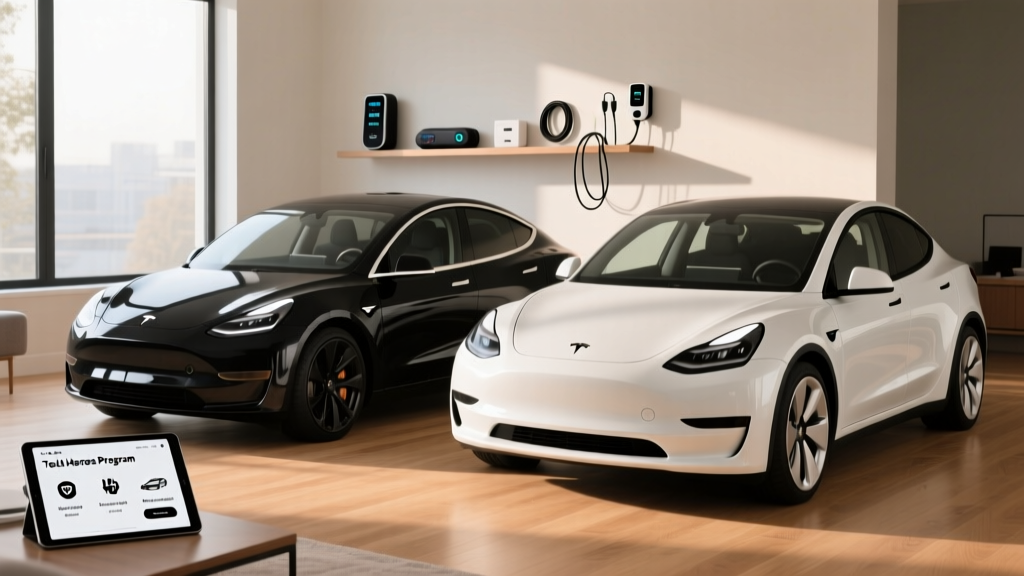
What Is the Tesla Heroes Program?
The Tesla Heroes Program is a referral-based discount initiative that Tesla has periodically offered to first responders, military service members, veterans, teachers, nurses, and other essential-service professionals. Unlike a standing corporate discount (such as Ford's A-Plan or GM's supplier pricing), Tesla's Heroes Program has historically been activated during specific promotional windows and often requires a referral code from an existing Tesla owner combined with proof of eligibility.
As of early 2026, Tesla's approach to targeted discounts remains fluid. The company has cycled through various incentive structures — from referral credits to inventory-based price reductions — rather than maintaining a permanent, publicly listed heroes discount page. If you are a qualifying professional, the most reliable path to savings involves combining any active Tesla promotional pricing with the federal §30D EV tax credit and potential state incentives.
This guide breaks down what the Heroes Program has offered, how to verify current eligibility, and — critically — which Tesla models deliver the best value when stacking every available discount.
How the Heroes Program Works and Who Qualifies
When active, the Tesla Heroes Program has typically offered one of the following:
- Flat purchase discount — historically $500–$1,500 off the vehicle purchase price, applied at checkout.
- Enhanced referral credit — additional Tesla credits (usable for Supercharging, accessories, or future purchases) on top of standard referral benefits.
- Free Supercharging miles — 10,000–15,000 miles of complimentary Supercharger access.
Eligibility categories have included:
- Active-duty military, reservists, and veterans (with DD-214 or military ID)
- First responders (police, fire, EMT — with department ID)
- Healthcare workers and nurses (with employer verification)
- K–12 teachers and higher-education faculty (with school ID)
Verification is typically handled through third-party services like ID.me or SheerID at the point of online order. Because Tesla's promotional programs shift frequently, we recommend checking Tesla's current offers page or contacting a Tesla advisor directly before assuming a specific discount is live.
Which Tesla Models Offer the Best Value Under the Heroes Program?
If you qualify for a Heroes Program discount, maximizing total savings means choosing a model that already sits under the §30D MSRP cap, has strong real-world efficiency, and minimizes your total cost of ownership. Here's how the current lineup stacks up.
| Spec | Model 3 RWD | Model 3 Long Range AWD | Model Y Long Range AWD | Model Y RWD |
|---|---|---|---|---|
| Base MSRP | $38,990 | $44,990 | $46,990 | $41,990 |
| EPA Range | 272 mi | 341 mi | 320 mi | 295 mi |
| Battery (usable) | ~57.5 kWh (LFP) | ~75 kWh (NMC) | ~75 kWh (NMC) | ~57.5 kWh (LFP) |
| 0–60 mph | 5.8 sec | 4.2 sec | 4.8 sec | 5.9 sec |
| Horsepower | 271 hp | 346 hp | 384 hp | 295 hp |
| MPGe (combined) | 132 MPGe | 125 MPGe | 117 MPGe | 127 MPGe |
| Max DC Fast Charge | 170 kW | 250 kW | 250 kW | 170 kW |
| 10–80% DC Time | ~25 min | ~22 min | ~22 min | ~25 min |
| Level 2 Home Rate | 11.5 kW (~37 mi/hr) | 11.5 kW (~37 mi/hr) | 11.5 kW (~35 mi/hr) | 11.5 kW (~37 mi/hr) |
| Drivetrain | RWD | Dual-Motor AWD | Dual-Motor AWD | RWD |
| Cargo Volume | 23 cu ft | 23 cu ft | 72 cu ft (rear seats folded) | 72 cu ft (rear seats folded) |
| §30D Eligible (SUV cap $80K) | Yes (sedan cap $55K) | Yes (sedan cap $55K) | Yes | Yes |
Source: fueleconomy.gov, Tesla.com specifications (2026 model year). Real-world results vary by driving conditions, temperature, and terrain.
Real-World Range: What the EPA Sticker Doesn't Tell You
- Model 3 RWD: EPA 272 mi → Expect ~230–245 mi highway at 70 mph; ~190–210 mi in sub-30°F winter.
- Model 3 Long Range: EPA 341 mi → Expect ~285–310 mi highway; ~240–265 mi in cold weather.
- Model Y Long Range: EPA 320 mi → Expect ~270–290 mi highway; ~225–250 mi in cold weather.
- Model Y RWD: EPA 295 mi → Expect ~250–270 mi highway; ~205–230 mi in cold weather.
Tesla's heat pump (standard on all current models) mitigates cold-weather cabin-heating losses better than resistive heaters, but battery chemistry itself loses efficiency below freezing. LFP batteries (Model 3 RWD, Model Y RWD) are slightly more affected by cold than NMC.
For first responders and service members who may need reliable range during unpredictable shifts or deployments, the Long Range AWD trims offer the most buffer. The NMC chemistry in Long Range models also sustains higher charge rates for longer, meaning your DC fast-charging stops are genuinely faster — not just peak-rated.
Charging Speed: DC Fast, Home Level 2, and the Supercharger Advantage
Tesla's Supercharger network remains the most reliable public DC fast-charging ecosystem in the U.S., with over 25,000 stalls nationally. For Heroes Program buyers who may travel for duty or face unpredictable schedules, this reliability matters.
| Method | Power (kW) | Miles Added/Hour | Notes |
|---|---|---|---|
| Level 1 (120V outlet) | ~1.4 kW | 3–5 mi/hr | Emergency/trickle only |
| Level 2 (240V, 48A Wall Connector) | 11.5 kW | 35–37 mi/hr | Full charge overnight (~8–9 hrs) |
| DC Fast — LFP models | Peak 170 kW | ~200 mi in 15 min | Sustains ~100 kW avg to 80% |
| DC Fast — NMC models | Peak 250 kW | ~200 mi in 15 min | Tapers above 60% SoC |
Charge curve insight: Peak kW numbers are misleading without context. A Model 3 Long Range peaks at 250 kW but only holds that rate up to roughly 40% state of charge (SoC). From 40–80%, it averages closer to 100–130 kW. LFP models (Model 3 RWD) have a flatter, lower charge curve — they never hit 250 kW but sustain a more consistent rate. In practice, the 10–80% times are closer than peak specs suggest.
Home charging: Tesla's Wall Connector ($420) on a 60A circuit delivers 11.5 kW / 48A. Most Heroes Program buyers with a garage or dedicated parking spot should budget $800–$2,000 for a licensed electrician to install a NEMA 14-50 outlet or hardwired Wall Connector. If your home's electrical panel is maxed out (common in older homes), a panel upgrade to 200A can add $1,500–$3,000.
Pricing, Tax Credits, and True Out-of-Pocket Cost
Tesla's MSRP positioning means all current Model 3 and Model Y trims fall under the IRS §30D MSRP caps ($55,000 for sedans, $80,000 for SUVs/vans/pickups). However, the full $7,500 federal credit is not automatic — it depends on battery component and critical mineral sourcing requirements that shift annually.
| Model / Trim | MSRP | Est. §30D Credit | Est. Heroes Discount | Effective Price |
|---|---|---|---|---|
| Model 3 RWD | $38,990 | $3,750–$7,500* | $500–$1,500** | $29,990–$34,740 |
| Model 3 Long Range AWD | $44,990 | $3,750–$7,500* | $500–$1,500** | $35,990–$40,740 |
| Model Y Long Range AWD | $46,990 | $3,750–$7,500* | $500–$1,500** | $37,990–$42,740 |
| Model Y RWD | $41,990 | $3,750–$7,500* | $500–$1,500** | $32,990–$37,740 |
*§30D credit amount depends on battery sourcing compliance for the delivery year. The IRS clean vehicle credit page lists currently qualifying vehicles and credit amounts. Buyer income caps apply: $150K single / $225K head of household / $300K joint MAGI. Credit can be transferred to the dealer at point of sale for an immediate price reduction.
**Heroes Program discount amounts and availability vary by promotional period. Confirm with Tesla at time of order.
- ✅ Vehicle MSRP under cap ($55K sedan / $80K SUV)
- ✅ Buyer MAGI under income limit ($150K / $225K / $300K)
- ⚠️ Battery components must meet North American assembly threshold (increases yearly)
- ⚠️ Critical minerals must meet sourcing threshold (increases yearly)
- ✅ Vehicle must be new, purchased for personal use in the U.S.
- ✅ Credit is non-refundable unless transferred at point of sale
Verify your specific vehicle's qualification at fueleconomy.gov before ordering.
Pros and Cons for Heroes Program Buyers
- Supercharger network reliability — best-in-class for road trips and unpredictable schedules
- All trims under §30D MSRP caps
- LFP battery option (Model 3/Y RWD) offers excellent cycle life and can be charged to 100% daily without degradation concerns
- Over-the-air updates continuously add features
- Strong resale value relative to most EVs
- Minimal maintenance — no oil changes, brake fluid lasts years with regen braking
- Heroes Program availability is inconsistent — not a permanent, guaranteed discount
- No physical instrument cluster — all info on central 15.4" screen
- FSD (Supervised) remains SAE Level 2 — driver must stay engaged at all times
- Turn-signal stalks removed on refreshed models — steering-wheel buttons instead
- Insurance premiums run 15–30% higher than comparable ICE vehicles
- Model 3 cargo space (23 cu ft) trails Model Y significantly for family use
Tech, Driver Assistance, and Interior
All 2026 Teslas ship with Basic Autopilot (lane-keeping, adaptive cruise, traffic-aware features). This is SAE Level 2 — you must keep hands on the wheel and eyes on the road. Tesla's Full Self-Driving (Supervised) package ($8,000 one-time or $99/month) adds automated lane changes, city street navigation, and parking assistance, but it remains Level 2 and requires constant supervision. It is not a Level 4 autonomous system.
The infotainment system runs on Tesla's proprietary OS with a 15.4-inch touchscreen, integrated navigation with real-time Supercharger routing, streaming media, and a built-in dashcam/sentry mode that records 360° when parked. There is no Apple CarPlay or Android Auto — Tesla's native system handles phone integration via Bluetooth for calls and media.
Interior space in the Model Y accommodates five adults comfortably with 41.6 inches of front legroom and 38.4 inches rear. The Model 3 offers 42.7 inches front / 35.2 inches rear — tighter in back but competitive with compact luxury sedans.
Warranty and Long-Term Ownership
Tesla's warranty structure:
- Basic Vehicle: 4 years / 50,000 miles
- Battery & Drive Unit (Model 3 RWD / Model Y RWD — LFP): 8 years / 100,000 miles, minimum 70% capacity retention
- Battery & Drive Unit (Long Range AWD — NMC): 8 years / 120,000 miles, minimum 70% capacity retention
LFP batteries typically degrade more slowly than NMC in daily use, especially when charged to 100% regularly (which Tesla actually recommends for LFP). Real-world data from high-mileage Tesla fleets suggests 10–15% degradation over 150,000 miles for LFP packs, and 12–18% for NMC packs — both well within warranty thresholds for most owners.
Who Should Buy a Tesla Through the Heroes Program?
- Choose Model 3 RWD if: You commute under 60 miles round-trip, charge at home nightly, and want the lowest entry price. LFP battery longevity is a plus for high-mileage commuters.
- Choose Model 3 Long Range if: You regularly drive 200+ miles between charges, face cold winters, or want dual-motor AWD for weather traction.
- Choose Model Y Long Range if: You need cargo versatility (72 cu ft with seats folded), carry passengers regularly, or want the highest ride height and easiest car-seat installation.
- Choose Model Y RWD if: You need the cargo space but your daily driving stays under 150 miles and you want to minimize cost.
- Look elsewhere if: You need a physical instrument cluster, prefer Apple CarPlay, tow heavy loads (Model Y max tow: 3,500 lbs), or require a guaranteed standing military/first-responder discount — brands like Ford and GM offer permanent programs.
Frequently Asked Questions
Is the Tesla Heroes Program currently active?
Tesla does not maintain a permanent, publicly listed Heroes Program page. The program has been activated during specific promotional windows. Contact Tesla directly or check their current offers page to verify availability at time of order.
Can I combine the Heroes discount with the federal tax credit?
Historically, yes — Tesla has allowed stacking of promotional discounts with §30D eligibility. The tax credit is a federal incentive applied to your tax liability (or transferred at point of sale), while the Heroes discount reduces the purchase price directly. Always confirm stacking rules with your Tesla advisor.
Does Tesla offer a military discount outside the Heroes Program?
Tesla has not maintained a permanent military discount program comparable to Ford's A-Plan or GM's military appreciation program. Savings for military members have come through the Heroes Program (when active), referral credits, and standard federal/state incentives.
Which Tesla model is best for a first responder with unpredictable shifts?
The Model Y Long Range AWD offers the best combination of range buffer (320 mi EPA, ~270–290 mi real-world highway), AWD for all-weather response, and cargo space for gear. The Supercharger network's reliability also matters for shift workers who may need a quick charge during odd hours.
How do I verify my Heroes Program eligibility?
When the program is active, verification is typically handled through ID.me or SheerID during the online ordering process. You'll need to upload proof of service — military ID, DD-214, department badge, or employer verification letter.
What is the real-world range of the cheapest Tesla I can get through the Heroes Program?
The Model 3 RWD at $38,990 MSRP carries a 272-mile EPA rating. In real-world mixed driving, expect approximately 230–250 miles. Highway-only driving at 70+ mph reduces this to ~230 miles, and sub-freezing temperatures can drop it to ~190–210 miles. For most commutes under 100 miles round-trip with nightly home charging, this is more than adequate.
Bottom Line
The Tesla Heroes Program can deliver meaningful savings when active, but it is not a guaranteed, always-available benefit. The smartest approach is to monitor Tesla's promotional page, confirm eligibility through their verification partner, and stack any available discount with the §30D federal tax credit and your state's EV incentives. Among Tesla's lineup, the Model Y Long Range AWD offers the best all-around value for service professionals who need range, cargo space, and all-weather capability — while the Model 3 RWD is the most budget-friendly entry point for commuters who charge at home.