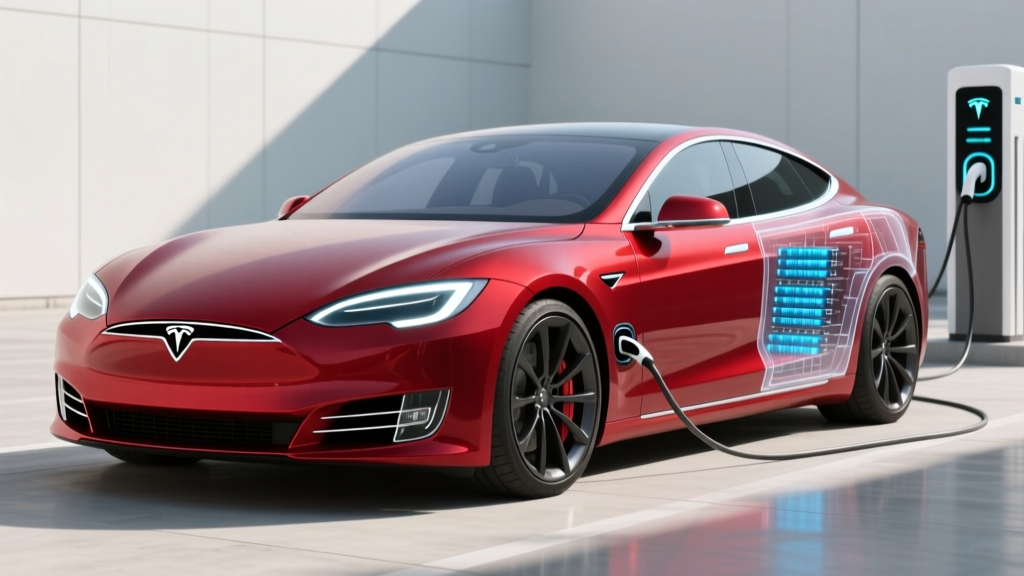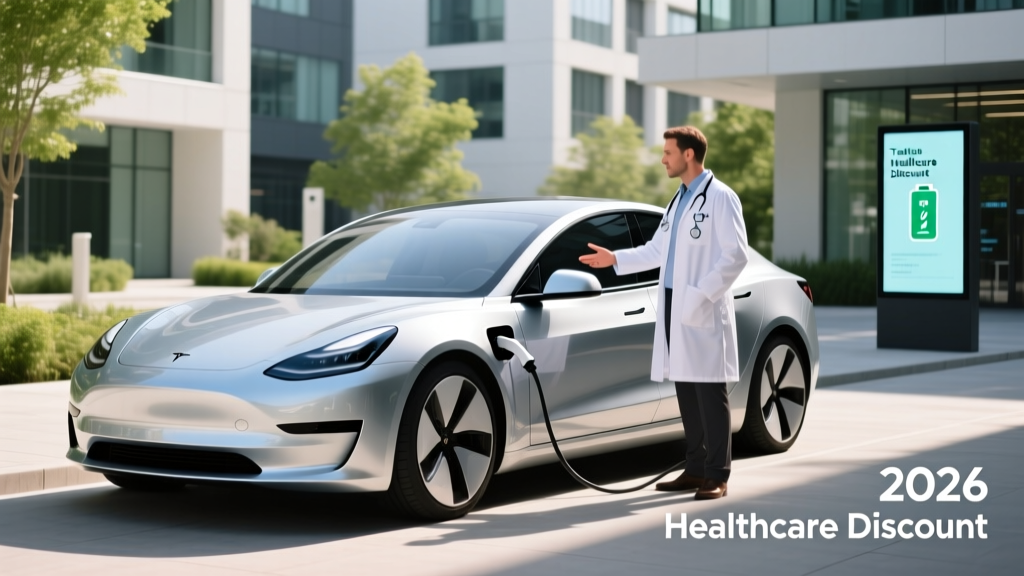
The Truth About a Tesla Healthcare Discount
If you work in healthcare and have searched for a "Tesla healthcare discount," you've likely hit a wall of conflicting forum posts and outdated promotional links. Here's the straight answer for 2026: Tesla does not offer a dedicated healthcare worker discount program. Unlike some automakers that run first-responder or medical-professional appreciation pricing (GM and Ford have offered these intermittently), Tesla's direct-sales model keeps pricing uniform across all buyers regardless of profession.
But that doesn't mean medical workers are left without savings avenues. Between the federal §30D tax credit, Tesla's referral program, employer-sponsored EV benefits, and strategic purchasing timing, healthcare professionals can realistically shave thousands off a new Model Y or Model 3. This guide maps every legitimate discount path available right now—and pairs it with a full 2026 Tesla Model Y review so you know exactly what you're buying.
2026 Tesla Model Y: The EV Healthcare Workers Actually Buy
The Model Y remains Tesla's best-selling vehicle and one of the top EVs for healthcare workers who need practical cargo space, reliable range for shift commutes, and a price that clears the federal tax credit MSRP cap. Here's the full spec breakdown for the current Long Range AWD trim.
| Spec | Value |
|---|---|
| EPA Estimated Range | 320 miles |
| Battery Capacity | 78.1 kWh usable (NMC chemistry) |
| Drivetrain | Dual-Motor AWD |
| Horsepower | 384 hp combined |
| 0–60 mph | 4.8 seconds |
| Max DC Fast Charge | 250 kW peak (V3 Supercharger) |
| 10–80% DC Charge Time | ~25 minutes |
| Level 2 Home Charge Rate | 11.5 kW (~44 mi/hr) |
| MPGe (Combined) | 122 MPGe |
| Efficiency | 28 kWh/100 mi |
| Cargo Volume (rear seats up) | 30.2 cu ft |
| Cargo Volume (rear seats folded) | 72.1 cu ft |
| Rear Legroom | 37.0 in |
| Battery Warranty | 8 years / 120,000 miles |
| Base MSRP | $44,990 |
Real-World Range: What the EPA Number Doesn't Tell You
The EPA rates the 2026 Model Y Long Range at 320 miles. In real-world driving, expect:
- City/suburban commute (moderate climate): 290–310 miles — regen braking in stop-and-go traffic helps recover energy.
- Highway (70+ mph, warm weather): 250–275 miles — aerodynamic drag dominates at speed.
- Cold weather (below 32°F, highway): 210–240 miles — battery resistance and cabin heating reduce range by 25–35%. The Model Y's heat pump mitigates this better than resistive heaters, but physics still wins.
For a healthcare worker doing 12-hour shifts with a 20-mile round-trip commute, even worst-case winter range means charging roughly twice a week at home — easily manageable with Level 2.
Charging Speed: DC Fast Charging and Home Setup
Charging speed is where Tesla's Supercharger network remains a decisive advantage. The 2026 Model Y Long Range peaks at 250 kW on V3 Superchargers, adding roughly 162 miles in 15 minutes under ideal conditions. However, charge curves taper significantly above 80% — that last 20% can take as long as the first 70%. For road trips, plan to charge from 10–80% and move on rather than waiting for a full battery.
| Charging Level | Power (kW) | Speed (mi/hr added) | Typical Use Case |
|---|---|---|---|
| Level 1 (120V) | ~1.4 kW | ~5 mi/hr | Emergency / overnight trickle |
| Level 2 (240V, 48A) | 11.5 kW | ~44 mi/hr | Home daily charging (8–10 hr for full) |
| DC Fast (V3 Supercharger) | 250 kW peak | ~1,000 mi/hr (peak) | Road trips; 10–80% in ~25 min |
| DC Fast (V4 Supercharger) | 250 kW (current vehicles) | Same as V3 | Newer stations; future vehicles may unlock higher |
For home charging, a Wall Connector on a 60-amp circuit delivers the full 11.5 kW. Expect installation costs of $500–$1,500 depending on panel proximity and whether your electrical panel needs an upgrade to 200 amps. For healthcare workers pulling overnight shifts, plugging in when you get home and waking up (or returning for a night shift) to a full battery is the most practical ownership pattern.
Where the Savings Actually Are: Credits, Referrals, and Employer Perks
Since a dedicated Tesla healthcare discount doesn't exist, here's how medical workers can stack real savings in 2026:
| Line Item | Amount |
|---|---|
| Base MSRP | $44,990 |
| Destination Fee | +$1,390 |
| Federal §30D Tax Credit (if eligible) | –$7,500 (point-of-sale) |
| Tesla Referral Credit (if applicable) | –$500 to –$1,000 |
| Employer EV Incentive (varies) | –$500 to –$2,000 |
| Estimated Net Price (best case) | ~$35,380 |
Federal §30D Tax Credit — Eligibility Checklist
The IRS §30D credit offers up to $7,500 for qualifying new EVs, and the 2026 Model Y Long Range AWD currently qualifies for the full amount. But eligibility depends on three caps:
- MSRP Cap: SUVs/vans/pickups must be under $80,000. The Model Y clears this easily at ~$46,380 with destination.
- Income Cap: Modified AGI must not exceed $150,000 (single), $225,000 (head of household), or $300,000 (joint). Many healthcare workers — especially nurses, techs, and early-career physicians — fall within these limits.
- Battery Sourcing: Critical minerals and battery components must meet escalating domestic-content thresholds. Tesla's Austin-built Model Y with its 4680 cells currently meets these requirements, but verify at the point of sale using the VIN check on fueleconomy.gov.
As of 2026, the credit can be transferred to the dealer at point of sale, reducing your out-of-pocket cost immediately rather than waiting for a tax refund.
Tesla Referral Program
Tesla's referral program periodically offers $500–$1,000 off a new vehicle purchase when using an existing owner's referral link. The terms change frequently — check Tesla's website at the time of ordering.
Employer-Sponsored EV Benefits
Many hospital systems and healthcare networks now offer EV incentives as part of sustainability programs or commuter benefits. These can include:
- Pre-tax salary reduction for EV lease/purchase (similar to transit benefits)
- On-site workplace charging (free or subsidized Level 2)
- Direct EV purchase rebates ($500–$2,000 at some large health systems)
Check with your HR department or benefits portal. Major systems like Kaiser Permanente, Mayo Clinic, and several VA networks have rolled out employee EV charging perks.
Who the Model Y Suits Best (And Who Should Look Elsewhere)
Best for: Healthcare workers with predictable commutes, home charging access, and a need for cargo flexibility (think: hauling medical equipment bags, kids' gear, or groceries for a busy household). The 30.2 cu ft rear cargo area and available frunk make it practical for daily life beyond the hospital.
Consider alternatives if: You need three rows (look at the Kia EV9 or Rivian R1S), you frequently drive 400+ miles between charging stops (the Model 3 Long Range at 358 miles EPA may suit better), or you want a more traditional infotainment interface with Apple CarPlay/Android Auto (Tesla uses its proprietary system exclusively).
Choose the Model Y If:
- You commute 20–60 miles round-trip and can charge at home
- You value Supercharger network reliability for occasional road trips
- Your household income is under the §30D cap and you want the full $7,500
- You need crossover cargo space without stepping up to a larger, credit-ineligible SUV
Look Elsewhere If:
- You lack home charging and rely solely on public infrastructure
- You need third-row seating for a larger family
- You prefer physical buttons and phone projection for infotainment
Standout Tech and Notable Drawbacks
Tech highlights: Tesla's 15.4-inch center touchscreen runs a responsive, if proprietary, OS with built-in navigation that factors in Supercharger stops and battery preconditioning. Over-the-air updates continuously add features. The available FSD (Supervised) package is a SAE Level 2 driver-assist system — it does not make the car self-driving, and you must remain attentive with hands on the wheel at all times. Basic Autopilot (adaptive cruise + lane centering) comes standard.
Drawbacks: The minimalist interior lacks physical climate or volume controls (everything routes through the screen). Rear-seat comfort is adequate but not class-leading compared to the Hyundai Ioniq 5 or Ford Mustang Mach-E. Panel gap quality has improved but still draws criticism. Insurance costs tend to run 15–25% higher than comparable gas crossovers due to repair-cost data — get a quote before ordering.
Pros
- 320-mile EPA range covers most commutes for 3–5 days between charges
- Supercharger network remains the most reliable DC fast-charging ecosystem
- Qualifies for full $7,500 federal tax credit (verify at purchase)
- Strong cargo versatility with 72.1 cu ft max and front trunk
- OTA updates keep the vehicle current post-purchase
Cons
- No dedicated healthcare or profession-based discount
- Proprietary infotainment — no CarPlay or Android Auto
- Insurance premiums higher than segment average
- Cold-weather range loss of 25–35% on highway drives
- Touchscreen-only controls distract from driving
Frequently Asked Questions
Does Tesla offer a healthcare worker discount in 2026?
No. Tesla does not run a profession-specific discount program for healthcare workers, military, or first responders. Savings come from the federal §30D tax credit, referral codes, and employer-sponsored EV benefits.
What is the real-world range of the 2026 Tesla Model Y?
The EPA rates it at 320 miles. Real-world highway driving yields 250–275 miles in warm weather and 210–240 miles in freezing conditions. City driving with regenerative braking can approach 290–310 miles.
How fast does the Model Y charge at home and on the road?
At home on a 240V Level 2 Wall Connector (48A), it charges at 11.5 kW, adding about 44 miles per hour — a full charge takes roughly 8 hours. On a V3 Supercharger, it peaks at 250 kW and charges from 10–80% in approximately 25 minutes.
Does the 2026 Model Y qualify for the $7,500 federal EV tax credit?
Yes, the Model Y Long Range AWD currently qualifies for the full $7,500 under IRS §30D, provided your income is under the cap ($150K single / $300K joint), the vehicle MSRP is under $80K, and battery sourcing requirements are met. The credit can be applied at point of sale.
Is the Tesla Model Y worth it vs. the Hyundai Ioniq 5 or Ford Mach-E?
The Model Y wins on Supercharger network access, software integration, and cargo space. The Ioniq 5 charges faster on compatible 350 kW chargers (10–80% in ~18 min) and offers a more comfortable rear seat. The Mach-E provides a more traditional cockpit layout. Test-drive all three — but if road-trip charging reliability is your priority, Tesla's network advantage is measurable.
What's the total 5-year cost advantage over a gas crossover?
Assuming 15,000 miles/year, $0.13/kWh home electricity, and $3.50/gallon gas at 25 MPG combined, the Model Y saves roughly $6,800 in fuel over 5 years. Factor in reduced maintenance (no oil changes, fewer brake replacements due to regen) for an estimated total savings of $8,500–$10,000 versus a comparable gas-powered RAV4 or CR-V, even after accounting for higher insurance premiums.