Tesla's corporate footprint has shifted dramatically since its Silicon Valley origins. If you're asking where is the Tesla headquarters, the answer is Austin, Texas — specifically the sprawling Gigafactory Texas complex along the Colorado River. Since relocating its official headquarters from Palo Alto, California, to Austin in late 2021, Tesla has used Giga Texas as both its nerve center and a primary manufacturing hub for the Model Y and Cybertruck.
But the headquarters story is really a manufacturing story. Where a Tesla is built increasingly defines what you get as a buyer — from battery cell chemistry to structural pack design. In this review, we examine the 2026 Tesla Model Y Long Range AWD, the volume seller rolling out of Giga Texas, and break down its real-world range, charging performance, pricing, and whether it still earns its spot as the default electric crossover.
Giga Texas and the 2026 Model Y: What Austin Builds
Gigafactory Texas spans roughly 2,500 acres in unincorporated Travis County, just east of downtown Austin. It's where Tesla produces the Model Y for North American delivery and where the Cybertruck entered production. The Austin-built Model Y features Tesla's structural battery pack and 4680-format cells — a distinct architecture from the earlier Fremont-built 2170-cell vehicles.
For 2026, the Model Y Long Range AWD continues as the core trim for buyers prioritizing range and dual-motor traction. Tesla also offers a Rear-Wheel-Drive base model and the Performance variant, but the Long Range AWD represents the sweet spot of efficiency, output, and price.
| Spec | Value |
|---|---|
| EPA Range | 320 miles |
| Battery Capacity (usable) | ~78 kWh |
| Battery Chemistry | NMC (nickel manganese cobalt) — 4680 cells |
| Drivetrain | Dual-motor AWD |
| Horsepower | 384 hp (combined) |
| 0–60 mph | 4.8 seconds |
| Peak DC Fast-Charge Rate | 250 kW |
| 10–80% DC Fast Charge | ~27 minutes |
| Level 2 Home Charge Rate | 11.5 kW (~44 mi/hr) |
| MPGe (combined) | 117 MPGe |
| Efficiency | 29 kWh/100 mi |
| Cargo Volume (rear seats up) | 30.2 cu ft |
| Cargo Volume (rear seats folded) | 72.1 cu ft |
| Rear Legroom | 37.0 in |
| Battery Warranty | 8 years / 120,000 miles |
| Base MSRP | $47,990 |
Real-World Range: What 320 EPA Miles Actually Means
Real-World Highway (70–75 mph): ~265–285 miles
Cold Weather (below 32°F, mixed driving): ~220–255 miles
City / Moderate Climate: ~300–315 miles
The EPA's 320-mile estimate for the Model Y Long Range AWD is achievable in moderate temperatures with mixed city-suburban driving where regenerative braking recovers energy. Highway travel at sustained 70–75 mph pushes consumption higher — expect roughly 265–285 miles before you need to stop, based on real-world efficiency of 3.4–3.6 mi/kWh at speed.
Cold weather remains the great equalizer for all EVs. The Model Y's heat pump helps mitigate cabin-heating draw, but battery chemistry slows in freezing temperatures, reducing both usable capacity and charge acceptance. In sub-32°F conditions, plan for 220–255 miles of practical range. Preconditioning the battery while plugged in — a feature Tesla handles automatically when you set a departure time or navigate to a Supercharger — recovers some of this loss.
According to fueleconomy.gov, the Model Y Long Range AWD achieves 117 MPGe combined, translating to 29 kWh per 100 miles. That efficiency figure is among the best in the electric crossover segment and a direct result of Tesla's drivetrain integration and low drag coefficient (~0.23 Cd).
Charging Performance: DC Fast, Level 2, and the Charge Curve
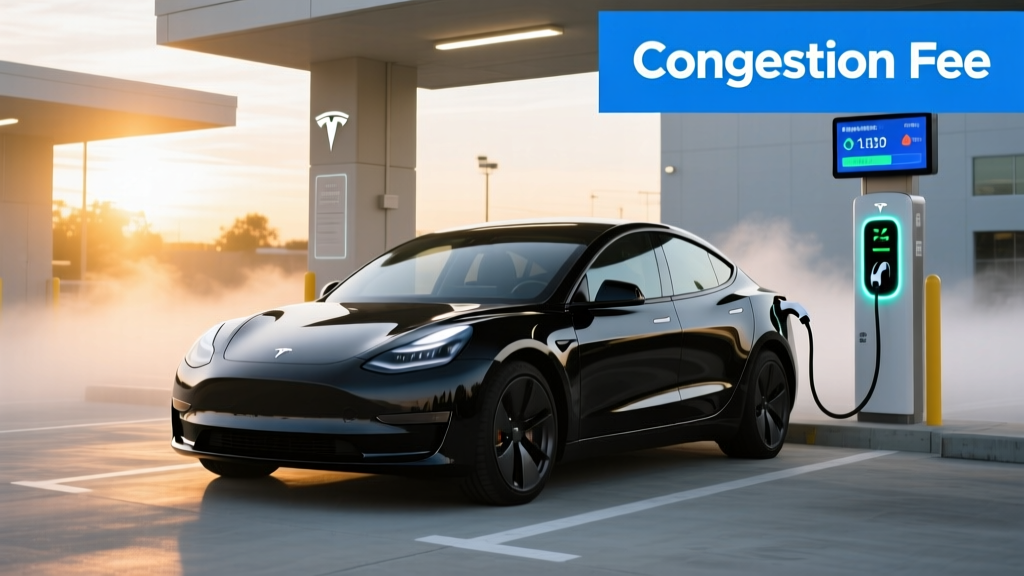
Charging speed is where Tesla's Supercharger network advantage meets real physics. The 2026 Model Y Long Range AWD supports a peak DC fast-charge rate of 250 kW on V3 Superchargers and compatible CCS/NACS stations. But peak rate is not sustained rate.
| Charge Level | Power | Speed (approx.) | Notes |
|---|---|---|---|
| Level 1 (120V household) | ~1.4 kW | ~5 mi/hr | Emergency/trickle only |
| Level 2 (240V, 48A) | 11.5 kW | ~44 mi/hr | Full overnight charge in ~7–8 hr |
| DC Fast (NACS/CCS, peak) | 250 kW | ~162 mi in 15 min | Peak rate at low SoC, tapers above 60% |
| DC Fast 10–80% | Variable | ~27 minutes | Average sustained ~130–150 kW |
The charge curve matters. The 4680-cell structural pack ramps quickly to peak kW at low state of charge (SoC), holds strong through roughly 50–60% SoC, then tapers progressively. A 10–80% session takes approximately 27 minutes at a V3 Supercharger. If you're arriving at 5% SoC and leaving at 80%, that's a realistic bathroom-and-coffee stop. Pushing past 80% adds diminishing returns — the final 20% can take as long as the first 60%.
At home, a Level 2 Wall Connector on a 60-amp circuit delivers 11.5 kW, adding roughly 44 miles of range per hour. Most owners charging overnight from 20% to 80% will wake to a full battery. Installation typically requires a 240V/60A dedicated circuit; budget $800–$2,000 for a licensed electrician depending on panel proximity and local permitting.
Tesla's North American Charging Standard (NACS) connector is now the de facto industry standard, with Ford, GM, Rivian, and others adopting it. The Model Y's native NACS port means direct Supercharger access without adapters — a meaningful convenience advantage as the public charging landscape consolidates.
Performance and Driving Dynamics
The dual-motor AWD Long Range produces 384 combined horsepower and launches to 60 mph in 4.8 seconds. That's brisk for a family crossover and sufficient for confident highway merging and passing. The instant torque delivery — a hallmark of electric drivetrains — makes the Model Y feel quicker than the stopwatch suggests in real-world stoplight-to-stoplight driving.
Ride quality has improved in recent refreshes with revised damper tuning, though the Model Y still leans firm compared to comfort-oriented rivals like the Hyundai Ioniq 5. Road noise on coarse pavement remains a noted critique in owner forums. The low center of gravity from the under-floor battery pack keeps body roll controlled through corners, and the steering is precise if somewhat numb.
Tesla's Autopilot comes standard and includes Traffic-Aware Cruise Control and Autosteer (lane centering). Full Self-Driving (Supervised) is available as a paid add-on or subscription and adds features like automatic lane changes and traffic-light recognition. However, it remains an SAE Level 2 driver-assistance system — the driver must maintain active supervision at all times. This is not autonomous driving.
Pricing, Tax Credits, and Total Cost
The 2026 Tesla Model Y Long Range AWD starts at $47,990 (MSRP, before destination). The Rear-Wheel-Drive base model undercuts it at roughly $44,990, while the Performance variant climbs to approximately $52,490. Options like FSD (Supervised), premium paint colors, and 20-inch wheels can push an as-tested Long Range past $55,000.
| Trim | Base MSRP | Federal Credit (§30D) | Effective Price (if eligible) |
|---|---|---|---|
| Rear-Wheel Drive | $44,990 | Up to $7,500* | ~$37,490 |
| Long Range AWD | $47,990 | Up to $7,500* | ~$40,490 |
| Performance AWD | $52,490 | Up to $7,500* | ~$44,990 |
*Federal tax credit eligibility under IRS §30D is not automatic. The Model Y qualifies for the credit, but buyers must meet several conditions:
- MSRP Cap: SUVs/crossovers must be below $80,000 — all Model Y trims clear this.
- Income Cap: Modified adjusted gross income must not exceed $150,000 (single), $225,000 (head of household), or $300,000 (joint filers).
- Battery Sourcing: The full $7,500 requires meeting both critical-mineral and battery-component sourcing requirements. Tesla's supply chain has adapted, but the exact credit amount can depend on the specific vehicle's battery composition and current IRS guidance. Always verify at the point of sale.
- Point-of-Sale Transfer: Eligible buyers can transfer the credit to the dealer (Tesla) at purchase, reducing the upfront cost rather than waiting for a tax refund.
Consult a tax professional before relying on credit eligibility — rules are subject to legislative change and individual circumstances vary.
Interior, Tech, and Practicality
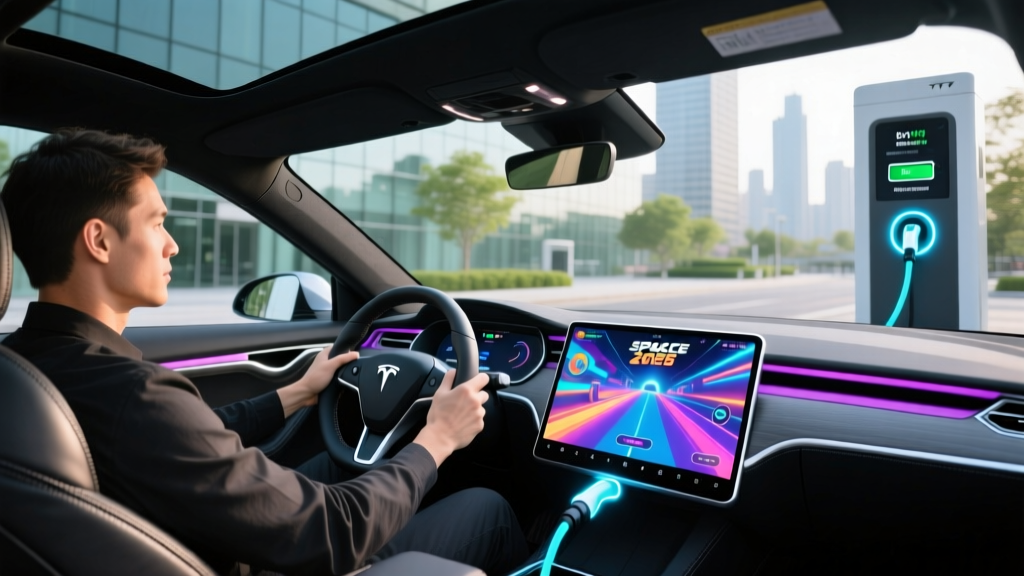
The Model Y's interior is characteristically minimalist. A single 15.4-inch center touchscreen handles nearly all vehicle functions — climate, media, navigation, vehicle settings — with no traditional instrument cluster. A rear 8-inch screen serves back-seat passengers. Build quality at Giga Texas has improved noticeably over early Fremont cars, with tighter panel gaps and more consistent material finishing.
Cargo space is a genuine strength: 30.2 cubic feet behind the second row expands to 72.1 cubic feet with the 60/40 split rear seats folded. The front trunk (frunk) adds additional storage for charging cables or a small bag. Rear legroom at 37.0 inches is adequate for adults on longer trips, though the sloping roofline cuts into headroom for taller passengers.
Tech highlights include Tesla's over-the-air update capability (which continuously adds features and refinements), Sentry Mode dashcam surveillance, and a built-in trip planner that routes through Superchargers with battery preconditioning. The Tesla app provides remote climate control, charge monitoring, and vehicle location.
Notable drawbacks: the lack of Apple CarPlay/Android Auto (Tesla uses its proprietary infotainment), the reliance on touchscreen controls for basic functions like wiper speed and mirror adjustment, and the absence of a traditional key fob (phone-as-key or key card only).
Pros
- Class-leading efficiency (117 MPGe / 29 kWh/100 mi)
- Native NACS — seamless Supercharger access
- Strong real-world range with 320-mi EPA rating
- Expansive cargo area (72.1 cu ft max)
- Continuous OTA improvements
- Competitive pricing after federal tax credit
Cons
- No Apple CarPlay or Android Auto
- Firm ride on rough pavement; road noise
- Touchscreen-dependent controls frustrate some drivers
- Rear headroom limited by coupe-like roofline
- FSD (Supervised) is expensive and still Level 2
- Insurance costs above segment average
How the Model Y Compares to Key Rivals
The electric crossover segment has matured, and the Model Y faces credible competition:
- Hyundai Ioniq 5: 800V architecture enables 10–80% charging in ~18 minutes (peak 350 kW). More comfortable ride, CarPlay/Android Auto, but slightly less range (305 mi EPA for Long Range AWD) and CCS charging requires a NACS adapter at Superchargers.
- Ford Mustang Mach-E: Strong driving dynamics, available BlueCruise hands-free highway driving (Level 2), and a more conventional interior layout. Extended Range AWD delivers ~312 mi EPA. Now adopting NACS for Supercharger access.
- Kia EV6: Shares the Ioniq 5's 800V platform with similar fast-charge capability. Slightly sportier styling, competitive range (310 mi EPA for Long Range AWD).
Choose a competitor if: You want faster peak charging (Ioniq 5/EV6), traditional infotainment with CarPlay, a softer ride, or hands-free Level 2 driving on mapped highways (Mach-E with BlueCruise).
Warranty and Long-Term Ownership
Tesla covers the Model Y's battery and drive unit for 8 years or 120,000 miles, whichever comes first, with a guarantee of at least 70% capacity retention over that period. The basic vehicle limited warranty runs 4 years or 50,000 miles. These terms are competitive with the segment, though some rivals now offer 10-year/100,000-mile battery warranties.
Long-term battery degradation data from Tesla's fleet suggests NMC packs lose roughly 10–12% capacity over the first 100,000 miles before leveling off. The 4680-cell structural pack is newer, and long-term data is still accumulating, but early indications are consistent with Tesla's prior NMC chemistry performance.
Insurance costs for the Model Y tend to run 15–25% higher than comparable gas crossovers, reflecting repair-cost realities for aluminum-intensive EVs with integrated battery structures. Get quotes before purchasing — insurance varies significantly by driver profile, location, and coverage level.
Who the Model Y Is For
The 2026 Model Y Long Range AWD is best suited for:
- Daily commuters with home Level 2 charging who want minimal fuel cost and low maintenance.
- Small families needing cargo flexibility for strollers, groceries, and weekend trips.
- Road-trippers who value Supercharger network density for cross-country travel without route-planning stress.
- Tech-forward buyers who appreciate OTA updates and a minimalist digital cockpit.
It's less ideal for buyers who prioritize ride comfort over sportiness, require CarPlay/Android Auto, or want hands-free Level 2 driving on long highway stretches (where BlueCruise or Super Cruise competitors have an edge).
Frequently Asked Questions
Where is the Tesla headquarters located?
Tesla's official headquarters is at Gigafactory Texas, 13101 Tesla Road, Austin, TX 78725. The company relocated from Palo Alto, California, in late 2021. Giga Texas serves as both corporate HQ and a primary manufacturing facility for the Model Y and Cybertruck.
What is the real-world range of the 2026 Tesla Model Y Long Range?
The EPA rates it at 320 miles. In real-world highway driving at 70–75 mph, expect 265–285 miles. In cold weather (below 32°F), plan for 220–255 miles. City driving in moderate temperatures can approach the EPA figure.
How fast does the Model Y charge at home and on the road?
On a Level 2 home charger (11.5 kW), it adds ~44 miles per hour, fully charging overnight. On a 250 kW DC fast charger (Supercharger V3 or compatible NACS station), 10–80% takes approximately 27 minutes, with peak charge rate at low SoC tapering significantly above 60%.
Does the 2026 Model Y qualify for the $7,500 federal EV tax credit?
The Model Y is eligible, but your personal eligibility depends on income caps ($150K single / $300K joint), the vehicle's MSRP (under the $80K SUV cap), and battery-sourcing requirements under IRS §30D. The credit can be transferred at point of sale. Verify current rules at irs.gov and with a tax professional.
Is the Model Y worth buying over the Ioniq 5 or Mach-E?
If Supercharger network access, maximum cargo space, and best-in-class efficiency matter most, the Model Y remains the default choice. If you prefer faster peak charging (Ioniq 5's 800V system), CarPlay integration, or hands-free Level 2 highway driving (Mach-E BlueCruise), the competitors have clear advantages. Test-drive all three before deciding.
What is the battery warranty on the Model Y?
Tesla covers the battery and drive unit for 8 years or 120,000 miles with a minimum 70% capacity retention guarantee. The basic vehicle warranty is 4 years or 50,000 miles.