Why Tesla Headquarters Matters to Every EV Buyer in 2026
When shoppers search for Tesla headquarters, they're usually looking for the company's official address — 1 Tesla Road, Austin, TX 78725. But for EV buyers, the more useful question is: how do Tesla's corporate decisions, factory locations, and manufacturing philosophies actually affect the car that shows up in your driveway?
Tesla's move from Palo Alto to Austin in late 2021 wasn't just a ZIP-code change. It restructured which models are built where, which battery chemistries ship to which markets, and how quickly software updates reach your vehicle. Understanding the link between Tesla's headquarters strategy and the vehicle on your shortlist is the kind of context most reviews skip — and it directly impacts range, charging speed, warranty coverage, and whether you qualify for the §30D federal tax credit.
This guide breaks down the 2026 Tesla lineup through the lens of where and how these cars are actually made, with the exact specs, pricing, and real-world ownership numbers you need to make a decision.
2026 Tesla Lineup at a Glance: Specs That Reflect Factory Decisions
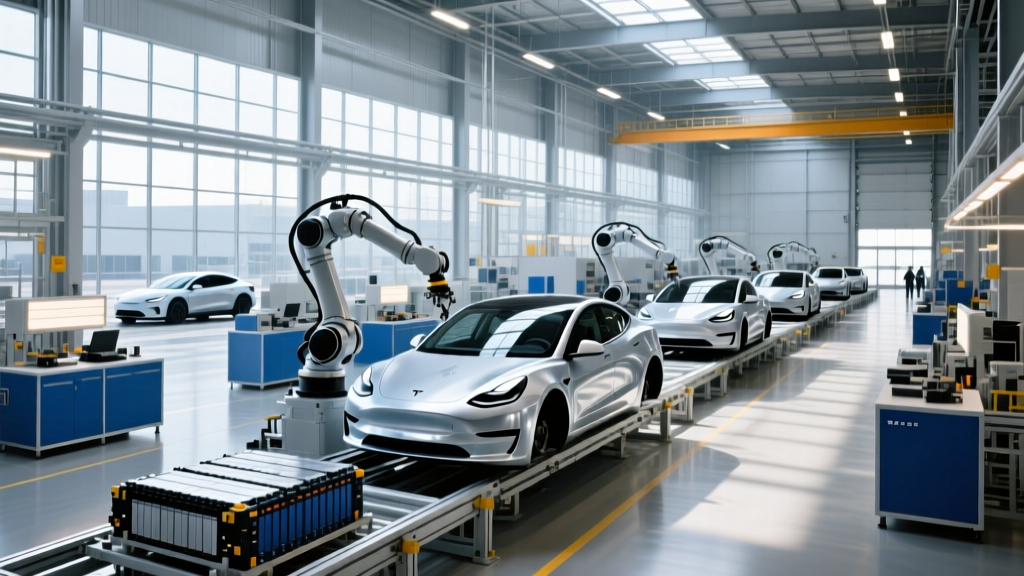
Every Tesla sold in the U.S. in 2026 rolls out of one of two main plants: Fremont, California (Models S, 3, X, and some Y variants) or Giga Texas in Austin (Models Y and Cybertruck). The factory determines battery sourcing, trim availability, and in some cases, which chemistry sits under your floor.
| Model / Trim | Factory | Battery (kWh usable) | Chemistry | EPA Range | 0-60 mph | HP | Drivetrain | Base MSRP |
|---|---|---|---|---|---|---|---|---|
| Model 3 RWD | Fremont | 60 | LFP | 272 mi | 5.8 s | 283 | RWD | $38,990 |
| Model 3 Long Range AWD | Fremont | 79 | NMC | 363 mi | 4.2 s | 346 | AWD Dual | $45,240 |
| Model Y RWD | Austin | 60 | LFP | 284 mi | 6.6 s | 295 | RWD | $44,990 |
| Model Y Long Range AWD | Austin | 79 | NMC | 330 mi | 4.8 s | 384 | AWD Dual | $49,990 |
| Model S Dual Motor | Fremont | 100 | NMC | 402 mi | 3.1 s | 670 | AWD Dual | $74,990 |
| Model X Dual Motor | Fremont | 100 | NMC | 335 mi | 3.8 s | 670 | AWD Dual | $79,990 |
Sources: fueleconomy.gov, Tesla official spec pages. Specs reflect 2026 model year as of publication; Tesla adjusts trims and pricing frequently.
Range Reality Check: EPA Stickers vs. What You'll Actually See
Tesla's EPA range figures are among the most-quoted numbers in the EV world — and among the most misunderstood. The EPA test cycle includes a mix of city and highway driving at moderate temperatures, which is rarely how owners actually drive.
- Model 3 Long Range (EPA 363 mi): Expect 290–315 mi on highway-only trips at 70–75 mph; ~240–260 mi in freezing weather with cabin heat.
- Model Y Long Range (EPA 330 mi): Expect 260–285 mi highway; ~220–240 mi in sub-30°F conditions.
- Model 3 RWD / Model Y RWD (LFP, EPA 272–284 mi): LFP chemistry loses slightly less range in cold than NMC (~10–15% vs. 20–25%), but the smaller battery means absolute miles drop faster. Highway real-world: 215–235 mi.
- Model S (EPA 402 mi): The 100 kWh pack provides real highway buffer — ~330–355 mi at 75 mph, ~280–310 mi in deep cold.
Preconditioning the battery while plugged in (via Scheduled Departure in the Tesla app) recovers 5–10% of cold-weather range by warming the pack before you leave.
Charging Speed: The Factory-Battery Link That Matters
Where your Tesla was built influences which battery cells are inside it, and cell chemistry directly determines your DC fast-charging curve. LFP cells (standard range models from both Fremont and Austin) tolerate repeated 100% charging better than NMC, but peak charge rates are lower.
| Model / Trim | Peak DC kW | 10-80% DC Time | Level 2 Home Rate | Mi/hr at 11.5 kW L2 |
|---|---|---|---|---|
| Model 3 RWD (LFP) | 170 | ~28 min | 11.5 kW | ~37 mi/hr |
| Model 3 LR AWD (NMC) | 250 | ~22 min | 11.5 kW | ~44 mi/hr |
| Model Y RWD (LFP) | 170 | ~28 min | 11.5 kW | ~37 mi/hr |
| Model Y LR AWD (NMC) | 250 | ~22 min | 11.5 kW | ~41 mi/hr |
| Model S / X (NMC) | 250 | ~27 min | 11.5 kW | ~36 mi/hr |
Charging curve reality: Peak kW is not sustained kW. A Model 3 Long Range hits 250 kW only between roughly 10–25% state of charge, then tapers to ~150 kW through 50%, and ~75 kW above 70%. The 10-80% time above reflects this full curve, not the marketing peak.
All 2026 Teslas use the native NACS (J3400) connector, giving direct access to the Supercharger network — now 6,500+ stalls in the U.S. Non-Tesla EVs with NACS adapters can access many (but not all) Superchargers, but Tesla owners still get the most seamless plug-and-charge experience.
Pricing, Trims, and the Federal Tax Credit Question
Tesla's headquarters in Austin operates under Texas tax policy, but the federal §30D EV tax credit is what most buyers care about — and eligibility is not automatic. The IRS enforces MSRP caps, buyer income limits, and battery-component / critical-mineral sourcing thresholds that shift year to year.
| Model / Trim | Base MSRP | As-Tested Typical | MSRP Cap Status | §30D Credit Potential |
|---|---|---|---|---|
| Model 3 RWD | $38,990 | $40,500 | Under $55k cap ✓ | Up to $7,500* |
| Model 3 Long Range | $45,240 | $47,800 | Under $55k cap ✓ | Up to $7,500* |
| Model Y RWD | $44,990 | $46,500 | Under $80k cap ✓ | Up to $7,500* |
| Model Y Long Range | $49,990 | $53,000 | Under $80k cap ✓ | Up to $7,500* |
| Model S Dual Motor | $74,990 | $82,000 | Under $80k cap ✗ | Ineligible |
| Model X Dual Motor | $79,990 | $88,000 | Borderline — options push over ✗ | Usually Ineligible |
*§30D eligibility for 2026 requires: buyer AGI under $150k single / $300k joint; vehicle MSRP under $55k (sedans) or $80k (SUVs/trucks); battery components and critical minerals meeting phased-in domestic-sourcing thresholds. Point-of-sale transfer is available at participating dealers. Verify current-year rules at IRS.gov §30D and consult a tax professional.
The Model 3 and Model Y remain Tesla's credit-eligible volume sellers, and decisions made at Austin headquarters on battery sourcing (shifting to CATL LFP for standard-range cars, for example) directly determine whether a specific VIN qualifies. Always confirm credit eligibility on the specific vehicle's window sticker before signing.
Efficiency, Space, and Daily-Use Practicality
Tesla's efficiency numbers are genuinely best-in-class for the segment, a result of the integrated design philosophy enforced from Austin headquarters across both factories. Heat pumps are standard on every 2026 Tesla, which matters significantly for cold-climate buyers — resistive cabin heaters in competitors can cut winter range by 35%+.
- Model 3 Long Range: 132 MPGe combined / 25 kWh per 100 mi
- Model Y Long Range: 122 MPGe combined / 28 kWh per 100 mi
- Model S Dual Motor: 120 MPGe combined / 28 kWh per 100 mi
Cargo and Passenger Dimensions
- Model 3: 23 cu ft trunk + frunk; 42.3 in front legroom; 35.3 in rear (tight for tall adults on long trips).
- Model Y: 34 cu ft behind second row, 76 cu ft folded + frunk; 41.8 in front / 41.6 in rear (genuinely family-usable).
- Model S: 28 cu ft rear hatch + frunk; 42.4 in front / 35.4 in rear.
- Model X: Up to 88 cu ft with seats folded; optional 7-seat layout; falcon-wing doors need ~12 in side clearance.
Tech, Driver Assists, and the Headquarters-Software Connection
Tesla's Austin headquarters houses the Autopilot and FSD (Supervised) engineering teams, and the tight hardware-software integration is still the brand's most distinctive trait. Every 2026 Tesla ships with Hardware 4.0 (AI4) vision-only sensor suite — no radar, no ultrasonics — and the neural-net-based perception stack is updated OTA roughly every 4–6 weeks.
Autopilot and FSD (Supervised) are SAE Level 2 driver-assist systems. The driver must remain attentive, hands available, and ready to take over at any moment. These are not self-driving systems. Only Level 4 robotaxi services (Waymo, Zoox in defined geofenced areas) operate without a driver in the loop.
Standout Tech
- 15.4-inch (Model 3/Y) or 17-inch (Model S/X) center touchscreen running Tesla OS — no Apple CarPlay or Android Auto.
- Over-the-air updates adding features post-purchase (recent: improved adaptive cruise smoothing, dashcam upgrades, UI refreshes).
- Sentry Mode dashcam recording, Dog Mode climate control, and integrated Supercharger route planning with battery preconditioning.
- Model S/X: yoke or round steering wheel option, rear-seat touchscreen, standard air suspension.
Notable Drawbacks
- No native CarPlay/Android Auto — a dealbreaker for some smartphone-dependent users.
- Panel-gap consistency improved since the Fremont early days but still trails German competitors on close inspection.
- Service-center wait times in low-density regions can stretch 2–4 weeks for non-critical repairs.
- FSD (Supervised) remains a $8,000 option or $99/mo subscription with measurable capability but persistent edge-case limitations in construction zones and unmapped areas.
Pros and Cons: The Honest Summary
- Best-in-class efficiency and real-world range per kWh
- Supercharger network access — still the most reliable public DC network
- Strong §30D credit eligibility on Model 3 and Y (under caps)
- Continuous OTA improvements post-purchase
- Heat pump standard on every trim
- Class-leading cargo space in Model Y for the footprint
- No CarPlay / Android Auto
- FSD costs extra and remains Level 2 — not autonomous
- Model S/X pricing excludes them from federal credit
- LFP standard-range models have slower DC peak charge rates
- Service access uneven outside major metros
- Minimalist interior not for everyone — no physical stalks on refreshed Model 3/Y
Who Each Tesla Actually Suits in 2026
- Model 3 RWD: Solo commuters, apartment dwellers with workplace charging, buyers prioritizing lowest entry price and credit eligibility. Best value in the lineup.
- Model 3 Long Range: Daily drivers covering 60+ miles, road-trippers who want 300+ real-world miles without charging stops, cold-climate owners.
- Model Y RWD: Young families needing cargo space without the Long Range premium; suburban commuters with home Level 2.
- Model Y Long Range: The default family EV pick — space, range, AWD, credit-eligible. Strongest all-around use case.
- Model S: Buyers wanting luxury-sedan performance (3.1s 0-60) with 400-mile EPA range, accepting no tax credit and premium pricing.
- Model X: Families wanting 6/7 seats, falcon-wing novelty, and air suspension — but weigh carefully against the Rivian R1S or three-row Hyundai Ioniq 9.
2026 Tesla Buyer FAQ
What is the real-world range of a 2026 Tesla?
Depends on trim and conditions. Model 3 Long Range delivers ~290–315 mi highway in mild weather, dropping to ~240–260 mi in freezing temps. LFP RWD trims (Model 3/Y) realistically deliver 215–235 mi highway. Preconditioning while plugged in mitigates cold losses.
How fast does a 2026 Tesla charge at home and on the road?
At home on a 48-amp Level 2 (11.5 kW), expect 36–44 miles of range per hour depending on model. On DC fast chargers, Long Range / NMC trims peak at 250 kW with 10-80% in ~22 minutes; LFP RWD trims peak at 170 kW with 10-80% in ~28 minutes. Sustained speeds taper significantly above 70% SoC.
Does a 2026 Tesla qualify for the federal EV tax credit?
Model 3 and Model Y trims under the MSRP cap ($55k sedans, $80k SUVs) generally qualify for up to $7,500 under §30D, subject to buyer income limits ($150k single / $300k joint AGI) and battery-sourcing requirements. Model S and most optioned Model X builds exceed MSRP caps and are ineligible. Verify on fueleconomy.gov for the specific VIN.
How much does a Tesla cost after the tax credit?
A Model 3 RWD at $38,990 MSRP can drop to ~$31,490 after the full $7,500 point-of-sale credit (if all §30D criteria are met). A Model Y Long Range at $49,990 can reach ~$42,490. Actual savings depend on your income, filing status, and the specific vehicle's battery sourcing — confirm before purchase.
Is a Tesla worth buying vs. Hyundai Ioniq 5, Ford Mustang Mach-E, or Rivian?
For efficiency, Supercharger access, and software integration, Tesla still leads. For interior quality, CarPlay support, and dealer service, Hyundai and Ford compete strongly. For three-row family needs, Rivian R1S and the incoming Ioniq 9 are credible Model X alternatives. Cross-shop with test drives — spec sheets alone don't decide it.
Where are Teslas actually built?
U.S.-market Model 3 and Model S/X are built in Fremont, California. Model Y and Cybertruck are built at Giga Texas near Tesla's Austin headquarters. Battery cell sourcing varies by trim — LFP cells largely come from CATL (China), while NMC cells are supplied by Panasonic at Giga Nevada and other partners.
What is the battery warranty on a 2026 Tesla?
All 2026 Teslas carry an 8-year / 100,000-mile battery and drive unit warranty (120,000 miles on Long Range and Model S/X), guaranteeing minimum 70% capacity retention. Tesla's degradation data across millions of vehicles shows ~12% average loss at 150,000 miles — better than the warranty floor.
The Bottom Line: Headquarters Decisions, Driveway Results
Tesla's Austin headquarters shapes everything from battery sourcing to software cadence, and in 2026 those decisions produce a lineup that remains the efficiency and charging-infrastructure benchmark — with real tradeoffs in interior refinement, service access, and premium-trim pricing that excludes tax credits. Model 3 and Model Y continue to be the rational buys for credit-eligible shoppers; Model S and X serve niche performance buyers willing to pay full MSRP. Verify §30D eligibility on your specific VIN, test-drive against at least one competitor, and spec your trim around your actual driving pattern — not the EPA sticker alone.