From Palo Alto to Austin: Where Tesla Calls Home
If you've ever typed "where is Tesla headquartered" into a search bar, the short answer is Austin, Texas. Tesla officially relocated its corporate headquarters from Palo Alto, California, to the Gigafactory Texas campus at 13101 Tesla Road, Austin, TX 78725, a move announced in late 2021 and completed through 2022–2023. The sprawling 2,500-acre facility along the Colorado River now serves as both the company's nerve center and one of its highest-volume manufacturing sites.
But for EV shoppers, the real question isn't just where Tesla's executives sit — it's how the Austin headquarters and Gigafactory influence the vehicles Tesla actually builds, prices, and ships to your driveway. In 2026, Gigafactory Texas produces the Model Y (the best-selling EV in the U.S.) and the Cybertruck, while the Fremont, California, factory continues building the Model 3, Model S, and Model X. Shanghai handles much of the international Model 3/Y volume, and Berlin-Brandenburg supplies European Model Y demand.
This article breaks down what Tesla's Austin headquarters means for current buyers, then dives into the 2026 specs, pricing, and real-world ownership data for the core models rolling out of Tesla's U.S. factories.
Why Austin Matters for Tesla Buyers in 2026
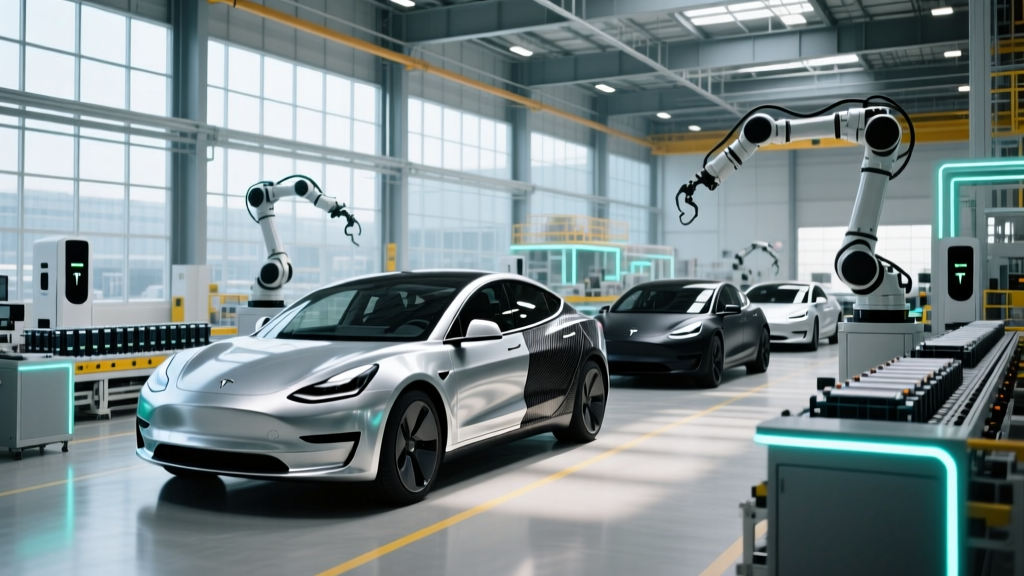
Tesla's headquarters relocation wasn't purely symbolic. The Austin move coincided with a manufacturing philosophy shift: the adoption of mega-casting (giant single-piece rear and front underbody castings that replace dozens of welded parts), the rollout of the 4680 battery cell format, and a structural battery pack design that integrates cells directly into the vehicle chassis.
For buyers, this translates to:
- Lower production costs — mega-casting reduces part count and assembly time, contributing to Tesla's aggressive pricing on the Model Y.
- 4680 cell availability — Austin-built Model Y variants use Tesla's in-house 4680 cells (in some configurations), which offer different energy density and thermal characteristics than the 2170 cells sourced from Panasonic at Fremont and Nevada.
- Proximity to the Texas supply chain — cathode material processing and lithium refining operations are increasingly U.S.-based, which matters for IRS §30D federal tax credit battery-sourcing requirements.
The Austin headquarters also houses Tesla's engineering teams for Autopilot/Full Self-Driving (Supervised), energy products (Megapack, Powerwall), and the Optimus robotics program — making it the convergence point for Tesla's vehicle and AI ambitions.
2026 Tesla Model Y: The Austin-Built Volume King
The Model Y remains Tesla's highest-volume vehicle and the best-selling electric car in America. The 2026 refresh (internally dubbed "Juniper") brings updated styling, a revised interior, improved suspension tuning, and a slightly larger battery pack across most trims.
| Spec | Long Range RWD | Long Range AWD | Performance |
|---|---|---|---|
| EPA Range | 320 mi | 305 mi | 280 mi |
| Battery (usable) | ~78 kWh (NMC) | ~78 kWh (NMC) | ~78 kWh (NMC) |
| Drivetrain | RWD (single motor) | Dual Motor AWD | Dual Motor AWD |
| 0–60 mph | 5.8 sec | 4.8 sec | 3.5 sec |
| Horsepower | 346 hp | 384 hp | 456 hp |
| Efficiency | 26 kWh/100 mi (129 MPGe) | 28 kWh/100 mi (120 MPGe) | 30 kWh/100 mi (112 MPGe) |
| Max DC Fast Charge | 250 kW | 250 kW | 250 kW |
| 10–80% DC Time | ~25 min | ~25 min | ~25 min |
| Level 2 Home Rate | 11.5 kW (~44 mi/hr) | 11.5 kW (~44 mi/hr) | 11.5 kW (~44 mi/hr) |
| Cargo Volume | 72.1 cu ft (rear seats folded) / 30.2 cu ft (seats up) | ||
| Base MSRP | $44,990 | $47,990 | $52,490 |
Charging the Model Y: DC Fast, Level 2, and the Supercharger Advantage
Tesla's Supercharger network remains the most reliable DC fast-charging ecosystem in North America. With over 6,500 V3/V4 stalls in the U.S. alone (as of early 2026), Tesla owners experience fewer broken-stall encounters than CCS-connector users on third-party networks.
| Charging Level | Power (kW) | Miles of Range Added | Typical Use Case |
|---|---|---|---|
| Level 1 (120V outlet) | ~1.4 kW | ~3–5 mi/hr | Emergency / overnight trickle |
| Level 2 (240V, Wall Connector) | 11.5 kW | ~44 mi/hr | Daily home charging (full overnight) |
| DC Fast (V3 Supercharger) | 250 kW peak | ~162 mi in 15 min | Road trips, highway travel |
| DC Fast (V4 Supercharger) | Up to 250 kW* | Similar to V3 for Model Y | Newer corridor stations |
*V4 Supercharger cabinets support higher power, but the Model Y's onboard charge architecture currently caps at ~250 kW. Future 800V-architecture Teslas may unlock higher rates.
Charging curve reality: The Model Y peaks at 250 kW only between roughly 10–30% state of charge. From 30–60%, expect ~150–180 kW. Above 80%, charging slows dramatically to protect battery health — typically below 50 kW. This is why Tesla (and fueleconomy.gov) recommends charging to 80% for road-trip stops and only topping to 100% at your destination.
2026 Tesla Model 3: The Fremont-Built Sedan Benchmark
While the Model Y is Austin's star, the refreshed Model 3 ("Highland" update, continuing into 2026) is still built at Fremont for North American delivery. The Model 3 remains the sharpest-handling sedan in Tesla's lineup and the most affordable entry point.
| Spec | Standard Range RWD | Long Range AWD | Performance |
|---|---|---|---|
| EPA Range | 272 mi | 341 mi | 315 mi |
| Battery (usable) | ~60 kWh (LFP) | ~78 kWh (NMC) | ~78 kWh (NMC) |
| 0–60 mph | 5.8 sec | 4.2 sec | 3.1 sec |
| Horsepower | 271 hp | 346 hp | 510 hp |
| Efficiency | 25 kWh/100 mi (134 MPGe) | 26 kWh/100 mi (129 MPGe) | 28 kWh/100 mi (120 MPGe) |
| Max DC Charge | 170 kW | 250 kW | 250 kW |
| 10–80% DC Time | ~28 min | ~25 min | ~25 min |
| Base MSRP | $38,990 | $45,990 | $52,990 |
LFP vs. NMC — what buyers should know: The Standard Range Model 3 uses a lithium iron phosphate (LFP) battery. LFP cells are heavier and less energy-dense than NMC, but they tolerate daily 100% charging better, have longer cycle life, and avoid cobalt/nickel supply-chain concerns. Tesla recommends charging LFP packs to 100% at least weekly for accurate range estimation. The trade-off: LFP range drops more sharply in freezing temperatures — expect a 30–40% winter reduction versus 20–30% for NMC.
Federal Tax Credit: Does Tesla Qualify in 2026?
Tesla's tax credit eligibility has been a moving target since the Inflation Reduction Act reshaped §30D rules in 2023. Here's where things stand for the 2026 model year:
- Model Y (all trims): MSRP under the $80,000 SUV cap — eligible pending battery-sourcing and critical-mineral requirements.
- Model 3 (all trims): MSRP under the $55,000 sedan cap — Standard Range likely qualifies; Long Range and Performance may exceed the cap depending on options.
- Buyer income caps: AGI must not exceed $150,000 (single), $225,000 (head of household), or $300,000 (joint filing).
- Battery sourcing: At least 60% of battery component value must be manufactured or assembled in North America (2026 threshold); critical minerals must meet escalating percentage thresholds from U.S. or FTA-partner countries.
- Point-of-sale transfer: Buyers can apply the credit (up to $7,500) as a down-payment reduction at purchase, rather than waiting for tax filing.
| Model / Trim | Base MSRP | Est. Credit | Effective Price |
|---|---|---|---|
| Model 3 Standard Range | $38,990 | $7,500 | ~$31,490 |
| Model 3 Long Range AWD | $45,990 | $7,500* | ~$38,490 |
| Model Y Long Range AWD | $47,990 | $7,500* | ~$40,490 |
| Model Y Performance | $52,490 | $7,500* | ~$44,990 |
*Credit eligibility depends on your income, the specific vehicle's battery-sourcing compliance at time of delivery, and IRS updates. Always verify on IRS.gov's qualified vehicles list before purchasing. Consult a tax professional for your specific situation.
Cybertruck: Austin's Most Controversial Product
The Cybertruck, built exclusively at Gigafactory Texas, continues to polarize. For 2026, Tesla offers three configurations:
- Dual Motor AWD: ~340 mi EPA, 600 hp, 0–60 in 4.1 sec, $79,990 MSRP
- Cyberbeast (Tri-Motor): ~320 mi EPA, 845 hp, 0–60 in 2.6 sec, $99,990 MSRP
- Range Extender option: Adds a removable bed-mounted battery pack, pushing range to ~470+ mi (Dual Motor) at added cost and weight
The stainless steel exoskeleton and 48-volt electrical architecture make the Cybertruck unlike anything else on the road. However, its 11,000-lb towing capacity comes at an efficiency cost: expect 45–55 kWh/100 mi when towing — cutting range roughly in half. The Cybertruck does not qualify for the §30D credit because its MSRP exceeds the $80,000 truck cap.
Warranty, Tech, and Ownership Realities
Tesla's warranty coverage is competitive but not class-leading:
- Basic Vehicle: 4 years / 50,000 miles
- Battery & Drive Unit: 8 years / 100,000 miles (Model 3 RWD with LFP) or 8 years / 120,000 miles (Long Range / Performance / Model Y) — with a minimum 70% capacity retention guarantee
Standout tech: The 2026 lineup features Tesla's latest infotainment (AMD Ryzen processor, 15.4" center display on Model Y/3), over-the-air updates, Sentry Mode dashcam recording, and the Tesla app ecosystem (remote preconditioning, charging management, Summon). Autopilot (basic lane-keep and adaptive cruise) is standard; Enhanced Autopilot ($6,000) adds auto lane-change and Navigate on Autopilot; FSD (Supervised) ($8,000 or $99/month) adds traffic-light recognition and city-street steering — but this remains an SAE Level 2 system requiring full driver attention at all times.
✅ Pros
- Supercharger network reliability — still the gold standard for road-trip charging
- Class-leading efficiency (kWh/100 mi) across Model 3 and Model Y
- Over-the-air updates continuously add features post-purchase
- LFP battery option (Model 3 SR) allows daily 100% charging without degradation worry
- Strong resale value relative to most EV competitors
❌ Cons
- No Apple CarPlay or Android Auto — Tesla's proprietary infotainment only
- Build-quality inconsistency still surfaces (panel gaps, paint defects)
- Service center wait times can stretch weeks in high-demand metro areas
- FSD (Supervised) remains expensive and does not deliver full autonomy
- Model Y rear visibility is limited; no traditional instrument cluster
Who Should Buy a 2026 Tesla?
Choose the Model 3 Standard Range if: You commute under 50 miles daily, want the lowest price of entry (~$31,490 after credit), and can charge at home overnight. LFP battery means zero charge-limit anxiety.
Choose the Model Y Long Range AWD if: You need family cargo space (72 cu ft with seats down), live in a climate with real winters (AWD + heat pump), and take road trips where the Supercharger network saves time and stress.
Choose the Model 3 Performance if: Driving dynamics matter — 3.1-second 0–60, track mode, and adaptive dampers make it a genuine sports sedan that happens to be electric.
Look elsewhere if: You want Apple CarPlay, need a dealer service network in a rural area, or require a minivan-scale third row (consider the Rivian R1S or Kia EV9).
Frequently Asked Questions
Where is Tesla headquartered in 2026?
Tesla's global headquarters is at Gigafactory Texas, 13101 Tesla Road, Austin, TX 78725. The facility serves as both the corporate office and a major manufacturing site for the Model Y and Cybertruck.
What is the real-world range of the 2026 Tesla Model Y?
The EPA rates the Long Range RWD at 320 miles, but real-world highway driving at 75 mph yields roughly 260–280 miles. In cold weather (below freezing), expect 220–255 miles. Preconditioning the battery before departure helps recover some of this loss.
How fast does a Tesla charge at home and on the road?
At home on a 240V Wall Connector (Level 2), the Model Y charges at 11.5 kW, adding roughly 44 miles of range per hour — a full charge in about 7–8 hours. On a V3 Supercharger (DC fast), it peaks at 250 kW, adding up to 162 miles in 15 minutes, with a 10–80% session taking approximately 25 minutes.
Does the 2026 Tesla Model Y qualify for the $7,500 federal tax credit?
The Model Y's MSRP falls under the $80,000 SUV cap, making it potentially eligible. However, full credit depends on the buyer's income (under $150K single / $300K joint), the vehicle's battery-sourcing compliance at delivery, and current IRS rules. Verify on IRS.gov before purchasing.
Is Tesla's Autopilot actually self-driving?
No. Autopilot and FSD (Supervised) are SAE Level 2 driver-assist systems. The driver must remain fully engaged — hands on wheel, eyes on road. Tesla's naming has drawn criticism from NHTSA and safety advocates. True self-driving (Level 4) currently exists only in geofenced robotaxi services like Waymo.
Is a Tesla worth buying vs. competitors like the Hyundai Ioniq 5 or Ford Mustang Mach-E?
The Tesla advantage in 2026 remains the Supercharger network and energy efficiency. If road-trip charging reliability is your top priority, Tesla still leads. However, the Ioniq 5 offers faster 800V charging (~18 min 10–80%), CarPlay support, and a more conventional interior. The Mach-E provides a more traditional driving feel. Test-drive all three before deciding.