If you've been following Tesla's autonomous driving ambitions, you've likely asked: when did Tesla HW4 come out? The answer isn't a single date—it's a rolling deployment that reshaped how Tesla's entire fleet perceives the road. Hardware 4.0 (also called AI4 or HW4) represents a generational leap in Tesla's onboard compute and sensor suite, and by 2026, it underpins every new Model S, 3, X, and Y leaving the factory.
But hardware alone doesn't drive a car. This profile examines what HW4 actually changed, how it pairs with FSD (Supervised) in 2026, and whether the vehicles equipped with it—particularly the refreshed Model Y and Model 3 Highland—deliver on their range, charging, and ownership promises.
When Did Tesla HW4 Come Out? The Full Rollout Timeline
Tesla Hardware 4.0 didn't arrive with a single press release. Instead, it phased in across models over roughly 18 months:
- March 2023: HW4 first appeared in newly built Model S and Model X vehicles. Owners began noticing the new camera housings and the absence of ultrasonic sensors (USS).
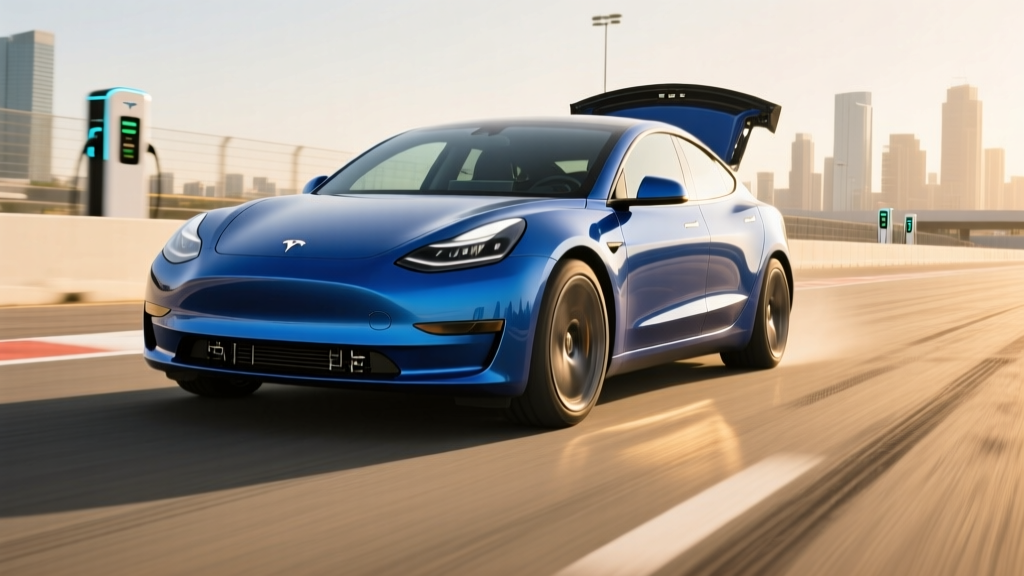
- October 2023: The Model 3 "Highland" refresh launched in North America with HW4 standard, alongside a redesigned interior, ventilated seats, and a rear touchscreen.
- Early 2024: The Model Y "Juniper" refresh began production with HW4, completing the transition across Tesla's core lineup.
- Mid-2024 onward: All new Tesla vehicles shipped with HW4. Tesla's Autopilot page confirmed the transition to the new hardware suite.
If you bought a Tesla between late 2022 and early 2024, your vehicle may have either HW3 or HW4 depending on the exact build week. The VIN alone doesn't always reveal which—checking the camera resolution in the vehicle's software menu or the physical camera lenses (HW4 uses higher-resolution sensors with a slightly different housing) is the most reliable method.
What Hardware 4.0 Actually Changed
HW4 isn't just a faster chip. It's a comprehensive sensor and compute overhaul:
- Cameras: HW4 uses up to 11 cameras with roughly 5-megapixel resolution (up from ~1.2 MP on HW3), providing significantly more detail at distance. The front-facing main camera now uses a wider lens with improved low-light performance.
- Compute: The FSD computer features a newer Samsung-manufactured processor delivering an estimated 3–4× the inference throughput of HW3, according to Tesla's AI Day disclosures.
- Radar removal: HW4 vehicles ship with no radar and no ultrasonic sensors—Tesla relies entirely on its vision-only "Tesla Vision" stack.
- New ECU architecture: A redesigned electronic control unit consolidates functions that previously required separate modules, reducing wiring complexity.
Tesla Model Y (2026 Juniper): Range, Charging & Specs
Since the Model Y is Tesla's highest-volume vehicle and the one most buyers cross-shop, here's a full spec breakdown for the 2026 Juniper-refresh model equipped with HW4.
| Spec | Long Range AWD | Performance |
|---|---|---|
| EPA Range | 320 miles | 295 miles |
| Battery | ~78 kWh usable, NMC | ~78 kWh usable, NMC |
| Drivetrain | Dual-Motor AWD | Dual-Motor AWD |
| Horsepower | ~384 hp | ~456 hp |
| 0–60 mph | 4.8 sec | 3.5 sec |
| Max DC Fast Charge | 250 kW (peak) | 250 kW (peak) |
| 10–80% DC Time | ~25 min | ~25 min |
| Level 2 Home Charge | 11.5 kW (~44 mi/hr) | 11.5 kW (~44 mi/hr) |
| Efficiency | 122 MPGe / 28 kWh/100mi | 111 MPGe / 30 kWh/100mi |
| Cargo (rear seats up) | 30.2 cu ft | 30.2 cu ft |
| Cargo (seats folded) | 72.1 cu ft | 72.1 cu ft |
| Base MSRP | $46,630 | $51,630 |
Source: fueleconomy.gov and Tesla's official configurator. Prices reflect destination charge; excludes potential incentives.
Charging Speed: DC Fast, Level 2, and the Supercharger Advantage
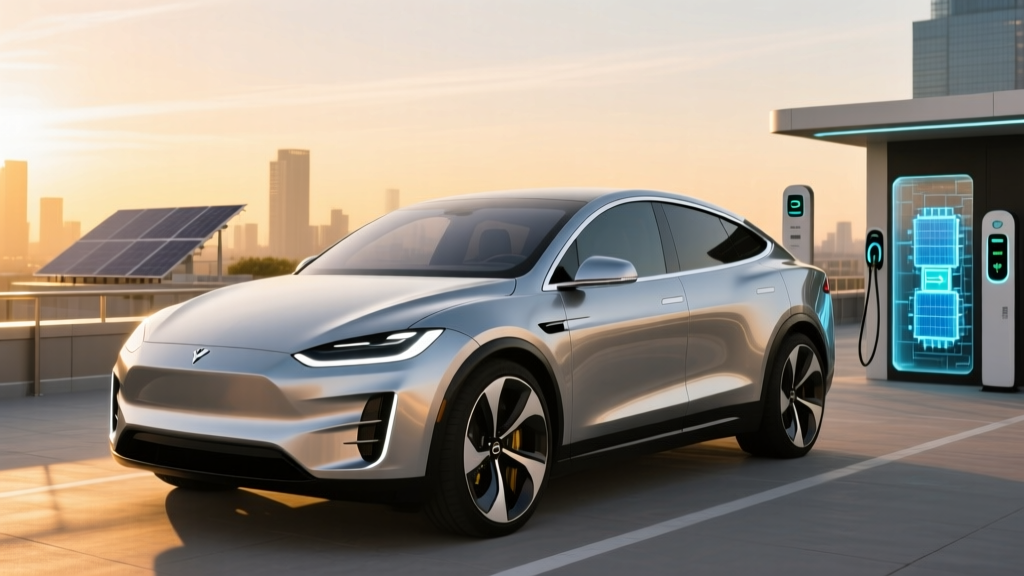
Tesla's charging ecosystem remains its strongest competitive moat in 2026. Here's how the Model Y charges across levels:
| Charge Level | Power | Speed (Approx.) | Use Case |
|---|---|---|---|
| Level 1 (120V) | ~1.4 kW | ~5 mi/hr | Emergency / overnight trickle |
| Level 2 (240V, 48A) | 11.5 kW | ~44 mi/hr | Daily home charging |
| DC Fast (Supercharger V3/V4) | 250 kW peak | ~175 mi in 15 min (10–80% in ~25 min) | Road trips |
Charging curve reality: The 250 kW peak rate only holds between roughly 10–30% State of Charge (SoC). By 50% SoC, the rate tapers to ~150 kW, and above 80% it drops sharply to protect the NMC battery chemistry. This is why Tesla's navigation system often recommends charging to 80% on road trips—time spent above 80% is disproportionately long.
With the NACS (North American Charging Standard) connector now adopted by Ford, GM, Rivian, Hyundai, and others, Tesla Superchargers are open to non-Tesla EVs at many locations. However, Tesla owners still benefit from seamless plug-and-charge authentication and vehicle-integrated routing that preconditions the battery before arrival—a feature that can shave 5–10 minutes off a charging stop in cold weather.
FSD (Supervised) in 2026: What HW4 Enables
Hardware 4.0 was designed to support Tesla's increasingly neural-net-dependent FSD stack. In 2026, FSD (Supervised) operates as an end-to-end system where a single neural network handles perception, planning, and control—replacing the modular rule-based code of earlier versions.
What this means in practice:
- Smoother lane changes: The higher-resolution cameras and improved compute allow the system to detect merging vehicles and lane markings at greater distance, reducing abrupt maneuvers.
- Better low-light performance: HW4's upgraded image sensors handle dusk, rain, and poorly lit roads with fewer disengagements than HW3.
- Intersection handling: Unprotected left turns and complex multi-lane roundabouts are handled more confidently, though driver supervision remains essential.
- It does not make the vehicle autonomous. You are the driver and are legally responsible.
- It does not reliably handle construction zones with shifted lanes or temporary barriers.
- It may not detect stopped emergency vehicles in all conditions.
- It does not replace attentive driving in heavy rain, snow, or fog where camera visibility is reduced.
- FSD (Supervised) costs $8,000 as a one-time purchase or $99/month in 2026. It is not included with the vehicle.
Pricing, Trims & Federal Tax Credit Eligibility
The 2026 Model Y lineup and federal tax credit picture:
| Trim | MSRP | Est. After §30D Credit | Credit Eligibility |
|---|---|---|---|
| Long Range AWD | $46,630 | ~$39,130 | Eligible (partial $3,750–$7,500)* |
| Performance | $51,630 | ~$44,130 | Eligible (partial $3,750–$7,500)* |
*The IRS §30D clean vehicle credit has multiple requirements:
- MSRP cap: SUVs must be under $80,000 (Model Y qualifies).
- Buyer income cap: AGI must not exceed $150,000 (single) / $300,000 (joint).
- Battery sourcing: The $7,500 credit splits into two halves—$3,750 for critical-minerals sourcing and $3,750 for battery-component assembly. Tesla's supply chain has shifted significantly, but exact eligibility varies by build month and battery cell origin. Check the DOE/FuelEconomy credit lookup tool for your specific VIN.
- Point-of-sale transfer: As of 2024, buyers can transfer the credit to the dealer for an immediate price reduction at purchase, rather than waiting to claim it on their tax return.
Consult a tax professional for your specific situation—credit rules continue to evolve under current legislation.
Battery Warranty & Longevity
Tesla covers the Model Y's battery and drive units with an 8-year / 120,000-mile warranty (whichever comes first), with a guaranteed minimum 70% capacity retention over that period. The NMC chemistry used in Long Range and Performance trims offers higher energy density than LFP (lithium iron phosphate), but is slightly more sensitive to sustained high-SoC storage. Tesla recommends:
- Daily charging to 80% (not 100%) for NMC batteries.
- Setting 100% only when needed for a long trip.
- Avoiding prolonged storage above 90% or below 20% SoC.
Real-world degradation data from Tesla's 2025 Impact Report suggests the average Model Y battery retains approximately 88–90% capacity at 100,000 miles—well within warranty thresholds. Replacement costs outside warranty remain significant: approximately $12,000–$16,000 for a full pack swap at a Tesla Service Center.
✓ Pros
- Best-in-class Supercharger network with seamless plug-and-charge
- HW4 camera suite provides superior FSD perception in 2026
- Strong efficiency (28 kWh/100mi) keeps charging costs low
- Over-the-air updates continuously add features
- Spacious cargo area (72.1 cu ft) for a compact SUV
- Heat pump standard — better cold-weather range retention
✗ Cons
- No ultrasonic sensors — parking near low obstacles relies entirely on cameras
- FSD costs $8,000 extra and is still Level 2 (supervised)
- Build quality inconsistencies still reported by some owners
- NMC battery requires 80% daily charge limit (unlike LFP rivals)
- No Apple CarPlay / Android Auto — Tesla's proprietary OS only
- Insurance premiums tend to be higher than segment average
Who Should Buy the Tesla Model Y with HW4?
Choose the Model Y Long Range if:
- You have home Level 2 charging and a daily commute under 80 miles round-trip.
- You take road trips 3+ times per year and want access to the Supercharger network.
- You want the most capable Level 2 driver-assist system available for highway driving.
- You need versatile cargo space for a family of 4–5.
Look at competitors (Hyundai Ioniq 5, Ford Mustang Mach-E, Chevrolet Equinox EV) if:
- You prefer Apple CarPlay or physical buttons and stalks.
- You want an LFP battery option (no daily charge-limit management).
- You're uncomfortable with Tesla's vision-only approach to parking and low-speed maneuvers.
- You want a lower entry price and don't need 300+ miles of range.
Frequently Asked Questions
When did Tesla HW4 come out for the Model 3?
HW4 debuted on the Model 3 with the "Highland" refresh in October 2023 in North America. Earlier 2023 Model 3s still carry HW3. If you're buying used, check the build date and camera housing design to confirm.
Can HW3 vehicles be upgraded to HW4?
No. Tesla has not offered a retrofit program from HW3 to HW4. The hardware change involves different camera modules, wiring harnesses, and the FSD computer itself. Elon Musk previously suggested free upgrades for FSD purchasers, but this applied only to HW2.5→HW3 transitions years ago. HW3 owners continue to receive FSD updates, but the system's perception ceiling is lower than HW4.
Is FSD (Supervised) worth the $8,000 cost in 2026?
For most buyers, no—unless you do extensive highway driving and value reduced fatigue. FSD (Supervised) handles highway lane-keeping, on-ramp to off-ramp navigation, and some city streets impressively, but you must remain fully engaged. The $99/month subscription is a lower-risk way to test it on a road trip before committing. Competitors like GM's Super Cruise and Ford's BlueCruise offer hands-free highway driving on mapped roads at a lower upfront cost, though with more limited geographic coverage.
Does the 2026 Model Y qualify for the full $7,500 federal tax credit?
It depends on the battery's critical-mineral and component sourcing at the time of manufacture, plus your income. The MSRP cap ($80,000 for SUVs) is easily met. Check the official DOE eligibility tool and consult a tax professional. Many buyers currently receive the partial $3,750 credit.
How does the Model Y's real-world range compare to the EPA sticker?
The EPA rates the Long Range at 320 miles. Real-world highway driving at 70–75 mph yields approximately 265–285 miles. In cold weather (below freezing), expect 220–250 miles. City driving with regenerative braking can match or slightly exceed the EPA figure in mild weather.
What's the difference between HW4 and Tesla's upcoming AI5 hardware?
AI5 (sometimes called HW5) has been announced by Tesla but is not yet in production as of early 2026. Tesla has described it as offering another significant compute increase. Vehicles with HW4 will continue to receive FSD updates, but the perception and compute ceiling of AI5 may eventually enable capabilities HW4 cannot support. No retrofit path has been announced.
Sources: fueleconomy.gov, Tesla Model Y configurator, IRS §30D Clean Vehicle Credit, NHTSA.