When Did Tesla Hardware 4 Come Out? The Full Rollout Timeline
If you've been researching Tesla's driver-assistance stack, you've likely asked: when did Tesla Hardware 4 come out? The answer isn't a single launch date but a phased rollout that began in early 2023 and extended through 2024 across Tesla's lineup. Hardware 4 (internally designated HW4 or AI4) first appeared in the refreshed Model S and Model X delivered starting March 2023, followed by the Model 3 Highland refresh in late 2023, and finally the Model Y Juniper refresh in early 2025.
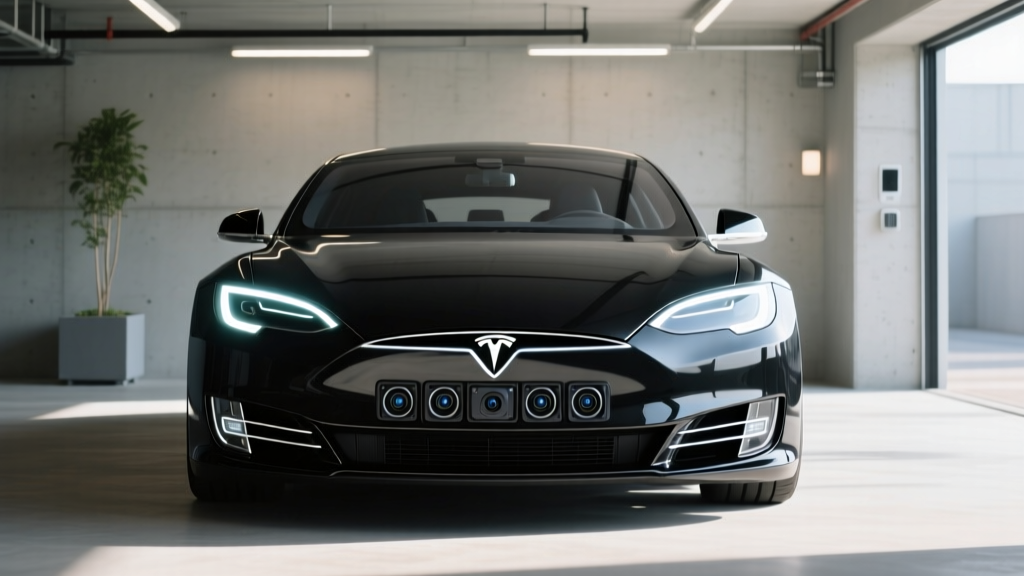
HW4 replaced Hardware 3 (HW3), which had powered Tesla vehicles since April 2019. The upgrade brought higher-resolution cameras, a more powerful neural-network processor, and the removal of ultrasonic sensors and radar in favor of a pure Tesla Vision approach. For buyers in 2026, every new Tesla rolling off the Fremont, Austin, Berlin, and Shanghai lines ships with HW4 as standard — there is no longer a HW3 option.
Tesla Hardware 4 vs Hardware 3: What Actually Changed
The jump from HW3 to HW4 was substantial in three areas: camera resolution, compute throughput, and sensor architecture.
| Attribute | Hardware 3 (HW3) | Hardware 4 (HW4 / AI4) |
|---|---|---|
| Camera count | 8 cameras (1.2 MP) | 7–8 cameras (up to 5 MP) |
| Front camera detail | Single tri-camera cluster, 1.2 MP each | Higher-res main + wide; improved low-light |
| Neural network processor | Dual FSD chips (~144 TOPS combined) | Custom AI4 chip (~2–3× throughput over HW3) |
| Ultrasonic sensors (USS) | 12 sensors | Removed (Tesla Vision only) |
| Radar | Removed in 2021+ builds | Not present (vision-only) |
| First production vehicles | April 2019 | March 2023 (Model S/X) |
The practical upshot: HW4 sees farther, resolves objects more clearly at speed, and handles low-light and high-contrast scenes better than HW3. For FSD (Supervised) subscribers, this translates to fewer phantom-braking events and smoother lane-change decisions on highways. However, the removal of ultrasonic sensors means that parking proximity alerts now rely entirely on vision-based estimates, which some owners report as less precise at very low speeds near thin obstacles like bollards or trailer hitches.
2026 Tesla Model Y: HW4 in Its Highest-Volume Vehicle
To understand what HW4 means for the average Tesla buyer, let's look at the vehicle where most drivers will experience it: the 2026 Tesla Model Y (Juniper refresh). This is Tesla's best-selling vehicle globally, and every 2026 unit ships with HW4.
| Spec | Long Range AWD | Performance AWD |
|---|---|---|
| EPA Range | 320 miles | 295 miles |
| Battery (usable) | ~78 kWh, NMC | ~78 kWh, NMC |
| Drivetrain | Dual-motor AWD | Dual-motor AWD |
| Horsepower | ~384 hp | ~456 hp |
| 0–60 mph | 4.8 sec | 3.5 sec |
| MPGe (combined) | 122 MPGe | 111 MPGe |
| Efficiency | 28 kWh/100 mi | 30 kWh/100 mi |
| Max DC Charge Rate | 250 kW | 250 kW |
| 10–80% DC Time | ~25 min | ~25 min |
| Level 2 Home Charge | 11.5 kW (~44 mi/hr) | 11.5 kW (~44 mi/hr) |
| Cargo Volume | 72 cu ft (rear seats folded) | 72 cu ft (rear seats folded) |
| Rear Legroom | 41.6 in | 41.6 in |
| Base MSRP | $46,990 | $52,990 |
| HW Version | Hardware 4 (AI4) | Hardware 4 (AI4) |
Sources: fueleconomy.gov, Tesla Model Y design page.
Charging Speed: DC Fast, Level 2, and the HW4 Connection
Hardware 4 doesn't directly change the vehicle's charge rate — that's governed by the battery pack and onboard charger — but HW4's improved thermal-management integration helps the Model Y precondition its battery more aggressively when you navigate to a Supercharger.
| Charging Level | Power (kW) | Miles Added per Hour | Notes |
|---|---|---|---|
| Level 1 (120V outlet) | ~1.4 kW | ~3–5 mi/hr | Emergency/trickle only |
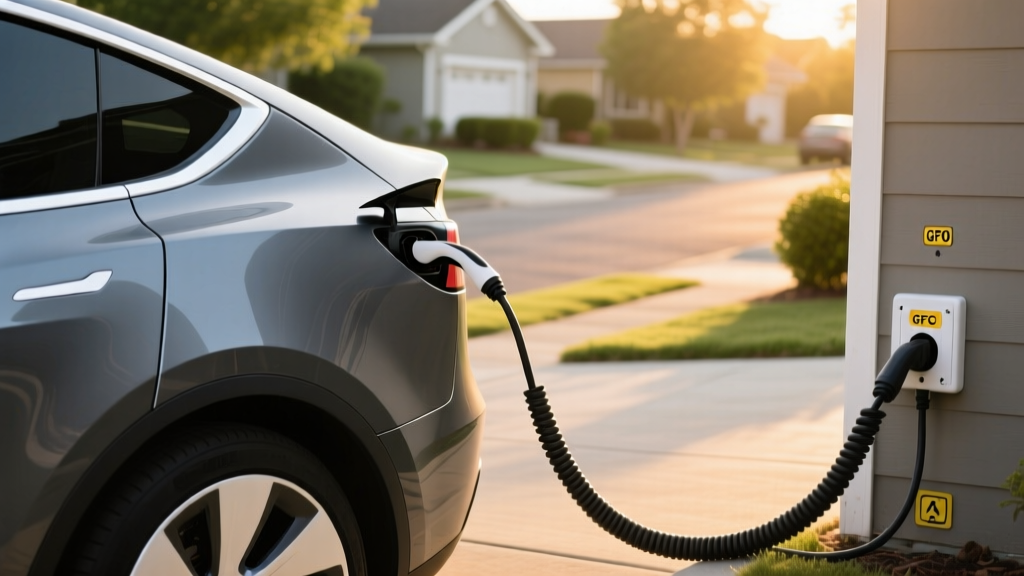
| Level 2 (240V, 48A Wall Connector) | 11.5 kW | ~44 mi/hr | Full overnight charge in ~7 hrs |
| DC Fast (V3 Supercharger) | Peak 250 kW | ~1,000+ mi/hr (peak) | 10–80% in ~25 min; tapers above 80% |
| DC Fast (V4 Supercharger) | Up to 250 kW (vehicle-limited) | Same as V3 for Model Y | V4 posts can deliver more, but Model Y caps at 250 kW |
Charge curve reality: The 250 kW peak only holds between roughly 10–30% state of charge. Above 50%, the rate tapers significantly, and by 80% it drops to under 60 kW. This is normal for NMC lithium-ion packs. Tesla's navigation-based battery preconditioning warms the pack before you arrive at a Supercharger, which helps you hit that peak rate sooner — especially important in cold weather.
The Model Y uses the NACS (North American Charging Standard) connector natively, which is now the industry standard adopted by Ford, GM, Rivian, Hyundai, and most other automakers for DC fast charging in North America. This gives Tesla owners seamless access to the Supercharger network — currently over 6,500 stations and 65,000+ connectors in North America — without adapters.
Driver-Assistance Tech: What HW4 Enables in 2026
Hardware 4's higher-resolution cameras and faster AI chip give Tesla's software more data to work with. Here's what that means for the three tiers of Tesla's driver-assistance suite as of 2026:
- Basic Autopilot (standard): Traffic-aware cruise control and lane-centering on highways. HW4's improved camera dynamic range means fewer disengagements when transitioning between bright sunlight and shadow.
- Enhanced Autopilot ($6,000 option): Adds auto lane-change, Navigate on Autopilot (highway on/off-ramp assistance), AutoPark, and Summon. HW4's compute headroom enables faster object-recognition during complex merges.
- FSD (Supervised) ($8,000 one-time or $99/month): Full traffic-light and stop-sign recognition, city-street autosteer, and the most advanced neural-network path planning. HW4 is the minimum hardware requirement for the latest FSD v13+ builds.
Pricing, Trim Levels, and Federal Tax Credit Eligibility
The 2026 Model Y lineup is streamlined into two main trims, with a base RWD variant available in select markets:
| Trim | MSRP | Est. §30D Credit | Effective Price |
|---|---|---|---|
| Long Range AWD | $46,990 | Up to $7,500* | ~$39,490* |
| Performance AWD | $52,990 | Up to $7,500* | ~$45,490* |
*Federal tax credit eligibility under IRS §30D depends on multiple requirements. As of 2026, the Model Y qualifies as an SUV under the $80,000 MSRP cap. However, the buyer must meet income limits (modified AGI ≤ $150,000 single / $300,000 joint), and the vehicle's battery must satisfy critical-mineral and battery-component sourcing thresholds that phase in annually. The credit can now be transferred to the dealer at point of sale as a purchase-price reduction. Always verify current eligibility at irs.gov and consult a tax professional.
- ✅ Vehicle MSRP under $80,000 (SUV classification) — Model Y qualifies
- ⚠️ Buyer income ≤ $150K single / $300K joint filer — verify your MAGI
- ⚠️ Battery critical-mineral sourcing ≥ applicable annual threshold — check window sticker
- ⚠️ Battery component manufacturing/assembly in North America — Tesla's Austin-built packs generally qualify
- ✅ Point-of-sale transfer available — reduces purchase price at delivery
Warranty, Ownership Costs, and Long-Term Battery Outlook
Tesla provides the following warranty coverage for the 2026 Model Y:
- Basic vehicle: 4 years / 50,000 miles
- Battery & drive unit: 8 years / 120,000 miles (Long Range & Performance), with a minimum 70% capacity retention threshold
- HW4 compute unit: Covered under the basic vehicle warranty (4yr/50K mi); Tesla has historically replaced failed HW units at no charge beyond warranty on a case-by-case basis, but this is not guaranteed
NMC battery degradation data from Tesla's fleet suggests an average capacity loss of roughly 10–12% after 150,000 miles. For most owners who charge at home to 80–90% daily and only use DC fast charging on road trips, degradation is modest. The 8-year/120,000-mile warranty provides a reasonable safety net, though competitors like Hyundai/Kia (10yr/100K mi) offer longer coverage periods.
Insurance costs for the Model Y remain above the midsize-SUV average. Expect annual premiums in the $1,800–$2,600 range depending on your state, driving record, and coverage level. Tesla's own insurance product (available in most states) uses real-time driving data and can be competitive for clean-record drivers.
Pros, Cons, and Who the HW4-Equipped Model Y Suits Best
Pros
- Class-leading Supercharger network access (NACS native)
- HW4 cameras deliver visibly sharper FSD perception in rain/dusk
- 320-mi EPA range (Long Range) covers most commutes + weekend trips
- 250 kW DC fast charging = practical road-trip stops
- 72 cu ft cargo with flat floor; usable frunk
- OTA updates continuously add features post-purchase
- Point-of-sale §30D credit can drop effective price below $40K
Cons
- No ultrasonic sensors — parking near thin objects is less precise
- FSD (Supervised) is expensive ($8K) and still Level 2, not autonomous
- Rear visibility is limited; relies heavily on camera display
- Insurance premiums above segment average
- Touchscreen-only controls (no physical buttons for climate, mirrors, glovebox)
- HW4 cannot be retrofitted to HW3 vehicles — no upgrade path for older Teslas
- Ride quality is firm on 20" Performance wheels
Who Should Buy the HW4-Equipped Model Y?
- Daily commuters (20–60 mi round trip): Ideal. Home Level 2 charging means you start every day with a full battery. The Long Range's 320-mi EPA rating means charging 2–3 times per week at most.
- Families needing cargo space: The 72 cu ft cargo area and available 7-seat option (third row best for small children) make it practical for school runs and grocery hauls.
- Road-trip enthusiasts: The Supercharger network is the most reliable DC fast-charging ecosystem in North America. 10–80% in ~25 minutes keeps stops short.
- Tech-forward buyers: If you value OTA updates, HW4's improved FSD stack, and Tesla's app ecosystem, no competitor matches the software integration.
Who Should Look Elsewhere?
- Buyers who want physical buttons and traditional interfaces: Consider the Hyundai Ioniq 5 or Kia EV6.
- Heavy towing needs: The Model Y is rated for only 3,500 lbs. The Rivian R1S or Ford F-150 Lightning handle far more.
- Budget-first buyers: The Chevy Equus EV or a used Model 3 may deliver better value if FSD/Supercharger access isn't a priority.
Competitor Check: Model Y HW4 vs Key Rivals
The Model Y doesn't exist in a vacuum. Here's how it stacks up on the specs that matter most to EV shoppers in 2026:
| Metric | Tesla Model Y LR | Hyundai Ioniq 5 Ltd | Ford Mustang Mach-E ER |
|---|---|---|---|
| EPA Range | 320 mi | 305 mi | 305 mi |
| Max DC Charge | 250 kW | 240 kW (800V) | 150 kW |
| 10–80% DC | ~25 min | ~18 min | ~38 min |
| Connector | NACS (native) | NACS (2025+) | NACS (2025+) |
| ADAS Hardware | HW4 (Tesla Vision) | HDA2 + LiDAR (some) | BlueCruise (camera/radar) |
| Base MSRP | $46,990 | $50,100 | $48,995 |
The Ioniq 5 charges faster (its 800V architecture enables a steeper charge curve), while the Model Y wins on range and charging-network reliability. The Mach-E lags in DC charging speed but offers a more traditional interior layout with physical controls.
Frequently Asked Questions
Can I upgrade my older Tesla from Hardware 3 to Hardware 4?
No. Tesla does not offer a retrofit program to upgrade HW3 vehicles to HW4. The camera wiring harness, mounting points, and compute unit are fundamentally different. If you want HW4, you need to purchase a vehicle built with it (Model S/X from March 2023+, Model 3 Highland from late 2023+, Model Y Juniper from early 2025+).
Does Hardware 4 improve range or efficiency?
Not directly. Range is determined by battery capacity, vehicle aerodynamics, and drivetrain efficiency. However, HW4's improved thermal-management integration can help the vehicle precondition the battery more efficiently for fast charging, which marginally reduces energy wasted during the preconditioning phase.
Is FSD (Supervised) worth the $8,000 cost with HW4?
This depends on your use case. For highway commuters, Basic Autopilot (standard) handles traffic-aware cruise and lane-centering well. FSD adds city-street autosteer, which is impressive in well-mapped areas but still requires constant supervision. Most EV analysts recommend trying the $99/month subscription before committing to the $8,000 purchase, especially since FSD's resale value transfer is uncertain.
What's the real-world range of the 2026 Model Y Long Range?
The EPA rates it at 320 miles. In mixed real-world driving (city + highway, moderate temps), expect 280–300 miles. Sustained highway driving at 75 mph drops that to ~270 miles. In freezing weather, plan for 220–250 miles. Always keep a 10–15% buffer for unexpected detours or charger availability issues.
Does the 2026 Model Y qualify for the full $7,500 federal tax credit?
It can, but eligibility depends on your income (≤$150K single / ≤$300K joint MAGI) and the specific battery's compliance with critical-mineral and component-sourcing rules for the 2026 tax year. The Model Y is classified as an SUV, so the $80,000 MSRP cap applies — well above its price. Check the VIN-specific eligibility on the IRS portal at irs.gov before purchasing, and consider the point-of-sale transfer option to reduce your upfront cost.
How does HW4 handle parking without ultrasonic sensors?
Tesla Vision uses the surround cameras to estimate distances to nearby objects and renders a 3D visualization on the touchscreen. For standard parking scenarios, it works adequately. However, owners consistently report that thin objects (bike racks, narrow posts, trailer hitches) may not be detected as reliably as the old ultrasonic system. Use the camera views actively and don't rely solely on proximity warnings.
Sources consulted: fueleconomy.gov (EPA range and efficiency data), tesla.com (manufacturer specifications), irs.gov (federal EV tax credit rules), nhtsa.gov (safety investigations).