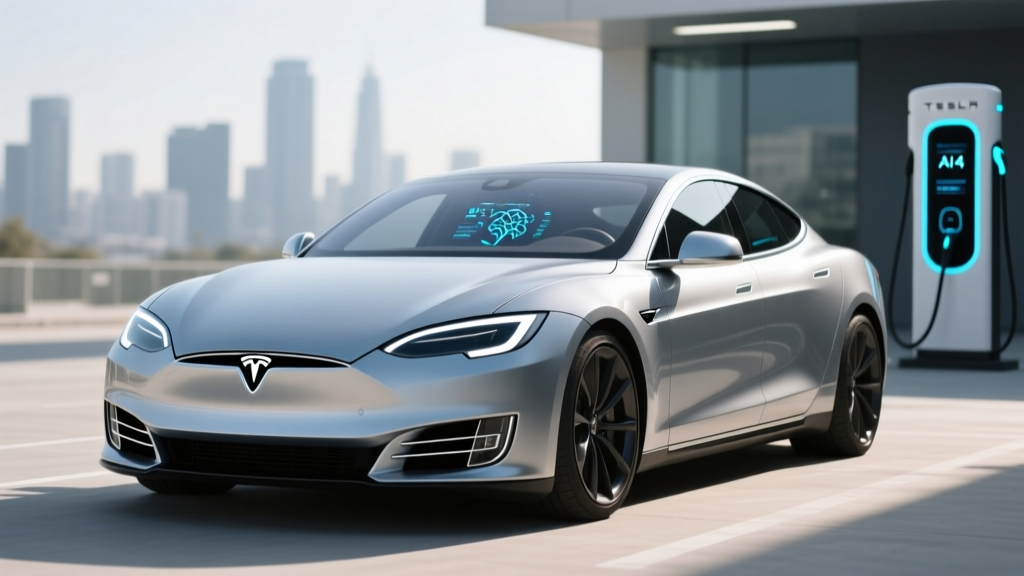
If you have been browsing Tesla's order page or scanning delivery forums, you have likely encountered the term Hardware 4 — also known internally as AI4. This is the latest generation of Tesla's onboard autonomous-driving computer and sensor suite, and it now ships on every new Model 3, Model Y, Model S, and Model X. Unlike a trim level or a battery option, Hardware 4 is not something you add or remove from your order. It is the baseline electronic architecture that enables Tesla's advanced driver-assistance features, including Autopilot and Full Self-Driving (Supervised).
But Hardware 4 is not just about self-driving aspirations. It correlates with meaningful upgrades in camera resolution, processing throughput, and — indirectly — the vehicle platform you are buying. This guide breaks down exactly what Hardware 4 means for range, charging, pricing, tax credits, and real-world ownership in 2026.
What Tesla Hardware 4 Actually Is
Hardware 4 (HW4 / AI4) is Tesla's fourth-generation driving computer and sensor package, succeeding Hardware 3 (HW3) which debuted in 2019. It began appearing in the Model S and Model X in early 2023, expanded to the refreshed Model 3 ("Highland") in late 2023, and rolled across the Model Y lineup through 2024 and 2025. As of 2026, every new Tesla delivered in the U.S. includes Hardware 4.
The core upgrades over HW3 include:
- Higher-resolution cameras: HW4 uses cameras with roughly double the resolution of HW3 sensors (approximately 5 megapixels vs. 1.2 megapixels), improving object detection at distance and in low-light conditions.
- Fewer cameras, better placement: The refreshed Model 3 and Model Y with HW4 eliminated the ultrasonic parking sensors (USS) in favor of a vision-only "Tesla Vision" approach, relying on neural-net depth estimation from the camera array.
- More compute throughput: Tesla claims HW4 delivers roughly 2–3× the inference performance of HW3, allowing the FSD neural network to run more complex models with lower latency.
- Redesigned ECU: The electronic control unit is physically larger, with improved thermal management to sustain peak compute under sustained highway driving.
For buyers, the practical takeaway is that HW4-equipped Teslas have a more capable perception system for both active safety (automatic emergency braking, lane-keeping) and the FSD (Supervised) feature — though the system's real-world capability is still bounded by its SAE Level 2 classification.
Specs at a Glance: 2026 Tesla Model Y Long Range AWD
Since Hardware 4 spans multiple vehicles, the specs below reflect the highest-volume HW4 model: the 2026 Tesla Model Y Long Range AWD, which remains Tesla's bestseller and the reference point for most buyers evaluating this platform.
| Attribute | 2026 Model Y Long Range AWD |
|---|---|
| EPA Range | 320 miles |
| Battery (usable) | ~75 kWh, NMC chemistry |
| Drivetrain | Dual-motor AWD |
| Horsepower | 384 hp |
| 0–60 mph | 4.8 seconds |
| Efficiency | 122 MPGe / 28 kWh/100 mi |
| Max DC Fast Charge | 250 kW (peak) |
| 10–80% DC Charge Time | ~25 minutes |
| Level 2 Home Charging | 11.5 kW (~44 mi/hr) |
| Cargo Volume | 30.2 cu ft (rear seats up) / 72.0 cu ft (folded) |
| Rear Legroom | 39.0 inches |
| Battery Warranty | 8 years / 120,000 miles (≥70% retention) |
| Base MSRP | $46,630 |
Real-World Range: What to Actually Expect
Real-World Highway (70 mph, mild weather): ~265–280 miles
Real-World City / Mixed Commute: ~290–310 miles
Cold Weather (below 32°F, highway): ~210–240 miles
The EPA 320-mile figure is a useful baseline, but real-world range in a Model Y Long Range AWD depends heavily on speed, temperature, and terrain. On a flat highway at 70 mph in 65°F weather, expect roughly 265–280 miles before you need to stop. City driving with frequent regenerative-braking opportunities pushes efficiency closer to the EPA number — and sometimes slightly above it in stop-and-go traffic.
Cold weather is the biggest variable. Below freezing, lithium-ion batteries lose usable capacity and the cabin heater draws significant power (even with the Model Y's heat pump). A 25–30% range reduction in sustained sub-freezing highway driving is typical. If you live in the upper Midwest or Northeast and plan winter road trips, plan charging stops around a 220-mile effective range to stay comfortable.
According to EPA fueleconomy.gov data, the Model Y Long Range AWD achieves 122 MPGe combined, translating to about 28 kWh per 100 miles. That efficiency figure is among the best in the compact electric SUV segment, and it reflects Tesla's strong aerodynamic design and powertrain efficiency — both of which are enhanced by the more precise sensor integration in HW4 vehicles.
Charging Speed: DC Fast, Level 2, and the Supercharger Advantage
Hardware 4 itself does not change the vehicle's charging hardware — that is determined by the battery pack and onboard charger. But because HW4 correlates with the latest Tesla platform revisions, here is what you can expect from a 2026 Model Y Long Range:
| Charging Level | Power | Speed (approx.) | Notes |
|---|---|---|---|
| Level 1 (120V) | ~1.4 kW | ~3–4 mi/hr | Emergency / trickle only |
| Level 2 (240V, 48A) | 11.5 kW | ~44 mi/hr | Home Wall Connector; full charge in ~7 hrs |
| DC Fast (Supercharger V3/V4) | 250 kW peak | 10–80% in ~25 min | Peak sustained only to ~50% SoC; tapers above |
A critical nuance: the 250 kW peak rate is not sustained for the entire charging session. The Model Y's charge curve peaks near 250 kW at low state-of-charge (around 10–20%), then progressively tapers. By 60% SoC, you are typically seeing 100–120 kW. By 80%, it drops further to roughly 50–60 kW. This is why Tesla and the EPA quote 10–80% times rather than 0–100%. Charging past 80% on a DC fast charger is slow and generally not worth the wait unless you absolutely need the extra range.
At home, the Tesla Wall Connector on a 60-amp circuit delivers up to 11.5 kW (48 amps continuous). That adds roughly 44 miles of range per hour, meaning a full overnight charge from 20% to 100% takes about 7 hours. Most owners who charge nightly at home rarely visit a DC fast charger except on road trips.
One of the biggest ownership advantages of a Tesla in 2026 is access to the Supercharger network, which now also serves non-Tesla EVs via the NACS standard. For Tesla owners, Superchargers offer plug-and-charge simplicity, reliable uptime, and integrated navigation preconditioning — the car warms or cools the battery en route to optimize charge speed on arrival.
Pricing, Trims, and Federal Tax Credit Eligibility
The 2026 Tesla Model Y is available in three primary configurations. Here is the current pricing landscape:
| Trim | MSRP | Est. After §30D Credit | EPA Range |
|---|---|---|---|
| Long Range RWD | $44,130 | ~$36,630* | 320 mi |
| Long Range AWD | $46,630 | ~$39,130* | 320 mi |
| Performance AWD | $51,630 | ~$44,130* | 293 mi |
*Estimated after $7,500 federal tax credit, assuming buyer eligibility. Actual credit depends on IRS §30D requirements.
- MSRP cap: SUVs/vans/pickups must be ≤ $80,000; sedans ≤ $55,000. All Model Y trims qualify.
- Buyer income cap: Modified AGI ≤ $150,000 (single), $225,000 (head of household), $300,000 (joint).
- Battery sourcing: Increasing percentages of critical minerals and battery components must be sourced from the U.S. or FTA partners. Tesla's U.S.-built battery supply chain has generally met these thresholds for Model Y, but verify at purchase.
- Point-of-sale transfer: As of 2024+, you can transfer the credit to the dealer at purchase, reducing your out-of-pocket cost immediately rather than waiting for a tax refund.
- Verify current rules: Sourcing requirements tighten annually. Check IRS.gov §30D guidance before ordering.
The Model Y qualifies as an SUV under IRS classifications, meaning the $80,000 MSRP cap applies — and every current trim clears that threshold comfortably. The more binding constraint for many buyers is the income cap. If your household modified adjusted gross income exceeds the limits above, you will not qualify for the $7,500 credit regardless of the vehicle.
Standout Tech and Notable Drawbacks
Hardware 4 vehicles carry Tesla's latest software stack, and the tech experience is a significant part of the ownership proposition — for better and for worse.
Standout features:
- FSD (Supervised): Tesla's most advanced driver-assist software. On HW4 vehicles, FSD benefits from the higher-resolution camera suite and faster inference, resulting in smoother lane changes, better intersection handling, and more confident highway merging. It remains a Level 2 system requiring active supervision. The $8,000 one-time purchase or $99/month subscription is optional.
- 15.4-inch center touchscreen: The Model Y's dashboard is dominated by a single high-resolution display handling navigation, media, climate, and vehicle settings. HW4 vehicles run Tesla's latest UI, which is responsive and feature-rich.
- Over-the-air updates: Tesla continues to push meaningful software improvements — range optimizations, new features, UI refinements — without dealership visits.
- Sentry Mode and Dashcam: HW4's improved cameras enhance Tesla's always-on security recording and built-in dashcam functionality.
- Supercharger network access: Seamless plug-and-charge with integrated navigation remains a top ownership perk.
Notable drawbacks:
- No ultrasonic sensors: HW4 Model Y uses vision-only parking assist. While functional, some owners find the Tesla Vision parking distance estimation less precise than dedicated ultrasonic sensors, especially near low curbs or thin poles.
- Minimalist interior: No physical buttons for climate, mirrors, or glovebox — everything routes through the touchscreen. This is a dealbreaker for some buyers.
- No Apple CarPlay / Android Auto: Tesla's proprietary infotainment does not support smartphone projection. You use Tesla's native apps for navigation and media.
- Insurance costs: Tesla insurance premiums tend to run 15–30% higher than comparable non-Tesla EVs, driven by higher repair costs and claims frequency. Get a quote before ordering.
- FSD is not self-driving: Despite the name, FSD (Supervised) requires constant driver attention. Buyers expecting autonomous capability will be disappointed.
How Hardware 4 Compares: Model Y vs. Key Competitors
Hardware 4 is not a standalone product — it is part of the broader Tesla platform. The real purchase decision is whether a HW4-equipped Model Y beats its rivals. Here is how the 2026 Model Y Long Range AWD stacks up:
| Spec | Tesla Model Y LR AWD | Hyundai Ioniq 5 Limited AWD | Ford Mustang Mach-E ER AWD |
|---|---|---|---|
| EPA Range | 320 mi | 290 mi | 290 mi |
| Max DC Charge | 250 kW | 233 kW | 150 kW |
| 10–80% DC Time | ~25 min | ~18 min (800V) | ~36 min |
| Efficiency (MPGe) | 122 | 110 | 101 |
| Cargo (rear up) | 30.2 cu ft | 27.2 cu ft | 29.7 cu ft |
| ADAS Hardware | HW4 (AI4) | HDA2 + radar | BlueCruise 1.4 |
| Base MSRP (AWD) | $46,630 | ~$54,000 | ~$48,995 |
The Model Y's combination of range, efficiency, and Supercharger access remains hard to match. The Ioniq 5's 800-volt architecture delivers a faster 10–80% charge time, but its lower total range and smaller cargo area are trade-offs. The Mach-E offers a more traditional interior with physical controls and Apple CarPlay, but trails significantly on charging speed and efficiency.
Who Should Buy a Hardware 4 Tesla?
- You want the longest real-world range in a compact electric SUV at a competitive price.
- You road-trip regularly and value the Supercharger network's reliability and coverage.
- You are interested in the most advanced Level 2 driver-assist system available (with the understanding that it still requires full attention).
- You prefer over-the-air updates and a tech-forward ownership experience.
- You can install a Level 2 home charger and will do most charging overnight.
- You want physical buttons, Apple CarPlay, or a more traditional cockpit layout.
- You need the fastest possible DC charging (Hyundai/Kia's 800V platform is quicker 10–80%).
- You are uncomfortable with vision-only parking assist (no ultrasonic sensors).
- Your household income exceeds the §30D tax credit caps, making competitors with similar incentives more price-competitive.
Frequently Asked Questions
Can I upgrade my older Tesla to Hardware 4?
No. Tesla does not offer a retrofit path from Hardware 3 to Hardware 4. The camera suite, wiring harness, and compute unit are fundamentally different. If you want HW4, you need to purchase a vehicle that shipped with it — generally any Model S/X built after March 2023, Model 3 Highland (late 2023+), or Model Y built after mid-2024.
Does Hardware 4 make FSD safer or more capable?
HW4 provides higher-resolution camera input and faster compute, which allows Tesla's neural networks to process more data with lower latency. In practice, FSD (Supervised) on HW4 vehicles tends to handle complex scenarios — construction zones, unprotected left turns, merging traffic — more smoothly than on HW3. However, FSD remains a Level 2 driver-assist system. The driver is responsible for all driving decisions and must intervene at any time.
Does the 2026 Model Y qualify for the full $7,500 federal tax credit?
The Model Y generally qualifies, as its MSRP is well under the $80,000 SUV cap and Tesla's battery supply chain has met the critical-mineral and component-sourcing thresholds. However, your personal eligibility depends on income caps ($150K single / $300K joint) and the sourcing requirements in effect at the time of delivery. Always verify on IRS.gov before finalizing your order. The credit can be applied at the point of sale to reduce your upfront cost.
How does Tesla's HW4 compare to other automakers' ADAS hardware?
Tesla's approach is camera-only (no lidar, no radar on HW4 vehicles), relying on neural-network vision processing. Competitors like GM's Super Cruise and Ford's BlueCruise use a combination of cameras, radar, and in some cases lidar, often with driver-monitoring cameras. On pre-mapped divided highways, BlueCruise and Super Cruise offer hands-free driving (still Level 2, eyes monitored). Tesla's FSD (Supervised) works on a broader range of roads — including residential streets — but requires hands-on or near-wheel engagement. Neither approach is "self-driving."
What is the real cost of ownership for a HW4 Model Y?
Beyond the purchase price, budget for: home Level 2 charger installation ($500–$2,000 depending on electrical panel), electricity costs (roughly $0.04–$0.06 per mile at residential rates vs. $0.12–$0.18 for gas in a comparable SUV), higher-than-average insurance premiums, and the optional $8,000 FSD purchase or $99/month subscription. Tesla's battery warranty covers 8 years / 120,000 miles with at least 70% capacity retention. Maintenance costs are low — no oil changes, minimal brake wear thanks to regen — but tire replacement comes more frequently due to the vehicle's weight and instant torque.
Is Hardware 4 worth waiting for if I was considering a used HW3 Tesla?
If you are buying new, you have no choice — all 2026 Teslas include HW4. If you are cross-shopping a used 2022–2023 HW3 vehicle at a lower price, the trade-off is cost vs. capability. HW3 vehicles still receive Autopilot and FSD (Supervised) updates, but the lower-resolution cameras and older compute unit mean the system's ceiling is lower. For buyers who plan to keep the vehicle 5+ years and want the best possible ADAS hardware, HW4 is the more future-proof choice. For budget-focused buyers who primarily need a commuter EV with good range, a well-priced used HW3 vehicle remains a strong option.