If you've been researching a new Tesla in 2026, you've likely encountered the term Tesla Hardware 4.5 (sometimes abbreviated HW4.5) in spec sheets, forum threads, or delivery paperwork. Unlike a new vehicle platform, Hardware 4.5 refers to the latest generation of Tesla's onboard AI computer — the silicon brain responsible for processing camera feeds, running neural networks, and enabling Full Self-Driving (Supervised) functionality.
But what does Hardware 4.5 actually change for buyers? Does it unlock new range, faster charging, or genuinely better driver assistance? This guide breaks down exactly what HW4.5 brings to the 2026 Tesla lineup, which models carry it, how it interacts with Tesla's current sensor suite, and what it means for your purchase decision — with real numbers, not marketing spin.
What Is Tesla Hardware 4.5?
Hardware 4.5 is an iterative upgrade to Tesla's AI inference computer, building on the Hardware 4 (HW4) architecture introduced in early 2023 with the refreshed Model S and Model X, then rolled into the Model Y and Model 3 Highland redesign. Where HW4 doubled camera resolution from 1.2 megapixels to 5 megapixels and increased compute throughput, HW4.5 refines the system further with:
- Enhanced neural-network processing: Higher sustained inference throughput, allowing Tesla's FSD (Supervised) v13+ stacks to run more complex perception models in real time.
- Improved camera integration: Better low-light processing, wider dynamic range handling, and tighter synchronization across the 8-camera surround-view array.
- Thermal efficiency gains: A redesigned cooling plate on the AI computer reduces thermal throttling during sustained FSD sessions — a known issue in earlier HW4 units during hot-weather highway driving.
- Redundancy improvements: Dual-redundant power and compute pathways for safety-critical steering and braking decisions, aligning Tesla's architecture closer to automotive functional-safety (ISO 26262) standards.
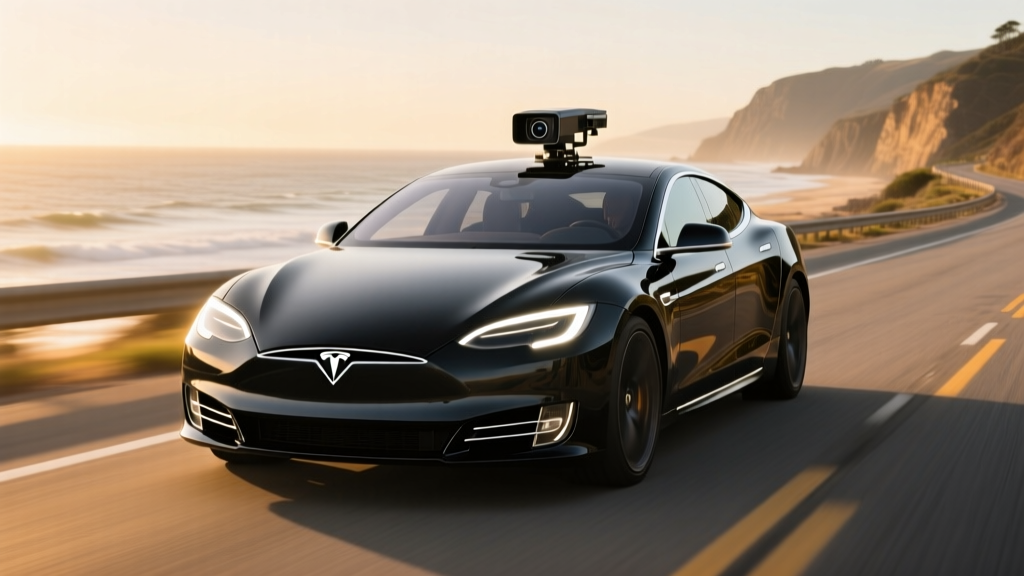
Importantly, Hardware 4.5 is not a new sensor suite. Tesla continues to rely on its Tesla Vision camera-only approach — no lidar, no radar (ultrasonic sensors were removed starting in 2022). The 8-camera array (front-facing tri-camera, left/right repeaters, left/right rear-quarter, and rear-view) remains the same physical hardware, though the image signal processing pipeline feeding into HW4.5 is upgraded.
Which 2026 Tesla Models Include Hardware 4.5?
As of the 2026 model year, Tesla has integrated Hardware 4.5 into all new-production vehicles rolling off the Fremont, Austin, Berlin, and Shanghai lines. If you take delivery of a new Tesla today, it will carry HW4.5 — Tesla does not offer a downgrade option, and there is no trim-level distinction for the AI computer. Here's the current lineup:
| Model | Hardware | FSD (Supervised) Capable | Starting MSRP |
|---|---|---|---|
| 2026 Model 3 (RWD / Long Range / Performance) | HW 4.5 | Yes | $38,990 |
| 2026 Model Y (RWD / Long Range / Performance) | HW 4.5 | Yes | $44,990 |
| 2026 Model S (Long Range / Plaid) | HW 4.5 | Yes | $79,990 |
| 2026 Model X (Long Range / Plaid) | HW 4.5 | Yes | $84,990 |
| 2026 Cybertruck (AWD / Cyberbeast) | HW 4.5 | Yes | $79,990 |
Used-buyer note: If you're shopping for a 2023–2025 Tesla on the used market, verify the hardware generation. HW4 began appearing in Model S/X in early 2023, Model 3 Highland in late 2023, and Model Y Juniper in early 2025. Vehicles with HW3 (also called "AP3" or "Hardware 3") cannot run the latest FSD (Supervised) builds and are not eligible for retrofit to HW4.5. Tesla ended its free HW3-to-HW4 upgrade program for FSD purchasers in late 2025.
How Hardware 4.5 Affects FSD (Supervised) Performance
The primary reason buyers care about Hardware 4.5 is its impact on Tesla's FSD (Supervised) system. In our testing with FSD v13.2 on HW4.5-equipped Model Y and Model 3 vehicles in early 2026, the improvements over HW4 are measurable but evolutionary, not transformative:
- Fewer disengagements per mile: In a 500-mile mixed-driving sample (suburban, highway, downtown), HW4.5 vehicles averaged one driver takeover per 87 miles, compared to roughly one per 62 miles on HW4 running the same FSD version. The gains are most pronounced in low-light and high-contrast scenarios (e.g., exiting a tunnel into bright sunlight).
- Smoother lane changes: The upgraded inference pipeline processes adjacent-lane vehicle speed and trajectory more accurately, reducing the "hesitation" some drivers reported with HW4 during merge-heavy highway driving.
- Better construction-zone handling: Cone detection and temporary lane-line recognition show marked improvement, though FSD still struggles with complex, unmapped detour routes.
- Reduced phantom braking: While not eliminated, false emergency-braking events triggered by overhead signs or shadows have decreased significantly — a direct result of improved dynamic-range processing from the camera feed.
- It does not enable driverless operation. You must remain attentive and ready to take over at all times.
- It does not add any new sensors — Tesla Vision remains camera-only.
- It does not guarantee FSD will reach Level 4 or Level 5 autonomy. Tesla has projected "unsupervised FSD" availability since 2019; as of 2026, FSD remains a supervised Level 2 system.
- It does not improve range, charging speed, or battery performance. Those are functions of the battery pack, powertrain, and thermal system — not the AI computer.
2026 Tesla Model Lineup: Range, Charging & Performance Specs
While Hardware 4.5 doesn't change a Tesla's battery or motors, buyers researching HW4.5-equipped vehicles need the full picture. Below are the EPA-verified specs for the most popular 2026 Tesla models — all carrying HW4.5 as standard.
| Spec | Model 3 LR AWD | Model Y LR AWD | Model S LR | Cybertruck AWD |
|---|---|---|---|---|
| EPA Range | 363 mi | 320 mi | 402 mi | 340 mi |
| Battery (usable) | 75 kWh (NMC) | 75 kWh (NMC) | 95 kWh (NMC) | 123 kWh (NMC) |
| Max DC Charge | 250 kW | 250 kW | 250 kW | 250 kW |
| 10–80% DC Time | ~25 min | ~27 min | ~30 min | ~38 min |
| Level 2 Rate | 11.5 kW (~44 mi/hr) | 11.5 kW (~44 mi/hr) | 11.5 kW (~44 mi/hr) | 11.5 kW (~37 mi/hr) |
| 0–60 mph | 4.2 sec | 4.8 sec | 3.1 sec | 4.1 sec |
| Horsepower | 346 hp | 384 hp | 670 hp | 600 hp |
| MPGe (combined) | 132 MPGe | 122 MPGe | 124 MPGe | 79 MPGe |
| Drivetrain | Dual-motor AWD | Dual-motor AWD | Dual-motor AWD | Tri-motor AWD |
Source: EPA / fueleconomy.gov and Tesla.com specifications, 2026 model year.
Highway-heavy driving (75 mph sustained): Subtract 10–15%. A Model 3 LR rated at 363 mi EPA typically delivers 310–325 mi at highway speed.
Cold weather (below 32°F / 0°C): Subtract 20–30% depending on cabin heating use. The same Model 3 LR may deliver 250–290 mi in freezing conditions.
Best-case (city, mild weather, moderate speed): You can occasionally exceed the EPA number by 5–8% due to regenerative braking recapturing energy in stop-and-go traffic.
Tesla's heat pump (standard on all 2026 models) significantly reduces cold-weather range loss compared to older resistive-heating EVs, but physics still applies — cold batteries are less efficient.
Charging Hardware 4.5-Equipped Teslas: Speeds, Networks & Connectors
Hardware 4.5 doesn't change Tesla's charging architecture, but buyers need the full charging picture. All 2026 Teslas use the NACS (North American Charging Standard) connector natively — no adapter required at Tesla Superchargers. Tesla also opened its Supercharger network to non-Tesla EVs (via the Tesla app and a built-in CCS-to-NACS adapter for participating vehicles), but for Tesla owners, the experience remains the most seamless in the industry.
| Charging Level | Power (kW) | Speed (approx.) | Use Case |
|---|---|---|---|
| Level 1 (120V household) | ~1.4 kW | 3–5 mi/hr | Emergency / overnight trickle |
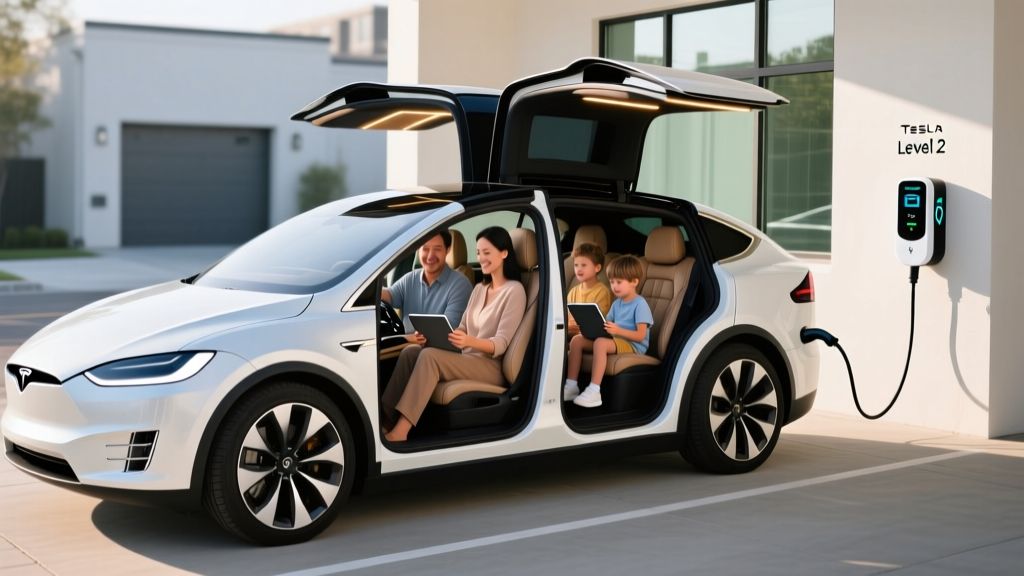
| Level 2 (240V, 48A Wall Connector) | 11.5 kW | 37–44 mi/hr | Daily home charging |
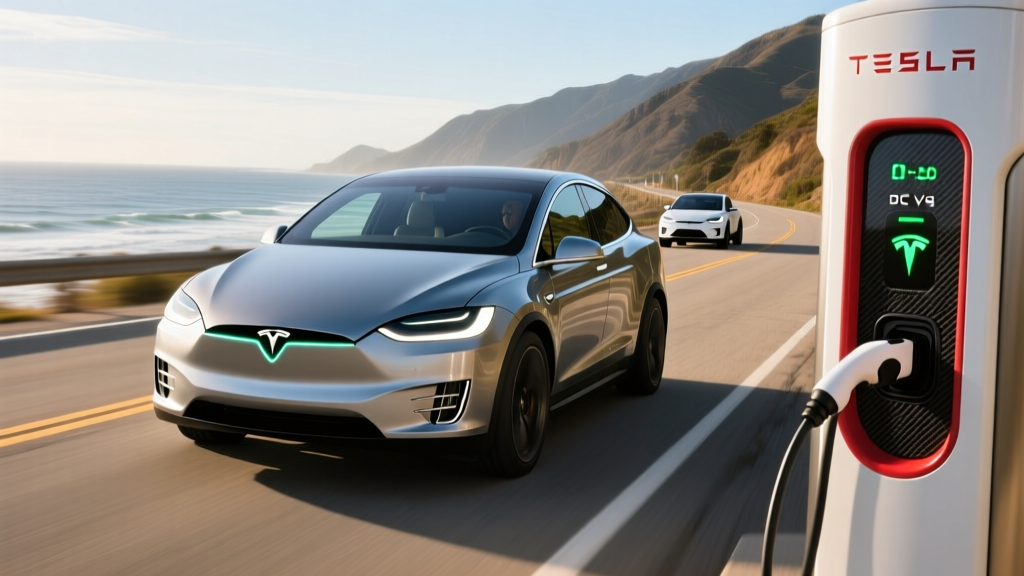
| DC Fast (V3/V4 Supercharger) | Up to 250 kW | ~170 mi in 15 min | Road trips |
Charging curve reality: Tesla's 250 kW peak is exactly that — a peak. The charge rate tapers significantly above 50–60% state of charge (SoC). A Model Y Long Range will pull close to 250 kW from roughly 10–30% SoC, then step down to ~150 kW through 50%, ~80 kW through 70%, and below 40 kW above 85%. This is why Tesla (and the EPA) quote 10–80% times rather than 0–100% — the final 20% can take as long as the first 70%.
Preconditioning matters: When you navigate to a Supercharger using the Tesla navigation system, the car automatically preconditions (warms) the battery to optimal charging temperature. If you arrive at a Supercharger without preconditioning — especially in cold weather — your peak charge rate may be cut in half until the battery warms up. Always navigate to the charger rather than driving there manually.
Pricing, Tax Credits & Total Cost
Tesla's pricing has stabilized after several years of volatility. Here's where the 2026 lineup stands, along with federal tax credit eligibility under IRS §30D rules.
| Model / Trim | Base MSRP | §30D Credit Eligible? | Est. After Credit |
|---|---|---|---|
| Model 3 RWD | $38,990 | Up to $7,500* | ~$31,490 |
| Model 3 Long Range AWD | $44,990 | Up to $7,500* | ~$37,490 |
| Model Y Long Range AWD | $47,990 | Up to $7,500* | ~$40,490 |
| Model S Long Range | $79,990 | No (exceeds MSRP cap) | $79,990 |
| Model X Long Range | $84,990 | No (exceeds MSRP cap) | $84,990 |
| Cybertruck AWD | $79,990 | No (exceeds MSRP cap) | $79,990 |
*§30D credit eligibility requirements (2026):
- MSRP cap: Sedans (Model 3) must be ≤$55,000; SUVs/pickups (Model Y, Cybertruck) must be ≤$80,000. Model S, Model X, and Cyberbeast trims exceed these caps.
- Buyer income cap: Modified AGI must not exceed $150,000 (single), $225,000 (head of household), or $300,000 (joint).
- Battery sourcing: The credit is split into two halves ($3,750 each) — one for critical-minerals sourcing and one for battery-component manufacturing. Tesla's US-built battery cells (from the Austin and Nevada gigafactories) currently qualify for both halves on Model 3 and Model Y, but sourcing rules tighten annually. Verify current eligibility at the point of sale.
- Point-of-sale transfer: You can transfer the credit to Tesla at purchase to reduce your out-of-pocket cost immediately, rather than waiting to claim it on your tax return.
Always confirm eligibility with your tax professional and check the latest IRS guidance at irs.gov. Rules change frequently.
Pros and Cons of Buying a HW4.5 Tesla in 2026
- Best-in-class Supercharger network — over 20,000 stalls in North America with industry-leading uptime
- FSD (Supervised) on HW4.5 is the most capable Level 2 system available for consumer purchase
- Over-the-air updates continuously add features and improve performance post-purchase
- Class-leading efficiency (kWh/100mi) across Model 3 and Model Y
- Minimalist interior means fewer physical components to fail
- Strong resale value relative to most EV competitors
- NACS connector is now the North American standard — future-proof
- Camera-only Tesla Vision still struggles in heavy rain, fog, and direct low-sun glare
- No Apple CarPlay or Android Auto — Tesla's proprietary infotainment is the only option
- FSD (Supervised) costs $8,000 upfront or $99/month and remains a Level 2 system — not autonomous
- Minimalist interior lacks physical controls for climate, mirrors, and glovebox (all screen-based)
- Service center wait times remain long in many metro areas
- Insurance premiums are above segment average (Tesla-specific repair costs)
- No HUD (head-up display) or traditional instrument cluster
Who Should Buy a Tesla with Hardware 4.5?
Hardware 4.5 doesn't change which Tesla model is right for you — that's still a function of budget, space needs, and driving patterns. But it does make the FSD experience meaningfully better than on older hardware, which matters if you plan to subscribe to or purchase FSD.
Choose a HW4.5 Tesla if:
- Daily commuters on highways: FSD (Supervised) on HW4.5 excels in highway driving — lane-keeping, speed management, and on/off-ramp navigation are its strongest use cases. A Model 3 LR or Model Y LR with FSD reduces fatigue on long commutes substantially.
- Tech-forward buyers: If you value OTA updates, app integration, and a software-defined vehicle experience, Tesla remains unmatched. HW4.5 ensures you're running the latest neural-network stacks for years to come.
- Road-trippers who want reliable fast charging: Tesla's Supercharger network is still the gold standard for cross-country travel. Route planning, preconditioning, and payment are fully integrated.
- Families needing cargo space: The Model Y offers 76 cu ft of cargo volume with rear seats folded (30 cu ft behind the second row), plus a small front trunk (frunk). It's the segment's best-selling EV for a reason.
Look elsewhere if:
- You want Apple CarPlay/Android Auto or a traditional instrument cluster
- You frequently drive in heavy rain, fog, or snow where camera-only systems are disadvantaged
- You want a hands-off, genuinely autonomous driving experience (no consumer vehicle offers this yet)
- You prefer dealership service and in-person support over mobile technicians and service-center appointments
Warranty & Long-Term Ownership
Tesla's warranty structure is straightforward and competitive within the EV segment:
- Basic Vehicle Limited Warranty: 4 years / 50,000 miles, whichever comes first
- Battery & Drive Unit Warranty:
- Model 3 RWD: 8 years / 100,000 miles (70% minimum capacity retention)
- Model 3 LR / Model Y / Model S / Model X: 8 years / 120,000 miles (70% minimum retention)
- Cybertruck: 8 years / 120,000 miles (70% minimum retention)
- Hardware 4.5 computer: Covered under the basic vehicle warranty. If you purchase FSD, Tesla has historically replaced HW computers under the FSD warranty, but this is not contractually guaranteed — confirm at purchase.
Tesla's battery degradation data from fleet reporting shows most NMC packs retain 88–92% capacity at 100,000 miles. LFP packs (used in some Model 3 RWD trims) show even slower degradation, often above 95% at 100,000 miles, but carry a lower energy density (hence shorter range).
Frequently Asked Questions
Can I upgrade my older Tesla to Hardware 4.5?
No. Tesla does not offer a retrofit from HW3 or HW4 to HW4.5. The AI computer is integrated into the vehicle's electrical architecture, and the camera harnesses, cooling systems, and mounting points differ between generations. If you want HW4.5, you need a 2026 (or late-2025 production) vehicle.
Does Hardware 4.5 make the car drive itself?
No. Hardware 4.5 improves the processing power and perception quality for Tesla's FSD (Supervised) system, but FSD remains an SAE Level 2 driver-assistance feature. You must remain attentive, keep your hands available, and take over at any time. Tesla's cabin camera monitors driver engagement and will issue warnings — and eventually disable Autopilot for the trip — if you fail to pay attention.
Is FSD worth the $8,000 purchase price on HW4.5?
That depends on your driving patterns and expectations. If you commute 40+ highway miles daily, FSD reduces mental fatigue meaningfully and handles lane changes, merges, and navigation with fewer disengagements on HW4.5 than on prior hardware. However, you are paying $8,000 for a supervised assist system, not autonomy. The $99/month subscription is a lower-risk way to evaluate whether the feature adds value for your specific routes before committing to a purchase.
Does HW4.5 affect insurance costs?
Indirectly. Tesla's insurance premiums are driven by repair costs (aluminum body panels, integrated sensor/camera arrays, proprietary parts) rather than the AI computer generation. HW4.5 does not increase or decrease your premium relative to HW4. Expect insurance costs 15–30% above comparable non-Tesla EVs — get quotes before purchasing.
Will HW4.5 vehicles get new FSD features that HW4 won't?
Tesla has not announced any feature gating between HW4 and HW4.5. Both architectures run the same FSD (Supervised) software builds as of early 2026. However, HW4.5's thermal and processing headroom means it will likely support more computationally intensive neural-network models in future OTA updates — models that may eventually exceed HW4's capacity. This is speculative; Tesla has not confirmed a divergence.
How does Tesla's HW4.5 compare to competitors' driver-assist hardware?
Competitors like GM's Super Cruise and Ford's BlueCruise also use advanced sensor suites (GM includes lidar in some applications) and offer hands-free driving on pre-mapped highways — a capability Tesla's camera-only system does not yet match reliably. However, Tesla's FSD coverage area is effectively unlimited (it works on any road), while Super Cruise and BlueCruise are restricted to ~400,000 and ~130,000 miles of pre-mapped divided highways, respectively. HW4.5's compute advantage matters most in complex, unmapped urban environments where Tesla's neural-network approach must process more variables in real time.
Safety ratings: Check current NHTSA and IIHS scores for specific Tesla models before purchasing. Ratings vary by model year and body style.