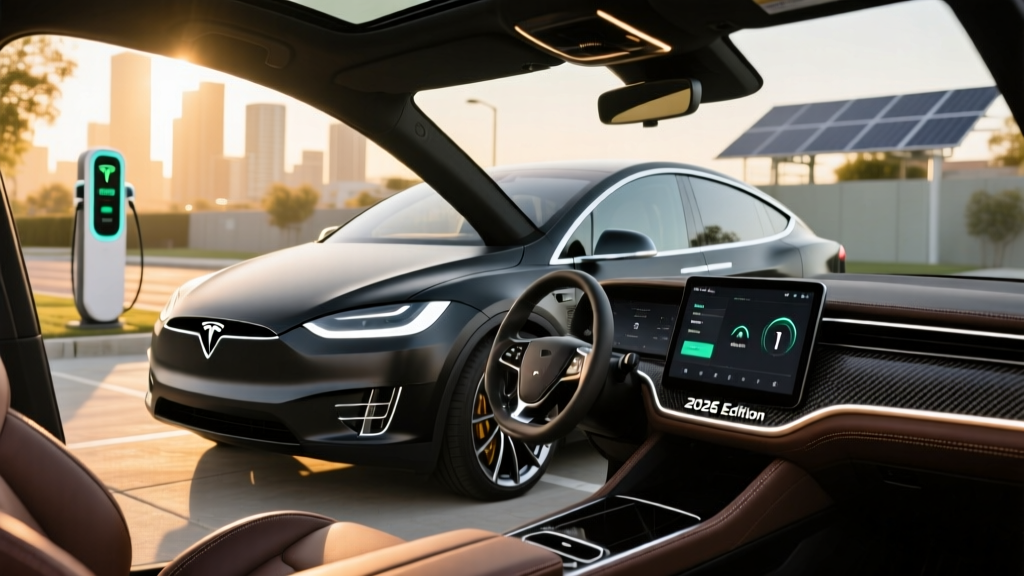
Why Tesla Owners Turn to Tesla Hacking
Tesla's over-the-air software updates have always hidden easter eggs, undocumented menus, and power-user tweaks that never make it into the official owner's manual. The term Tesla hacking doesn't mean breaking into anything — it refers to the community-driven practice of discovering hidden settings, optimizing efficiency, and pushing the vehicle's software beyond its default behavior. Whether you drive a 2025-2026 Model 3 Highland, a refreshed Model Y Juniper, or a Performance variant, there are real, actionable techniques that can improve your daily driving, charging, and ownership experience.
This guide pairs the best Tesla hacking tricks with a complete spec breakdown so you know exactly what your vehicle is capable of — and how to extract every mile, kilowatt, and minute of charge time from it.
2026 Tesla Model 3 & Model Y: The Spec Sheet That Matters
Before diving into hidden menus, you need the baseline numbers. Here are the confirmed specs for the current-generation lineup sold in the U.S. as of the 2026 model year:
| Spec | Model 3 Long Range AWD | Model 3 Performance | Model Y Long Range AWD | Model Y Performance |
|---|---|---|---|---|
| EPA Range | 341 mi | 315 mi | 320 mi | 295 mi |
| Battery (usable) | ~79 kWh (NMC) | ~79 kWh (NMC) | ~78 kWh (NMC) | ~78 kWh (NMC) |
| Drivetrain | Dual-Motor AWD | Dual-Motor AWD | Dual-Motor AWD | Dual-Motor AWD |
| Horsepower | ~346 hp | ~510 hp | ~384 hp | ~456 hp |
| 0–60 mph | 4.2 sec | 2.9 sec | 4.8 sec | 3.5 sec |
| Max DC Fast Charge | 250 kW | 250 kW | 250 kW | 250 kW |
| 10–80% DC Time | ~27 min | ~27 min | ~27 min | ~27 min |
| Level 2 Home Rate | 11.5 kW (~44 mi/hr) | 11.5 kW (~44 mi/hr) | 11.5 kW (~44 mi/hr) | 11.5 kW (~44 mi/hr) |
| MPGe (combined) | 132 MPGe | 119 MPGe | 122 MPGe | 111 MPGe |
| Base MSRP | $47,740 | $54,990 | $49,990 | $54,990 |
Sources: fueleconomy.gov, Tesla.com spec sheets.
Real-World Range: What the EPA Sticker Doesn't Tell You
EPA Sticker vs. Reality
The Model 3 Long Range carries a 341-mile EPA rating, but real-world highway driving at 70–75 mph typically yields 270–295 miles in moderate temperatures. In winter conditions (below 30°F), expect a 20–30% reduction, dropping effective range to roughly 220–260 miles. The heat pump on Highland/Juniper models recovers some efficiency versus older resistive heaters, but cold-soaked batteries still lose capacity until preconditioned.
Tesla Hacking Tip — Energy App Calibration: Navigate to the Energy app (swipe up from the bottom of the touchscreen) and switch from "Average" to "Instant" consumption view. This shows real-time kW draw, letting you identify exactly how speed, HVAC, and elevation affect your efficiency. Many owners discover that dropping highway speed from 75 to 68 mph adds 25–40 miles of range — a finding you'd never see on the EPA label.
Charging Hacks: Squeezing More Out of Every Supercharger Stop
Tesla's V3 and V4 Superchargers peak at 250 kW, but the charge curve is far from flat. Here's the breakdown:
| State of Charge | Approx. Power | Notes |
|---|---|---|
| 10–30% | 220–250 kW | Peak sustained only with preconditioning |
| 30–50% | 170–200 kW | Gradual taper begins |
| 50–70% | 120–150 kW | Noticeable slowdown |
| 70–80% | 75–100 kW | Significant taper — plan stops to avoid |
| 80–100% | 20–50 kW | Only for destination charging patience |
Tesla Hacking Tip — Preconditioning Without Navigation: Tesla's navigation system automatically preconditions the battery when you route to a Supercharger. But if you're using a third-party app or driving a familiar route, you can manually trigger preconditioning by navigating to any nearby Supercharger, even if you don't intend to stop there. The car will begin warming the pack 10–20 minutes before arrival, ensuring you hit peak charge rates. Cancel navigation once preconditioning starts — the battery stays warm for several minutes.
Level 2 Home Charging: At 11.5 kW on a 48-amp circuit, you'll recover roughly 44 miles per hour of charging. A full overnight session (8 hours) adds about 350 miles — more than enough for any daily commute. If your electrical panel supports a 60-amp circuit, the onboard charger maxes at 11.5 kW regardless, so don't overspend on heavier-gauge wire.
Hidden Menus, Easter Eggs, and Software Tricks
Tesla's software is full of undocumented features that the community has cataloged over years of updates. Here are the most practical ones for 2025–2026 vehicles:
1. The Secret Service Menu
Press and hold the "Model" badge on the "About" screen (Controls → Software → Vehicle Information) for 3 seconds. A text field appears — type "service" to unlock a diagnostic menu. This reveals detailed battery cell voltage data, thermal management status, and drive unit temperatures. While not every parameter is actionable, monitoring cell voltage spread (ideal: under 20 mV across modules) can give early warning of pack imbalance.
2. Custom Acceleration Profiles
Beyond the standard Chill and Sport modes, some firmware versions allow you to create named acceleration profiles with custom torque curves. Navigate to Pedals & Steering → Acceleration, then long-press the profile name to rename and save. Pair this with custom steering weight and regen settings for driver-specific presets that sync to your key fob or phone key.
3. Scheduled Departure + Preconditioning Synergy
Set Scheduled Departure (Controls → Charging → Schedule) to warm both the cabin and the battery pack before your commute. This is the single most impactful efficiency hack for cold-climate owners — a preconditioned battery recovers regen braking immediately, whereas a cold pack may disable regen for the first 5–15 miles, forcing you to use friction brakes and waste energy.
4. Sentry Mode Optimization
Sentry Mode can drain 1–2 miles of range per hour if left active 24/7. Use the "Exclude Home" and "Exclude Work" settings (Controls → Safety → Sentry Mode) to automatically disable it at locations where you don't need it. Power users also set Sentry to deactivate below 20% SoC to protect range on multi-day trips without charging access.
Federal Tax Credit Eligibility: What You'll Actually Pay
For the 2026 tax year, the IRS §30D Clean Vehicle Credit offers up to $7,500, split into two halves: $3,750 for battery component sourcing and $3,750 for critical minerals. Eligibility depends on several factors:
- MSRP Cap: Sedans (Model 3) must be under $55,000; SUVs/trucks (Model Y) must be under $80,000. The Model 3 Performance at $54,990 clears the sedan cap, but adding options can push it over.
- Buyer Income Cap: AGI must not exceed $150,000 (single), $225,000 (head of household), or $300,000 (joint).
- Battery Sourcing: Battery components must be manufactured or assembled in North America (percentage thresholds increase annually). Critical minerals must be sourced from the U.S. or free-trade-agreement partners.
- Point-of-Sale Transfer: You can transfer the credit to the dealer at purchase, reducing your out-of-pocket cost immediately rather than waiting for tax filing.
Important: Tesla's battery sourcing compliance changes periodically. Always verify current eligibility at fueleconomy.gov and consult IRS.gov §30D guidance before purchasing. Tax professionals can confirm your personal eligibility.
| Model | Base MSRP | Est. Credit | Effective Price (if eligible) |
|---|---|---|---|
| Model 3 Long Range AWD | $47,740 | Up to $7,500 | ~$40,240 |
| Model 3 Performance | $54,990 | Up to $7,500 | ~$47,490 |
| Model Y Long Range AWD | $49,990 | Up to $7,500 | ~$42,490 |
| Model Y Performance | $54,990 | Up to $7,500 | ~$47,490 |
Autopilot and FSD (Supervised): What Tesla Hacking Can't Change
SAE Level 2 — Not Self-Driving
Both Autopilot and Full Self-Driving (Supervised) are SAE Level 2 driver-assistance systems. The driver must remain fully engaged, hands on or near the wheel, and eyes on the road at all times. No Tesla hacking technique, software mod, or third-party device can elevate these systems to Level 4 autonomy. Attempting to defeat driver-monitoring is dangerous and violates Tesla's terms of service.
What you can optimize: FSD's behavior profiles (now adjustable between "Assertive" and "Cautious") affect following distance, lane-change urgency, and yellow-light behavior. Many owners find the Assertive profile more natural for highway driving, while Cautious is preferable in dense urban traffic. These settings are in Controls → Autopilot → FSD Profile.
Pros, Cons, and Who Should Buy
Pros
- Supercharger network remains the most reliable DC fast-charging ecosystem in North America
- Over-the-air updates continuously add features — the car improves after purchase
- Industry-leading efficiency (kWh/mi) translates to lower charging costs per mile
- Strong resale value relative to most EV competitors
- Extensive owner community means Tesla hacking tips and troubleshooting are always available
Cons
- 250 kW peak charge rate now trails competitors like the Hyundai Ioniq 5 (350 kW capability)
- No Apple CarPlay or Android Auto — Tesla's native infotainment is the only option
- Panel gap quality and interior material choices still lag luxury competitors at this price point
- FSD (Supervised) requires a $8,000 option or $99/month subscription with no guarantee of full autonomy
- Service center wait times in high-population areas can stretch to weeks for non-critical repairs
Who It's For: The Model 3 and Model Y are ideal for tech-savvy commuters and small families who value software-driven optimization, frequent over-the-air improvements, and access to the Supercharger network. Road trippers benefit enormously from Tesla's route planning and charging integration. If you enjoy tinkering with settings and extracting efficiency gains, the Tesla hacking ecosystem offers more depth than any competitor's owner community.
Warranty Coverage and Long-Term Ownership
Tesla's warranty structure is competitive with the broader EV market:
- Basic Vehicle: 4 years / 50,000 miles
- Battery & Drive Unit: 8 years / 120,000 miles (Long Range/Performance) — guaranteed to retain at least 70% capacity during the warranty period
- Corrosion: 12 years, unlimited miles (perforation only)
Real-world battery degradation data from owner fleets shows NMC packs in the Model 3/Y losing approximately 8–12% capacity over the first 100,000 miles, with degradation slowing significantly after the initial break-in period. Daily charging to 80% (rather than 100%) and avoiding prolonged high-SoC storage are the two most effective Tesla hacking strategies for long-term battery health.
Frequently Asked Questions
What is the real-world range of the 2026 Tesla Model 3 Long Range?
The EPA rates it at 341 miles, but expect 270–295 miles in real-world highway driving at moderate temperatures, and 220–260 miles in sub-freezing winter conditions. City driving with regen braking can approach or slightly exceed the EPA number.
How fast does a Tesla Model Y charge at home and on the road?
On a Level 2 home charger (11.5 kW / 48-amp circuit), you'll gain approximately 44 miles of range per hour, or about 350 miles in 8 hours. At a V3/V4 Supercharger, the 10–80% charge takes roughly 27 minutes when the battery is properly preconditioned.
Does the Tesla Model 3 qualify for the $7,500 federal tax credit?
It can, but eligibility depends on your AGI (income caps apply), the vehicle's MSRP (must be under $55,000 for sedans), and current battery-sourcing compliance. Check fueleconomy.gov for the latest qualifying VIN configurations and consult a tax professional.
Is Tesla hacking legal and safe?
Yes — Tesla hacking refers to discovering hidden software settings, optimizing charge routines, and using undocumented menus. It does not involve modifying firmware, bypassing safety systems, or violating terms of service. Never attempt to defeat driver-monitoring or alter battery management software.
Is the Tesla Model 3 or Model Y worth buying over competitors in 2026?
If you prioritize charging infrastructure, software sophistication, and efficiency, Tesla still leads. If you prefer faster peak charging (Hyundai Ioniq 5 at 350 kW), traditional infotainment (CarPlay), or a more luxurious interior (BMW i4), competitors have closed the gap significantly. The Supercharger network remains Tesla's strongest competitive advantage.