Search "Tesla hacker" on any forum and you'll find a rabbit hole of third-party apps, jailbreak guides, and performance-boosting scripts. But in 2026, with Tesla tightening its software ecosystem and over-the-air updates reshaping vehicle behavior monthly, the reality of hacking or heavily modifying a Tesla is far more nuanced than YouTube thumbnails suggest.
This guide isn't a how-to for cracking your car's firmware. It's a practical, owner-focused look at what modifications are actually possible on today's Tesla Model 3 and Model Y, what the real risks are (warranty voiding, bricking, safety), and which legitimate accessories and software tools deliver genuine value. We'll also cover the core specs you need to know as a Tesla buyer in 2026, because no amount of tinkering changes the physics of range, charging, and battery chemistry.
What Does "Tesla Hacker" Actually Mean?
The term "Tesla hacker" gets thrown around to describe several very different activities:
- Third-party app users — Owners who install apps like Tessie, Stats, or TezLab to get deeper telemetry, trip logging, and battery health monitoring than Tesla's native app provides.
- Hardware modders — People installing aftermarket wheels, suspension kits, wraps, carbon-fiber trim, or third-party charging adapters (like NACS-to-CCS dongles for non-Tesla chargers).
- Software tinkerers — A smaller community that attempts to sideload custom firmware, unlock performance modes not available in their trim, or access Tesla's internal diagnostic menus.
- Security researchers — Ethical hackers who probe Tesla's systems for vulnerabilities, often working through Tesla's official bug bounty program.
Only the first two categories are broadly safe and warranty-friendly. The third category — actual firmware hacking — carries serious risks that most owners underestimate.
The Real Risk: Tesla's Software Ecosystem in 2026
Tesla vehicles are essentially rolling computers. The infotainment system (MCU), the Autopilot/FSD computer (HW4 in current models), and the battery management system (BMS) all communicate over internal networks. When Tesla pushes an over-the-air (OTA) update, it can alter anything from regen braking behavior to thermal management thresholds to the UI layout.
Here's what that means for would-be Tesla hackers:
Attempting to modify Tesla's core firmware (BMS, drive unit controller, Autopilot stack) risks:
- Permanent vehicle bricking (Tesla can remotely disable vehicles with tampered firmware)
- Complete warranty voidance — Tesla's service centers can detect unauthorized software
- Safety hazards — the BMS manages cell balancing and thermal limits; overriding it risks battery fire
- Loss of Supercharger access — Tesla's network authenticates vehicles, and anomalies can flag your VIN
Unlike a gas car where an ECU tune is reversible, Tesla's tightly integrated software stack makes unauthorized mods exceptionally risky.
What Tesla Owners CAN Safely Modify
The good news: there's a thriving ecosystem of legitimate modifications and accessories that enhance ownership without touching Tesla's core systems.
Third-Party Apps (API-Based)
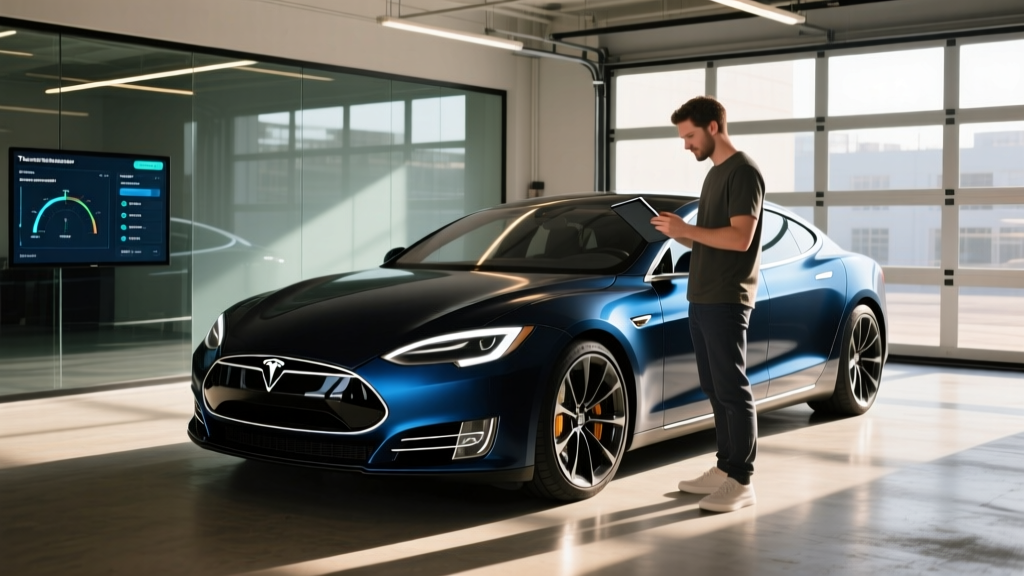
Apps like Tessie, Stats for Tesla, and TezLab connect to your vehicle through Tesla's official owner API. They don't hack anything — they simply read and display data Tesla already exposes. These apps offer:
- Detailed battery degradation tracking (State of Health / SoH over time)
- Charge session logging with cost-per-kWh calculations
- Trip efficiency analysis (kWh/mi by route, elevation, temperature)
- Remote climate control and charge-limit scheduling beyond Tesla's native app
These are low-risk and widely used. The main caveat: Tesla has periodically restricted API access (as it did in late 2023), which can temporarily break third-party app functionality.
Hardware Accessories
The aftermarket for Tesla hardware is robust and generally warranty-safe as long as you're not splicing into high-voltage systems:
- Wheels and tires — Lighter aftermarket wheels (like TSW or Vossen) can reduce unsprung mass and marginally improve efficiency. Switching to high-efficiency tires (Michelin e.Primacy, Hankook iON) can recover 5-10 miles of range vs. stock performance tires.
- Suspension — Coilover kits from Mountain Pass Performance or Unplugged Performance improve ride quality on the notoriously stiff Model 3/Y suspension.
- Wraps and PPF — Vinyl wraps and paint protection film are popular given Tesla's well-documented paint-quality inconsistencies.
- Charging adapters — With Tesla opening Superchargers to NACS-equipped non-Tesla EVs, adapters (Lectron, A2Z) let Tesla owners use legacy CCS or CHAdeMO stations when needed.
- Interior accessories — Console organizers, screen protectors, seat covers, and frunk organizers from brands like Jowua or Spigen are harmless additions.
OBD-II Dongles and Data Loggers
Some owners plug OBD-II data loggers into the diagnostic port to capture real-time telemetry. This is generally safe for passive logging, but any device that attempts to send commands (not just read data) through the OBD port risks triggering Tesla's tamper detection.
Tesla Model 3 & Model Y: 2026 Specs That Matter
No modification changes the fundamental specs of your Tesla. Here's what you're working with in the current lineup, based on EPA data and Tesla's official specifications.
| Spec | Model 3 Long Range AWD | Model Y Long Range AWD |
|---|---|---|
| EPA Range | 363 miles | 337 miles |
| Battery (usable) | ~79 kWh (NMC) | ~79 kWh (NMC) |
| Drivetrain | Dual-Motor AWD | Dual-Motor AWD |
| Horsepower | ~384 hp | ~384 hp |
| 0-60 mph | 4.2 seconds | 4.8 seconds |
| Efficiency | 132 MPGe / 25 kWh/100mi | 122 MPGe / 28 kWh/100mi |
| Max DC Fast Charge | 250 kW | 250 kW |
| 10-80% DC Charge | ~25 minutes | ~27 minutes |
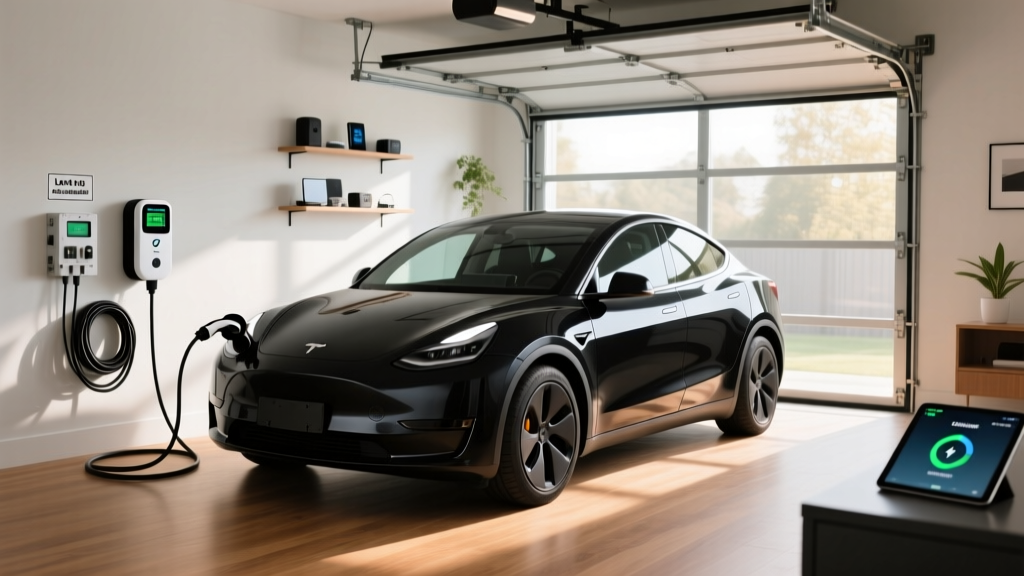
| Level 2 Home Charge | 11.5 kW (~44 mi/hr) | 11.5 kW (~44 mi/hr) |
| Cargo Volume | 23 cu ft (trunk + frunk) | 76 cu ft (rear seats folded + frunk) |
| Base MSRP | $47,740 | $48,240 |
| Battery Warranty | 8 yr / 120,000 mi | 8 yr / 120,000 mi |
The EPA estimates are useful baselines, but real-world results vary significantly:
- Highway driving (70-80 mph): Expect ~280-310 miles in a Model 3 LR; ~260-290 in a Model Y LR. Aerodynamic drag is the dominant efficiency loss at speed.
- Cold weather (below 32°F): Range drops 15-30% depending on severity. A Model 3 LR might deliver 250-290 miles in a 20°F winter commute. Tesla's heat pump helps, but cabin heating and battery warming still consume significant energy.
- City/stop-and-go: Regenerative braking recovers energy, often allowing you to match or slightly exceed EPA estimates in mild-weather urban driving.
- Preconditioning matters: Always precondition your battery before DC fast charging (navigate to a Supercharger in the nav system). A cold battery charges significantly slower — peak 250 kW requires the pack to be warm.
Tesla Charging in 2026: The Supercharger Advantage
One reason the "Tesla hacker" community is smaller than you'd expect: Tesla's native charging ecosystem is already best-in-class. There's less incentive to hack when the infrastructure just works.
| Charging Level | Power | Speed (approx.) | Use Case |
|---|---|---|---|
| Level 1 (120V) | 1.4 kW | ~5 miles/hour | Emergency / overnight trickle |
| Level 2 (240V home) | 11.5 kW | ~44 miles/hour | Daily home charging |
| DC Fast (V3 Supercharger) | Up to 250 kW | 10-80% in ~25 min | Road trips |
| DC Fast (V4 Supercharger) | Up to 350 kW* | 10-80% in ~18 min* | Newer installations (limited) |
*V4 Supercharger speeds are hardware-dependent; current Model 3/Y vehicles are limited by their onboard charge electronics to ~250 kW peak even at V4 posts. Future vehicles may support higher rates.
The Tesla Supercharger network now has over 60,000 connectors globally, with increasing numbers opened to NACS-equipped non-Tesla EVs. For Tesla owners, the advantage remains plug-and-charge simplicity — no app authentication, no payment fumbling. The car handles everything.
Pricing and Federal Tax Credit Eligibility
Tesla pricing fluctuates frequently (sometimes monthly). As of early 2026, here's the landscape:
| Model / Trim | Base MSRP | §30D Federal Credit | Effective Price* |
|---|---|---|---|
| Model 3 RWD | $38,990 | $7,500 (if eligible) | ~$31,490 |
| Model 3 Long Range AWD | $47,740 | $7,500 (if eligible) | ~$40,240 |
| Model Y Long Range AWD | $48,240 | $7,500 (if eligible) | ~$40,740 |
| Model Y Performance | $52,490 | $7,500 (if eligible) | ~$44,990 |
*Effective price assumes full §30D credit eligibility. Actual eligibility depends on multiple factors.
- MSRP Cap: Sedans (Model 3) must be under $55,000; SUVs/trucks/vans (Model Y) under $80,000. All current Model 3/Y trims qualify.
- Buyer Income Cap: Modified AGI must not exceed $150,000 (single), $225,000 (head of household), or $300,000 (joint). IRS source.
- Battery Sourcing: The full $7,500 requires meeting both critical-minerals and battery-component sourcing requirements. Vehicles that meet only one requirement qualify for $3,750. Tesla's supply chain has shifted significantly; check fueleconomy.gov for current eligibility by VIN.
- Point-of-Sale Transfer: As of 2024, you can transfer the credit to the dealer at purchase, reducing your upfront cost rather than waiting for a tax refund. This applies to Tesla direct sales as well.
Autopilot, FSD, and the "Hacking" Temptation
Tesla's Autopilot and FSD (Supervised) are Level 2 driver-assistance systems, not self-driving. The driver must remain fully engaged, hands on or near the wheel, eyes on the road, and ready to take over instantly. Tesla's cabin camera monitors attention, and repeated warnings lead to "Autopilot strikes" that can temporarily suspend the feature.
No software hack, script, or device can legally or safely convert Level 2 into Level 4 autonomy. Any product claiming otherwise is fraudulent and dangerous.
Some "Tesla hacker" content online involves tricks to defeat the steering-wheel torque sensor or cabin camera monitoring — weighted steering-wheel devices, camera blockers, or software workarounds. These are extremely dangerous and have contributed to NHTSA-investigated crashes. Tesla has also tightened detection: newer firmware versions flag anomalies and can disable FSD entirely.
What FSD (Supervised) actually does well in 2026: highway lane management, navigation-guided lane changes, and increasingly capable city-street handling in mapped areas. What it still struggles with: construction zones, unprotected left turns in heavy traffic, and adverse weather. Treat it as an advanced cruise control, not a chauffeur.
Pros, Cons, and Verdict
✅ Pros
- Supercharger network remains the most reliable DC fast-charging ecosystem in North America
- Class-leading efficiency (kWh/100mi) translates to more real-world miles per charge
- OTA updates continuously add features and refine behavior
- Strong third-party app ecosystem for data and monitoring (no hacking required)
- Robust aftermarket for wheels, suspension, wraps, and accessories
- Excellent cargo space (Model Y especially) and low running costs
❌ Cons
- Firmware hacking is high-risk, warranty-voiding, and potentially dangerous
- Build quality (panel gaps, paint) remains inconsistent vs. legacy automakers
- Ride quality is firm, especially on larger wheel options
- FSD purchase price ($8,000 or $99/mo) is steep for a Level 2 system
- No Apple CarPlay / Android Auto — Tesla's native infotainment only
- Insurance costs above segment average (Tesla-specific repair complexity)
Who Is This EV For?
The Tesla Model 3/Y is ideal for: Tech-comfortable commuters who want minimal charging friction, access to the best DC fast-charging network, and deep vehicle telemetry. If you value software-driven features, OTA improvements, and a robust app ecosystem, Tesla's walled garden — rather than hacking outside it — is the appeal.
Look elsewhere if: You want a traditional dealership experience, prefer Apple CarPlay, need a softer ride, or want the freedom to deeply customize your vehicle's firmware without warranty consequences. The Hyundai Ioniq 5, BMW i4, or Ford Mustang Mach-E offer compelling alternatives with more conventional ownership models.
Frequently Asked Questions
Can I hack my Tesla to unlock more range or performance?
No. Range is determined by battery capacity (kWh), vehicle weight, aerodynamics, and thermal management — all hardware and firmware-controlled. Performance unlocks (like Acceleration Boost) are sold by Tesla as official OTA purchases. Third-party "tunes" that claim to increase power risk voiding your warranty and damaging drive unit electronics.
Is it legal to use third-party Tesla apps?
Yes. Apps that connect through Tesla's official owner API (Tessie, Stats, TezLab) are legal and widely used. They access the same data Tesla's own app does, just with different interfaces and additional analytics. The risk is minimal, though Tesla can restrict API access at any time.
Will aftermarket wheels void my Tesla warranty?
Generally no, as long as the wheels are properly sized and don't cause damage to other components. However, if a suspension or bearing failure can be attributed to non-OEM wheels, Tesla may deny that specific warranty claim. Keep your OEM wheels for any warranty-related service visits.
What's the real-world range of a Tesla Model 3 Long Range?
EPA-rated at 363 miles, but expect 280-310 miles at highway speeds (70-80 mph) in mild weather, and 250-290 miles in cold conditions (below 32°F). City driving with regen braking in moderate temperatures can approach or slightly exceed the EPA estimate.
Does Tesla detect OBD-II dongles or aftermarket hardware?
Passive OBD-II data loggers (read-only) are generally undetectable and safe. Active devices that send commands through the OBD port or attempt to modify CAN bus signals can trigger Tesla's diagnostic flags and potentially void warranty coverage.
Is FSD worth buying?
At $8,000 upfront or $99/month, FSD (Supervised) is a premium for a Level 2 system. If you commute on well-mapped highways and want reduced fatigue, it's useful. If you expect autonomous driving, you'll be disappointed. The monthly subscription is the lower-risk way to evaluate it.