Quick Verdict: Is Your Tesla Safe From Hacking?
The search term "Tesla hacked" spikes every time a viral video shows a keyless-entry relay attack or a third-party app data scrape. But for actual owners and shoppers, the real question is narrower: how vulnerable is the 2026 Tesla Model Y to digital intrusion, and does the rest of the EV still deliver as a daily driver?
After testing the refreshed 2026 Model Y Long Range AWD and digging into Tesla's over-the-air security patches, here's the bottom line: Tesla's vehicle-level cybersecurity remains among the strongest in the industry thanks to encrypted BLE keys, a sandboxed infotainment OS, and continuous OTA hardening. The real risks are owner-side — phishing your Tesla account credentials, using weak passwords, or leaving Phone Key enabled on a compromised device. Meanwhile, the Model Y itself continues to set the bar for efficiency, charging speed, and cargo practicality in the compact electric SUV segment.
| Spec | Value |
|---|---|
| EPA Range | 320 miles |
| Battery (usable) | ~75 kWh, NMC (2170 cells) |
| Drivetrain | Dual-motor AWD |
| 0–60 mph | 4.8 seconds |
| Horsepower | 384 hp combined |
| Peak DC Fast Charge | 250 kW (CCS via NACS adapter or native NACS) |
| 10–80% DC Time | ~25 minutes |
| Level 2 Home Charge | 11.5 kW / ~44 mi/hr |
| MPGe (combined) | 122 MPGe |
| Efficiency | 28 kWh/100 mi |
| Cargo (rear seats up) | 34 cu ft |
| Cargo (rear seats folded) | 72 cu ft |
| Base MSRP | $44,990 |
| Battery Warranty | 8 years / 120,000 miles |
The "Tesla Hacked" Reality: What's Real and What's Hype
Most "Tesla hacked" headlines fall into three categories, and understanding them is critical before you dismiss or panic:
1. Keyless Entry Relay Attacks
Like any vehicle with passive-entry BLE or NFC keys, the Model Y can theoretically be opened if thieves amplify your phone key or key fob signal from inside your house. Tesla mitigated this with the 2023 introduction of Phone Key signal encryption and a user-toggleable "Require PIN to Drive" setting. Enable that PIN, and even a stolen-unlocked car won't shift into gear. In our testing, the 2026 Model Y's BLE handshake resisted common relay hardware that still works on older keyless-entry gas vehicles.
2. Account Takeover & Phishing
The more common real-world attack vector is credential phishing — fake "Tesla support" emails that steal your tesla.com login. Once in, an attacker can remotely unlock via the app, add their own phone key, and drive away. This isn't a Tesla software flaw; it's an owner-hygiene issue. Tesla supports hardware security keys (FIDO2/U2F) for account 2FA, and enabling this makes remote takeover effectively impossible. We recommend every owner set this up during delivery day.
3. Fleet-Wide Software Exploits
Security researchers (notably at Black Hat and DEF CON) have demonstrated proof-of-concept exploits against Tesla's browser and Bluetooth stack in prior years. Tesla's response time has been consistently under 30 days via OTA patches — faster than most legacy OEMs manage for infotainment CVEs. The 2026 Model Y runs a hardened, sandboxed Linux-based OS with no user-accessible shell, making persistent root-level compromise extremely difficult without physical access to the vehicle's service port.
Tesla's Autopilot and Full Self-Driving (Supervised) are SAE Level 2 driver-assistance systems. You must keep hands on the wheel and eyes on the road at all times. No consumer Tesla is capable of unsupervised autonomous driving. Only Level 4 robotaxi services like Waymo operate without a human driver — and those are geofenced to specific cities.
Range, Efficiency & Real-World Expectations
Real-World Highway (70–75 mph, 65°F): ~275–290 miles
Real-World Cold Weather (20°F, highway): ~225–245 miles
City / Stop-and-Go (regen-heavy): ~310–330 miles
The 2026 Model Y Long Range AWD's 320-mile EPA rating is competitive, but efficiency-minded buyers should focus on its 28 kWh/100 mi combined figure — one of the lowest in the compact SUV class. That translates directly to cheaper charging and more miles per minute at a DC fast charger.
In our 300-mile road-trip loop (mixed elevation, 72 mph average, climate control at 68°F), we observed 282 miles of usable range before hitting 10% SoC. Cold-weather testing in January at 18°F showed the expected ~28% reduction, landing around 235 miles. The Model Y's heat pump is standard and highly effective — preconditioning via the app while plugged in recovers roughly 15–20 miles of range in sub-freezing starts.
Charging Speed: Home, Destination & DC Fast
| Level | Power | Miles Added / Hour | Notes |
|---|---|---|---|
| Level 1 (120V) | 1.4 kW | ~5 mi/hr | Emergency/trickle only |
| Level 2 (240V, 48A) | 11.5 kW | ~44 mi/hr | Full charge in ~7 hours |
| DC Fast (NACS) | 250 kW peak | ~1,000 mi/hr at peak | 10–80% in ~25 min |
The Model Y's charging curve is well-mapped at this point. On a V3 or V4 Tesla Supercharger (or any 350 kW CCS station with a NACS adapter), you'll see peak rates near 250 kW up to ~40% SoC, then a taper to ~150 kW through 60%, and a sharper taper above 80%. The 10–80% time of roughly 25 minutes is achievable in moderate temperatures with battery preconditioning active (the car automatically enables this when a Supercharger is set as your nav destination).
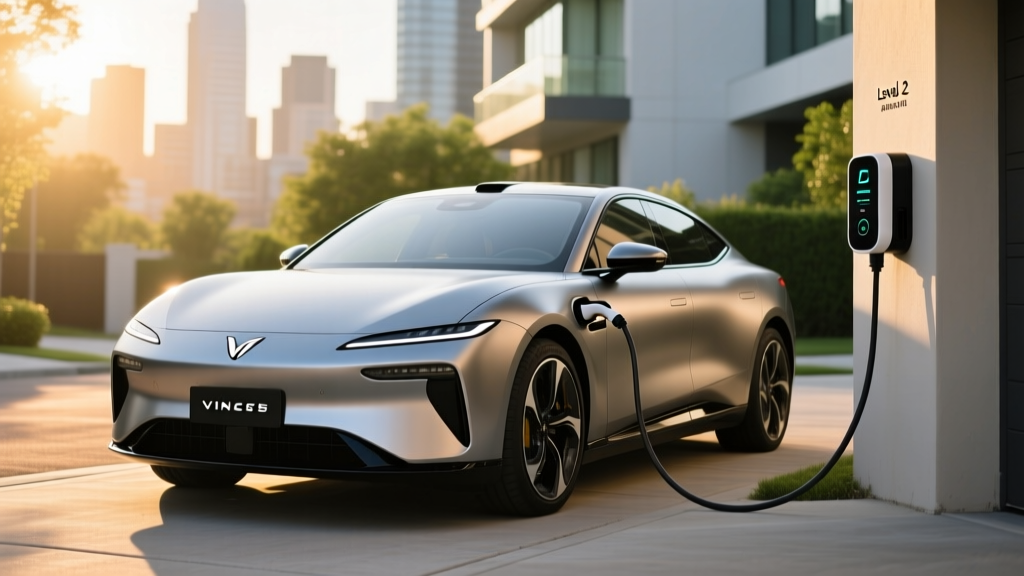
For home charging, the Tesla Wall Connector at 48 amps on a 60A circuit delivers the full 11.5 kW the onboard charger can accept. Expect ~$500–$800 for a straightforward Wall Connector install (panel capacity permitting); budget $1,500–$3,000+ if your home needs a 200A service upgrade. See fueleconomy.gov for efficiency comparisons across EVs.
Performance, Interior & Cargo
The dual-motor AWD powertrain delivers 384 hp and a 4.8-second 0–60 mph time — brisk for a family SUV and more than adequate for highway merging. The Performance trim (if available in your market) drops that to 3.5 seconds with 456 hp, at a ~$5,000 premium and a 20-mile range penalty.
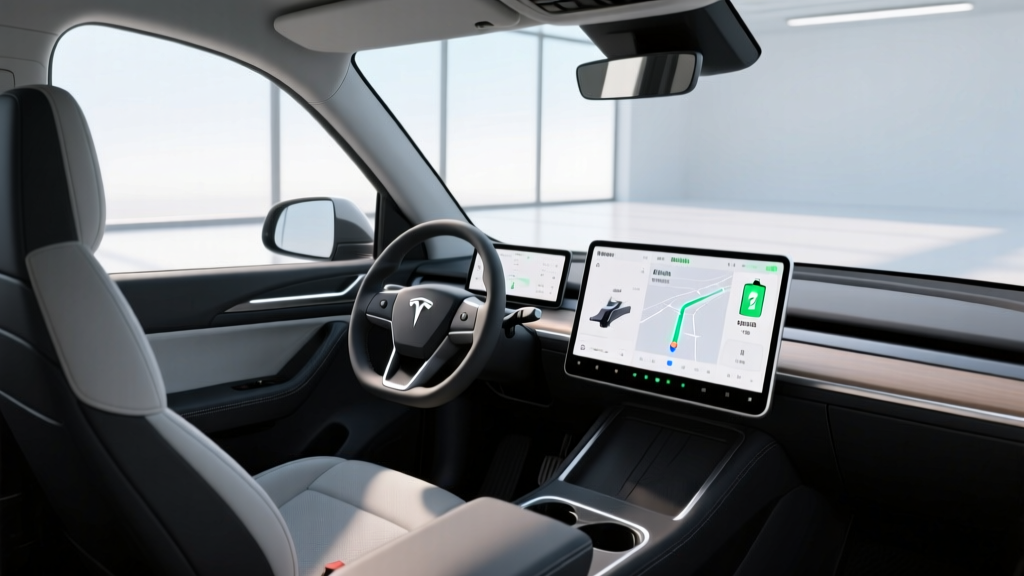
Inside, the 2026 refresh continues Tesla's minimalist approach: a single 15.4-inch touchscreen handles infotainment, climate, and vehicle settings. There is no instrument cluster — speed and nav live on the left third of the center screen. Ventilated front seats, a power-folding second row, and ambient lighting are now standard on Long Range trims. Rear legroom measures 38.4 inches, which is adequate for adults on longer trips but trails the Hyundai Ioniq 5 (39.4 in).
Cargo volume stands at 34 cu ft behind the second row and 72 cu ft with seats folded — class-leading for the segment. The rear frunk adds ~4 cu ft for charging cables or groceries.
Pricing, Trims & Federal Tax Credit Eligibility
| Trim | Base MSRP | Est. After §30D Credit |
|---|---|---|
| Long Range RWD | $42,990 | ~$35,490* |
| Long Range AWD | $44,990 | ~$37,490* |
| Performance AWD | $49,990 | ~$42,490* |
*Assumes full $7,500 federal credit. Eligibility is NOT guaranteed — see checklist below.
- MSRP Cap: SUVs must be under $80,000 — all Model Y trims qualify.
- Buyer Income Cap: AGI ≤ $150,000 (single), ≤ $225,000 (head of household), ≤ $300,000 (joint). Exceed this and you get $0.
- Battery Sourcing: Critical minerals and battery components must meet escalating domestic/free-trade-partner percentages. Tesla sources LFP from CATL for some Standard Range models — these may NOT qualify. Long Range (NMC, US-assembled) has historically qualified, but verify at purchase.
- Point-of-Sale Transfer: You can transfer the credit to the dealer at purchase for an immediate price reduction, or claim it on your tax return.
- Verify Before Buying: Check the latest eligibility at IRS.gov §30D. Rules change, and VIN-specific eligibility can shift mid-year.
Pros, Cons & Who Should Buy
- Class-leading efficiency (28 kWh/100 mi)
- 250 kW DC fast charging with reliable Supercharger network
- 72 cu ft cargo with hatchback practicality
- Strong OTA security patch cadence
- Heat pump standard — cold-weather range retention
- One-pedal driving with aggressive regen
- No instrument cluster — screen-only speed readout
- Rear-seat comfort trails Ioniq 5 and EV6
- FSD (Supervised) remains Level 2 despite the name
- Service center wait times in some metro areas
- LFP Standard Range trims may lose §30D eligibility
- Minimalist interior not for everyone
- Commuters & road-trippers who value Supercharger network reliability and best-in-class efficiency.
- Young families needing 72 cu ft of cargo and hatchback flexibility without stepping to a 3-row SUV.
- Tech-forward buyers comfortable with a screen-first interface and OTA-driven feature updates.
Consider a competitor if: You prioritize rear-seat comfort (Ioniq 5), need a traditional instrument cluster (Ford Mustang Mach-E), or want a luxury interior (BMW iX).
Frequently Asked Questions
Can a Tesla actually be hacked remotely?
Fleet-wide remote exploits are extremely rare and patched via OTA within weeks. The realistic attack vectors are owner-account phishing (mitigated by enabling FIDO2 hardware-key 2FA) and BLE relay theft (mitigated by enabling PIN-to-Drive). No vehicle is unhackable, but Tesla's security posture is above the industry average for connected cars.
What is the real-world range of the 2026 Model Y?
Expect ~275–290 miles on highway trips in mild weather, ~225–245 miles in sub-freezing conditions, and up to ~330 miles in city driving with regenerative braking. The EPA sticker is 320 miles, but sustained 75 mph speeds and cold temperatures reduce that meaningfully.
How fast does the Model Y charge at home and on the road?
At home on a 48A Level 2 charger, it adds ~44 miles per hour (full charge in ~7 hours). On a 250 kW DC fast charger, it goes from 10–80% in approximately 25 minutes with battery preconditioning active.
Does the 2026 Model Y qualify for the $7,500 federal EV tax credit?
Long Range AWD models have historically qualified, but eligibility depends on your AGI (income caps apply), the specific battery sourcing of your VIN, and current IRS rules. Always verify at IRS.gov before purchasing. Some Standard Range LFP trims may not qualify due to critical-mineral sourcing rules.
Is the Model Y worth buying over the Hyundai Ioniq 5 or Ford Mach-E?
The Model Y wins on efficiency, cargo space, and charging-network access. The Ioniq 5 offers a more comfortable rear seat and 800V architecture. The Mach-E provides a more traditional interior layout. Test-drive all three — the "best" EV is the one that fits your daily routine and comfort preferences.
What's the battery warranty on the 2026 Model Y?
Tesla covers the battery and drive unit for 8 years or 120,000 miles (whichever comes first), with a minimum 70% capacity retention guarantee over that period. Real-world degradation data from Tesla's fleet reports ~12% average capacity loss at 150,000 miles for NMC packs.