If you are shopping a Tesla and your driveway has a steep apron, your route includes gravel fire roads, or you live where winter snow piles up at intersections, Tesla ground clearance matters more than 0-60 times. Teslas sit lower than most crossovers and trucks to reduce drag and maximize range, but the numbers vary widely across the lineup. Below is a model-by-model breakdown of ride height, paired with the range, charging, battery, and pricing data you need to make a real purchase decision in 2026.
Why Tesla Ground Clearance Varies So Much Across the Lineup
Ground clearance is the distance between the lowest point of the vehicle (usually the front splitter or battery skid plate) and the ground. Tesla engineers optimize for aerodynamic efficiency — a lower car has a smaller frontal area and less underbody turbulence, which directly translates to more miles per kWh. The trade-off is approach/departure angle and obstacle clearance.
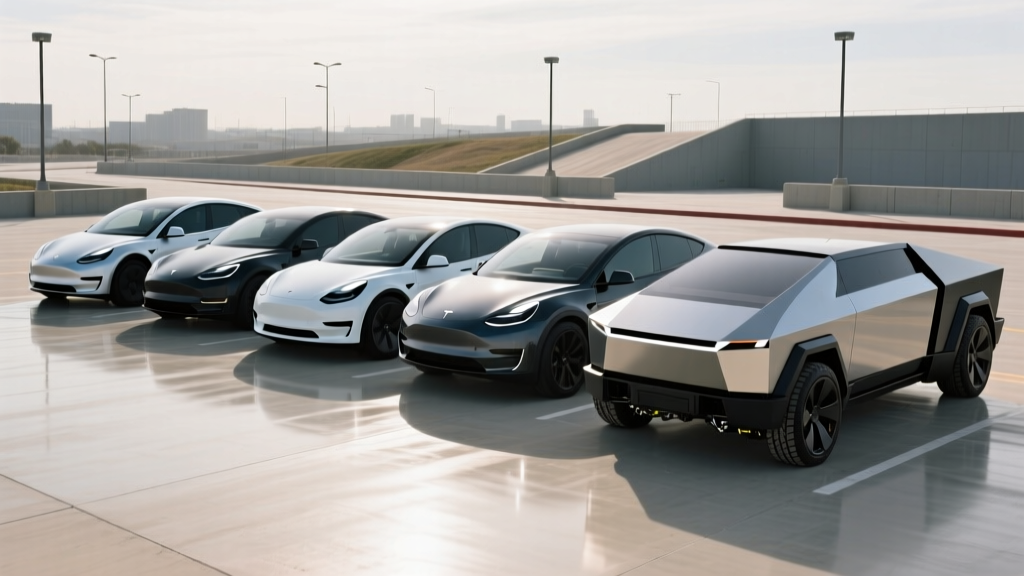
Sedans like the Model 3 and Model S sit around 5.5 inches, typical for sport sedans. The Model Y crossover adds roughly an inch. The Model X, with its adaptive air suspension, can raise itself for driveways and trails. The Cybertruck is in a completely different class, rivaling body-on-frame trucks.
Tesla Ground Clearance by Model: Spec Table
| Model & Trim | Ground Clearance (in) | EPA Range (mi) | Battery (kWh usable / chemistry) | 0-60 mph (sec) | Drivetrain / HP |
|---|---|---|---|---|---|
| Model 3 RWD | 5.5 | 272 | ~60 / LFP | 5.8 | RWD / 283 |
| Model 3 Long Range AWD | 5.5 | 363 | ~79 / NMC | 4.2 | Dual-motor AWD / 346 |
| Model 3 Performance | 5.3 | 315 | ~79 / NMC | 2.9 | Dual-motor AWD / 510 |
| Model Y Long Range AWD | 6.6 | 320 | ~79 / NMC | 4.8 | Dual-motor AWD / 384 |
| Model Y Performance | 6.4 | 285 | ~79 / NMC | 3.5 | Dual-motor AWD / 510 |
| Model S Long Range | 5.0–6.8 (air) | 402 | ~95 / NMC | 3.1 | Dual-motor AWD / 670 |
| Model S Plaid | 5.0–6.8 (air) | 359 | ~95 / NMC | 1.99 | Tri-motor AWD / 1,020 |
| Model X Long Range | 5.4–8.3 (air) | 335 | ~95 / NMC | 3.8 | Dual-motor AWD / 670 |
| Model X Plaid | 5.4–8.3 (air) | 311 | ~95 / NMC | 2.5 | Tri-motor AWD / 1,020 |
| Cybertruck AWD | 16.0 (max, air) | 340 | ~123 / NMC | 4.1 | Dual-motor AWD / 600 |
| Cybertruck Cyberbeast | 16.0 (max, air) | 320 | ~123 / NMC | 2.6 | Tri-motor AWD / 845 |
Sources: fueleconomy.gov, Tesla Owner's Manuals, Tesla press specs.
Real-World Range vs. EPA Sticker: What Tesla Owners Actually See
EPA estimates assume a mixed city/highway cycle at moderate temperatures. Real-world results depend heavily on speed, climate, and terrain.
- Model 3 Long Range (EPA 363 mi): Expect 290–320 mi on a 75-mph highway road trip; 250–280 mi in sub-30°F winter.
- Model Y LR AWD (EPA 320 mi): Highway realistic is 260–290 mi; winter drops to 220–250 mi.
- Model S LR (EPA 402 mi): Highway realistic 330–360 mi; cold weather ~300 mi.
- Cybertruck AWD (EPA 340 mi): Highway realistic 270–300 mi; towing a 5,000-lb trailer cuts range roughly in half (~160–180 mi).
Efficiency figures from fueleconomy.gov show the Model 3 RWD at 132 MPGe combined (25 kWh/100 mi), the Model Y LR at 122 MPGe (28 kWh/100 mi), and the Cybertruck AWD at 102 MPGe (33 kWh/100 mi). Higher ground clearance and heavier curb weight directly reduce MPGe.
Charging Speeds: DC Fast, Level 2, and the Charge-Curve Reality
A common mistake is quoting peak kW as if the car sustains it to 100%. Teslas taper charge rate above ~50–60% SoC to protect the battery. The 10–80% window is the practical metric.
| Model | Max DC Fast Charge (kW) | 10–80% DC Time | Level 2 Home Rate (kW / ~mi/hr) |
|---|---|---|---|
| Model 3 (all trims) | 250 (CCS/NACS) | ~25 min | 11.5 kW / ~44 mi/hr |
| Model Y (all trims) | 250 | ~27 min | 11.5 kW / ~40 mi/hr |
| Model S / Model X | 250 | ~30 min | 11.5 kW / ~34 mi/hr |
| Cybertruck | 350 (800V arch) | ~15 min | 11.5 kW / ~28 mi/hr |
All current Teslas use the NACS connector natively. At a V4 Supercharger, the Cybertruck's 800-volt architecture lets it sustain higher power deeper into the curve — a meaningful road-trip advantage. For home charging, a 48-amp Level 2 wall connector on a 60-amp circuit is the practical ceiling; budget $800–$1,500 for equipment plus $500–$2,000 for electrician labor depending on panel proximity and local permits.
Pricing, Trims, and Federal Tax Credit Eligibility
Tesla's MSRP structure shifts frequently, but as of early 2026, here is the lineup with the §30D federal tax credit applied where eligible. The credit is up to $7,500, but eligibility depends on three IRS rules: buyer income caps, vehicle MSRP caps, and battery critical-mineral/component sourcing.
| Model / Trim | Base MSRP | MSRP Cap Met? | Est. Credit | Effective Price (est.) |
|---|---|---|---|---|
| Model 3 RWD | $38,990 | Yes (sedan ≤$55k) | $7,500 | ~$31,490 |
| Model 3 LR AWD | $45,990 | Yes | $7,500 | ~$38,490 |
| Model Y LR AWD | $46,990 | Yes (SUV/Van ≤$80k) | $7,500 | ~$39,490 |
| Model S LR | $79,990 | No (sedan >$55k) | $0 | $79,990 |
| Model X LR | $79,990 | Yes (SUV ≤$80k) | Partial ($3,750) | ~$76,240 |
| Cybertruck AWD | $79,990 | Yes (truck ≤$80k) | Partial ($3,750) | ~$76,240 |
Income caps (MAGI): $150k single, $225k head-of-household, $300k joint. Check current rules at IRS.gov §30D. Credit can now be transferred to the dealer at point of sale as an instant discount — you don't have to wait until tax filing. Battery sourcing rules change annually; Tesla periodically updates which trims qualify for the full vs. half credit.
Cargo, Passenger Space, and Daily Practicality
Ground clearance affects more than off-road capability — it determines entry/exit ease, cargo loading height, and whether the front splitter scrapes your garage threshold.
- Model 3: 23 cu ft trunk + frunk; rear legroom 35.2 in. Low load floor but tight rear door opening.
- Model Y: 34 cu ft behind rear seats (76 cu ft folded); rear legroom 41.6 in. The hatch and higher roof make it the family default.
- Model S: 28 cu ft rear cargo (hatch); rear legroom 35.4 in. Air suspension kneels for loading.
- Model X: Up to 88 cu ft with seats folded; optional 6- or 7-seat config. Falcon-wing doors need vertical clearance, not ground clearance.
- Cybertruck: 6.5-ft bed, ~67 cu ft; frunk + sail-pillar storage. Bed height ~34 in at standard ride, drops with air suspension.
Warranty, Battery Longevity, and Total Cost of Ownership
Tesla's warranty structure is straightforward:
- Basic vehicle: 4 years / 50,000 miles
- Battery & drive unit: 8 years / 100,000 mi (Model 3 RWD, LFP); 8 years / 120,000 mi (Model 3 LR, Model Y); 8 years / 150,000 mi (Model S, X, Cybertruck)
- Capacity retention threshold: 70% of original kWh during warranty period
LFP batteries (Model 3 RWD) tolerate routine 100% charging and show slower calendar degradation than NMC, but have lower energy density and worse cold-weather range retention. NMC packs (LR, Performance, S, X, Cybertruck) benefit from daily charge limits of 80% for longevity. Out-of-warranty battery replacement runs $12,000–$20,000 depending on pack size — a real long-term ownership cost to model.
Driver-Assist Tech: Autopilot and FSD (Supervised)
Tesla Autopilot and Full Self-Driving (Supervised) are SAE Level 2 driver-assistance systems. The driver must remain engaged, hands on or near the wheel, eyes on the road. These are not Level 4 robotaxi systems like Waymo. Treat them as advanced cruise + lane-centering, not autonomy.
Standard Autopilot (traffic-aware cruise + lane-keeping) is included on all trims. FSD (Supervised) is a $8,000 add or $99/month subscription as of 2026. It handles city streets, traffic lights, and parking, but requires constant supervision. Safety data from Tesla's quarterly reports shows FSD-engaged miles between reported incidents, but NHTSA continues to investigate Autopilot/FSD crash patterns — a factor to weigh before purchasing.
Pros and Cons: Tesla Lineup at a Glance
- Best-in-class Supercharger network (17,000+ stalls in North America)
- Class-leading efficiency (kWh/mi) across sedan lineup
- Over-the-air updates add features post-purchase
- Cybertruck's 16-in air suspension rivals dedicated off-road trucks
- Point-of-sale tax-credit transfer reduces upfront cost
- Model 3/Y ground clearance (5.5–6.6 in) limits snow/gravel use
- Phantom braking reported in Autopilot — requires vigilance
- No Apple CarPlay / Android Auto
- Service-center wait times can stretch weeks in metro areas
- Cybertruck's stainless-steel body panels are expensive to repair
Who Should Buy Which Tesla?
- Choose Model 3 RWD if: budget is the priority, commute is under 60 mi round-trip, you charge at home, and ground clearance isn't a concern.
- Choose Model 3 LR AWD if: you road-trip regularly and need 300+ mi real-world range without upgrading to S pricing.
- Choose Model Y LR AWD if: you need cargo space, child seats, and 6.6 in of clearance for light snow or gravel driveways.
- Choose Model X if: you need 3 rows, up to 8.3 in of adjustable clearance, and towing up to 5,000 lb.
- Choose Cybertruck if: you need truck-bed utility, 16 in of air-suspension clearance for trails, and 11,000-lb towing — and accept the size/cost trade-offs.
Tesla Ground Clearance FAQ
Which Tesla has the highest ground clearance?
The Cybertruck at up to 16.0 inches in Extract Mode via its adaptive air suspension, rivaling a Ford F-150 Raptor.
Can I raise a Model 3 or Model Y for snow?
No. Model 3 and Model Y have fixed steel-spring suspensions with no height adjustment. If deep snow is routine, the Model X (up to 8.3 in) or Cybertruck are the Tesla options with meaningful clearance.
Does Tesla offer an off-road mode?
The Cybertruck and Model X with air suspension have raise modes for rough terrain. Model 3 and Model Y do not.
Does ground clearance affect Tesla range?
Yes. Higher ride height increases aerodynamic drag. The Cybertruck (16 in) gets 102 MPGe vs. the Model 3 RWD (5.5 in) at 132 MPGe — roughly a 23% efficiency penalty.
Will a Model 3 scrape speed bumps?
At 5.5 in, the Model 3 clears standard 4–6 in speed bumps at low speed. Steep driveway aprons and raised crosswalks are more likely to cause contact on the front splitter.
Do Teslas qualify for the $7,500 federal tax credit?
Model 3 RWD, Model 3 LR, and Model Y LR typically qualify for the full $7,500 under §30D, subject to buyer income caps ($150k/$300k) and battery-sourcing rules. Model S, Model X, and Cybertruck have varying partial or zero eligibility due to MSRP and sourcing constraints. Verify at fueleconomy.gov.