Tesla's Grok Integration: What Owners Need to Know in 2026
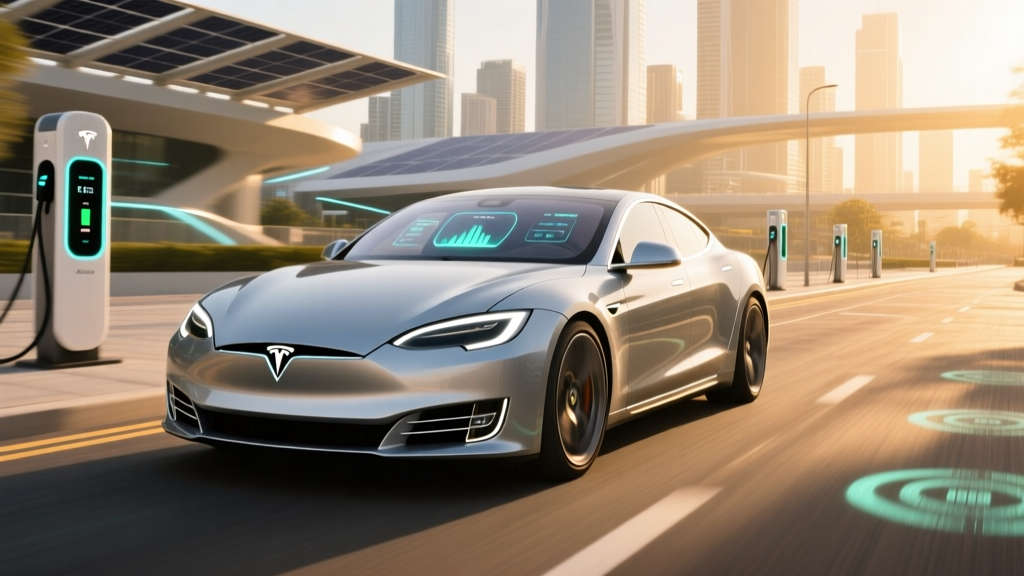
If you've been scrolling Tesla owner forums or checking your car's software update notes, you've likely asked: when will my Tesla get Grok? The short answer depends on your vehicle's hardware generation, your subscription tier, and Tesla's phased rollout schedule throughout 2026. Grok — the large-language-model AI developed by xAI, Elon Musk's artificial intelligence venture — is being integrated into Tesla's infotainment stack as an in-car conversational assistant, navigation aid, and vehicle-control interface.
But Grok's arrival isn't just a software toggle. It intersects with the hardware your Tesla was built with, the infotainment processor generation (MCU3 vs. the newer MCU4/HW5 platform), and whether you're a Premium Connectivity or FSD (Supervised) subscriber. This guide maps out the rollout, explains what Grok actually does in the car, and — because you still need to evaluate the vehicle itself — provides a complete ownership profile of the current Tesla lineup most affected by this update.
Grok Rollout Timeline: Which Teslas Get It First?
Tesla began deploying Grok in limited form to internal test fleets in late 2025. The public rollout follows a hardware-first priority queue:
| Vehicle / Hardware | Grok Availability | Requirements |
|---|---|---|
| 2025+ Model S/X (HW5/MCU4) | Available now (OTA v2026.8+) | Premium Connectivity or FSD subscription |
| 2025+ Model 3 Highland / Model Y Juniper (HW4/MCU3+) | Rolling out Q2 2026 | Premium Connectivity required |
| 2023–2024 Model 3/Y (HW3/MCU3) | Expected Q3–Q4 2026 | Premium Connectivity; limited features |
| Pre-2023 (HW2.5/MCU2) | Not planned | Hardware insufficient for on-device inference |
The key bottleneck is on-device inference capability. Grok runs a hybrid architecture: lightweight queries (climate control, navigation POIs, calendar) process locally via the vehicle's neural processing unit, while complex queries (trip planning with weather integration, general knowledge) route to xAI's cloud servers via the car's LTE/5G connection. Older MCU2 hardware simply lacks the NPU throughput for the local inference layer.
What Grok Actually Does in Your Tesla
Grok replaces and extends the legacy voice-command system that Tesla owners have used for years. Here's what changes in practice:
- Natural-language navigation: "Find me a charger near a good Mexican restaurant in Flagstaff" — Grok parses compound intent and returns filtered Supercharger locations with nearby POI ratings.
- Vehicle control: "Set the cabin to 70 and turn on the seat heaters" — replaces rigid command syntax with conversational phrasing.
- Trip intelligence: "How's the weather going to affect my range on the drive to Tahoe this weekend?" — Grok cross-references elevation, temperature forecasts, and your recent efficiency data.
- Charging optimization: "Should I charge to 80 or 90 percent for tomorrow's commute?" — contextual advice based on your calendar and driving patterns.
- General assistant: General knowledge, summarization, and light entertainment — similar to the chatbot experience on X (formerly Twitter), but car-contextualized.
- Control steering, braking, or acceleration — it has zero influence on the driving stack.
- Replace FSD (Supervised) or alter its behavior in any way.
- Function without an active internet connection for cloud-dependent queries.
- Access or modify your Tesla account, payment info, or personal data beyond what legacy voice commands could.
Tesla Model 3 (2026 Highland): Full EV Profile
Since the Model 3 is the highest-volume Tesla and the vehicle most owners are asking about regarding Grok, here's a complete ownership profile of the 2026 Model 3 Long Range AWD — the trim that balances range, price, and feature availability.
| Spec | Value |
|---|---|
| EPA Range | 363 miles |
| Battery (usable) | 75 kWh, NMC (Nickel Manganese Cobalt) |
| Max DC Fast Charge | 250 kW peak (Supercharger V3/V4) |
| 10–80% DC Charge Time | ~25 minutes |
| Level 2 Home Charging | 11.5 kW / ~44 mi/hr (48A Wall Connector) |
| 0–60 mph | 4.2 seconds |
| Horsepower | 346 hp (dual motor AWD) |
| MPGe (combined) | 132 MPGe / 25 kWh/100mi |
| Cargo Volume | 23 cu ft (rear trunk + frunk) |
| Rear Legroom | 35.3 inches |
| Battery/Drive Unit Warranty | 8 years / 120,000 miles (70% retention) |
| Base MSRP | $47,740 (incl. destination) |
The EPA rates the 2026 Model 3 Long Range AWD at 363 miles. In real-world testing, expect:
- Highway (75 mph, mild weather): ~290–310 miles
- Mixed city/highway (65°F): ~320–340 miles
- Cold weather (30°F, highway): ~240–270 miles (NMC chemistry loses 20–30% in freezing temps without preconditioning)
Charging Deep Dive: Supercharger Network & Home Setup
Tesla's Supercharger network remains the most reliable DC fast-charging ecosystem in the US, with over 6,500 V3/V4 stalls nationwide as of early 2026. Here's what charging looks like across all levels:
| Level | Power (kW) | Miles Added per Hour | Use Case |
|---|---|---|---|
| Level 1 (120V) | ~1.4 kW | ~4–5 mi/hr | Emergency / overnight trickle |
| Level 2 (240V, 48A) | 11.5 kW | ~44 mi/hr | Daily home charging |
| DC Fast (V3 Supercharger) | 250 kW peak | ~170 mi in 15 min | Road trips |
| DC Fast (V4 Supercharger) | 250 kW (cable-limited for NACS native) | ~170 mi in 15 min | Road trips (newer stalls) |
Charging curve reality: The Model 3 LR peaks at 250 kW only between roughly 10–30% state of charge. From 30–60%, it sustains around 150–180 kW. Above 80%, charge speed tapers sharply to protect the NMC battery — expect 50 kW or less, which is why Tesla's navigation system typically routes you to charge only to 80% on road trips. A full 10–80% session takes approximately 25 minutes at a V3 or V4 Supercharger.
For home Level 2 charging, Tesla's Wall Connector ($475) on a 60A circuit delivers the full 11.5 kW / 48A. Installation costs typically range from $500–$2,000 depending on panel proximity and whether your home needs a 200A service upgrade. Consult a licensed electrician for a site-specific quote.
Pricing, Trims & Federal Tax Credit Eligibility
| Trim | MSRP | Est. Federal Credit | Effective Price |
|---|---|---|---|
| RWD (LFP battery) | $40,240 | $3,750–$7,500* | $32,740–$36,490 |
| Long Range AWD | $47,740 | $3,750–$7,500* | $40,240–$43,990 |
| Performance | $54,740 | $3,750–$7,500* | $47,240–$50,990 |
*Federal EV tax credit amounts vary based on IRS §30D eligibility. See checklist below.
-
IRS §30D Federal EV Tax Credit — 2026 Eligibility Requirements:
- Buyer income cap: AGI ≤ $150,000 (single) / $300,000 (joint) / $225,000 (head of household)
- MSRP cap: Vehicle MSRP ≤ $55,000 (sedans like Model 3) — all trims currently qualify
- Battery sourcing: Critical minerals and battery components must meet escalating domestic/FTE-content thresholds. As of 2026, partial credit ($3,750) applies if only one of two sourcing requirements is met; full $7,500 requires both. Tesla's supply chain sourcing has been in flux — check the latest fueleconomy.gov listing for your specific build month.
- Point-of-sale transfer: You can transfer the credit to the dealer at purchase for an immediate price reduction, or claim it on your tax return via IRS Form 8936.
- Consult a tax professional — individual eligibility varies based on tax liability, AMT status, and other credits.
Model 3 vs. Competitors: Is It Still the Default EV Sedan?
The Model 3's Grok integration adds a tech differentiator, but the EV sedan market has matured considerably. Here's how it stacks up against two key rivals:
| Spec | Tesla Model 3 LR AWD | Hyundai Ioniq 6 SEL | BMW i4 eDrive40 |
|---|---|---|---|
| EPA Range | 363 mi | 361 mi | 307 mi |
| Max DC Charge | 250 kW | 240 kW | 205 kW |
| 10–80% Time | ~25 min | ~18 min | ~31 min |
| 0–60 mph | 4.2 sec | 5.1 sec | 5.5 sec |
| Base MSRP | $47,740 | $46,700 | $57,900 |
| AI Assistant | Grok (2026) | Basic voice | BMW Intelligent Personal Assistant |
The Ioniq 6 charges faster (its 800V architecture sustains higher power longer in the mid-SoC range), while the Model 3 wins on acceleration and Supercharger network access. The BMW i4 offers superior build quality and a more traditional luxury interior at a significant price premium. Grok gives Tesla a genuine infotainment edge in conversational AI, but it doesn't change the fundamental driving or charging dynamics.
✅ Pros
- Class-leading 363-mile EPA range
- Supercharger network access (no adapter needed)
- Grok AI adds genuine utility for trip planning and vehicle control
- Best-in-class 0–60 for the price
- OTA updates continuously add features
- Strong resale value relative to EV segment
❌ Cons
- Rear legroom (35.3") is tight for adults on long trips
- No physical buttons — all controls via touchscreen
- Grok requires Premium Connectivity subscription ($9.99/mo)
- NMC battery degrades faster than LFP in extreme heat climates
- Insurance premiums 15–25% above segment average
- Turn signal stalks removed in Highland refresh (capacitive buttons on wheel)
Who Should Buy the Tesla Model 3 in 2026?
Choose the Model 3 if:
- You drive 30–80 miles daily and want to charge at home overnight with no gas station visits
- You take regular road trips and value Supercharger reliability over third-party networks
- You want the most advanced in-car AI assistant available in 2026
- Performance matters — 4.2-second 0–60 in the LR AWD is sports-sedan territory
- You qualify for the full or partial §30D credit, bringing the effective price under $44,000
Look elsewhere if:
- You regularly carry rear-seat adults (Ioniq 6 and BMW i4 offer more space)
- You prefer physical controls and a more traditional cockpit layout
- You live in an extreme-heat climate where LFP chemistry (Model 3 RWD) or the Ioniq 6's thermal management may age better
- You don't have reliable home charging access — public-only charging erodes the cost advantage
Frequently Asked Questions
When will my Tesla get Grok if I own a 2024 Model 3?
If your 2024 Model 3 has HW3/MCU3 hardware (standard for that model year), Tesla's roadmap targets Q3–Q4 2026 for Grok deployment. You'll need an active Premium Connectivity subscription. Expect a limited feature set compared to HW4/HW5 vehicles — specifically, cloud-dependent queries will work, but local on-device inference features may be restricted.
Does Grok cost extra?
Grok requires Tesla's Premium Connectivity subscription at $9.99/month (or $99/year). It is not bundled with FSD (Supervised), though FSD subscribers also get Grok access since FSD includes Premium Connectivity. There is no standalone Grok subscription.
Will Grok work offline?
Partially. Basic vehicle-control commands (climate, media, settings) use on-device processing and work without connectivity. Navigation, trip intelligence, general knowledge queries, and anything requiring real-time data need an active cellular connection.
Does the Model 3 RWD with LFP battery get Grok?
Yes — the 2025+ Model 3 RWD (Highland refresh) uses the same MCU3+ infotainment processor as the Long Range. Grok availability follows the same Q2 2026 timeline for HW4 vehicles. The LFP battery itself has no impact on software features. The LFP variant's EPA range is 272 miles, and it charges at a lower 170 kW peak DC rate.
How does Grok compare to Apple CarPlay or Android Auto?
Tesla does not support CarPlay or Android Auto. Grok is Tesla's native alternative — a deeply integrated AI assistant that accesses vehicle systems (battery, navigation, climate, calendar) in ways CarPlay/Android Auto cannot. However, you lose the third-party app ecosystem (Spotify native, Waze, etc.) that phone projection provides. Tesla's native Spotify and media apps partially close this gap.
Is the Tesla Model 3 still worth buying over the Hyundai Ioniq 6?
It depends on your priorities. The Model 3 wins on acceleration (4.2 vs. 5.1 sec), Supercharger network access, AI features (Grok), and cargo versatility (hatchback + frunk). The Ioniq 6 wins on DC charging speed (18 vs. 25 min, 10–80%), rear-seat space, and physical button availability. Both qualify for partial or full federal tax credits. For road-trip-heavy owners, the Supercharger advantage remains decisive.
What's the battery replacement cost if my Model 3 battery fails out of warranty?
Out-of-warranty Model 3 battery replacement currently runs $12,000–$16,000 depending on the pack variant and service center. However, Tesla's NMC batteries in the Model 3 have demonstrated less than 15% degradation at 200,000 miles in fleet data, making out-of-warranty replacement uncommon for typical owners. The 8-year/120,000-mile warranty covers defects and capacity loss below 70%.
Sources: EPA range and efficiency data from fueleconomy.gov; IRS §30D tax credit rules from irs.gov; Tesla specifications from tesla.com/model3. Pricing and credit eligibility current as of 2026 model year and subject to change. Always verify with official sources before purchasing.