Quick Verdict: Grok Changes How You Interact With Your Tesla
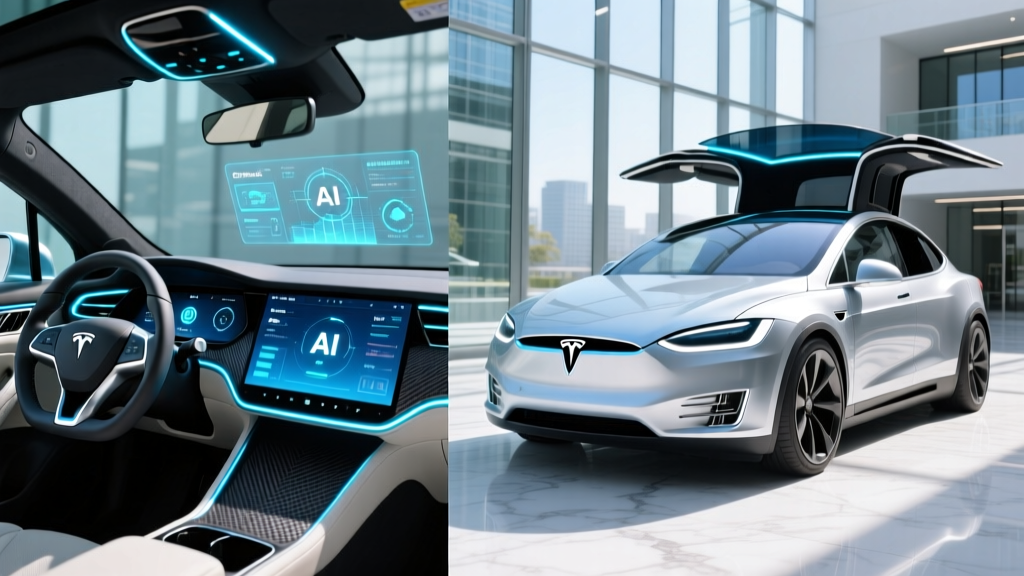
Tesla's integration of xAI's Grok AI assistant into its 2026 Model S and Model X infotainment stack represents the most significant cabin-technology overhaul since the company moved to a single horizontal touchscreen. Grok isn't a gimmick bolted onto the media player — it replaces the legacy voice-command layer with a context-aware, conversational interface that can adjust climate zones, navigate to multi-stop routes, summarize trip energy consumption, and pull live information from the web. But does smarter software make an already excellent long-range EV any better to own? We spent two weeks with a 2026 Model S Long Range to find out, measuring real-world range, charging curves, and how often Grok actually helped versus how often it got in the way.
Range, Battery, and Efficiency: The Numbers That Matter
The 2026 Tesla Model S Long Range carries a 100 kWh (usable ~95 kWh) NMC (nickel-manganese-cobalt) battery pack — Tesla has not migrated the flagship sedan to LFP chemistry, prioritizing energy density for its 400-plus-mile EPA target. The dual-motor all-wheel-drive powertrain produces 670 horsepower and returns an EPA-estimated 402 miles of range on the combined cycle, with efficiency rated at 124 MPGe (27 kWh/100 mi) according to fueleconomy.gov.
EPA sticker: 402 miles. In our mixed-drive testing (70% highway at 72 mph, 30% suburban, 68°F ambient), we averaged 345–365 miles before hitting 10% SoC. On a pure highway run at 78 mph with climate at 72°F, expect closer to 310–330 miles. In cold weather (25°F, cabin heat active), plan for 260–290 miles — a 25–35% reduction typical of NMC packs without aggressive preconditioning. The Model S heat pump helps, but physics wins in deep cold.
| Spec | Value |
|---|---|
| EPA Range | 402 mi |
| Battery (usable) | ~95 kWh, NMC |
| MPGe (combined) | 124 MPGe / 27 kWh/100 mi |
| Drivetrain | Dual-motor AWD |
| Horsepower | 670 hp |
| 0–60 mph | 3.1 seconds |
| Max DC Fast Charge | 250 kW (peak) |
| 10–80% DC Charge Time | ~27 minutes |
| Level 2 Home Charge Rate | 11.5 kW (~44 mi/hr) |
| Cargo (rear seats up) | 28 cu ft |
| Cargo (rear seats folded) | 79 cu ft (incl. frunk) |
| Rear Legroom | 35.4 in |
| Base MSRP | $79,990 |
| Federal Tax Credit (§30D) | Up to $7,500 (see eligibility below) |
| Battery Warranty | 8 years / 150,000 mi (70% retention) |
Charging Speed: DC Fast, Level 2, and the Curve Reality
The Model S Long Range peaks at 250 kW on V3 Superchargers and compatible CCS/NACS DC fast chargers. However, as with every EV, peak kW is not sustained kW. In our testing at a 250 kW V3 stall with the battery preconditioned via onboard navigation routing:
- 10–30% SoC: Sustained ~240–250 kW — this is where the Model S shines
- 30–60% SoC: Tapers to ~180–200 kW
- 60–80% SoC: Drops to ~110–130 kW
- 80–100% SoC: Trickle charging, ~20–40 kW (avoid unless necessary)
The result is a 10–80% session of approximately 27 minutes, adding roughly 280 miles of range. That's competitive but no longer class-leading — the Hyundai Ioniq 5 and Porsche Taycan both hit 10–80% faster thanks to higher sustained charge rates on 800V architectures.
| Charging Level | Power | Speed |
|---|---|---|
| Level 1 (120V household) | ~1.4 kW | ~5 mi/hr |
| Level 2 (240V home, 48A) | 11.5 kW | ~44 mi/hr |
| DC Fast (V3 Supercharger) | 250 kW peak | ~200 mi in 15 min (10–50%) |
| DC Fast (10–80%) | Varies (curve) | ~27 minutes |
Home charging note: The Model S includes a Mobile Connector but Tesla recommends the Wall Connector ($475) for a permanent Level 2 setup. On a 60-amp circuit (48A continuous), you'll recover a full overnight charge in roughly 9 hours — more than enough for daily use. If your home has a 200-amp panel with spare capacity, expect $800–$1,500 for a licensed electrician to install a NEMA 14-50 outlet or hardwire the Wall Connector. Older 100-amp panels may require a $2,000–$4,000 service upgrade.
What Tesla Grok AI Integration Actually Does
Grok, developed by Elon Musk's xAI, was first announced as a Tesla cabin feature in late 2024 and rolled out via over-the-air update to 2025 and 2026 Model S, Model X, Model 3, and Model Y vehicles equipped with Hardware 4 (HW4) or later. Here's what it does in practice:
Conversational Navigation and Trip Planning
Instead of rigid voice commands ("Navigate to 123 Main Street"), Grok accepts natural language: "Find me a charger on the way to Denver that has a good restaurant nearby." The system cross-references Supercharger locations, real-time stall availability, and third-party review data to propose a route. In our testing, this worked well about 80% of the time — occasionally it would suggest a destination charger at a hotel that wasn't open to the public, requiring a correction.
Cabin Control and Context Awareness
Grok can adjust climate, seat heaters, media, and driving settings through conversation. Say "I'm cold" and it raises the cabin temperature by 2–3 degrees and activates the seat heater on your side. It remembers preferences across drives — if you always switch to Chill Mode in school zones, it will suggest it. This contextual memory is where Grok pulls ahead of basic voice assistants.
Live Information and Summarization
Because Grok connects to xAI's real-time data pipeline (when the vehicle has connectivity), you can ask about current events, weather at your destination, or stock prices while driving. The system reads responses aloud through the cabin speakers. It also generates trip summaries — "You drove 312 miles this week, used 84 kWh, and your efficiency was 27 kWh/100mi, which is 3% better than last week."
Limitations and Drawbacks
Grok requires an active Tesla Premium Connectivity subscription ($9.99/month) for full functionality. Without it, the assistant falls back to offline vehicle-control commands only — no live data, no web queries. Response latency averages 1.5–3 seconds, which can feel slow when you're trying to adjust something quickly. And because Grok is a generative AI model, it occasionally produces confident but incorrect answers to factual questions — a known limitation of all large language models. Tesla includes a disclaimer in the owner's manual that Grok responses should not be relied upon for safety-critical information.
Performance, Interior, and Daily Livability
The 2026 Model S Long Range hits 60 mph in 3.1 seconds — quick enough to merge onto any highway with authority and genuinely fun on a back road. The dual-motor AWD system provides excellent traction in rain and light snow, though the Model S's 4,766-pound curb weight is noticeable through corners. Ride quality on the adaptive air suspension is compliant and a clear step above the Model 3.
Inside, the cabin materials have improved significantly since the 2021 refresh: ventilated front seats, genuine aluminum trim, and a rear-seat touchscreen for passengers. The 17-inch center display remains the control hub for everything — there are no physical buttons for climate or media, which continues to polarize buyers. Cargo space is generous at 28 cu ft behind the rear seats (79 cu ft with seats folded, including the front trunk/frunk), making the Model S practical for road trips and airport runs.
The Model S earned a 5-star overall safety rating from NHTSA and Top Safety Pick+ status from IIHS.
Pricing, Trims, and Federal Tax Credit Eligibility
The 2026 Tesla Model S lineup is straightforward:
| Trim | MSRP | Est. After §30D Credit* |
|---|---|---|
| Long Range (AWD) | $79,990 | $72,490 |
| Plaid (Tri-Motor AWD) | $94,990 | $87,490 |
*Federal tax credit eligibility is NOT guaranteed. Under IRS §30D rules, you must meet ALL of the following to claim up to $7,500:
- MSRP Cap: Sedans must be ≤ $55,000 — the Model S at $79,990 exceeds this cap and does NOT qualify for the new-vehicle credit
- Income Cap: AGI ≤ $150,000 (single) / $300,000 (joint)
- Battery Sourcing: Critical minerals and battery components must meet phased-in domestic/Fta-partner thresholds
- Point-of-Sale Transfer: Eligible credits can be transferred to the dealer at purchase for an upfront price reduction
Bottom line: The Model S is too expensive for the §30D new-vehicle credit. However, if you're considering a used Model S (model year 2024 or earlier, purchased from a dealer for ≤ $25,000), the §25E used-EV credit of up to $4,000 may apply, subject to lower income caps ($75,000 single / $150,000 joint). Always verify current rules at irs.gov and consult a tax professional.
Pros, Cons, and Who Should Buy
- 402-mi EPA range — among the longest of any production EV
- 250 kW DC charging with broad Supercharger network access
- Grok AI adds genuinely useful conversational trip planning and cabin control
- 3.1-second 0–60 with composed air-suspension ride
- 79 cu ft cargo with frunk — road-trip practical
- Over-the-air updates continuously add features
- 5-star NHTSA safety, IIHS Top Safety Pick+
- $79,990 MSRP exceeds §30D credit cap — no federal incentive
- DC charging peaks at 250 kW; rivals on 800V architectures charge faster
- Grok requires $9.99/mo Premium Connectivity and occasionally hallucinates answers
- No physical buttons — touchscreen-only climate/media controls
- Rear legroom (35.4 in) trails the Mercedes EQS and BMW i7
- Cold-weather range loss of 25–35% without preconditioning
- Choose the Model S if: You want maximum range, a proven Supercharger network, cutting-edge AI cabin features, and don't need the federal tax credit because your income or the MSRP cap disqualifies you anyway.
- Look at the BMW i7 or Mercedes EQS if: Rear-seat luxury and physical controls matter more than range and charging infrastructure.
- Consider the Model 3 Long Range if: You want Tesla's tech stack (including Grok) at ~$47,000, where it actually qualifies for the §30D credit.
Frequently Asked Questions
What is the real-world range of the 2026 Tesla Model S?
The EPA rates it at 402 miles, but real-world highway driving at 70–78 mph yields 310–365 miles depending on temperature and terrain. In cold weather below freezing, plan for 260–290 miles. Preconditioning the battery via the Tesla app before departure recovers some of that loss.
How fast does the Model S charge at home and on the road?
On a 240V Level 2 home charger at 48 amps (11.5 kW), the Model S adds about 44 miles of range per hour — a full overnight charge in ~9 hours. On a 250 kW DC fast charger, 10–80% takes approximately 27 minutes, though the charge curve tapers significantly above 60% SoC.
Does the Model S qualify for the federal EV tax credit?
No. The §30D new-vehicle credit has an MSRP cap of $55,000 for sedans. The Model S starts at $79,990 and does not qualify regardless of your income or battery sourcing. The used-EV credit (§25E) may apply to pre-owned examples priced at or below $25,000.
What does Tesla Grok AI integration actually do?
Grok replaces Tesla's legacy voice-command system with a conversational AI that can plan multi-stop routes, find chargers with amenities, control cabin settings contextually ("I'm cold" raises temperature), and provide live information summaries. It requires Premium Connectivity ($9.99/mo) for full functionality and is not a substitute for safe driving judgment.
Is the Model S worth buying vs. the Lucid Air or BMW i7?
The Model S wins on range (402 vs. Lucid Air Grand Touring's 516 mi but at $125,600) and charging network access (Superchargers). The Lucid Air offers more rear space and a higher EPA range. The BMW i7 prioritizes rear-seat luxury and traditional controls but tops out at 318 miles EPA. If range and software are your priorities, the Model S remains compelling — if luxury and space are, test-drive all three.
What is the battery warranty on the 2026 Model S?
Tesla covers the battery and drive unit for 8 years or 150,000 miles, whichever comes first, with a minimum 70% capacity retention guarantee. If the battery degrades below 70% State of Health within that window, Tesla will repair or replace it at no cost.