The Grand Rapids Factor: Why Tesla's Michigan Operations Matter for Your Next EV
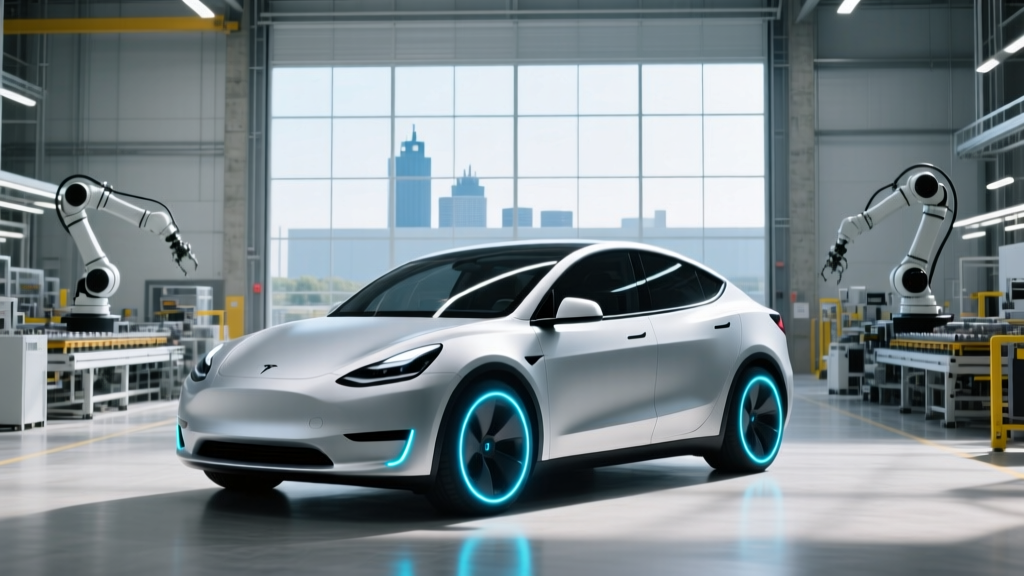
Tesla's manufacturing footprint has expanded well beyond Fremont and Austin, and a key piece of that puzzle sits in Grand Rapids, Michigan. While the Gigafactory Texas and Shanghai plants handle the bulk of vehicle assembly, Tesla's Grand Rapids facility — focused on stamping, component manufacturing, and supply-chain logistics — plays a meaningful role in producing structural parts and assemblies that feed into the Model Y and Model 3 production lines. For 2026 buyers researching Tesla manufacturing Grand Rapids operations, the practical takeaway is straightforward: stronger domestic parts sourcing supports both vehicle availability in the Midwest and eligibility for the federal §30D EV tax credit, which now requires strict critical-mineral and battery-component sourcing thresholds.
This review focuses on the 2026 Tesla Model Y Long Range AWD — the highest-volume vehicle that benefits from Tesla's North American supply chain — with real numbers on range, charging, pricing, and whether it still earns its spot against a growing field of midsize electric crossovers.
2026 Model Y Long Range AWD: Core Specifications
| Specification | Value |
|---|---|
| EPA Estimated Range | 320 miles |
| Battery Capacity (Usable) | ~75 kWh, NMC (Nickel Manganese Cobalt) |
| Drivetrain | Dual-Motor AWD |
| Horsepower | 384 hp (combined) |
| 0–60 mph | 4.8 seconds |
| MPGe (Combined) | 117 MPGe |
| Efficiency | 29 kWh/100 mi |
| Max DC Fast Charge | 250 kW (peak) |
| 10–80% DC Fast Charge | ~27 minutes |
| Level 2 Home Charging | 11.5 kW (~44 mi/hr) |
| Cargo Volume (rear seats up) | 30.2 cu ft |
| Cargo Volume (rear seats folded) | 72.0 cu ft |
| Rear Legroom | 38.7 in |
| Battery Warranty | 8 years / 120,000 miles |
| Basic Vehicle Warranty | 4 years / 50,000 miles |
| Base MSRP | $46,630 (before destination) |
Real-World Range: What the EPA Number Doesn't Tell You
EPA Sticker: 320 miles
Real-World Highway (70–75 mph, mild weather): ~265–285 miles
Real-World Cold Weather (below 30°F, mixed driving): ~220–250 miles
City/Commuter Driving (regen-heavy, moderate climate): ~300–320 miles
The 2026 Model Y Long Range's 320-mile EPA figure holds up well in stop-and-go driving where regenerative braking recaptures energy aggressively. However, sustained highway speeds above 70 mph push consumption closer to 33–35 kWh/100 mi, trimming effective range to roughly 270 miles in fair conditions. In sub-freezing temperatures, the NMC battery's internal resistance increases and cabin heating draws substantial power — expect a 20–30% range reduction on the coldest days, even with Tesla's heat pump (standard on all 2026 trims). The heat pump significantly mitigates winter losses compared to older resistive-heater EVs, but physics still applies.
For Midwest buyers near Grand Rapids and similar climates, plan for roughly 240 miles of usable range in January. That's still ample for most daily commutes and manageable for regional road trips with one Supercharger stop.
Charging Performance: Supercharger Network and Home Setup
| Charging Level | Power / Rate | Speed (Miles Added) | Use Case |
|---|---|---|---|
| Level 1 (120V outlet) | ~1.4 kW | ~4–5 mi/hr | Emergency / trickle |
| Level 2 (240V, 48A Wall Connector) | 11.5 kW | ~44 mi/hr | Overnight home charging |
| DC Fast (Supercharger V3) | Up to 250 kW peak | ~175 mi in 15 min | Road trips |
| DC Fast (Supercharger V4) | Up to 250 kW peak (cabled CCS/NACS) | ~175 mi in 15 min | Road trips (non-Tesla stalls) |
The Model Y's charging curve is well-managed but not class-leading. It peaks at 250 kW only between roughly 10–30% State of Charge (SoC), then tapers progressively. By 60% SoC, you're typically seeing 120–150 kW; above 80%, the rate drops below 50 kW to protect battery longevity. The 10–80% session takes approximately 27 minutes at a V3 Supercharger — competitive but slower than the Hyundai Ioniq 5's 18-minute 10–80% on 800V architecture.
At home, Tesla's Wall Connector on a 60A circuit delivers 11.5 kW (48A continuous), adding roughly 44 miles of range per hour. A full overnight charge from 20% to 90% takes about 5–6 hours, which fits easily into a standard overnight window. Installation costs for a Level 2 home setup typically run $800–$2,500 depending on panel capacity and conduit length — budget for a 200A panel upgrade ($1,500–$3,500) if your home has an older 100A service.
Tesla's Supercharger network remains the most reliable public DC fast-charging ecosystem in the US, with over 28,000 stalls nationally. The 2026 Model Y uses the native NACS connector, meaning no adapter is needed at Tesla stalls, and adapters are available for legacy CCS networks (Electrify America, EVgo) — though Tesla's opening of Superchargers to non-Tesla vehicles has occasionally increased wait times at popular corridors.
Pricing, Trims, and Federal Tax Credit Eligibility
| Trim | Base MSRP | Est. After §30D Credit | Notes |
|---|---|---|---|
| Model Y Long Range AWD | $46,630 | ~$39,130 | Eligible for up to $7,500 if buyer meets income caps |
| Model Y Performance | $51,630 | ~$44,130 | Same credit eligibility; 0–60 in 3.5 sec |
The 2026 Model Y Long Range AWD starts at $46,630 before the $1,390 destination fee. Under current IRS §30D rules, the federal clean vehicle credit offers up to $7,500 — split into $3,750 for critical-minerals sourcing and $3,750 for battery-component manufacturing, both of which must meet escalating domestic-content thresholds each year.
- MSRP Cap: SUVs/crossovers must be priced at or below $80,000 — Model Y qualifies comfortably.
- Buyer Income Cap: Modified AGI must not exceed $150,000 (single), $225,000 (head of household), or $300,000 (joint filers).
- Battery Sourcing: For 2026, 80% of critical minerals by value must be sourced from the US or FTA partners, and 100% of battery components must be manufactured or assembled in North America. Tesla's North American supply chain (including facilities like Grand Rapids) supports compliance, but eligibility can shift mid-year as IRS updates approved-vehicle lists.
- Point-of-Sale Transfer: Buyers can transfer the credit to the dealer at purchase, reducing the purchase price directly rather than waiting for a tax refund.
Always verify current eligibility on the IRS website or with a tax professional before purchase — the approved-vehicle list has changed multiple times since 2024 due to evolving FEOC (Foreign Entity of Concern) rules.
Tech, Driver Assistance, and Interior Practicality
The 2026 Model Y continues with Tesla's minimalist interior: a single 15.4-inch center touchscreen handles all infotainment, climate, and vehicle settings. There is no instrument cluster; speed and navigation appear on the upper-left corner of the main display. Build quality has improved noticeably since the 2022–2023 Highland/Model Y refresh — panel gaps are tighter, cabin materials are softer-touch, and acoustic glass reduces highway noise meaningfully.
Autopilot and FSD (Supervised): Every Model Y ships with Basic Autopilot (lane-keeping, traffic-aware cruise control). The $8,000 FSD (Supervised) upgrade adds automatic lane changes, traffic-light recognition, and city-street navigation. Per NHTSA guidelines, FSD remains an SAE Level 2 system — the driver must remain fully attentive, hands on or near the wheel, and legally responsible at all times. This is not autonomous driving.
Cargo and Passenger Space: With 30.2 cu ft behind the second row and 72.0 cu ft with seats folded, the Model Y offers strong utility for its class. The front trunk (frunk) adds 4.1 cu ft for charging cables or groceries. Rear legroom of 38.7 inches accommodates adults comfortably on longer trips. The optional third row (available on Long Range, adds ~$2,000) provides a small cargo-area bench best suited for children under 5'2".
Notable Drawbacks: The lack of physical controls (no turn-signal stalk in the refreshed Model Y — signals are on the steering wheel) frustrates some drivers. Visibility out the rear is limited by the sloping roofline, making the backup camera essential. And while Tesla's Supercharger network is excellent, reliance on a single-screen interface for climate and mirror adjustments remains a polarizing design choice.
How It Compares: Model Y vs. Key Rivals
The midsize electric SUV segment has matured considerably. Here's how the Model Y Long Range stacks up against its most direct competitors:
vs. Hyundai Ioniq 5 (Long Range AWD): The Ioniq 5 charges faster (800V architecture, 10–80% in ~18 min vs. Tesla's ~27 min) and offers a slightly more traditional interior with physical buttons. However, it trails on range (EPA 290 mi vs. 320 mi) and lacks access to Tesla's Supercharger network without an adapter. The Ioniq 5 starts at ~$49,000, making the Model Y a few thousand dollars cheaper before credits.
vs. Ford Mustang Mach-E (Extended Range AWD): The Mach-E offers a sportier driving feel and more conventional crossover styling but falls short on efficiency (EPA 290 mi, 101 MPGe vs. Model Y's 117 MPGe) and cargo space. Ford's BlueCruise hands-free system is well-regarded for highway use, but Tesla's overall software ecosystem and OTA update cadence remain ahead.
vs. Chevrolet Equinox EV (RS AWD): The Equinox EV undercuts on price (~$43,000 base) and qualifies for the full $7,500 credit, bringing it to roughly $35,500. However, it offers less range (EPA 307 mi), slower DC charging (150 kW peak), and a less refined infotainment experience. It's a strong budget choice but trades off performance and tech polish.
Choose the Model Y if: You prioritize range efficiency, Supercharger network access, strong cargo capacity, and Tesla's software ecosystem. It's the best all-rounder for families who road-trip regularly.
Look elsewhere if: You want the fastest possible DC charging (Ioniq 5), hands-free highway driving with a more traditional interior (Mach-E with BlueCruise), or the lowest possible price after credits (Equinox EV).
Pros and Cons at a Glance
Pros
- Class-leading efficiency at 117 MPGe / 29 kWh/100 mi
- 320-mile EPA range covers most commutes and regional trips comfortably
- Supercharger network reliability remains best-in-class
- Strong cargo capacity (72 cu ft max) with practical frunk
- Continuous OTA updates add features post-purchase
- NACS connector is now the industry standard — future-proof
Cons
- DC charging speed (250 kW peak, ~27 min 10–80%) trails 800V rivals
- Minimalist interior lacks physical controls — polarizing
- FSD (Supervised) costs $8,000 and remains Level 2, not autonomous
- Rear visibility limited by coupe-like roofline
- Insurance premiums tend to run 15–25% higher than comparable ICE crossovers
- Service center wait times can stretch weeks in some metro areas
Who Should Buy the 2026 Model Y Long Range?
The Model Y Long Range AWD is the default recommendation for buyers who need a do-everything electric family vehicle. It excels as a daily commuter (one-pedal driving and regenerative braking shine in traffic), a road-trip hauler (Supercharger coverage and 320-mile range minimize stops), and a practical cargo carrier (stroller, camping gear, or Costco runs fit easily). Midwest buyers near Tesla's Grand Rapids supply-chain operations may also see slightly faster delivery times and stronger regional service support.
It's less ideal for buyers who prioritize the fastest DC charging, want a traditional cockpit layout, or need Level 4 autonomous capability (which no consumer vehicle currently offers). If your daily commute is under 40 miles round-trip and you rarely road-trip, the lower-priced Equinox EV or a PHEV like the Toyota RAV4 Prime may offer better value.
Frequently Asked Questions
What is the real-world range of the 2026 Tesla Model Y Long Range?
The EPA rates it at 320 miles. In real-world highway driving at 70–75 mph in mild weather, expect 265–285 miles. In cold weather (below 30°F), plan for 220–250 miles. City driving with regenerative braking can approach the EPA sticker figure.
How fast does the Model Y charge at home and on the road?
At home on a Level 2 Wall Connector (11.5 kW), it adds ~44 miles of range per hour — a full overnight charge takes 5–6 hours. On a Tesla V3 Supercharger, it peaks at 250 kW and charges from 10–80% in approximately 27 minutes, though the rate tapers significantly above 60% SoC.
Does the 2026 Model Y qualify for the $7,500 federal EV tax credit?
It can, but eligibility depends on your income (AGI caps of $150K single / $300K joint), the vehicle's MSRP (must be under $80K — Model Y qualifies), and current battery-sourcing rules under §30D. Tesla's North American manufacturing (including components from facilities like Grand Rapids) supports compliance, but always verify on the IRS clean vehicle credit page before purchasing, as the approved list updates periodically.
Is the Model Y worth buying over the Ioniq 5 or Mach-E?
It depends on priorities. The Model Y wins on range efficiency, Supercharger access, and cargo space. The Ioniq 5 charges faster and offers a more conventional interior. The Mach-E drives sportier and has BlueCruise for hands-free highway driving. For most families prioritizing versatility and road-trip ease, the Model Y remains the strongest all-rounder.
What's the battery warranty on the 2026 Model Y?
Tesla covers the battery and drive unit for 8 years or 120,000 miles (whichever comes first), with a guaranteed minimum 70% capacity retention over that period. Real-world data from high-mileage Tesla owners suggests NMC batteries typically retain 85–90% capacity at 100,000 miles when charged primarily on Level 2 and kept between 20–80% SoC for daily use.
What role does Tesla's Grand Rapids, Michigan facility play?
The Grand Rapids operation supports Tesla's North American supply chain through component stamping, parts manufacturing, and logistics. This domestic sourcing contributes to Model Y production efficiency and supports §30D tax-credit battery-component requirements. For Midwest buyers, it also correlates with relatively strong regional delivery timelines and service infrastructure.
Sources: EPA Fuel Economy, IRS §30D Clean Vehicle Credit, Tesla Warranty Information.