Quick Verdict: The Real 'Tesla Glue' Isn't the Car — It's the Ecosystem
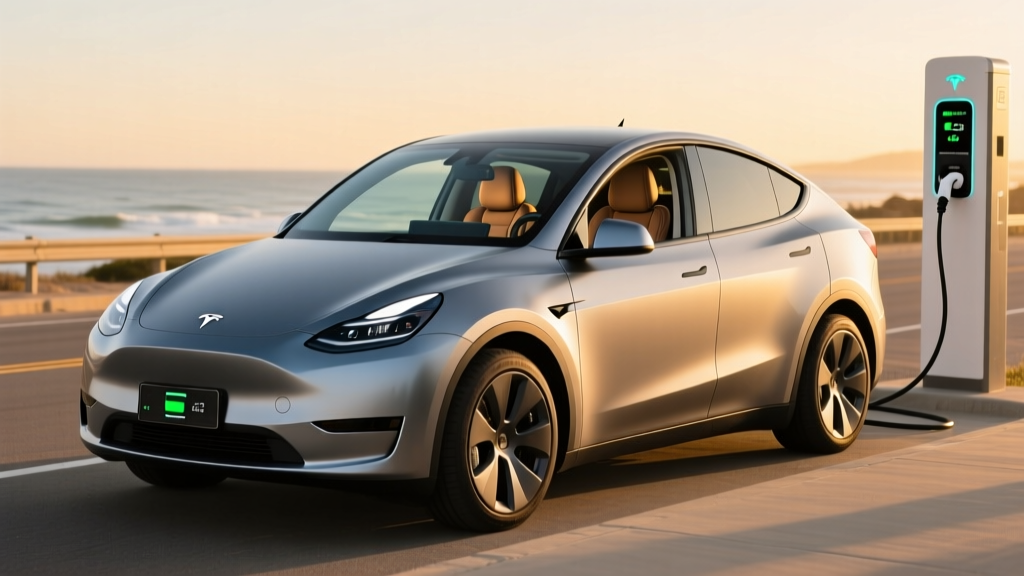
Search forums and owner threads for "Tesla glue" and you'll find a term that describes something automakers have chased for a century: the combination of product, software, charging infrastructure, and brand identity that makes owners reluctant to leave. In 2026, the refreshed Model Y (codenamed Juniper) remains the primary vehicle generating that stickiness. With an EPA-estimated 320 miles of range on the Long Range AWD trim, a peak 250 kW DC fast-charge rate, and exclusive access to the 60,000+ stall Supercharger network, the Model Y's value proposition extends far beyond its spec sheet.
But the competitive landscape has shifted. The Hyundai Ioniq 5, Ford Mustang Mach-E, and Chevrolet Equinox EV now match or exceed the Model Y in interior quality, ride comfort, and — thanks to NACS adoption — charging access. So what exactly is the Tesla glue in 2026, and does the Model Y still earn its loyalty?
2026 Tesla Model Y Specifications at a Glance
| Spec | Long Range AWD | Performance AWD | RWD (Standard) |
|---|---|---|---|
| EPA Range | 320 mi | 298 mi | 280 mi (est.) |
| Battery (usable) | ~75 kWh (NMC) | ~75 kWh (NMC) | ~60 kWh (LFP) |
| Peak DC Fast Charge | 250 kW | 250 kW | ~175 kW |
| 10–80% DC Time | ~25 min | ~25 min | ~30 min |
| Level 2 Home Charge | 11.5 kW (~44 mi/hr) | 11.5 kW (~44 mi/hr) | 7.7 kW (~30 mi/hr) |
| 0–60 mph | 4.8 sec | 3.5 sec | 6.6 sec (est.) |
| Horsepower | 384 hp | 456 hp | 295 hp (est.) |
| Drivetrain | Dual-Motor AWD | Dual-Motor AWD | RWD |
| Efficiency | 122 MPGe / 27 kWh/100mi | 111 MPGe / 30 kWh/100mi | 128 MPGe (est.) |
| Base MSRP | $48,590 | $54,590 | $44,990 (est.) |
| Battery Warranty | 8 yr / 120,000 mi | 8 yr / 120,000 mi | 8 yr / 100,000 mi |
Sources: EPA / fueleconomy.gov, Tesla spec sheets. RWD figures estimated based on prior-generation data; confirm with Tesla at purchase. Pricing excludes destination fee.
Real-World Range: What the EPA Sticker Doesn't Tell You
EPA Estimate: 320 miles
Real-World Highway (70–75 mph, moderate temps): ~265–285 miles
Real-World Cold Weather (below 32°F, highway): ~220–250 miles
City/Commuter (regen-heavy, mild temps): ~300–320 miles
The 320-mile EPA figure for the Long Range AWD is achievable in city and suburban driving where regenerative braking recaptures energy. Highway driving at sustained 70–75 mph drops efficiency to roughly 3.0–3.3 miles per kWh, yielding 265–285 miles on a full charge. Cold weather compounds this: lithium-ion cells lose efficiency below freezing, and cabin heating (even with the Model Y's heat pump) draws significant energy. Expect a 20–30% range reduction in sub-freezing conditions on highway trips.
This is where the Tesla glue tightens its grip. Even with real-world range losses, the Supercharger network's density means most highway corridors have chargers every 100–150 miles. Competitors with similar or higher EPA range numbers still face sparser public charging options in many regions, making the Model Y's effective road-trip range feel longer than raw numbers suggest.
Charging Speed and the Supercharger Advantage
The Model Y Long Range and Performance trims peak at 250 kW on V3 Superchargers. However, sustained charge rate matters more than peak. The Model Y's charge curve holds above 200 kW from roughly 10% to 35% State of Charge (SoC), then tapers progressively. A typical 10–80% session takes approximately 25 minutes at a V3 stall, adding roughly 170–180 miles of range.
At home on a Level 2 Wall Connector (48 amps / 11.5 kW), the Long Range AWD recovers about 44 miles of range per hour of charging — enough to fully replenish overnight from any daily commute. The RWD trim with LFP chemistry charges at a slower 7.7 kW on Level 2 but gains a significant daily-use advantage: Tesla recommends charging LFP batteries to 100% regularly, unlike NMC batteries which benefit from an 80% daily charge limit. This effectively narrows the usable range gap between trims.
The Supercharger network now serves non-Tesla vehicles equipped with NACS connectors or adapters, which dilutes the exclusivity that once defined Tesla glue. However, Tesla owners still benefit from seamless plug-and-charge authentication, integrated navigation with battery preconditioning, and generally higher stall counts per location compared to third-party networks.
Pricing, Tax Credits, and the True Cost of Entry
The 2026 Model Y lineup starts at an estimated $44,990 for the RWD base model and $48,590 for the Long Range AWD. The Performance variant sits at $54,590. Adding Tesla's Full Self-Driving (Supervised) package — which remains a Level 2 driver-assistance system requiring active driver engagement — adds approximately $8,000 to any trim.
| Trim | MSRP | Potential §30D Credit | Effective Price (if eligible) |
|---|---|---|---|
| RWD (Standard) | $44,990 | Up to $7,500 | ~$37,490 |
| Long Range AWD | $48,590 | Up to $7,500 | ~$41,090 |
| Performance AWD | $54,590 | Up to $7,500 | ~$47,090 |
Federal tax credit eligibility under IRS §30D is not automatic. Key requirements for 2026 include:
- MSRP cap: SUVs/vans must be at or below $80,000 — all Model Y trims qualify.
- Buyer income cap: Modified AGI must not exceed $150,000 (single), $225,000 (head of household), or $300,000 (joint).
- Battery sourcing: Critical minerals and battery components must meet escalating domestic-content and free-trade-agreement thresholds that tighten annually. Tesla's shift toward LFP cells from CATL (China) for RWD trims has complicated credit eligibility for those variants in prior years.
- Point-of-sale transfer: Eligible buyers can apply the credit as a discount at purchase rather than waiting for tax filing.
Always verify current eligibility at IRS.gov before purchasing, as battery sourcing compliance can change with supply chain adjustments.
Interior, Cargo, and Daily Livability
The Juniper-refreshed Model Y interior represents Tesla's most significant quality improvement. Soft-touch materials, ventilated front seats, ambient lighting, and a rear-seat touchscreen bring the cabin closer to European premium standards — though panel-gap consistency still varies by production batch.
Cargo space remains a class strength:
- Rear cargo (behind second row): 30.2 cu ft
- Cargo (rear seats folded): 72.1 cu ft
- Front trunk (frunk): 4.1 cu ft
- Rear legroom: 41.6 inches
- Front headroom: 41.0 inches
The Model Y's hatchback design and flat load floor make it one of the most practical compact electric SUVs for families. The frunk, while modest, accommodates a charging cable bag and small groceries. Towing capacity on AWD trims is rated at 3,500 pounds — sufficient for a small trailer or pair of dirt bikes but not a full-size boat.
Tech, Software, and the Stickiest Part of the Ecosystem
The Model Y's 15.4-inch center touchscreen runs Tesla's proprietary infotainment stack, which remains the most responsive and feature-rich system in the EV market. Wireless phone mirroring is absent — Tesla uses its own app ecosystem — but native navigation, streaming media, and over-the-air (OTA) updates keep the system current without dealer visits.
Driver assistance includes standard Autopilot (adaptive cruise + lane centering) and the optional Full Self-Driving (Supervised) package. FSD Supervised operates at SAE Level 2 — meaning the driver must remain fully attentive, hands on or near the wheel, and ready to intervene at all times. It is not autonomous driving. Tesla's vision-only approach (no lidar or radar) has improved in urban environments but still exhibits hesitation in construction zones, unprotected left turns, and heavy rain.
This is a Level 2 driver-assist system, not self-driving. The driver is legally and operationally responsible for the vehicle at all times. Performance degrades in heavy rain, snow, construction zones, and unmapped areas. Do not use while fatigued or distracted.
The tech ecosystem extends beyond the car. The Tesla mobile app enables remote climate control, location tracking, Sentry Mode camera access, and service scheduling. OTA updates can add features (or modify existing ones) months or years after purchase — a capability legacy automakers are still struggling to match reliably.
Pros and Cons
- Supercharger network reliability and density (60,000+ stalls globally)
- Class-leading efficiency (122 MPGe Long Range)
- Spacious cargo area (72.1 cu ft max) and practical hatchback
- Seamless OTA updates and app integration
- Strong safety ratings (NHTSA 5-star, IIHS Top Safety Pick+)
- LFP option for RWD buyers wanting 100% daily charging
- No Apple CarPlay or Android Auto
- Ride quality firm on rough pavement (improved but not class-leading)
- FSD (Supervised) costs $8,000 and remains Level 2 only
- Service center wait times can stretch weeks in high-volume markets
- Vision-only ADAS struggles in adverse weather
- Competitors now offer NACS charging access, eroding Supercharger exclusivity
Is the Model Y Still Worth It vs. Competitors?
- You road-trip frequently and value Supercharger reliability
- You want the most mature OTA update and app ecosystem
- Efficiency (kWh/100mi) is a top priority for home-charging cost savings
- You prefer hatchback cargo flexibility over traditional SUV styling
- You want Apple CarPlay / Android Auto
- Ride comfort and cabin quietness are higher priorities
- You want a lower entry price (Equinox EV starts under $35,000)
- You prefer a more traditional dealership service experience
The Tesla glue in 2026 is less about any single spec and more about the integrated ownership experience. The Supercharger network, while no longer exclusive, remains the most reliable DC fast-charging infrastructure in North America. Tesla's vertical integration — controlling hardware, software, charging, and service — creates a friction-reduced ownership model that competitors are still assembling piecemeal. If that ecosystem matters to you, the Model Y remains the stickiest option in its class.
Frequently Asked Questions
What is the real-world range of the 2026 Tesla Model Y?
The EPA rates the Long Range AWD at 320 miles. In real-world highway driving at 70–75 mph, expect 265–285 miles. Cold weather (below 32°F) can reduce range to 220–250 miles on highways. City driving with regenerative braking can approach or match the EPA figure.
How fast does the Model Y charge at home and on road trips?
On a Level 2 home charger (11.5 kW), the Long Range adds about 44 miles per hour, fully charging overnight. On a V3 Supercharger (250 kW peak), a 10–80% session takes approximately 25 minutes. Charging slows significantly above 80% SoC to protect battery health.
Does the 2026 Model Y qualify for the $7,500 federal tax credit?
It may, but eligibility depends on your income (AGI caps apply), the specific battery sourcing of your vehicle at time of delivery, and the MSRP cap (all trims qualify at under $80,000). LFP-equipped RWD models have faced sourcing challenges in prior years. Verify current eligibility at IRS.gov and consider consulting a tax professional.
Is Tesla's Full Self-Driving actually self-driving?
No. FSD (Supervised) is an SAE Level 2 driver-assistance system. You must remain fully engaged, monitor the road, and be prepared to take over instantly. It does not make the vehicle autonomous. Only Level 4 services like Waymo operate without a driver.
What are the biggest pros and cons of the 2026 Model Y?
Pros include Supercharger network access, class-leading efficiency, spacious cargo area, and strong OTA/app integration. Cons include the lack of phone mirroring, firm ride quality, FSD cost without Level 4 capability, and service wait times in some markets.
How does the Model Y compare to the Hyundai Ioniq 5 or Ford Mach-E?
The Ioniq 5 offers a more comfortable ride and 800V architecture for faster peak charging (up to 350 kW on compatible chargers). The Mach-E provides a more traditional SUV feel and Apple CarPlay. The Model Y counters with superior efficiency, a more mature software ecosystem, and the Supercharger network. All three now share NACS connector compatibility, narrowing the charging-access gap.