The Tesla Gear Shift: What Changed and Why It Matters
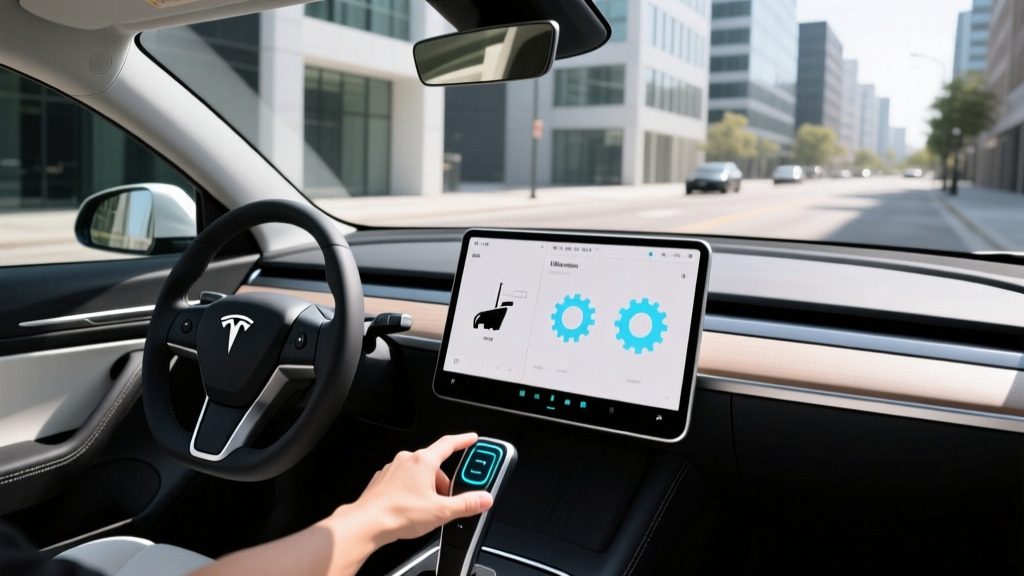
If you're searching for a traditional gear lever in a new Tesla, you won't find one. Since mid-2021, Tesla has eliminated the physical gear shift stalk from the Model S and Model X, and with the 2025 "Juniper" refresh of the Model Y (carried into the 2026 model year), the gear stalk is gone from Tesla's best-selling vehicle too. The Tesla gear shift is now entirely screen-based: you swipe up on the left edge of the touchscreen to engage Drive, swipe down for Reverse, and press a button on the overhead console or screen for Park.
This design choice is polarizing. Some owners adapt within a day; others find it a persistent friction point, especially in parking lots, drive-throughs, and three-point turns. Tesla's argument is that the car's Auto Shift feature — which uses cameras and ultrasonic sensors to infer whether you want Drive or Reverse — reduces the need for manual gear selection. In practice, Auto Shift works well in predictable scenarios (backing out of a garage, pulling into a parking spot) but can misjudge edge cases like angled driveways or tight cul-de-sacs.
This review covers the 2026 Tesla Model Y Long Range AWD — the volume trim — with full specs on range, charging, performance, pricing, and whether the gear-shift change should factor into your buying decision.
2026 Tesla Model Y: Core Specifications at a Glance
| Attribute | Value |
|---|---|
| EPA Estimated Range | 320 miles |
| Battery (Usable) | ~78 kWh, NMC (Nickel Manganese Cobalt) |
| Drivetrain | Dual-Motor AWD |
| Horsepower | 384 hp (combined) |
| 0–60 mph | 4.8 seconds |
| Top Speed | 125 mph |
| Max DC Fast Charge | 250 kW (peak) |
| 10–80% DC Charge Time | ~27 minutes |
| Level 2 Home Charging | 11.5 kW (~44 mi/hr) |
| Efficiency | 122 MPGe combined / 28 kWh/100 mi |
| Cargo (rear seats up) | 30.2 cu ft |
| Cargo (rear seats folded) | 72.1 cu ft |
| Base MSRP | $44,990 |
| Battery Warranty | 8 years / 120,000 miles (min 70% retention) |
Sources: EPA fueleconomy.gov, Tesla Model Y specs.
Real-World Range vs. the EPA Sticker
EPA Estimate: 320 miles
Real-World Highway (70 mph, mild weather): ~265–285 miles
Real-World City/Mixed: ~290–310 miles
Cold Weather (below 30°F, highway): ~220–250 miles
The 2026 Model Y Long Range AWD carries an EPA-estimated 320 miles of range. That figure is achievable in moderate temperatures with mixed city/highway driving at moderate speeds. However, Tesla's efficiency advantage — among the best in the industry at roughly 28 kWh per 100 miles — doesn't eliminate the physics of cold weather and high-speed drag.
On a 70-mph highway cruise in 75°F conditions, expect roughly 265–285 miles before the battery hits 10% State of Charge. Drop the ambient temperature below freezing, and range can fall 20–30% due to cabin heating demands and increased battery internal resistance. The Model Y uses a heat pump (standard since 2021), which recovers waste heat from the drivetrain to warm the cabin — this helps, but it doesn't eliminate cold-weather loss entirely.
For most commuters driving under 60 miles round-trip, the real-world range is more than sufficient with nightly home charging. Road-trippers should plan charging stops every 200–240 miles in winter to maintain a comfortable buffer.
Charging Speed: DC Fast, Level 2, and the NACS Advantage
| Charging Level | Max Power | Miles Added per Hour | Notes |
|---|---|---|---|
| Level 1 (120V outlet) | 1.4 kW | ~5 mi/hr | Emergency/trickle only |
| Level 2 (240V, 48A) | 11.5 kW | ~44 mi/hr | Full charge in ~7.5 hours |
| DC Fast (V3 Supercharger) | 250 kW peak | Up to ~1,000 mi/hr (peak) | 10–80% in ~27 min |
| DC Fast (V4 Supercharger) | 250 kW (current vehicles) | Same as V3 | Future vehicles may support higher |
The Model Y charges at a peak of 250 kW on Tesla V3 and V4 Superchargers using the NACS (North American Charging Standard) connector — the connector Tesla pioneered and which most major automakers are now adopting. The 10–80% charge takes roughly 27 minutes under ideal conditions (battery preconditioned, moderate ambient temperature).
Understanding the charge curve matters: the 250 kW peak is only sustained between roughly 10–30% State of Charge. Above 50%, the rate tapers significantly — by 80% you're pulling roughly 60–80 kW. This is normal lithium-ion behavior, not a Tesla-specific limitation, but it means the last 20% takes nearly as long as the first 60%. For road trips, charge to 80% and move on; only charge past 80% at your final destination.
At home on a Level 2 Wall Connector (240V, 48-amp circuit), the Model Y adds roughly 44 miles of range per hour. A full overnight charge from 20% to 80% takes about 5–6 hours — more than enough for daily use. Home installation of a 240V/60A circuit typically costs $800–$2,000 depending on panel proximity and local permitting; a panel upgrade to 200A can add $1,500–$3,000 if your home has older 100A service.
With the 2025+ built-in NACS port, the Model Y accesses Tesla's Supercharger network natively — the largest and most reliable DC fast-charging network in the U.S. Non-Tesla networks (Electrify America, EVgo, ChargePoint) require a NACS-to-CCS adapter for DC fast charging on legacy CCS stalls, though many networks are adding NACS cables.
Performance and the Screen-Based Gear Shift Experience
The 2026 Model Y Long Range AWD produces 384 horsepower from its dual-motor setup and hits 60 mph in 4.8 seconds. That's quick by any measure — quicker than a BMW X3 M40i or Audi Q5 S — and the instant electric torque makes it feel even faster in stoplight-to-stoplight driving. The Performance trim (450 hp, 3.5 seconds 0–60) is available for buyers who prioritize acceleration over a few miles of range.
The driving experience is dominated by the Tesla gear shift interface. Here's how it works in practice:
- Drive: Swipe up on the left edge of the touchscreen (a thin, always-visible control strip).
- Reverse: Swipe down on the same strip.
- Park: Press the "P" button on the overhead console above the rearview mirror, or tap the Park icon on screen.
- Neutral: Hold the swipe in either direction for ~1 second.
- Auto Shift: When enabled, the car selects Drive or Reverse automatically based on surroundings and brake-pedal context.
Most owners report adapting to the screen-based gear shift within 3–7 days. The primary complaints center on multi-point parking maneuvers (where you're rapidly alternating between Drive and Reverse) and rental-car or guest-driver confusion. Auto Shift mitigates this in simple scenarios but isn't reliable enough to fully replace conscious gear selection.
One advantage of the stalkless design: it frees up steering-column space and contributes to the Model Y's minimalist interior aesthetic. The trade-off is a loss of muscle memory — you can't shift gears without looking at the screen, which is a departure from decades of driving habit.
Pricing, Trims, and Federal Tax Credit Eligibility
| Trim | Base MSRP | Est. After §30D Credit | EPA Range |
|---|---|---|---|
| Long Range RWD | $42,990 | ~$35,490* | 330 mi |
| Long Range AWD | $44,990 | ~$37,490* | 320 mi |
| Performance AWD | $48,990 | ~$41,490* | 298 mi |
*After $7,500 point-of-sale transfer, if buyer and vehicle meet all §30D requirements. Destination fee ($1,390) not included in MSRP.
The 2026 Model Y is priced aggressively for the compact luxury EV SUV segment. The Long Range AWD at $44,990 undercuts the Ford Mustang Mach-E Premium AWD and BMW iX3 while offering competitive range and access to the Supercharger network.
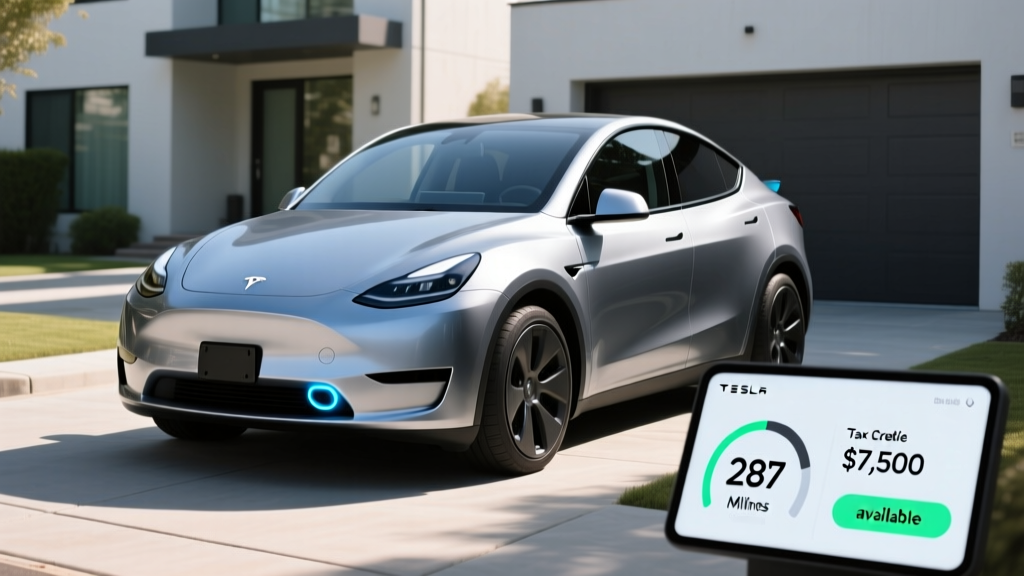
Federal Tax Credit (§30D) Eligibility: The Model Y qualifies for the full $7,500 federal tax credit, which can now be transferred to the dealer at point of sale as an instant discount (effective 2024 under IRS rules). However, eligibility depends on several buyer and vehicle criteria:
- ✅ Vehicle MSRP ≤ $80,000 (SUVs/trucks/vans) — Model Y qualifies
- ✅ Buyer AGI ≤ $150,000 (single) / $300,000 (joint) — check IRS income limits
- ✅ Battery components manufactured/assembled in North America (phased thresholds increase yearly)
- ✅ Critical minerals sourced from U.S. or FTA partners (thresholds increase yearly)
- ✅ Vehicle assembled in North America (Model Y: Fremont, CA or Austin, TX)
- ⚠️ Rules and sourcing thresholds change annually — confirm current-year eligibility at IRS.gov or with a tax professional
Tesla's battery supply chain has shifted significantly toward North American sourcing, and the Model Y has maintained §30D eligibility through 2025 and into 2026. However, the critical-minerals and battery-component thresholds tighten each year under the Inflation Reduction Act. Always verify current eligibility before finalizing a purchase — Tesla's checkout page and the IRS clean vehicle credit page are the authoritative sources.
Interior, Tech, and Daily Livability
The Juniper-refreshed Model Y interior is a substantial improvement over the pre-2025 version. Key upgrades include ventilated front seats, ambient lighting, a rear-seat touchscreen for climate and media control, power-folding second-row seats, and improved sound insulation. The cabin materials remain premium-minimalist — synthetic leather, aluminum trim, and a 15.4-inch center touchscreen that handles virtually all vehicle controls.
Cargo and Passenger Space:
- Rear legroom: 41.6 inches (generous for the segment)
- Cargo behind rear seats: 30.2 cu ft
- Cargo with rear seats folded: 72.1 cu ft
- Front trunk (frunk): ~4.1 cu ft — useful for charging cables and small bags
Tech and Driver Assistance:
Every Model Y includes Tesla's Basic Autopilot (adaptive cruise control + lane centering), which operates at SAE Level 2 — meaning the driver must remain fully engaged with hands on the wheel and eyes on the road. Tesla's Full Self-Driving (Supervised) package ($8,000 one-time or $99/month) adds automatic lane changes, traffic-light recognition, and city-street navigation, but it remains a Level 2 system requiring constant driver supervision. It is not autonomous driving.
The infotainment system is among the fastest and most responsive in the industry, with native Spotify, Netflix, YouTube, and gaming capabilities (the car includes a Ryzen-based processor). There is no Apple CarPlay or Android Auto — Tesla's ecosystem is closed, which is a dealbreaker for some buyers.
Pros, Cons, and Who Should Buy the 2026 Model Y
- Class-leading efficiency (122 MPGe combined)
- Supercharger network access (NACS native)
- 320-mile EPA range covers most road trips comfortably
- Strong performance (4.8s 0–60) without sacrificing range
- Over-the-air updates continuously add features
- Spacious cargo area + frunk
- Competitive pricing after $7,500 tax credit
- Screen-based gear shift requires adaptation; no physical backup
- No Apple CarPlay / Android Auto
- FSD ($8,000) remains Level 2 — not autonomous
- Firm ride on 20-inch wheels; road noise on rough surfaces
- Service center wait times can be long in some markets
- Rear visibility compromised by sloping roofline (backup camera essential)
Who the 2026 Model Y Suits Best:
- Daily commuters with home charging access who want minimal fueling cost and strong range buffer.
- Small families needing cargo versatility (72 cu ft with seats folded) and rear-seat space.
- Road-trip enthusiasts who value Supercharger network reliability over absolute max range.
- Tech-forward buyers comfortable with a screen-centric interface and Tesla's closed software ecosystem.
Consider alternatives if: you frequently lend your car to others (gear shift confusion), you require Apple CarPlay, you want a traditional dealer service experience, or you need a third row (look at the Model X or Kia EV9).
Frequently Asked Questions
Can you add a physical gear shift stalk to the 2026 Model Y?
No. Tesla does not offer a retrofit gear stalk, and no third-party solution exists that integrates with the vehicle's drive system. The screen-based interface is the only gear selection method. Some aftermarket companies sell physical button panels that map to screen actions, but these are not Tesla-endorsed and may affect warranty coverage.
Does Auto Shift reliably choose the right gear?
In straightforward scenarios — backing out of a garage, pulling forward into a parking space — Auto Shift works well. In ambiguous situations (angled driveways, tight multi-point turns, loading docks), it can misjudge intent. Most experienced owners keep Auto Shift enabled but override it manually when needed via the screen swipe.
How does the Model Y's range compare to the Ford Mustang Mach-E and Hyundai Ioniq 5?
The Model Y Long Range AWD's 320-mile EPA rating exceeds the Mach-E Extended Range AWD (~290 mi EPA) and the Ioniq 5 Long Range AWD (~290 mi EPA). However, the Ioniq 5 charges faster on non-Tesla DC networks (up to 350 kW peak, 10–80% in ~18 minutes on compatible chargers). The Model Y's advantage is the integrated Supercharger network, which remains the most reliable U.S. fast-charging ecosystem.
Is the 2026 Model Y a good first EV?
Yes, with one caveat: you need reliable home charging access (Level 2, 240V). With a home charger, the Model Y is one of the lowest-friction EV ownership experiences available — plug in nightly, wake up with a full "tank," and use Superchargers only for road trips. Without home charging, public-charging dependency adds time and cost that can frustrate first-time EV owners.
What is the battery replacement cost if it fails out of warranty?
Out-of-warranty Model Y battery replacements currently range from $12,000 to $16,000 depending on the pack configuration and service center. However, Tesla's NMC batteries have shown strong longevity — data from high-mileage fleets indicates roughly 85–90% capacity retention at 150,000 miles. The 8-year/120,000-mile battery warranty (minimum 70% retention) provides substantial coverage, and most owners will sell or trade the vehicle before a replacement is needed.