What Is the Tesla Gateway 2?
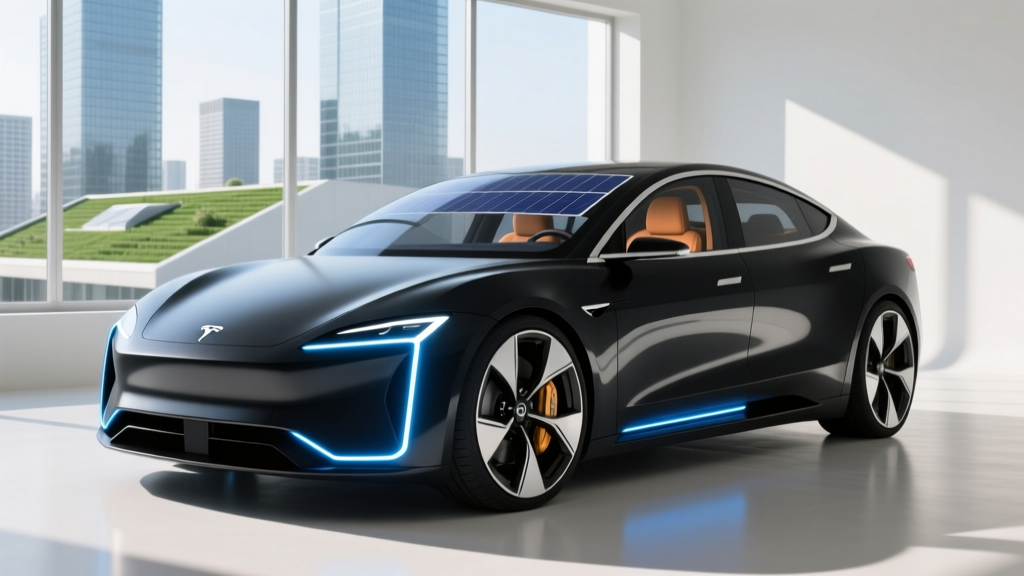
The term Tesla Gateway 2 has circulated across EV forums, investor threads, and automotive media as shorthand for Tesla's next-generation vehicle platform — the architecture expected to underpin a more affordable Tesla model (often referred to as the "Model 2," "Redwood," or Tesla's $25,000 car). As of early 2026, Tesla has not officially released a vehicle branded "Gateway 2," nor has the company used that name in any formal product announcement. However, the underlying platform — Tesla's next-gen unboxed manufacturing process, smaller vehicle footprint, and cost-reduced battery strategy — is very real and has been discussed by CEO Elon Musk and Tesla engineering leadership during earnings calls and investor events.
This article synthesizes everything confirmed and credibly reported about Tesla's next-generation platform: expected range, battery chemistry, charging architecture, pricing, and how it stacks up against the competition. Where specs remain unconfirmed, we clearly label them as estimated or announced.
Expected Range and Battery Specifications
Tesla's next-gen platform is designed around a smaller, lighter vehicle with a targeted base price near $25,000. To hit that price point while maintaining competitive range, Tesla is expected to lean heavily on LFP (lithium iron phosphate) battery chemistry — the same chemistry already used in the Model 3 Standard Range and Model Y Rear-Wheel-Drive variants.
| Specification | Estimated Value |
|---|---|
| Battery Chemistry | LFP (Lithium Iron Phosphate) |
| Battery Capacity (usable) | ~50–55 kWh (estimated) |
| EPA Estimated Range | ~250–275 miles (target, not certified) |
| Efficiency Target | ~25–27 kWh/100 mi (est.) |
| Structural Battery Pack | Yes — 4680 cells in structural pack |
Tesla's use of 4680-format cells in a structural battery pack — where the battery itself serves as a load-bearing component of the chassis — is central to reducing parts count, weight, and manufacturing cost. The "unboxed" assembly process Tesla has described involves building sub-assemblies in parallel rather than sequentially, which the company claims could cut production costs by up to 50%.
Charging Speed and Infrastructure
One of the most critical questions for any affordable EV is how quickly it charges. Tesla's Supercharger network remains the gold standard for reliability, and the next-gen platform will almost certainly use the NACS (North American Charging Standard) connector natively — the same connector now adopted by Ford, GM, Rivian, and most major automakers.
| Charging Level | Power / Rate | Estimated Time / Miles Added |
|---|---|---|
| Level 1 (120V household) | ~1.4 kW | ~4–5 miles per hour |
| Level 2 (240V home) | ~7.7–11.5 kW | ~28–42 miles per hour |
| DC Fast Charge (peak) | ~170–200 kW (est.) | 10–80% in ~22–28 min (est.) |
With a ~50–55 kWh battery, peak DC charging speeds will likely be capped around 170–200 kW — lower than the 250 kW peak of the Model 3 Long Range, but appropriate for the smaller pack size. The charge curve on LFP batteries tends to hold peak power longer than NMC before tapering, which could mean competitive 10–80% times despite a lower peak kW number.
On a home Level 2 charger (such as the Tesla Wall Connector at 48 amps / 11.5 kW), a full charge from 10% to 100% would take roughly 5–6 hours — easily achievable overnight. LFP batteries can and should be charged to 100% regularly, unlike NMC batteries where daily charging to 80% is recommended for longevity. This is a practical advantage for owners who want the full rated range available every morning.
Performance and Drivetrain
Tesla has not released official horsepower or 0–60 mph figures for the next-gen platform. Based on the vehicle's expected weight (~3,300–3,500 lbs), motor configuration, and competitive positioning, here are reasonable estimates:
| Metric | Estimated Value |
|---|---|
| Drivetrain | Rear-Wheel Drive (base); AWD (expected higher trim) |
| Horsepower | ~200–250 hp (RWD base) |
| 0–60 mph | ~5.8–6.5 seconds (RWD, est.) |
| Top Speed | ~125 mph (electronically limited, est.) |
These figures would position the vehicle competitively against the Chevrolet Equinox EV (0–60 in ~7.8 seconds, 213 hp) and the base Hyundai Kona Electric (0–60 in ~7.5 seconds, 201 hp), while coming in below the Tesla Model 3 RWD (0–60 in 5.8 seconds, 271 hp). A potential dual-motor AWD variant could drop 0–60 times into the low 5-second range.
Pricing, Trims, and Federal Tax Credit Eligibility
The headline number for Tesla's next-generation vehicle is an anticipated base MSRP near $25,000. Tesla has referenced this price target in multiple earnings calls, though achieving it depends on the cost savings from the unboxed manufacturing process, 4680 cell production scaling, and supply-chain localization.
| Trim (Estimated) | Expected MSRP | After §30D Credit (if eligible) |
|---|---|---|
| Base RWD | ~$25,000 | ~$17,500–$25,000* |
| Long Range / AWD | ~$30,000–$33,000 | ~$22,500–$33,000* |
*Tax credit amount depends on meeting all §30D eligibility criteria. Not all buyers will qualify.
- MSRP Cap: The vehicle must have an MSRP at or below $55,000 (sedans/hatchbacks) or $80,000 (SUVs/trucks). At ~$25,000, this vehicle clears the cap easily.
- Buyer Income Cap: Modified adjusted gross income must not exceed $150,000 (single), $225,000 (head of household), or $300,000 (joint filers). See IRS §30D guidelines.
- Battery Sourcing: A percentage of critical minerals and battery components must be sourced from the US or FTA partners. This is the most uncertain requirement — Tesla's LFP cells have historically been sourced from CATL in China, which could disqualify some or all of the $7,500 credit depending on 2026 sourcing rules.
- Point-of-Sale Transfer: Eligible buyers can apply the credit at purchase, reducing the out-of-pocket price immediately rather than waiting for tax filing.
- Final Assembly: The vehicle must undergo final assembly in North America. Tesla's Austin, TX and (potentially) Mexico factories could satisfy this requirement.
The battery sourcing requirement is the wildcard. If Tesla sources LFP cells from CATL (China), the critical-minerals portion of the credit ($3,750) would likely be forfeited. The battery-component portion ($3,750) depends on where cells are manufactured. Tesla may pursue North American LFP sourcing or cell production to maximize credit eligibility, but this remains unconfirmed.
Interior, Cargo, and Technology
Tesla's next-gen vehicle is expected to be a compact crossover or hatchback — smaller than the Model Y but larger than the discontinued original Roadster. Think of it as occupying the space between the Hyundai Kona Electric and the Tesla Model Y.
| Dimension | Estimate |
|---|---|
| Vehicle Class | Compact crossover / hatchback |
| Cargo Volume (behind rear seats) | ~20–25 cu ft (est.) |
| Cargo Volume (seats folded) | ~50–58 cu ft (est.) |
| Front Trunk (Frunk) | Expected — ~2–3 cu ft |
| Seating | 5 passengers |
On the technology front, expect Tesla's signature minimalist interior: a single central touchscreen (likely 15.4 inches), no physical instrument cluster, and Tesla's latest hardware generation for Autopilot/FSD capability. The vehicle should ship with:
- Tesla's latest infotainment OS with streaming, navigation, and over-the-air updates
- Basic Autopilot (adaptive cruise + lane centering) as standard — SAE Level 2 driver assistance requiring full driver engagement
- Full Self-Driving (Supervised) available as a paid option — still SAE Level 2, not autonomous
- Heat pump for efficient cabin heating (critical for winter range preservation)
- Sentry Mode, Dashcam, and Tesla's app ecosystem
Warranty and Ownership Costs
Based on Tesla's current warranty structure, the next-gen platform should carry:
| Component | Expected Coverage |
|---|---|
| Basic Vehicle | 4 years / 50,000 miles |
| Battery & Drive Unit | 8 years / 100,000 miles (min 70% retention) |
LFP batteries generally exhibit slower degradation than NMC, with many real-world Tesla LFP packs showing less than 5% degradation after 50,000 miles. This chemistry advantage could mean the 70% capacity retention threshold in Tesla's warranty is conservative — most LFP packs should retain 85%+ capacity well past the warranty period.
Insurance costs are the unknown variable. Teslas have historically carried higher insurance premiums than comparable EVs from legacy automakers due to repair costs and parts pricing. A $25,000 Tesla may still face insurance rates of $1,800–$2,400/year depending on location and driver profile. Get quotes before committing.
Competitive Landscape: Is It Worth Waiting For?
If Tesla delivers a $25,000 EV with 250+ miles of range, Supercharger access, and OTA updates, it would compete directly with:
| Spec | Tesla Next-Gen (Est.) | Chevy Equinox EV | Hyundai Kona Electric | Tesla Model 3 RWD |
|---|---|---|---|---|
| Base MSRP | ~$25,000 | ~$33,000 | ~$33,000 | ~$38,990 |
| EPA Range | ~250–275 mi | 319 mi | 261 mi | 272 mi |
| DC Fast Charge (peak) | ~170–200 kW | 150 kW | 100+ kW | 170 kW |
| 0–60 mph | ~5.8–6.5s | ~7.8s | ~7.5s | 5.8s |
| Charging Network | Supercharger (native NACS) | NACS (Supercharger access) | NACS adapter available | Supercharger (native NACS) |
- Wait for the Tesla next-gen if: You want the lowest possible entry price into the Tesla/Supercharger ecosystem, you're comfortable with a compact vehicle, and your timeline is flexible (production may not ramp until late 2026 or 2027).
- Buy the Chevy Equinox EV now if: You need 300+ miles of range today, prefer a larger crossover, and want a proven vehicle with available dealer support.
- Buy the Model 3 RWD now if: You want proven Tesla tech, 272 miles of EPA range, and don't mind spending ~$14,000 more for a midsize sedan with more interior space.
Pros and Cons
- Expected ~$25,000 base price — potentially the most affordable Tesla ever
- Native Supercharger/NACS access — the most reliable DC charging network
- LFP battery chemistry — excellent longevity, safe to charge to 100% daily
- Tesla OTA updates, software ecosystem, and resale value
- Structural battery pack reduces weight and increases rigidity
- Heat pump standard for winter efficiency
- Not yet available — timeline uncertain, delays likely
- Smaller battery means shorter range than Model 3/Y Long Range variants
- Compact size may not suit families needing maximum cargo space
- Tax credit eligibility uncertain due to LFP cell sourcing from China
- Insurance costs may be higher than competitors
- Tesla's minimalist interior isn't for everyone — no physical buttons or instrument cluster
Frequently Asked Questions
What is the real-world range of the Tesla Gateway 2 / next-gen platform?
Official EPA figures are not yet available. Based on the expected ~50–55 kWh LFP battery pack and Tesla's efficiency targets, we estimate an EPA rating of 250–275 miles. Real-world highway driving at 70+ mph should yield approximately 220–240 miles, and cold-weather range (below 32°F) could drop to 180–200 miles without preconditioning.
How fast does it charge at home and on DC fast chargers?
Estimated DC fast charging peaks at 170–200 kW, with a 10–80% session taking roughly 22–28 minutes. On a Level 2 home charger at 11.5 kW, a full charge should take about 5–6 hours. The smaller battery actually works in your favor here — less total energy to fill means shorter absolute charge times even at lower peak kW.
How much does it cost after tax credits?
If the base MSRP is ~$25,000 and the vehicle qualifies for the full $7,500 federal tax credit under IRS §30D, the effective price could drop to ~$17,500. However, battery sourcing requirements may limit the credit to $3,750 or eliminate it entirely if LFP cells are sourced from China. Always verify current eligibility on IRS.gov before purchasing.
Is it worth buying vs. the Chevy Equinox EV or Hyundai Kona Electric?
If price is your primary concern and you can wait, the Tesla next-gen platform could undercut competitors by $8,000–$10,000. However, the Equinox EV offers more range (319 mi EPA) and a larger vehicle today. The Kona Electric provides a more conventional interior layout. If you need a car now, buy now. If you can wait and want the lowest-cost Tesla ecosystem entry, waiting makes sense.
Does it qualify for the federal EV tax credit?
Likely yes on MSRP and income criteria (the ~$25,000 price clears the $55,000 sedan cap). The uncertain factor is battery component and critical-mineral sourcing. Tesla's LFP supply chain has strong ties to China (CATL), which could reduce or eliminate the credit under 2026 rules. Tesla may develop North American LFP sourcing to address this, but nothing is confirmed.
When will the Tesla next-gen affordable vehicle be available?
Tesla has signaled production could begin in late 2025 or 2026, but Tesla's timelines are notoriously optimistic. A realistic expectation for meaningful production volume and customer deliveries is mid-to-late 2026 at the earliest, with broader availability extending into 2027.