The Short Answer: No Tesla Has a Gas Engine
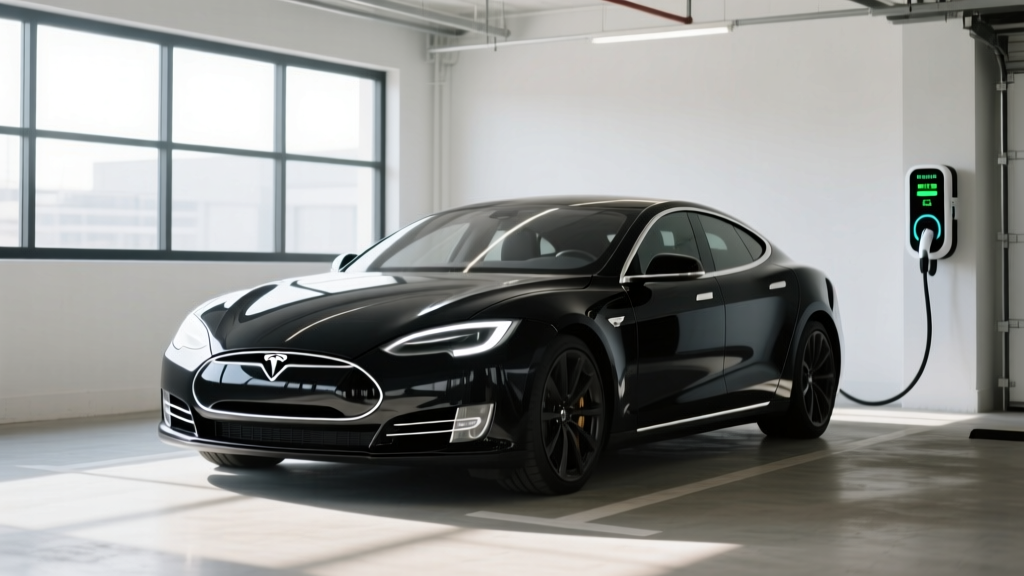
If you've been searching for a Tesla gas engine, the answer is straightforward: Tesla does not manufacture any vehicle with an internal combustion engine, hybrid powertrain, or range-extending generator. Every model Tesla has ever sold — from the original Roadster to the current Model 3, Model Y, Model S, Model X, and Cybertruck — is a battery-electric vehicle (BEV) powered exclusively by an electric motor drawing energy from a lithium-ion battery pack.
Unlike plug-in hybrids such as the Toyota RAV4 Prime or the Chrysler Pacifica PHEV, Teslas have no gas tank, no exhaust system, and no backup gasoline engine. If the battery depletes, the vehicle stops. That makes understanding range, charging access, and battery chemistry critical before you buy.
Below, we break down what actually powers a Tesla, how far you can really drive on a charge, what it costs to own one, and how the lineup stacks up against gas and hybrid alternatives in 2026.
What Powers a Tesla If Not Gas?
Teslas use one or two electric motors (depending on trim) fed by a high-voltage battery pack. The powertrain architecture varies by model:
- Model 3 Rear-Wheel Drive: Single permanent-magnet synchronous motor on the rear axle, 271 hp.
- Model 3 Long Range AWD: Dual-motor all-wheel drive, ~346 hp combined.
- Model Y Long Range / Performance: Dual-motor AWD, up to ~384 hp (Performance).
- Model S / Model X: Dual-motor or tri-motor (Plaid) configurations, up to 1,020 hp in Plaid trims.
- Cybertruck: Dual-motor AWD or tri-motor (Cyberbeast), up to 845 hp.
Energy storage comes from either LFP (lithium iron phosphate) or NMC (nickel manganese cobalt) battery chemistries depending on the trim. Standard-range Model 3 and Model Y variants typically use LFP packs, which are heavier but offer longer cycle life and can be charged to 100% daily without degradation concerns. Long Range and Performance trims use NMC chemistry for higher energy density and greater range per kilogram.
2026 Tesla Lineup: Range, Battery, and Efficiency Specs
| Model / Trim | Battery (kWh usable) | Chemistry | EPA Range | MPGe (combined) | kWh/100 mi | Drivetrain | 0–60 mph |
|---|---|---|---|---|---|---|---|
| Model 3 RWD | ~57.5 | LFP | 272 mi | 132 MPGe | 25 | RWD | 5.8 s |
| Model 3 Long Range AWD | ~75 | NMC | 341 mi | 134 MPGe | 25 | AWD | 4.2 s |
| Model Y Long Range AWD | ~75 | NMC | 320 mi | 122 MPGe | 28 | AWD | 4.8 s |
| Model S Long Range | ~95 | NMC | 402 mi | 124 MPGe | 27 | AWD | 3.1 s |
| Model S Plaid | ~95 | NMC | 359 mi | 116 MPGe | 29 | AWD (tri) | 1.99 s |
| Cybertruck AWD | ~123 | NMC | 340 mi | 68 MPGe | 48 | AWD (tri) | 4.1 s |
Source: fueleconomy.gov and Tesla.com specifications. Figures reflect current 2025–2026 model-year EPA ratings.
EPA estimates assume a mix of city and highway driving at moderate temperatures. In real-world conditions:
- Highway driving at 75 mph: Expect 10–15% less than the EPA sticker. A Model 3 Long Range rated at 341 miles typically delivers 285–310 miles on a flat interstate.
- Cold weather (below 32°F): Range drops 20–30% due to cabin heating and battery resistance. That same Model 3 LR may deliver 230–270 miles in January in Minnesota.
- City / stop-and-go: Regenerative braking recovers energy, often allowing you to match or slightly exceed EPA estimates.
Teslas come equipped with a heat pump (standard since 2021 on all models), which significantly reduces cold-weather HVAC energy draw compared to resistive heaters. Still, if you live in a cold climate, budget at least 25% below sticker range for winter planning.
Charging Speed: DC Fast Charging and Home Level 2
Without a gas engine, charging infrastructure becomes your "refueling" network. Here's how Tesla's charging speeds break down across the lineup:
| Charging Level | Power / Rate | Model 3 LR | Model Y LR | Model S | Cybertruck |
|---|---|---|---|---|---|
| Level 1 (120V outlet) | ~1.4 kW | ~3 mi/hr | ~3 mi/hr | ~3 mi/hr | ~2 mi/hr |
| Level 2 (240V home) | 11.5 kW (48A) | ~44 mi/hr | ~42 mi/hr | ~40 mi/hr | ~34 mi/hr |
| DC Fast (Supercharger V4) | Peak 250 kW | 10–80% ~25 min | 10–80% ~27 min | 10–80% ~28 min | 10–80% ~35 min |
Understanding the charge curve: Peak DC fast-charge rates (up to 250 kW on V3/V4 Superchargers) only hold at low states of charge — typically between 10% and 40%. Above 60%, the rate tapers significantly. By 80%, you're often charging at under 50 kW. This is why manufacturers quote 10–80% times rather than 0–100%. Charging from 80% to 100% on a DC fast charger can take nearly as long as the 10–80% session.
Home charging setup: Tesla's Wall Connector delivers up to 11.5 kW (48 amps) on a 60-amp circuit. Most owners install a NEMA 14-50 outlet (50-amp circuit, ~9.6 kW / 40 amps continuous) for $500–$1,500 including electrician labor and permits, depending on panel proximity. A full electrical panel upgrade (100A to 200A service) can add $1,500–$3,500. Always get a quote from a licensed electrician before committing.
Supercharger network: As of 2026, Tesla operates over 6,500 Supercharger stations in North America. The network now also serves non-Tesla EVs via the NACS connector standard, but Tesla owners still benefit from seamless plug-and-charge integration, automatic billing, and route preconditioning — where the car warms the battery before you arrive to maximize charge speed.
Pricing, Tax Credits, and Total Cost vs. Gas Cars
| Model / Trim | Base MSRP | Federal §30D Credit | Effective Price |
|---|---|---|---|
| Model 3 RWD | $38,990 | Up to $7,500* | ~$31,490 |
| Model 3 Long Range AWD | $45,240 | Up to $7,500* | ~$37,740 |
| Model Y Long Range AWD | $44,990 | Up to $7,500* | ~$37,490 |
| Model S Long Range | $79,990 | $0 (MSRP cap) | $79,990 |
| Cybertruck AWD | $79,990 | $0 (MSRP cap) | $79,990 |
*Federal EV tax credit eligibility under IRS §30D rules depends on multiple requirements that change periodically.
- Vehicle MSRP cap: Sedans ≤ $55,000; SUVs/trucks/vans ≤ $80,000. Model S and Cybertruck exceed these caps.
- Buyer income cap: Modified AGI ≤ $150,000 (single), $225,000 (head of household), $300,000 (joint).
- Battery sourcing: Increasing percentages of critical minerals and battery components must be sourced from the U.S. or FTA-partner countries. This requirement tightens annually and can reduce or eliminate the credit for some trims.
- Point-of-sale transfer: As of 2024, buyers can transfer the credit to the dealer for an immediate price reduction at purchase rather than waiting for tax filing.
- Assembly: Vehicle must undergo final assembly in North America (all U.S.-sold Teslas qualify — assembled in Fremont, CA, or Austin, TX).
Always verify eligibility on fueleconomy.gov and consult a tax professional before relying on the credit.
Cost per mile vs. gas: At a national average electricity rate of $0.16/kWh, a Model 3 Long Range (25 kWh/100 mi) costs roughly $0.04 per mile to charge at home. A comparable gas sedan getting 30 MPG at $3.40/gallon costs $0.11 per mile. Over 15,000 miles annually, that's a fuel savings of approximately $1,050/year — or $5,250 over five years. Public DC fast charging is more expensive ($0.30–$0.50/kWh at many networks), so savings shrink if you rely heavily on road-trip charging.
Interior, Cargo, and Tech: What You Get (and What You Don't)
Model 3 (2025–2026 "Highland" refresh):
- Front legroom: 42.3 in / Rear legroom: 34.9 in
- Cargo: 23 cu ft trunk + rear frunk (combined)
- 15.4-inch center touchscreen, ventilated front seats, ambient lighting, rear passenger screen
Model Y (2025–2026 "Juniper" refresh):
- Front legroom: 41.8 in / Rear legroom: 41.6 in
- Cargo: 72 cu ft (rear seats folded) — one of the most spacious in its class
- Optional third-row seating (small children only)
Standout tech:
- Over-the-air software updates that add features post-purchase
- Tesla Vision (camera-only) Autopilot standard; FSD (Supervised) available as a $8,000 add-on or $99/month subscription
- Sentry Mode dashcam recording, Dog Mode climate control, and built-in navigation with real-time Supercharger routing
- Phone-as-key with Bluetooth proximity unlock
Tesla Autopilot and Full Self-Driving (Supervised) are SAE Level 2 driver-assistance systems. They require continuous driver attention and hands-on or eyes-on supervision at all times. They are not "self-driving" in any legal or technical sense. Level 4 autonomous driving (no driver needed) currently exists only in geofenced robotaxi services like Waymo. Never treat any Tesla as capable of unsupervised operation.
Notable drawbacks:
- No Apple CarPlay or Android Auto — Tesla's proprietary infotainment only
- Minimalist interior lacks physical buttons; climate and mirror adjustments are screen-only
- Panel gaps and paint quality remain inconsistent compared to legacy luxury brands
- FSD (Supervised) still requires active monitoring and can make unexpected decisions in construction zones or complex intersections
- Insurance premiums tend to be 20–40% higher than comparable gas vehicles due to repair costs
Tesla vs. Gas, Hybrid, and Competing EVs: Who Should Buy?
✅ Pros
- Best-in-class Supercharger network — most reliable DC fast-charging ecosystem in North America
- Strong efficiency (low kWh/100 mi) means more real-world range per kWh of battery
- Over-the-air updates keep the car current years after purchase
- Low running costs with home charging ($0.03–$0.05/mi)
- No oil changes, spark plugs, or transmission fluid — minimal drivetrain maintenance
- Strong resale value relative to most EV competitors
❌ Cons
- No gas engine means range is 100% dependent on charging access
- No CarPlay/Android Auto — a dealbreaker for some buyers
- Cold-weather range loss of 20–30% is real and significant
- Service center wait times can stretch weeks in some metro areas
- Higher insurance costs than comparable gas or hybrid vehicles
- FSD promises have historically outpaced delivery
Choose a Tesla if: You have reliable home charging (garage or driveway with 240V access), your daily commute is under 200 miles round-trip, you value access to the Supercharger network for road trips, and you're comfortable with a screen-centric interface.
Consider a plug-in hybrid instead if: You lack home charging access, regularly drive 400+ miles in a single day through areas with sparse charging, live in extreme cold where range loss compounds, or want the security blanket of a gas engine for long rural trips. Vehicles like the Toyota RAV4 Prime (42 mi electric-only + gas backup) or the Hyundai Tucson PHEV bridge the gap for charging-limited households.
Consider a competing EV if: You want Apple CarPlay, a more traditional interior layout, or a dealer service network. The Hyundai Ioniq 5, Kia EV6, and BMW i4 offer competitive range and charging with more conventional ergonomics and broader service footprints.
Warranty Coverage
| Coverage | Model 3 / Model Y | Model S / Model X |
|---|---|---|
| Basic Vehicle | 4 years / 50,000 mi | 4 years / 50,000 mi |
| Battery & Drive Unit | 8 years / 120,000 mi (RWD) or 100,000 mi (AWD) | 8 years / 150,000 mi |
| Battery Retention Guarantee | ≥70% capacity during warranty period | ≥70% capacity during warranty period |
Tesla's battery warranty guarantees the pack will retain at least 70% of its original capacity for the stated term. Real-world data from high-mileage Tesla owners suggests NMC packs typically retain 85–90% capacity at 100,000 miles with normal charging habits. LFP packs show even slower degradation due to their chemistry, though long-term high-mileage data is still accumulating. Out-of-warranty battery replacement costs range from $12,000–$20,000 depending on the model — a figure worth considering if you plan to own the vehicle beyond 150,000 miles.
Frequently Asked Questions
Does Tesla make a hybrid or gas-powered car?
No. Tesla has never produced a hybrid, plug-in hybrid, or gas-powered vehicle. Every Tesla is a fully battery-electric vehicle (BEV). CEO Elon Musk has repeatedly stated the company has no plans to develop hybrid powertrains. If you need a gas backup, you'll need to look at other manufacturers.
What happens if my Tesla runs out of charge?
The vehicle will gradually reduce power, display increasingly urgent warnings, and eventually come to a stop. Tesla's navigation system proactively routes you through Superchargers and warns you if your destination exceeds available range. If you do run out, Tesla roadside assistance (included during the basic warranty period) can tow you to the nearest charger. Unlike a gas car, you cannot bring a "jerry can" — you must reach a charging outlet.
Can I add a gas-powered range extender to a Tesla?
No. There is no factory or aftermarket gas generator option for any Tesla. The BMW i3 REx (discontinued) and the upcoming Ram 1500 REV with range extender offer that concept, but Tesla's architecture is purely electric.
How does Tesla range compare to a gas car's range?
A typical gas sedan achieves 350–450 miles per tank. The Tesla Model S Long Range (402 mi EPA) matches or exceeds that. However, gas cars refuel in 3–5 minutes at any of 150,000+ U.S. gas stations, while a Tesla requires 25–35 minutes at a Supercharger and access to a much smaller — though growing — charging network.
Is a Tesla cheaper to own than a gas car?
Over five years, a Tesla Model 3 can save $4,000–$7,000 in fuel and maintenance compared to a comparable gas sedan, depending on local electricity rates and driving habits. However, higher purchase prices (before credits), elevated insurance premiums, and potential home charging installation costs partially offset those savings. Use the DOE's vehicle cost calculator for a personalized comparison.
Does the Tesla Model Y qualify for the $7,500 federal tax credit?
The Model Y Long Range AWD (MSRP under the $80,000 SUV cap) can qualify for up to $7,500 under §30D, provided the buyer meets income limits and the vehicle's battery satisfies critical-mineral and component-sourcing thresholds. These sourcing requirements tighten each year. Check the latest eligibility at fueleconomy.gov before purchasing and consider consulting a tax professional.