What Is the Tesla Gap Cam and Why Are Owners Talking About It?
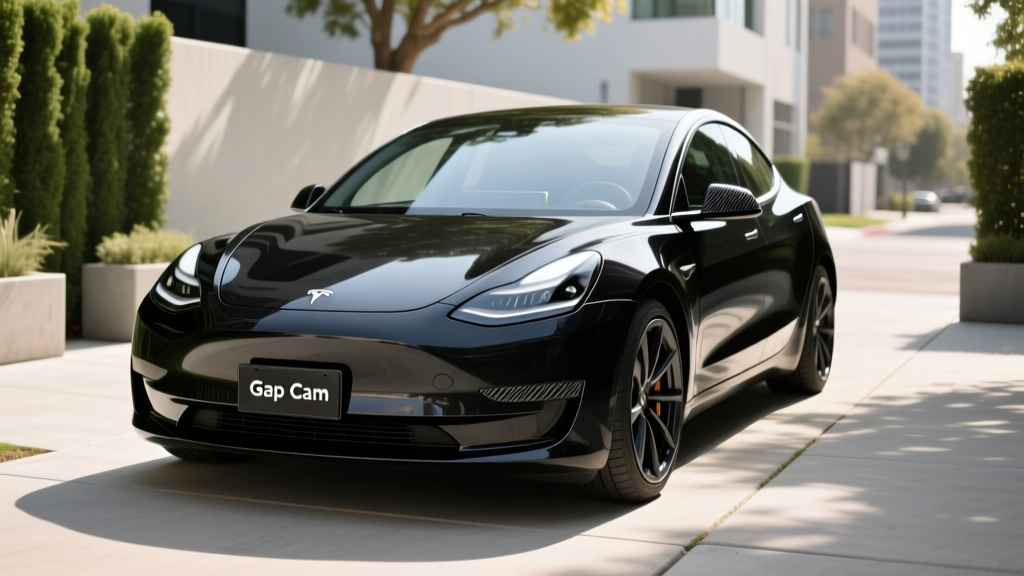
If you've spent any time in Tesla forums or owner groups, you've likely encountered the phrase "Tesla gap cam." It's not an official Tesla product name, but rather a community-coined term referring to the exterior camera system on Tesla vehicles — specifically the way the side repeater and fender cameras capture the blind-spot "gap" between the side mirrors and the rear quarter panels. In the 2026 Tesla Model 3 (the current "Highland" refresh generation), this camera array plays a central role in both the driver-assistance suite and the increasingly popular Dashcam/Sentry Mode security features.
Whether you're researching the Model 3's camera capabilities for safety, considering the vehicle as a daily commuter, or simply trying to decode owner jargon before you buy, this review covers the full 2026 Model 3 package: range, charging, performance, pricing, tax credits, and how the camera system fits into real ownership.
2026 Tesla Model 3: Quick Specs at a Glance
| Spec | Value |
|---|---|
| EPA Range | 341 miles (Long Range AWD) |
| Battery Capacity | ~79 kWh usable (NMC chemistry) |
| Drivetrain | Dual-Motor AWD |
| Horsepower | 346 hp (combined) |
| 0–60 mph | 4.2 seconds |
| Max DC Fast Charge | 250 kW peak |
| 10–80% DC Charge Time | ~25 minutes |
| Level 2 Home Charging | 11.5 kW (~44 mi/hr) |
| Efficiency | 132 MPGe / 25 kWh/100 mi |
| Cargo Volume | 23 cu ft (rear trunk) + 3.1 cu ft (frunk) |
| Rear Legroom | 35.3 inches |
| Base MSRP (Long Range AWD) | $42,490 |
| Battery Warranty | 8 years / 120,000 miles |
Range and Efficiency: EPA Sticker vs. Real-World Driving
EPA Estimate: 341 miles (Long Range AWD) / 363 miles (RWD)
Real-World Highway (70–80 mph): Expect ~280–305 miles
Cold Weather (below 32°F): Expect ~240–280 miles depending on cabin heating and preconditioning
City/Mixed Commuting: 320–345 miles (regen braking recovers energy in stop-and-go)
The 2026 Model 3 Long Range AWD carries an EPA-estimated 341 miles of range. That's among the best in its class, but the EPA test cycle blends city and highway driving at moderate speeds. On sustained highway trips at 75+ mph, aerodynamic drag cuts into that figure meaningfully — plan for roughly 280–305 miles before you need to stop.
Cold weather compounds the loss. Lithium-ion batteries lose efficiency in freezing temperatures, and cabin heating draws from the same pack. The Model 3's standard heat pump helps mitigate this — it's significantly more efficient than resistive heating — but you'll still see 15–25% range reduction in sub-freezing conditions. Preconditioning the battery while plugged in (a feature Tesla handles automatically when you set a departure time or navigate to a Supercharger) recovers some of that loss.
The base RWD model uses an LFP (lithium iron phosphate) battery with ~60 kWh usable capacity and a 363-mile EPA rating. LFP chemistry sacrifices some energy density but offers superior cycle life and can be charged to 100% daily without degradation concerns — a genuine advantage for commuters with home charging.
Charging Speed: DC Fast Charging and Home Level 2
| Charging Level | Power (kW) | Speed (mi/hr added) | Notes |
|---|---|---|---|
| Level 1 (120V outlet) | ~1.4 kW | ~5 mi/hr | Emergency/trickle only |
| Level 2 (240V home) | 11.5 kW | ~44 mi/hr | Full charge in ~7–8 hours |
| DC Fast (Supercharger V3) | 250 kW peak | ~170 mi in 15 min | 10–80% in ~25 min |
| DC Fast (V4 Supercharger) | 250 kW peak | Similar to V3 | Improved cable handling, CCS-compatible pedestal |
Tesla's Supercharger network remains the gold standard for public DC fast charging. At a V3 or V4 Supercharger, the Model 3 Long Range peaks at 250 kW, adding roughly 170 miles in 15 minutes. However, peak rate is not sustained rate — the charge curve tapers significantly above 50–60% state of charge. The 10–80% session takes approximately 25 minutes, which is competitive but not class-leading (the Hyundai Ioniq 5's 800V architecture hits 350 kW and does 10–80% in ~18 minutes).
At home on a Level 2 Wall Connector (48-amp circuit, 60-amp breaker), the Model 3 accepts up to 11.5 kW, replenishing roughly 44 miles of range per hour. A full overnight charge from 20% to 80% takes about 4–5 hours — more than adequate for daily use. Home installation of a Tesla Wall Connector typically runs $500–$1,500 depending on electrical panel proximity and whether a panel upgrade is needed.
For non-Tesla public chargers, the 2026 Model 3 ships with a NACS (North American Charging Standard) port natively. Tesla has opened Superchargers to other brands via adapter, and the broader industry has largely adopted NACS, meaning the Model 3's connector is now the de facto standard — a significant long-term advantage over CCS-equipped competitors relying on adapter solutions.
The Tesla Camera System: Gap Cam, Autopilot, and Dashcam Explained
The 2026 Model 3 uses Tesla's HW4 (Hardware 4) camera suite, which includes:
- Front main camera — mounted behind the windshield, high-resolution wide-angle
- Front narrow camera — telephoto for long-range object detection
- Left and right fender cameras — these are what owners often call the "gap cams," positioned in the front fenders to cover the blind zone between the side mirrors and the A-pillars
- Left and right rear repeater cameras — mounted on the front fender edges, covering the side-rear blind spots
- Rear camera — backup and rear-traffic monitoring
The "gap cam" terminology specifically refers to how the fender and repeater cameras fill the visual gap that traditional mirrors cannot cover. When you activate a turn signal, the center display shows a live feed from the corresponding side camera, overlaying detected vehicles, cyclists, and lane markings. This is particularly useful in urban environments where cyclists and scooters occupy the blind spot between mirror visibility and peripheral vision.
Dashcam and Sentry Mode
All eight cameras simultaneously record in Tesla's Dashcam feature, saving the last 10 minutes of footage on a USB drive when you tap the Dashcam icon (or automatically upon detecting a collision). Sentry Mode uses the same cameras to monitor the vehicle's surroundings while parked, recording incidents and alerting you via the app. The gap cam (fender camera) angle is especially valuable in Sentry Mode for capturing side-swipe incidents and door-ding events in parking lots — footage that many competing vehicles' single-camera dashcams miss entirely.
Autopilot and FSD (Supervised): SAE Level 2
Tesla Autopilot and Full Self-Driving (Supervised) are SAE Level 2 driver-assistance systems. The driver must remain fully engaged, hands on or near the wheel, and eyes on the road at all times. These systems do not make the vehicle self-driving. Only Level 4 services like Waymo operate without a human driver.
The camera system powers Tesla's Autopilot (standard) and FSD Supervised ($8,000 one-time or $99/month as of 2026). Autopilot provides adaptive cruise control and lane centering on highways. FSD Supervised extends this to city streets, traffic lights, stop signs, and automatic lane changes — but requires constant driver supervision. The camera-based vision-only approach (Tesla removed ultrasonic sensors and radar in the current generation) has improved markedly, though it still struggles in heavy rain, construction zones, and faded lane markings.
Performance, Interior, and Daily Livability
The Long Range AWD Model 3 delivers 346 horsepower from its dual-motor setup, hitting 0–60 mph in 4.2 seconds. That's quick enough to merge confidently onto any freeway and overtake without hesitation. The Performance trim ($47,490) drops that to 2.9 seconds with 510 hp, though it sacrifices roughly 20 miles of EPA range.
Inside, the Highland-generation Model is a significant step up from pre-2024 models. Materials quality has improved with ventilated front seats, ambient lighting, a rear passenger touchscreen (8 inches), and substantially better sound insulation. The 15.4-inch center display handles all vehicle controls — there are no physical buttons for climate, mirrors, or glovebox. Most owners adapt within a week, but it remains a dealbreaker for some buyers who prefer tactile controls.
Cargo space totals 23 cubic feet in the rear trunk (with a power liftgate) plus a 3.1-cubic-foot frunk. Rear legroom at 35.3 inches is adequate for adults on shorter trips but tight for anyone over 6 feet on long drives. The Model Y offers substantially more rear space and cargo volume if family hauling is a priority.
Pricing, Tax Credits, and Total Cost
| Trim | MSRP | Est. After §30D Credit | Credit Eligibility |
|---|---|---|---|
| RWD (LFP) | $38,990 | ~$31,490* | Eligible for up to $7,500** |
| Long Range AWD | $42,490 | ~$34,990* | Eligible for up to $7,500** |
| Performance AWD | $47,490 | ~$39,990* | Eligible for up to $7,500** |
*Assumes full $7,500 credit eligibility and point-of-sale transfer. **Eligibility depends on buyer income, battery sourcing, and MSRP caps under IRS §30D rules.
- MSRP Cap: Vehicle must be under $55,000 (sedans) — all Model 3 trims qualify ✓
- Buyer Income Cap: AGI ≤ $150,000 (single) / $300,000 (joint) — check your tax situation
- Battery Sourcing: Critical minerals and battery components must meet phased-in domestic/free-trade requirements — Tesla has shifted significant sourcing to qualify, but verify at purchase via the dealer/point-of-sale system
- Point-of-Sale Transfer: You can apply the credit as a down-payment reduction at purchase rather than waiting for tax filing
- Assembly: Must be assembled in North America — Model 3 is built in Fremont, CA and Austin, TX ✓
The RWD Model 3 at $38,990 before incentives is one of the most affordable premium electric sedans on the market. With the full $7,500 federal credit (if you qualify), it drops to roughly $31,490 — undercutting comparably equipped gas sedans when you factor in five years of fuel and maintenance savings. However, the credit's battery-sourcing requirements have tightened annually, and eligibility can shift. Always confirm your specific vehicle's VIN eligibility on the IRS portal or through Tesla at the time of purchase.
Pros, Cons, and How It Stacks Up
- Class-leading Supercharger network access (native NACS)
- 341-mile EPA range eliminates most range anxiety
- Comprehensive camera suite (gap cam/fender cams) for safety and security
- Over-the-air updates continuously add features
- Low operating cost: ~$0.04/mile on home electricity
- Strong resale value relative to most EVs
- No physical buttons — everything through touchscreen
- Rear seat space is tight for taller adults
- Vision-only Autopilot struggles in heavy rain/snow
- 250 kW peak charge rate trails 800V competitors
- Insurance premiums run 15–30% higher than gas equivalents
- FSD Supervised ($8,000) remains a Level 2 system despite the name
vs. Hyundai Ioniq 6: The Ioniq 6 offers faster 350 kW charging and a similar ~360-mile range, but lacks Tesla's charging network and camera-based security features. It's a strong alternative if you prioritize charge speed and physical controls.
vs. BMW i4: The i4 provides a more traditional luxury interior and physical buttons, but costs $10,000+ more for comparable range and has no frunk.
vs. Model Y: If you need rear-seat space and cargo room, the Model Y is the pragmatic choice — but it costs ~$5,000 more and has slightly lower efficiency.
Who Should Buy the 2026 Model 3?
- Choose the Model 3 RWD if: You commute under 60 miles daily, have home charging, want the lowest price, and don't need AWD.
- Choose the Model 3 Long Range AWD if: You take regular road trips, live in a climate with snow/rain, or want the 341-mile buffer for Supercharger-desert stretches.
- Choose the Performance if: You want sub-3-second acceleration and track-capable handling, and don't mind the range trade-off.
- Look elsewhere if: You regularly carry rear-seat adults, need physical climate controls, or frequently drive in conditions where vision-only driver assist struggles (heavy fog, blizzards).
Frequently Asked Questions
What exactly is the Tesla gap cam?
The "gap cam" is an owner-community term for the Tesla Model 3's fender-mounted side cameras that cover the visual gap between the side mirrors and the rear quarter panels. They activate on turn-signal use and are integral to Sentry Mode's side-impact recording capability. They are not a separate accessory — they're part of the standard HW4 camera suite on every 2026 Model 3.
What is the real-world range of the 2026 Model 3?
The EPA rates the Long Range AWD at 341 miles. In real-world highway driving at 75 mph, expect 280–305 miles. In freezing weather, that can drop to 240–280 miles. City driving with regenerative braking often matches or slightly exceeds the EPA figure.
How fast does the Model 3 charge?
On a Tesla Supercharger (DC fast), the Model 3 peaks at 250 kW and charges from 10–80% in approximately 25 minutes. At home on a Level 2 Wall Connector (11.5 kW), it adds ~44 miles per hour, fully replenishing overnight.
Does the 2026 Model 3 qualify for the $7,500 federal tax credit?
All Model 3 trims fall under the $55,000 MSRP sedan cap and are assembled in the US. However, full credit eligibility depends on your income (≤$150K single / ≤$300K joint), battery critical-mineral sourcing compliance, and current IRS rules. Verify via fueleconomy.gov and the IRS portal at purchase.
Is the Model 3 worth buying over competitors in 2026?
For most buyers prioritizing range, charging infrastructure, and total cost of ownership, yes — the Model 3 Long Range AWD at ~$35,000 after the federal credit is difficult to beat. The Ioniq 6 charges faster, and the BMW i4 feels more traditionally luxurious, but neither matches Tesla's Supercharger network or the security utility of the full camera suite. If rear-seat space is critical, cross-shop the Model Y.
Is Tesla's Autopilot or FSD self-driving?
No. Both Autopilot and FSD (Supervised) are SAE Level 2 systems that require full driver attention and engagement. You are responsible for the vehicle at all times. Do not treat these systems as autonomous.