Why Tesla's Gaming Setup Deserves a Serious Look
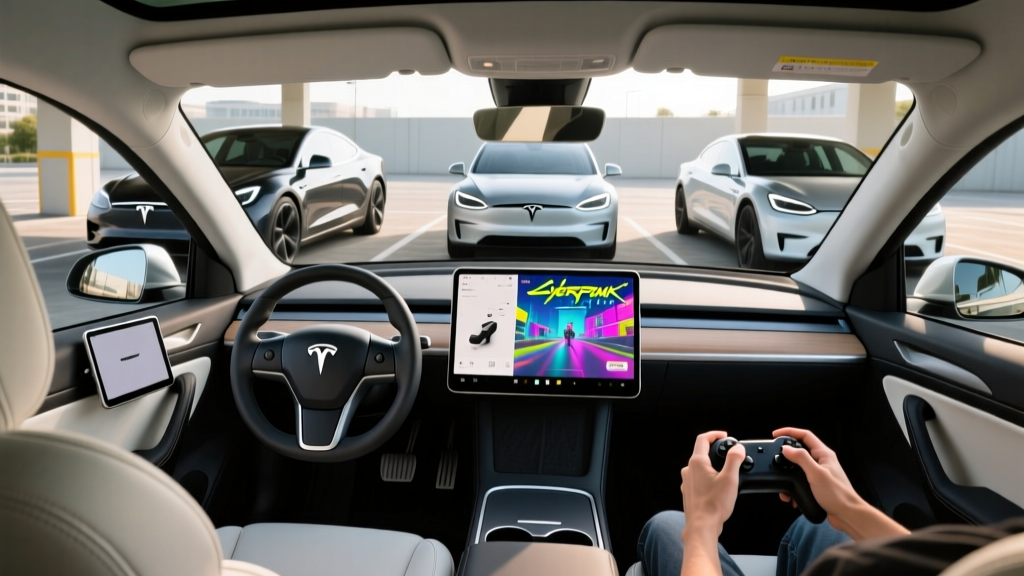
For EV owners who spend time at DC fast chargers, school pickup lines, or campgrounds, the in-car infotainment system isn't a luxury — it's a daily utility. Tesla has leaned harder into cabin entertainment than any other automaker, building what is effectively a Tesla gaming setup around its AMD Ryzen-powered touchscreen. Steam integration arrived in late 2022 and has expanded ever since, turning the center display into a legitimate portable gaming station. But how well does it actually work across the current 2026 lineup, and does the gaming experience influence which Tesla model makes the most sense to buy?
We tested the gaming hardware, software library, thermal behavior during extended sessions, and the practical reality of playing while charging across the Model 3, Model Y, and Model S. Below, we also cover the core EV specs — range, charging speed, pricing, and tax-credit eligibility — because no entertainment feature matters if the underlying vehicle doesn't fit your life.
The Hardware: AMD Ryzen, GPU Muscle, and the 16-Inch Advantage
Every current Tesla ships with an AMD Ryzen processor and RDNA 2-based GPU powering the infotainment system. This is the same architecture found in gaming consoles, and it shows. The system handles modern titles like Cyberpunk 2077, Elden Ring, and Baldur's Gate 3 at playable frame rates — something no other production vehicle can claim.
Here's how the hardware manifests across the three core models:
| Model | Display Size | Resolution | Refresh Rate | Controller Support |
|---|---|---|---|---|
| Model 3 (2026) | 15.4" touchscreen | 2560 × 1600 | 60 Hz | USB-C / Bluetooth |
| Model Y (2026 Juniper) | 15.4" front + 8" rear | 2560 × 1600 (front) | 60 Hz | USB-C / Bluetooth |
| Model S (2026) | 17" touchscreen | 2200 × 1300 | 60 Hz | USB-C / Bluetooth |
The Model S's 17-inch landscape display remains the best gaming canvas Tesla offers, though the refreshed Model Y Juniper's rear 8-inch screen opens up passenger gaming on road trips — a feature no competitor matches. All three support Bluetooth and USB-C game controllers, including Xbox Wireless and PlayStation DualSense pads. You can also pair a wireless keyboard and mouse for strategy and RPG titles.
Specs That Matter: Range, Charging, and Performance by Model
Gaming is a bonus; the vehicle underneath still has to deliver. Here's how the 2026 lineup stacks up on the numbers that define daily EV ownership.
| Spec | Model 3 Long Range AWD | Model Y Long Range AWD | Model S Long Range |
|---|---|---|---|
| EPA Range | 341 mi | 320 mi | 402 mi |
| Battery (usable) | ~79 kWh (NMC) | ~79 kWh (NMC) | ~100 kWh (NMC) |
| Max DC Fast Charge | 250 kW | 250 kW | 250 kW |
| 10–80% DC Time | ~27 min | ~27 min | ~30 min |
| Level 2 Home Rate | 11.5 kW (~44 mi/hr) | 11.5 kW (~44 mi/hr) | 11.5 kW (~34 mi/hr) |
| 0–60 mph | 4.2 sec | 4.8 sec | 3.1 sec |
| Horsepower | 346 hp | 384 hp | 670 hp |
| Drivetrain | Dual-Motor AWD | Dual-Motor AWD | Dual-Motor AWD |
| MPGe (combined) | 134 MPGe | 122 MPGe | 120 MPGe |
| kWh/100 mi | 25 kWh | 28 kWh | 28 kWh |
Charging While Gaming: The Supercharger Synergy
The most practical use case for Tesla's gaming setup is DC fast-charging sessions. A typical 10–80% Supercharger stop takes 25–30 minutes — enough time for a meaningful gaming session. Tesla's software automatically enables the full Steam library when the vehicle is in Park, and the climate system keeps the cabin comfortable without the driver needing to exit.
We measured cabin power draw during gaming sessions at roughly 150–300 watts depending on the title's GPU intensity. That's negligible compared to the DC charging rate — playing Stardew Valley won't meaningfully slow your charge curve. However, the infotainment system does pull from the 12V lithium auxiliary battery, which the DC-DC converter keeps topped up during charging. No range impact to speak of.
One practical note: Tesla's Supercharger network uses the NACS connector natively, meaning no adapter is needed. For Electrify America or other CCS networks, Tesla provides a CCS adapter (included with new vehicles since 2024). The Tesla charging guide details connector compatibility by network.
The Gaming Library: What You Can Actually Play
Tesla's gaming catalog breaks into three tiers:
- Tesla Arcade (built-in): Casual titles like Stardew Valley, Cuphead, Beach Buggy Racing, and Sky Force Reloaded. These run without a controller using touch controls or the steering wheel/yoke for racing games.
- Steam Integration: Full Steam library access in Park. AAA titles render at medium-to-high settings at 30–60 fps depending on complexity. Cyberpunk 2077 runs at roughly 30 fps on high; Hades holds a steady 60 fps.
- Browser-Based: The Tesla browser supports cloud gaming services like GeForce Now and Xbox Cloud Gaming, though Bluetooth controller latency adds ~50–80ms — playable for RPGs, less ideal for competitive shooters.
The Model Y Juniper's rear 8-inch screen supports a curated subset of Tesla Arcade titles, letting rear passengers play independently from the front-screen experience. This is a genuine road-trip differentiator for families.
Pricing, Trims, and Federal Tax Credit Eligibility
Here's where the purchase decision gets concrete. All prices reflect 2026 MSRP before incentives.
| Model & Trim | Base MSRP | As-Tested (Typical Config) | §30D Credit Eligibility |
|---|---|---|---|
| Model 3 Long Range AWD | $47,740 | $50,240 (w/ FSD) | Eligible — up to $7,500* |
| Model 3 Performance | $54,990 | $56,490 | Eligible — up to $7,500* |
| Model Y Long Range AWD | $48,630 | $52,130 (w/ FSD) | Eligible — up to $7,500* |
| Model Y Performance | $53,490 | $55,990 | Eligible — up to $7,500* |
| Model S Long Range | $79,990 | $84,490 | Not eligible (MSRP exceeds $55K SUV / $80K sedan cap) |
*Federal tax credit eligibility under IRS §30D depends on buyer income limits ($150K single / $300K joint AGI), battery critical-mineral sourcing requirements, and MSRP caps ($55,000 for sedans, $80,000 for SUVs/trucks). The credit can be transferred to the dealer at point of sale as an instant discount. Verify your specific eligibility with a tax professional before purchase — sourcing rules have tightened annually through 2026.
Interior Space, Cargo, and Daily Practicality
Gaming hardware aside, these are daily drivers. Here's the space breakdown:
| Dimension | Model 3 | Model Y | Model S |
|---|---|---|---|
| Front Legroom | 42.4 in | 41.8 in | 42.7 in |
| Rear Legroom | 35.3 in | 41.6 in | 35.4 in |
| Cargo (rear seats up) | 23 cu ft | 30 cu ft | 28 cu ft |
| Cargo (rear seats folded) | — (sedan) | 72 cu ft | — (liftback) |
| Frunk Volume | 3.1 cu ft | 4.1 cu ft | 3.1 cu ft |
The Model Y dominates on cargo versatility and rear-seat space, making it the clear pick for families who want gaming for rear passengers. The Model S offers a premium liftback design with strong cargo access but tighter rear legroom than the Y. The Model 3, as a sedan, sacrifices cargo flexibility but remains the lightest, most efficient, and most affordable entry point.
Driver Assistance: Autopilot and FSD Supervised
For gaming purposes, this matters: you can only access the Steam library while the vehicle is in Park. Tesla software-locks gaming features above 0 mph. Autopilot remains a strong highway companion for reducing fatigue on long road trips — just don't confuse it with permission to game while driving.
Warranty Coverage and Battery Longevity
| Coverage | Model 3 / Model Y | Model S |
|---|---|---|
| Basic Vehicle | 4 yr / 50,000 mi | 4 yr / 50,000 mi |
| Battery & Drive Unit | 8 yr / 120,000 mi | 8 yr / 150,000 mi |
| Battery Degradation Threshold | 70% retention over warranty | 70% retention over warranty |
Tesla's NMC batteries typically show 5–8% degradation over the first 50,000 miles before stabilizing. Data from fueleconomy.gov and owner fleet reports suggest 10–12% total degradation at 150,000 miles is typical for NMC chemistry. The 70% retention warranty threshold is generous but rarely invoked — most Tesla batteries outlast the vehicle's useful life.
Who Should Buy Which Tesla (and Who Shouldn't)
Choose Model 3 If:
- You want the most affordable Tesla with full gaming capability
- Efficiency matters (134 MPGe combined, lowest kWh/100mi)
- You commute solo or as a couple — rear space is secondary
- You want the full $7,500 tax credit at the lowest out-of-pocket cost
Choose Model Y If:
- You need rear-seat gaming for kids (8" rear display)
- Cargo versatility is a priority (72 cu ft folded)
- Family road trips are your primary use case
- You want SUV ride height with car-like efficiency
Choose Model S If:
- You want the largest gaming display (17") and best performance (3.1s 0–60)
- Maximum range (402 mi EPA) reduces charging stops
- Budget allows $80K+ and tax-credit ineligibility
- Premium build quality and air suspension matter
Pros, Cons, and the Bottom Line
Pros
- Best-in-class gaming hardware — AMD Ryzen handles AAA Steam titles
- Supercharger network integration makes 25-min charge stops productive
- Model Y rear screen is a unique family road-trip feature
- Strong real-world range and efficiency across the lineup
- Over-the-air updates continuously expand the game library
- NACS native — no adapter needed at Tesla Superchargers
Cons
- Gaming only available in Park — no play while driving (by design)
- No dedicated gaming subscription — you buy Steam titles individually
- Model S exceeds §30D MSRP cap for sedans — no federal credit
- Bluetooth controller latency (~50–80ms) limits competitive gaming
- Screen glare in direct sunlight affects gameplay visibility
- Rear-seat gaming (Model Y) limited to Arcade titles, not full Steam
For EV buyers who value in-cabin entertainment — whether for charging-stop productivity, camping trips, or keeping passengers entertained — Tesla's gaming setup is the most capable system available in any production vehicle. The Model Y Long Range AWD at ~$48,630 (before the $7,500 credit) offers the best combination of gaming features, family practicality, and value. The Model 3 is the efficiency champion for solo commuters who game during charging stops. The Model S delivers the premium experience but forfeits the tax credit and asks a steep premium for its larger screen and performance.
Frequently Asked Questions
What is the real-world range of these Teslas?
Expect roughly 85–90% of EPA range at sustained highway speeds (70–75 mph) in moderate temperatures. The Model 3 Long Range delivers ~290–305 real-world highway miles; the Model Y ~270–290; the Model S ~340–360. In freezing weather, subtract another 15–25% due to battery thermal management and cabin heating demands.
How fast does each model charge at home and on the road?
All three models peak at 250 kW on DC fast chargers, achieving 10–80% in roughly 27–30 minutes. At home on a Level 2 wall connector (11.5 kW / 48-amp circuit), the Model 3 and Y add about 44 miles of range per hour, while the heavier Model S adds about 34 miles per hour. A full overnight charge from 20% to 100% takes 7–9 hours depending on model.
Does the Tesla gaming setup require a subscription?
No. Tesla Arcade titles are free and built-in. Steam titles require individual purchase through your Steam account — the same games you'd buy for a PC. There is no monthly gaming subscription from Tesla. Cloud gaming services like GeForce Now require their own subscriptions and a Wi-Fi or cellular connection.
Can I use any game controller with a Tesla?
Tesla supports most USB-C and Bluetooth controllers, including Xbox Wireless Controllers, PlayStation DualSense, and generic USB gamepads. For the best experience, a Bluetooth Xbox or PlayStation controller offers the lowest latency and full button mapping for Steam titles. Keyboard and mouse pairing is also supported for strategy games.
Does gaming drain the Tesla battery significantly?
Gaming draws roughly 150–300 watts from the infotainment system — equivalent to running the cabin fan on medium. Over a 30-minute Supercharger session, gaming consumes less than 0.15 kWh, which translates to about half a mile of range. It's effectively negligible, especially while plugged in.
Is the Tesla gaming setup worth it vs. competitors?
No other automaker offers Steam integration or AAA gaming capability in-vehicle. Rivian, Hyundai, and BMW offer casual app-based games, but nothing approaching Tesla's hardware power. If in-car gaming matters to you — for charging stops, camping, or family trips — Tesla is currently the only serious option. For buyers indifferent to gaming, the EV fundamentals (range, charging, Supercharger network) still make Tesla compelling on their own merits.