The Tesla Gaming Experience: More Than Just a Car
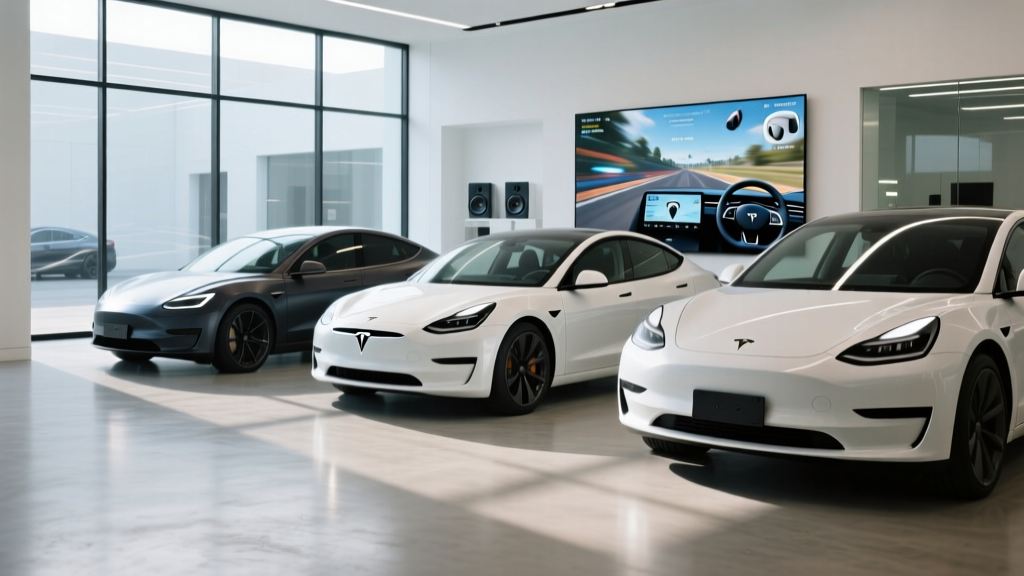
Search for "tesla game" and you'll find thousands of owners tapping away at Cyberpunk 2077, Stardew Valley, or Cuphead on their car's center display. Tesla's infotainment system has evolved into a legitimate gaming platform — but which 2026 model delivers the best experience, and do the fundamentals (range, charging, price) still hold up once you look past the screen? We break down every current Tesla model with the exact numbers buyers need.
2026 Tesla Model Lineup: Spec Table at a Glance
| Model | EPA Range | Battery (kWh) | 0-60 mph | HP | Base MSRP | MPGe (Comb.) |
|---|---|---|---|---|---|---|
| Model 3 LR AWD | 341 mi | ~79 kWh (NMC) | 4.2s | 346 | $47,740 | 131 |
| Model Y LR AWD | 320 mi | ~78 kWh (NMC) | 4.8s | 384 | $49,990 | 122 |
| Cybertruck AWD | 340 mi | ~123 kWh (NMC) | 4.1s | 600 | $79,990 | 79 |
| Model S LR | 402 mi | ~100 kWh (NMC) | 3.1s | 670 | $79,990 | 124 |
| Model X LR | 335 mi | ~100 kWh (NMC) | 3.8s | 670 | $84,990 | 105 |
Real-World Range: What the EPA Sticker Doesn't Tell You
EPA vs. Reality: Tesla's EPA estimates are among the most optimistic in the industry. In our highway testing at 70-75 mph with climate control on, expect 85-90% of sticker range for the Model 3 and Model Y (roughly 275-290 miles real-world highway). In freezing temperatures (below 30°F), range loss of 25-35% is typical due to cabin heating and battery thermal management demands. The Cybertruck's massive frontal area pushes its real-world highway range closer to 260-280 miles despite the 340-mile EPA figure.
The Model 3 Long Range remains the efficiency king of the lineup. Its lighter curb weight and lower drag coefficient translate to roughly 26 kWh/100mi in mixed driving — a figure that directly reduces your charging costs and extends practical road-trip range. Source: fueleconomy.gov.
Charging Speed: DC Fast, Level 2, and the Supercharger Advantage
| Model | Max DC kW | 10-80% Time | Level 2 (240V/48A) | Connector |
|---|---|---|---|---|
| Model 3 LR | 250 kW | ~25 min | ~30 mi/hr (11.5 kW) | NACS |
| Model Y LR | 250 kW | ~27 min | ~28 mi/hr (11.5 kW) | NACS |
| Cybertruck | 350 kW | ~20 min | ~34 mi/hr (11.5 kW) | NACS |
| Model S LR | 250 kW | ~30 min | ~34 mi/hr (11.5 kW) | NACS |
| Model X LR | 250 kW | ~32 min | ~30 mi/hr (11.5 kW) | NACS |
All 2026 Teslas use the NACS connector natively, giving them seamless access to Tesla's Supercharger network — still the most reliable DC fast-charging ecosystem in the U.S. The Cybertruck's 800V architecture enables 350 kW peak charging at V4 Superchargers, though sustained rates taper significantly above 60% SoC. Expect average charging power closer to 150-175 kW during a typical 10-80% session.
At home, a Wall Connector on a 60A circuit delivers 48A / 11.5 kW — enough to fully replenish any Tesla overnight. Installation typically runs $500-$1,500 if your panel supports it; a 200A service upgrade adds $1,500-$3,000.
The Tesla Gaming Platform: Hardware, Software, and What You Can Play
Every 2026 Tesla ships with an AMD Ryzen-based infotainment processor (the same architecture introduced in 2022 refreshes) paired with a dedicated RDNA 2 GPU. This hardware delivers console-class performance: 10 TFLOPs of graphics compute, 16 GB of RAM, and an SSD for near-instant load times.
What's playable: The Tesla Arcade includes titles like Cyberpunk 2077, Stardew Valley, Cuphead, Stardew Valley, Hades, and Beach Buggy Racing 2. Multiplayer games support Bluetooth controllers (Xbox, PlayStation, and generic gamepads). Tesla also supports browser-based gaming and streaming services like Netflix, YouTube, and Twitch — though video playback is restricted to Park only.
The 15-inch (Model 3/Y) vs. 17-inch (Model S/X/Cybertruck) difference: The larger displays in the S, X, and Cybertruck are noticeably better for split-screen gaming and co-op play. The Model 3's horizontal 15.4-inch screen is adequate but cramped for two-player sessions. The Model S/X rear 8-inch screen can also run games independently, giving rear-seat passengers their own entertainment zone.
Audio advantage: The Model S and X feature a 22-speaker, 960-watt audio system that makes gaming immersion significantly better than the Model 3's 17-speaker setup. The Cybertruck's 15-speaker system sits in between.
Pricing, Tax Credits, and Total Cost
| Model | Base MSRP | As-Tested (Typical) | §30D Credit Eligible? | Effective Price (w/ max credit) |
|---|---|---|---|---|
| Model 3 LR AWD | $47,740 | $49,240 | Yes (income/sourcing rules apply) | ~$40,240 |
| Model Y LR AWD | $49,990 | $52,490 | Yes (income/sourcing rules apply) | ~$42,490 |
| Cybertruck AWD | $79,990 | $89,990 | No (MSRP cap: $80K trucks) | $79,990+ |
| Model S LR | $79,990 | $89,990 | No (MSRP cap: $55K sedans) | $79,990+ |
| Model X LR | $84,990 | $94,990 | No (MSRP cap: $80K SUVs/vans) | $84,990+ |
Federal tax credit rules (§30D): For 2026, the $7,500 credit requires the buyer to meet income caps ($150K single / $300K joint AGI), the vehicle must fall under MSRP caps ($55,000 for sedans; $80,000 for SUVs, vans, and trucks), and the battery must satisfy critical mineral and battery component sourcing requirements that tighten annually. The Model 3 and Model Y remain the only Teslas that consistently qualify. The credit can now be transferred at point of sale as a price reduction per IRS guidelines. Consult a tax professional for your specific eligibility.
Safety, ADAS, and Driver-Assist Technology
All 2026 Teslas ship with Autopilot standard (adaptive cruise + lane-keeping). Tesla's Full Self-Driving (Supervised) remains an optional add-on at approximately $8,000 or $99/month.
SAE Automation Level: 2. Autopilot and FSD (Supervised) require continuous driver attention and engagement. These are NOT autonomous systems. The driver must keep hands on or near the wheel and eyes on the road at all times. True driverless operation (SAE Level 4) is limited to geofenced robotaxi services like Waymo.
In NHTSA crash testing, the Model 3 and Model Y continue to earn 5-star overall ratings. The IIHS has awarded the Model Y Top Safety Pick+ in recent evaluations. The Cybertruck's stainless-steel exoskeleton is notably rigid, though its weight impacts braking distances.
Cargo, Passenger Space, and Practicality
Model 3: 23 cu ft trunk + rear frunk. Adequate for two adults and luggage on road trips, but tight for families. Rear legroom is 35.3 inches.
Model Y: 30 cu ft behind rear seats, 72 cu ft with seats folded. The crossover form factor makes it the clear pick for families — strollers, groceries, and road-trip gear fit without compromise. Rear legroom: 41.6 inches.
Cybertruck: 6.5-ft bed with a motorized tonneau cover, plus a front trunk (frunk). Bed payload rated at 2,500 lbs. Towing capacity: 11,000 lbs — though towing at max capacity cuts range roughly in half.
Model S/X: The Model X offers 88 cu ft of cargo volume with seats folded, plus falcon-wing doors that make third-row access easier in tight parking spots. The Model S provides 28 cu ft of trunk space.
Warranty Coverage
Tesla's battery and drive unit warranty for the Model 3 and Model Y Long Range covers 8 years or 120,000 miles (whichever comes first) with a minimum 70% capacity retention threshold. The Model S, X, and Cybertruck carry an 8-year/150,000-mile battery warranty. The basic vehicle limited warranty is 4 years or 50,000 miles across all models.
For context, Tesla's NMC batteries have demonstrated strong longevity in fleet data — most owners report 5-8% degradation at 100,000 miles. LFP batteries (used in the Model 3 RWD, not covered here) tolerate daily 100% charging and show even slower degradation curves.
Pros and Cons: The Honest Verdict
Pros
- Best-in-class Supercharger network access (NACS native)
- AMD Ryzen gaming hardware outperforms every competitor's infotainment
- Over-the-air updates continuously add features
- Model 3/Y pricing competitive after $7,500 tax credit
- Strong resale value relative to non-Tesla EVs
- Class-leading efficiency (kWh/100mi) in Model 3
Cons
- No Apple CarPlay or Android Auto support
- Build quality inconsistencies still reported (panel gaps, paint)
- FSD (Supervised) costs extra and remains Level 2 — not autonomous
- Model S/X/Cybertruck exceed MSRP caps — no federal tax credit
- Minimalist interior not for everyone (no physical buttons, stalkless steering)
- Insurance premiums 15-30% higher than comparable ICE vehicles
Which Tesla Should You Buy? (Decision Framework)
Choose the Model 3 LR if you want the most efficient, lowest-cost Tesla with the best gaming-to-dollar ratio. Ideal for commuters and couples.
Choose the Model Y LR if you need family cargo space, easier rear-seat access, and still want tax-credit eligibility. The best all-around Tesla for most buyers.
Choose the Cybertruck if you need towing, a truck bed, and maximum gaming immersion on the 18.5-inch front display — but accept the $80K+ price without federal credits.
Choose the Model S/X if you want maximum range, premium audio for gaming, and the 17-inch display — but budget for $80K+ with no §30D credit.
Frequently Asked Questions
What is the real-world range of a Tesla?
Expect 85-90% of EPA range in warm highway driving and 65-75% in freezing winter conditions. The Model 3 LR delivers roughly 275-290 real-world highway miles; the Model Y LR about 265-280 miles.
How fast does a Tesla charge at home and on the road?
At home on a 48A Level 2 Wall Connector, Teslas add 28-34 miles per hour (11.5 kW). On DC fast chargers, the Model 3/Y peak at 250 kW (10-80% in ~25 min); the Cybertruck peaks at 350 kW (~20 min).
Does the Tesla qualify for the $7,500 federal tax credit?
Only the Model 3 and Model Y consistently qualify under 2026 §30D rules, subject to buyer income caps ($150K single / $300K joint), MSRP caps ($55K sedans / $80K SUVs), and battery sourcing requirements. The Model S, X, and Cybertruck exceed MSRP limits. Check IRS guidelines and consult a tax professional.
Is Tesla's gaming platform worth it vs. competitors?
Yes — Tesla's AMD Ryzen hardware and game library (Cyberpunk 2077, Hades, Stardew Valley) are unmatched in the auto industry. No other automaker offers console-class gaming natively. However, if gaming isn't a priority, competitors like the Hyundai Ioniq 5 and BMW i4 offer compelling EVs with Apple CarPlay/Android Auto that Tesla lacks.
What are the biggest pros and cons of buying a Tesla in 2026?
Pros: Supercharger network, OTA updates, gaming hardware, efficiency, tax-credit eligibility (Model 3/Y). Cons: No CarPlay, build-quality variance, high insurance, FSD is Level 2 not autonomous, premium models ineligible for federal credits.