The 'Tesla Gate' Latch Controversy Explained
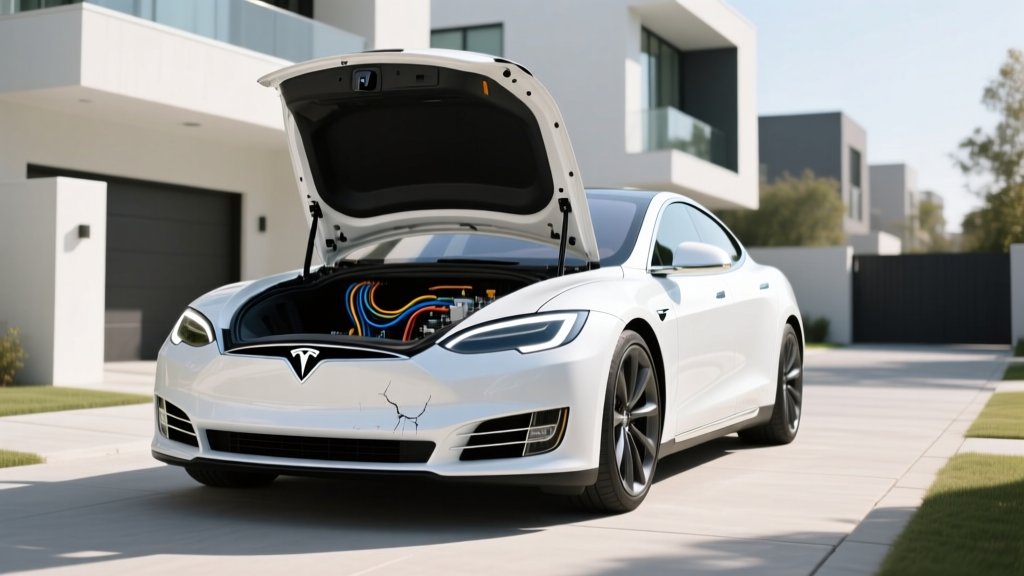
Search for Tesla gate on owner forums and you'll find a recurring thread: complaints about front trunk (frunk) and power liftgate latch mechanisms on the Model 3 and Model Y. Some owners report frunks that won't unlatch via the app, tailgate struts that weaken after two winters, and alignment issues that trigger "trunk ajar" warnings at highway speed. While Tesla has issued multiple service bulletins and updated the latch hardware on 2025+ builds, the topic remains a top concern for used- and new-EV shoppers alike.
This profile reviews the 2026 Tesla Model Y Long Range AWD — the best-selling EV in America — through the lens of these gate/latch issues, while delivering the complete spec breakdown buyers need: real-world range, charging speed, pricing after the federal tax credit, and how it stacks up against the Hyundai Ioniq 5 and Ford Mustang Mach-E.
2026 Tesla Model Y Long Range: Full Spec Sheet
| Drivetrain | Dual-motor AWD (permanent magnet rear + induction front) |
|---|---|
| Horsepower | 384 hp combined |
| 0-60 mph | 4.8 seconds (manufacturer) |
| Battery Usable Capacity | 75 kWh (NMC, LG M50 cells, 4680 structural pack in Austin builds) |
| EPA Range | 320 miles |
| MPGe (city / hwy / combined) | 127 / 110 / 119 MPGe |
| Efficiency | 28 kWh / 100 mi |
| Peak DC Fast Charge | 250 kW (V3 Supercharger) |
| 10-80% DC Charge Time | ~27 minutes (preconditioned) |
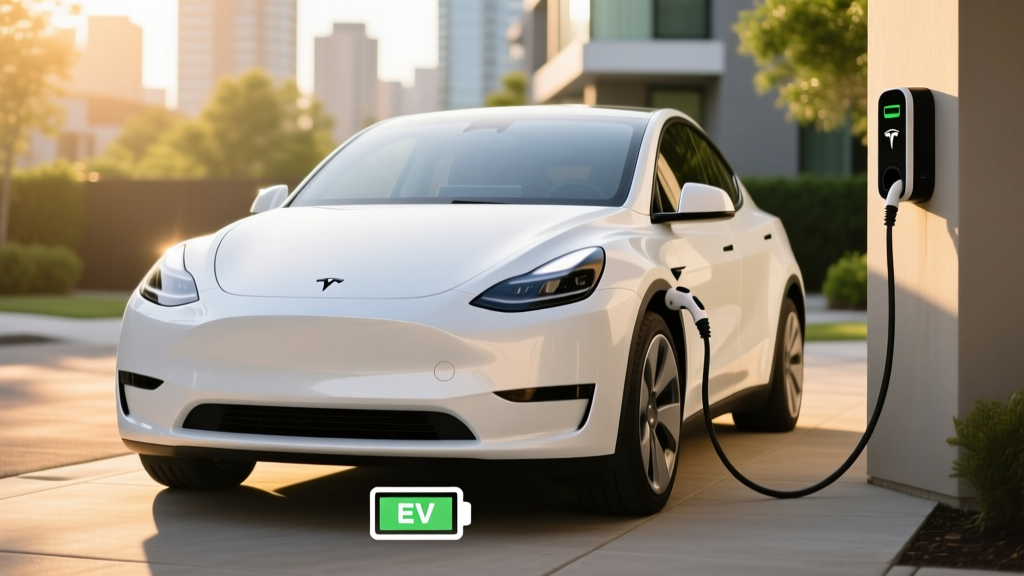
| Level 2 Home Charge Rate | 11.5 kW / 44 mi/hr (48A Wall Connector) |
| Cargo Volume (rear seats up / folded) | 30.2 / 72.0 cu ft + 4.1 cu ft frunk |
| Legroom (front / rear) | 41.8 / 37.4 inches |
| Base MSRP (excl. destination) | $44,990 |
| Destination Fee | $1,390 |
| Warranty — Battery | 8 years / 120,000 miles (min 70% retention) |
| Warranty — Vehicle | 4 years / 50,000 miles |
Real-World Range: Beyond the EPA Sticker
EPA sticker: 320 miles
Real-world highway (70 mph, 68°F): ~270-285 miles
Real-world mixed city/regen: ~295-310 miles
Cold weather (20°F, heater on): ~220-245 miles
Source: fueleconomy.gov, owner-reported data on Recurrent and TeslaFi fleets.
The Model Y's 75 kWh usable pack paired with a heat pump gives it an efficiency advantage over many rivals — 28 kWh/100 mi is among the best in the midsize electric SUV segment. But the EPA combined number assumes a 55/45 city/highway mix with moderate climate use. Sustained 75-80 mph interstate driving pushes consumption closer to 33-35 kWh/100 mi, cutting range roughly 15%. Winter is the bigger hit: LFP chemistry (used on the RWD Standard Range trim) suffers more cold-capacity loss than the NMC pack in the Long Range, but even NMC loses 20-25% at 20°F without preconditioning.
Owner tip: Always precondition the cabin and battery via the Tesla app 15-20 minutes before departure. On DC fast charges, preconditioning is the difference between hitting 250 kW peak and limping in at 70 kW.
Charging Speed: Supercharger Network Advantage
| Level | Power / Voltage | Miles Added per Hour | Typical Use Case |
|---|---|---|---|
| Level 1 (120V / 12A) | ~1.4 kW | ~3-4 mi/hr | Emergency / trickle top-off |
| Level 2 (240V / 48A) | 11.5 kW | ~44 mi/hr | Home overnight, full charge in ~7 hrs |
| DC Fast (V3 Supercharger) | Up to 250 kW | ~180 mi in 15 min | Road trips, 10-80% in ~27 min |
| DC Fast (V4 Supercharger) | Up to 350 kW (capable, vehicle-limited to ~250 kW) | Same as V3 on this model | Future-proofing |
The Model Y's 250 kW peak is no longer class-leading — the Hyundai Ioniq 5 and Kia EV6 hit 240 kW on 800V architectures and sustain that rate longer thanks to flatter charge curves. Tesla's taper above 60% SoC is aggressive: you'll see ~180 kW at 50%, but it drops to ~80 kW by 75% and ~45 kW at 85%. Plan road-trip stops around 10-70% charges for the fastest throughput.
The decisive advantage remains network access. As of 2026, Tesla operates over 20,000 Superchargers in North America with industry-leading uptime (~97%), according to J.D. Power's EV Public Charging Index. NACS is now the standard connector on the Model Y (no adapter needed for Tesla stalls), and the opening of Superchargers to Ford, GM, Rivian, and Hyundai NACS-equipped vehicles has reduced exclusivity but not reliability.
Gate & Latch Issues: What's Actually Happening
The "Tesla gate" keyword clusters around three specific hardware concerns:
- Frunk latch actuator (2022-2024 Model Y): Early-build Giga Texas and Fremont Model Ys used a plastic-housed actuator prone to moisture ingress. Owners reported frunks that wouldn't unlatch from the app or touchscreen, requiring a manual release pull-cord inside the cabin. Tesla updated to a sealed Bosch-built unit in late 2024, and 2026 builds carry the revised part.
- Power liftgate strut sag (Model Y): Gas-strut assisted liftgates on 2023-2024 vehicles occasionally failed to hold full extension in cold weather. Service centers typically replace under the 4/50,000 bumper-to-bumper warranty. The 2026 "Juniper" refresh introduced a stronger dual-strut design with a reinforced hinge.
- Trunk alignment / "ajar" warnings: Misaligned striker plates on pre-refresh Model Ys could trigger false "trunk open" alerts above 65 mph. This was a build-consistency issue at Fremont; Austin and Berlin builds showed lower incidence. A $0 service-bulletin striker adjustment resolves it.
For used buyers targeting 2022-2024 Model Ys, request service records confirming latch/strut replacement. For 2026 new buyers, these are largely resolved — but the first-year Juniper refresh may introduce its own teething issues, a common Tesla pattern.
Pricing, Trims & Federal Tax Credit Eligibility
| Trim | MSRP + Destination | Federal Credit (max) | Effective Price |
|---|---|---|---|
| Long Range AWD | $46,380 | $3,750* | ~$42,630 |
| Performance AWD | $51,880 | $3,750* | ~$48,130 |
*As of the 2026 tax year, the Model Y qualifies for a partial §30D credit — typically $3,750 rather than the full $7,500 — because it meets the critical-minerals requirement but not 100% of the battery-component sourcing threshold under IRS §30D rules. Income caps apply: $150K single / $300K joint MAGI. The credit can be transferred to the dealer as a point-of-sale discount. Always confirm eligibility with your tax professional before purchase — sourcing rules tighten annually.
The Model Y's price has crept up since the 2024 price cuts, but it remains undercut by the Ioniq 5 SEL ($45,500 AWD) and Mach-E Premium ($47,500). Where Tesla wins back the math is in Supercharger access, lower insurance-group repair networks, and stronger resale value — Kelley Blue Book projects a 5-year retention of ~52% vs ~44% for the Mach-E.
Tech, Driver Assist & Interior
The 2026 Juniper-refresh Model Y brings meaningful updates:
- Ventilated front seats (finally) and ambient lighting strip
- 15.4" front touchscreen + 8" rear screen for passengers
- HW4.0 Autopilot suite with higher-resolution cameras and improved phantom-braking behavior
- FSD (Supervised) v13.x — still SAE Level 2, requiring hands-on-wheel and eyes-on-road engagement at all times
- Sentry Mode, Dashcam, Dog Mode included; Premium Connectivity ($12.99/mo) adds live traffic and streaming
Important: Tesla Autopilot and FSD (Supervised) are SAE Level 2 driver-assist systems — not self-driving. The driver is legally and operationally responsible for the vehicle at all times. Do not confuse these with Waymo's Level 4 robotaxi service.
The minimalist interior is polarizing: no physical buttons, no traditional instrument cluster, turn signals on a yoke (optional) or wheel. Cargo space (30.2 cu ft rear + 4.1 cu ft frunk) beats the Mach-E (29.9 cu ft) but trails the Ioniq 5 with seats folded (72.0 vs 59.3 cu ft). Rear legroom (37.4") is adequate for adults on short trips but tight for 6-footers on long hauls.
Who Should Buy the 2026 Model Y — And Who Shouldn't
Pros
- Best-in-class Supercharger network reliability
- Class-leading efficiency (28 kWh/100 mi)
- Strong OTA updates improve the car post-purchase
- Excellent cargo versatility with frunk + fold-flat rear
- High resale retention vs rivals
Cons
- Partial ($3,750) tax credit vs full $7,500 for some rivals
- DC fast-charge taper is aggressive above 60% SoC
- Minimalist interior not for everyone; no physical HVAC knobs
- Ride quality firm on 20" wheels; road noise noticeable
- First-year Juniper build may have new fit-finish quirks
Best for: Tech-forward commuters who road-trip 2-4 times per year and value charging-network reliability above all else. Families with 1-2 kids fit comfortably; the frunk handles strollers well.
Look elsewhere if: You need the full $7,500 credit (consider the Ioniq 5 or Equinox EV), prefer physical controls (VW ID.4, Mach-E), or tow frequently (the Rivian R1S or F-150 Lightning are better platforms).
Frequently Asked Questions
What is the real-world range of the 2026 Tesla Model Y Long Range?
EPA-rated at 320 miles. Expect 270-285 miles on sustained highway driving at 70 mph, and 220-245 miles in sub-freezing winter conditions with cabin heat active. Preconditioning recovers 5-10% of cold-weather loss.
How fast does the Model Y charge at home and on DC fast chargers?
On a 48A Level 2 Wall Connector, it adds ~44 miles per hour (full charge in ~7 hours). On a V3 Supercharger, it peaks at 250 kW and charges 10-80% in roughly 27 minutes when preconditioned — though the curve tapers sharply above 60% SoC.
Does the 2026 Model Y qualify for the federal EV tax credit?
Yes, but only partially. As of 2026, it qualifies for approximately $3,750 under IRS §30D, meeting critical-minerals requirements but not the full battery-component threshold. Buyer income caps ($150K single / $300K joint) and the $80,000 SUV MSRP cap also apply. Confirm with a tax professional before purchase.
Are the 'Tesla gate' frunk and liftgate issues fixed on the 2026 model?
Largely yes. The 2026 Juniper refresh uses an updated sealed frunk actuator and reinforced dual-strut liftgate. The 2022-2024 builds had documented issues with moisture ingress and strut sag; used buyers should verify service records. New buyers should still inspect panel gaps at delivery.
Is the Model Y worth buying vs the Hyundai Ioniq 5 or Ford Mach-E?
Choose the Model Y if Supercharger reliability, efficiency, and resale value are your priorities. Choose the Ioniq 5 if you want 800V ultra-fast charging and a full $7,500 credit. Choose the Mach-E if you prefer physical controls and a more traditional crossover feel. All three are capable; the decision comes down to network access, credit eligibility, and interior preference.
What's the battery warranty?
Tesla covers the Long Range battery for 8 years or 120,000 miles, whichever comes first, with a minimum 70% capacity retention guarantee. Real-world fleet data from Recurrent shows most NMC Model Y packs retain 90%+ capacity at 100,000 miles with normal charging habits (20-80% daily, occasional 100% for trips).