Why the Tesla Front Trunk Matters for Real-World Cargo
When shoppers search for Tesla front trunk dimensions, they're usually trying to solve a practical problem: how to fit a second carry-on, a week's worth of groceries, or a stroller without sacrificing passenger space. In battery-electric vehicles, the absence of an internal-combustion engine frees up the area between the front wheels for a forward cargo compartment — colloquially called a frunk (front trunk). Tesla has offered a frunk on every model it has ever sold, but the usable volume, shape, and accessibility vary significantly across the 2026 lineup.
This guide covers the frunk capacity of each current Tesla model, explains why the numbers differ, and pairs that cargo data with the full vehicle specs you need to make an informed purchase — range, charging speed, pricing, and federal tax-credit eligibility under IRS §30D rules.
Tesla Front Trunk Capacity: Model-by-Model Breakdown
Tesla does not always publish frunk volume separately from total cargo, so the figures below combine Tesla's official specs with independent measurements. The key takeaway: the Model Y offers the most practical frunk for daily use, while the Model 3 frunk is best suited for charging cables and a slim laptop bag.
| Model | Frunk Volume (cu ft) | Rear Cargo (cu ft) | Total Cargo (cu ft) | Frunk Shape Notes |
|---|---|---|---|---|
| Model 3 (RWD / Long Range / Performance) | ~3.1 | ~23 (behind 2nd row) | ~26 | Shallow, wide; good for cables, small duffel |
| Model Y (Long Range / Performance) | ~4.1 | ~30 (behind 2nd row) / ~72 (folded) | ~34 / ~76 | Deeper, more rectangular; fits a carry-on suitcase |
| Model S (Long Range / Plaid) | ~3.1 | ~28 (liftback) | ~31 | Wide but shallow; limited by low hood line |
| Model X (Long Range / Plaid) | ~6.6 | ~42 (behind 2nd row) / ~88 (folded) | ~49 / ~95 | Largest Tesla frunk; fits a full-size backpack or groceries |
What Fits Inside Each Tesla Frunk?
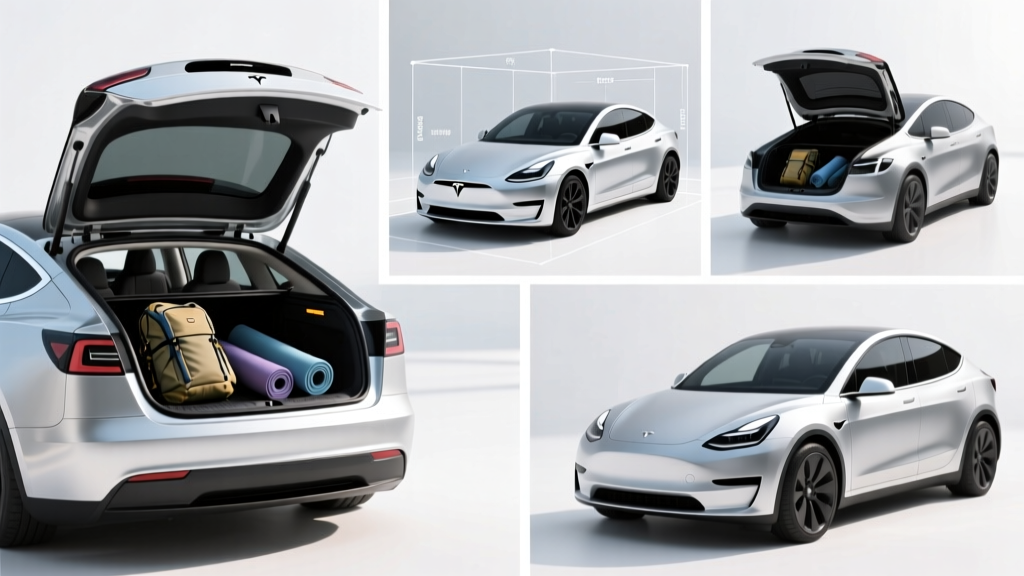
- Model 3: Mobile Connector kit, a slim gym bag, or two reusable grocery bags stacked flat.
- Model Y: A standard 22-inch carry-on suitcase laid flat, or three to four reusable grocery bags upright.
- Model S: Similar to Model 3 — charging accessories, a laptop sleeve, or a small soft cooler.
- Model X: A full backpack, a large soft cooler, or a week's worth of produce bags. The deeper well makes stacking easier.
Range, Battery, and Efficiency: What Powers These Cargo Haulers
A frunk is only useful if the car can get you where you're going. Below are the 2026 EPA range figures and battery details for each Tesla, along with the real-world adjustments every buyer should expect.
| Model / Trim | EPA Range (mi) | Usable Battery (kWh) | Chemistry | MPGe (combined) | kWh/100 mi |
|---|---|---|---|---|---|
| Model 3 RWD | 272 | ~57.5 | LFP | 142 | 24 |
| Model 3 Long Range AWD | 341 | ~75 | NMC | 134 | 25 |
| Model 3 Performance | 315 | ~75 | NMC | 121 | 28 |
| Model Y Long Range AWD | 320 | ~75 | NMC | 122 | 28 |
| Model Y Performance | 285 | ~75 | NMC | 111 | 30 |
| Model S Long Range | 402 | ~95 | NMC | 120 | 28 |
| Model S Plaid | 359 | ~95 | NMC | 116 | 29 |
| Model X Long Range | 335 | ~95 | NMC | 108 | 31 |
| Model X Plaid | 311 | ~95 | NMC | 103 | 33 |
LFP vs. NMC: What It Means for Daily Use
The Model 3 RWD uses a lithium iron phosphate (LFP) battery. LFP cells tolerate frequent 100% charging better than NMC, making them ideal for daily commuters who can charge at home every night. The trade-off is lower energy density (hence the smaller battery and shorter range) and slightly reduced cold-weather performance. All other 2026 Tesla trims use nickel manganese cobalt (NMC) chemistry, which Tesla recommends charging to 80% for daily use and reserving 100% for long trips.
Charging Speed: DC Fast Charge and Home Level 2
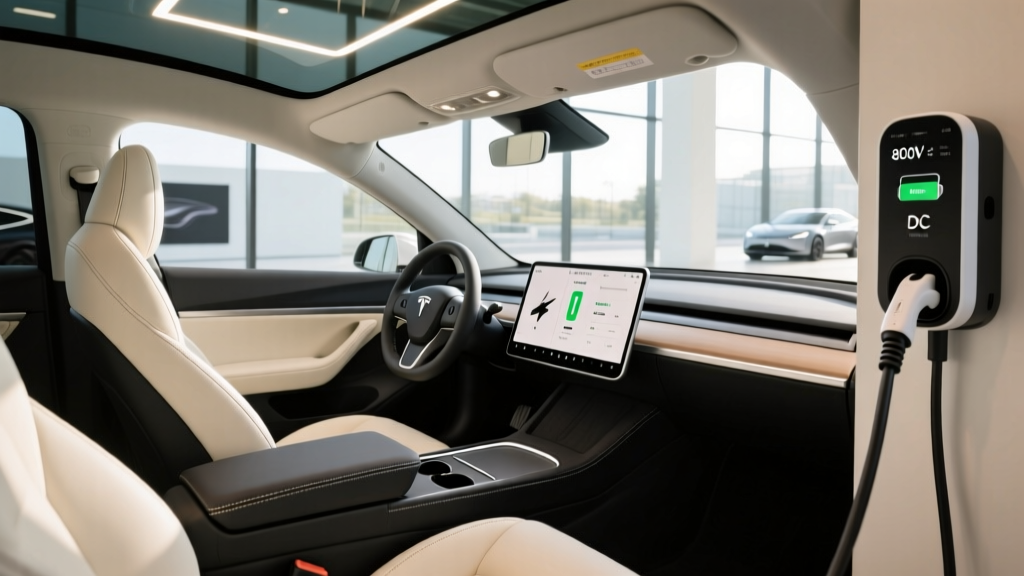
Cargo capacity matters less if you're stuck at a charger for an hour. Tesla's Supercharger network remains the most reliable public DC fast-charging ecosystem in the U.S., and all 2026 Teslas use the NACS (North American Charging Standard) connector natively — no adapter needed at Tesla Superchargers or the growing number of NACS-equipped third-party stations.
| Model / Trim | Peak DC Fast Charge (kW) | 10–80% DC Time (min) | Level 2 Home Charge (kW) | Miles Added per Hour (Level 2) |
|---|---|---|---|---|
| Model 3 RWD (LFP) | 170 | ~25 | 11.5 | ~44 |
| Model 3 Long Range / Performance | 250 | ~18 | 11.5 | ~44 |
| Model Y Long Range / Performance | 250 | ~20 | 11.5 | ~37 |
| Model S Long Range / Plaid | 250 | ~22 | 11.5 | ~34 |
| Model X Long Range / Plaid | 250 | ~24 | 11.5 | ~30 |
Home Charging Setup
For Level 2 home charging, Tesla's Wall Connector (or any J1772/NACS-compatible Level 2 unit on a 48-amp circuit) delivers up to 11.5 kW. On a 40-amp circuit, expect ~9.6 kW. Most owners charging overnight (8–10 hours) will fully replenish any Tesla battery from near-empty — making the frunk's primary role daily cargo, not road-trip luggage.
Performance and Drivetrain Specs
| Model / Trim | 0–60 mph (sec) | Horsepower | Drivetrain | Towing Capacity (lbs) |
|---|---|---|---|---|
| Model 3 RWD | 5.8 | 271 | RWD (single motor) | Not rated |
| Model 3 Long Range AWD | 4.2 | 346 | Dual-motor AWD | Not rated |
| Model 3 Performance | 2.9 | 510 | Dual-motor AWD | Not rated |
| Model Y Long Range AWD | 4.8 | 384 | Dual-motor AWD | 3,500 |
| Model Y Performance | 3.5 | 456 | Dual-motor AWD | 3,500 |
| Model S Long Range | 3.1 | 670 | Dual-motor AWD | Not rated |
| Model S Plaid | 1.99 | 1,020 | Tri-motor AWD | Not rated |
| Model X Long Range | 3.8 | 670 | Dual-motor AWD | 5,000 |
| Model X Plaid | 2.5 | 1,020 | Tri-motor AWD | 5,000 |
Pricing, Trims, and Federal Tax Credit Eligibility
Understanding the out-of-pocket cost requires layering the base MSRP with potential §30D federal tax credits. Under current IRS rules, the credit is up to $7,500, but eligibility depends on three factors that change periodically: buyer income caps, vehicle MSRP caps, and battery critical-mineral and component sourcing requirements. Tesla's U.S.-built vehicles have maintained strong sourcing compliance, but buyers should always verify current-year eligibility at IRS.gov before purchasing.
| Model / Trim | Base MSRP | Under MSRP Cap? | Est. Max §30D Credit | Effective Price (est.) |
|---|---|---|---|---|
| Model 3 RWD | $38,990 | Yes ($55K sedan cap) | Up to $7,500 | ~$31,490 |
| Model 3 Long Range AWD | $42,990 | Yes | Up to $7,500 | ~$35,490 |
| Model 3 Performance | $50,990 | Yes | Up to $7,500 | ~$43,490 |
| Model Y Long Range AWD | $44,990 | Yes ($80K SUV cap) | Up to $7,500 | ~$37,490 |
| Model Y Performance | $48,990 | Yes | Up to $7,500 | ~$41,490 |
| Model S Long Range | $79,990 | No (exceeds $55K sedan cap) | $0 | $79,990 |
| Model S Plaid | $94,990 | No | $0 | $94,990 |
| Model X Long Range | $79,990 | Yes ($80K SUV cap) | Up to $7,500 | ~$72,490 |
| Model X Plaid | $94,990 | No | $0 | $94,990 |
- Income caps: Modified AGI ≤ $150,000 (single) / $300,000 (joint) / $225,000 (head of household)
- MSRP caps: ≤ $55,000 for sedans (Model 3, Model S) / ≤ $80,000 for SUVs and trucks (Model Y, Model X)
- Battery sourcing: Critical minerals and battery components must meet phased-in percentage thresholds from U.S. or FTA-partner countries
- Point-of-sale transfer: Eligible buyers can transfer the credit to the dealer at purchase, reducing the upfront price rather than waiting for a tax refund
Always confirm eligibility with a tax professional and the IRS Clean Vehicle Credit page before finalizing your order.
Tech, Driver Assists, and the Frunk's Role in Daily Life
Infotainment and Cabin Tech
All 2026 Teslas center around a 15.4-inch touchscreen (Model 3/Y) or 17-inch touchscreen (Model S/X) running Tesla's proprietary operating system. Navigation, media, climate controls, and vehicle settings are all screen-based — there are minimal physical buttons. Over-the-air updates add features regularly. Rear-seat passengers in the Model 3 and Model Y get an 8-inch rear screen for climate and media control.
Driver-Assist Systems: Autopilot and FSD (Supervised)
Tesla's Autopilot (standard) and Full Self-Driving Supervised (optional, ~$8,000 or $99/month) are SAE Level 2 driver-assistance systems. The driver must remain fully engaged, hands on or near the wheel, and eyes on the road at all times. These systems do not make the vehicle self-driving. True Level 4 driverless capability (no human needed) is currently only available in limited robotaxi services like Waymo — not in any consumer Tesla.
Frunk Design Evolution
The refreshed Model 3 (2024+) and updated Model Y feature a slightly reshaped frunk well compared to earlier versions. The liner is more rigid and includes molded channels for the mobile connector and tire-inflation kit. Model S and Model X frunks have remained largely consistent since the 2021 refresh. None of Tesla's current frunks are powered/latch-operated from the key fob by default, though the touchscreen and app can pop the frunk remotely — useful when your hands are full of groceries.
Warranty Coverage
| Model | Basic Vehicle | Battery & Drive Unit | Capacity Retention Threshold |
|---|---|---|---|
| Model 3 RWD (LFP) | 4 yr / 50,000 mi | 8 yr / 100,000 mi | 70% |
| Model 3 LR / Perf (NMC) | 4 yr / 50,000 mi | 8 yr / 120,000 mi | 70% |
| Model Y (all trims) | 4 yr / 50,000 mi | 8 yr / 120,000 mi | 70% |
| Model S / Model X | 4 yr / 50,000 mi | 8 yr / 150,000 mi | 70% |
Tesla guarantees that the battery will retain at least 70% of its original capacity during the warranty period. Real-world degradation data from fleet operators and owner communities suggests most NMC Tesla batteries lose roughly 5–8% capacity in the first 50,000 miles, then plateau. LFP batteries in the Model 3 RWD show similar or slightly better longevity, with the added benefit of tolerating 100% state-of-charge without accelerated wear. See fueleconomy.gov for official EPA efficiency and range data.
Who Should Buy Which Tesla? (And How Much Frunk They Need)
Best for Daily Commuters
Model 3 RWD (~$31,490 after credit) — Lowest cost, LFP battery tolerates daily 100% charges, 272-mile EPA range covers most commutes with margin. The 3.1 cu ft frunk holds your charging cable and a gym bag.
Best for Families
Model Y Long Range (~$37,490 after credit) — 320-mile range, 34 cu ft total cargo (76 with seats folded), 4.1 cu ft frunk fits a carry-on. The most practical Tesla for child seats, strollers, and Costco runs.
Best for Road Trips & Range
Model S Long Range ($79,990, no credit) — 402-mile EPA range means fewer charging stops on cross-country drives. The 3.1 cu ft frunk is modest, but the 28 cu ft liftback rear cargo area compensates.
Best for Maximum Cargo & Towing
Model X Long Range (~$72,490 after credit) — The 6.6 cu ft frunk is the largest in the lineup. Combined with 5,000-lb towing, falcon-wing rear doors, and up to 7 seats, it's the ultimate Tesla hauler.
Pros and Cons Across the Tesla Lineup
✓ Pros
- Supercharger network — most reliable DC fast-charging ecosystem in the U.S.
- NACS connector native — no adapter needed at 20,000+ Supercharger stalls
- Over-the-air updates continuously add features
- Strong §30D tax credit eligibility on Model 3 and Model Y
- LFP option on Model 3 RWD allows carefree 100% daily charging
- Frunk drain hole on all models enables easy cleaning
- Heat pump standard on all trims — better cold-weather range retention
✗ Cons
- Model 3 frunk (3.1 cu ft) is small vs. competitors like the Hyundai Ioniq 5 (0.85 cu ft frunk but far more rear cargo)
- Model S and Model X exceed MSRP caps for the federal tax credit (sedan: $55K; SUV: $80K for Plaid trims)
- FSD (Supervised) is expensive ($8,000 or $99/mo) and remains Level 2 — not autonomous
- No physical buttons for climate or mirrors — everything is screen-based
- Insurance premiums run 15–30% higher than comparable ICE vehicles
- Service center wait times can be long in rural or low-density markets
- Frunk is not power-operated by default (requires app or touchscreen to open)
Frequently Asked Questions
What is the real-world range of a Tesla in 2026?
Real-world range depends heavily on driving style, speed, and temperature. For the Model Y Long Range (EPA 320 mi), expect roughly 270–290 miles on a highway trip at 70–75 mph in mild weather, and as low as 220–250 miles in sub-freezing conditions. The Model 3 RWD (EPA 272 mi) delivers around 230–250 highway miles in moderate temps. Always plan charging stops at 15–20% remaining to avoid stress.
How fast does a Tesla charge at home and on the road?
On a 48-amp Level 2 home charger (11.5 kW), any Tesla adds roughly 30–44 miles of range per hour, fully replenishing overnight. On a 250 kW Supercharger, the Model 3 Long Range goes from 10–80% in approximately 18 minutes. The Model 3 RWD peaks lower at 170 kW, taking about 25 minutes for the same window.
Does the Tesla Model Y qualify for the $7,500 federal tax credit?
Yes — the Model Y Long Range ($44,990 MSRP) and Performance ($48,990 MSRP) fall under the $80,000 SUV MSRP cap. Buyer income must not exceed $150,000 (single) or $300,000 (joint) modified AGI. Battery sourcing requirements must also be met; check IRS.gov for the latest qualifying vehicle list before purchase. The credit can be transferred to the dealer at point of sale.
Is a Tesla worth buying vs. competitors like the Hyundai Ioniq 5 or Ford Mustang Mach-E?
It depends on your priorities. Tesla's Supercharger network and NACS-native charging are still unmatched for road-trip convenience. The Model Y offers a strong combination of range (320 mi), cargo (34 cu ft total), and price after the tax credit (~$37,490). However, the Hyundai Ioniq 5 offers faster peak charging (up to 350 kW on 800V architecture), a more button-friendly interior, and competitive pricing. The Ford Mustang Mach-E provides a more traditional driving feel and strong dealer-service access. If Supercharger access and OTA updates are top priorities, Tesla wins. If interior ergonomics and 800V charging speed matter more, test-drive the Ioniq 5.
Can I fit a carry-on suitcase in the Tesla front trunk?
A standard 22-inch carry-on fits in the Model Y frunk (4.1 cu ft) laid flat. The Model 3 frunk (3.1 cu ft) is too shallow for a hard-shell carry-on but can accommodate a soft duffel or laptop bag. The Model X frunk (6.6 cu ft) easily swallows a full-size carry-on plus accessories.
How does the Tesla frunk compare to other EVs?
Tesla frunks are generally mid-pack. The Ford F-150 Lightning leads all EVs with a 14.1 cu ft "Mega Power Frunk" — essentially a full trunk up front. The Rivian R1S/R1T offers an 11 cu ft front trunk. Among sedans and crossovers, the Model X's 6.6 cu ft frunk is above average, while the Model 3's 3.1 cu ft is on the smaller side. The frunk's value depends on your use case: for charging-cable storage, any frunk works; for groceries or luggage, larger is better.
What are the biggest pros and cons of owning a Tesla in 2026?
The biggest advantage remains the Supercharger network and the seamless charging experience with NACS. The strongest value plays are the Model 3 RWD and Model Y Long Range, both eligible for the full $7,500 credit. The biggest drawbacks are the screen-dependent controls, higher insurance costs, and — for the Model S and most Model X trims — ineligibility for the federal tax credit due to MSRP caps.