Tesla Fremont: The Original Gigafactory Still Powering Tesla's Lineup
When EV shoppers search for Tesla Fremont, they're usually trying to answer one of three questions: Which Tesla models are actually built at the Fremont, California plant? Does a Fremont-built Tesla differ from one made in Austin, Shanghai, or Berlin? And how does Fremont production affect delivery timelines and build quality in 2026? This guide answers all three, with the exact specs, pricing, and tax-credit details you need before placing an order.
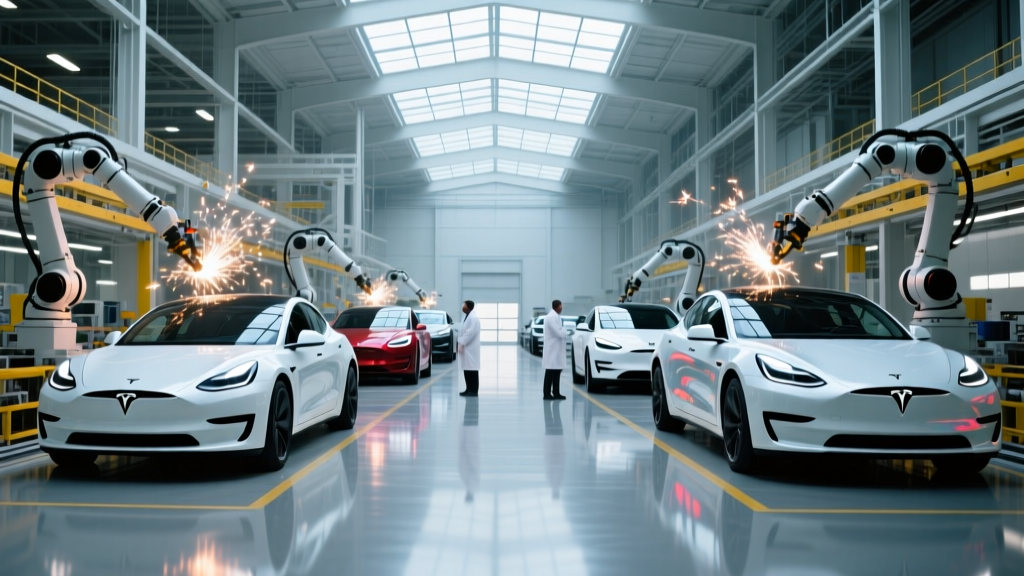
Tesla's Fremont factory is the company's oldest and most versatile production site. Acquired from NUMMI (the former GM-Toyota joint venture) in 2010, the 5.3-million-square-foot facility currently produces the Model S, Model 3, Model X, and Model Y. It remains the primary source of Tesla vehicles delivered to the U.S. West Coast and a major export hub. Understanding which trims roll off the Fremont line—and what that means for your order—is critical for 2026 buyers.
Which Tesla Models Are Built at the Fremont Factory?
As of the 2026 model year, Tesla's U.S. production is split across two main plants: Fremont, California, and the Gigafactory in Austin, Texas. Here's the breakdown:
| Model | Fremont, CA | Austin, TX | Notes |
|---|---|---|---|
| Model S | Yes | No | All trims (Dual Motor, Plaid) |
| Model 3 | Yes | No | Highland refresh; RWD & Long Range AWD |
| Model X | Yes | No | All trims (Dual Motor, Plaid) |
| Model Y | Yes | Yes | Long Range & Performance from both plants |
| Cybertruck | No | Yes | Austin-exclusive production |
Key takeaway: If you order a Model S, Model 3, or Model X in the U.S., it will come from Fremont. Model Y orders may be fulfilled from either Fremont or Austin depending on your region, configuration, and current production capacity. West Coast deliveries almost always originate from Fremont.
Fremont-Built Model Lineup: Specs, Range & Pricing at a Glance
| Spec | Model 3 RWD | Model 3 Long Range AWD | Model Y Long Range AWD | Model S Dual Motor | Model X Dual Motor |
|---|---|---|---|---|---|
| EPA Range | 341 mi | 363 mi | 320 mi | 402 mi | 335 mi |
| Battery (usable kWh) | ~57.5 kWh (LFP) | ~75 kWh (NMC) | ~75 kWh (NMC) | ~95 kWh (NMC) | ~95 kWh (NMC) |
| 0-60 mph | 5.8 sec | 4.2 sec | 4.8 sec | 3.1 sec | 3.8 sec |
| Horsepower | 271 hp | 346 hp | 384 hp | 670 hp | 670 hp |
| Drivetrain | RWD | AWD (Dual Motor) | AWD (Dual Motor) | AWD (Dual Motor) | AWD (Dual Motor) |
| MPGe (combined) | 132 MPGe | 125 MPGe | 117 MPGe | 116 MPGe | 103 MPGe |
| Base MSRP | $38,990 | $45,490 | $44,990 | $79,990 | $84,990 |
| Battery Warranty | 8 yr / 100,000 mi | 8 yr / 120,000 mi | 8 yr / 120,000 mi | 8 yr / 150,000 mi | 8 yr / 150,000 mi |
Sources: fueleconomy.gov, Tesla.com official specifications. Pricing reflects 2026 model year MSRP before destination fees. Real-world range varies with temperature, speed, and terrain.
Real-World Range vs. EPA Estimates: What Fremont Buyers Actually Get
The EPA range figures above represent controlled laboratory testing. In real-world driving from Tesla's Fremont-built vehicles, expect the following adjustments:
- Highway driving (75 mph): Subtract 10-15% from the EPA number. A Model 3 Long Range rated at 363 mi will deliver roughly 310-325 mi at sustained highway speeds.
- Cold weather (below 32°F): Expect 20-30% range reduction due to battery chemistry limitations and cabin heating demands. The same Model 3 LR drops to ~250-290 mi in winter conditions.
- City / stop-and-go driving: Range often meets or exceeds EPA estimates thanks to regenerative braking recapturing energy.
- LFP battery note (Model 3 RWD): Lithium Iron Phosphate cells tolerate regular 100% charging better than NMC, but have slightly lower energy density and greater cold-weather sensitivity.
Tesla's official battery guidance recommends daily charging to 80% for NMC-equipped vehicles (Long Range, Performance) and 100% for LFP models (Model 3 RWD). This affects your usable daily range: a Model Y Long Range owner charging to 80% has roughly 256 mi of practical range before needing to stop.
Charging Speed: DC Fast Charge and Home Level 2 Rates
| Model | Max DC Fast Charge (kW) | 10-80% DC Time | Level 2 Home Rate (kW) | Level 2 Miles/Hour |
|---|---|---|---|---|
| Model 3 RWD | 170 kW | ~25 min | 11.5 kW | ~37 mi/hr |
| Model 3 Long Range AWD | 250 kW | ~18 min | 11.5 kW | ~44 mi/hr |
| Model Y Long Range AWD | 250 kW | ~22 min | 11.5 kW | ~44 mi/hr |
| Model S Dual Motor | 250 kW | ~27 min | 11.5 kW | ~41 mi/hr |
| Model X Dual Motor | 250 kW | ~31 min | 11.5 kW | ~35 mi/hr |
Charging curve reality: Peak DC fast-charge rates (e.g., 250 kW) are sustained only between roughly 10-30% State of Charge. Above 50%, the rate tapers significantly. By 80%, you're typically charging at under 60 kW. This is why manufacturers quote 10-80% times rather than 0-100% — the final 20% can take as long as the first 70%.
All 2026 Tesla vehicles built at Fremont ship with the NACS (North American Charging Standard) connector natively. This grants access to Tesla's Supercharger network (over 20,000 stalls in North America) without adapters. Non-Tesla EVs are increasingly gaining Supercharger access via NACS adapters, but Tesla owners still benefit from seamless plug-and-charge integration and the highest station reliability ratings in the industry.
Federal Tax Credit Eligibility: Which Fremont Teslas Qualify?
The federal EV tax credit provides up to $7,500 for qualifying new EVs, but eligibility depends on multiple factors that change frequently. Here's what applies to Tesla's Fremont-built lineup as of 2026:
- MSRP caps: Sedans (Model S, Model 3) must be under $55,000. SUVs/vans (Model Y, Model X) must be under $80,000.
- Buyer income limits: Modified Adjusted Gross Income (MAGI) must not exceed $150,000 (single), $225,000 (head of household), or $300,000 (joint filing).
- Battery sourcing requirements: Increasing percentages of battery components and critical minerals must be sourced from the U.S. or free-trade-agreement countries. These thresholds tighten annually.
- Point-of-sale transfer: Since 2024, buyers can transfer the credit to the dealer at purchase, reducing the out-of-pocket price immediately rather than waiting for a tax refund.
Always verify current eligibility on IRS.gov before ordering. Battery sourcing rules are subject to change, and Tesla's credit qualification status has shifted multiple times.
| Model | Base MSRP | Est. Credit | Effective Price* | Credit Eligibility Notes |
|---|---|---|---|---|
| Model 3 RWD | $38,990 | $7,500 | ~$31,490 | Under $55K cap; sourcing-dependent |
| Model 3 LR AWD | $45,490 | $7,500 | ~$37,990 | Under $55K cap; sourcing-dependent |
| Model Y LR AWD | $44,990 | $7,500 | ~$37,490 | Under $80K SUV cap; sourcing-dependent |
| Model S Dual Motor | $79,990 | $0 | $79,990 | Exceeds $55K sedan cap |
| Model X Dual Motor | $84,990 | $0 | $84,990 | Exceeds $80K SUV cap |
*Effective price assumes full $7,500 credit eligibility and does not include destination fees, state/local incentives, or optional upgrades. Confirm eligibility with your tax professional and Tesla at time of order.
Build Quality and Delivery: The Fremont Advantage (and Trade-offs)
Tesla's Fremont factory has the longest production history of any Tesla plant, which translates to a few practical advantages for buyers:
- Panel gap consistency: Fremont's production lines have had the most time to refine fit-and-finish. While Tesla's quality has improved across all plants, Fremont-built vehicles tend to show slightly tighter panel gaps and fewer cosmetic issues at delivery.
- West Coast delivery speed: If you live in California, Oregon, Washington, or Nevada, a Fremont-sourced vehicle typically arrives faster (often 2-6 weeks) compared to an Austin-built car shipped cross-country.
- Service center familiarity: Fremont-area service centers have the deepest experience diagnosing and repairing Tesla vehicles, having supported the local fleet since 2012.
Trade-offs to know: Fremont is Tesla's oldest facility and uses some legacy manufacturing equipment. Austin's newer Gigafactory employs more advanced casting techniques (like the single-piece rear underbody "gigacasting"), which can reduce weight and part count. However, the real-world impact on durability and driving feel is negligible for most owners.
Who Should Buy a Fremont-Built Tesla?
- You want a Model S or Model X — these are exclusively built at Fremont, no other option exists.
- You're a West Coast buyer prioritizing fast delivery and local service expertise.
- You prefer a Model 3 (any trim) — all U.S.-spec Model 3s come from Fremont.
- You value the factory with the longest track record for build consistency.
- You want a Cybertruck — Austin only.
- You're ordering a Model Y and live in the South or East Coast — Austin may deliver faster.
- You want the absolute latest manufacturing techniques (gigacasting) and don't mind a newer production line's learning curve.
Best use cases by model
- Model 3 RWD: Budget-conscious commuters who can charge at home daily. LFP battery rewards 100% daily charging, and 341 mi EPA range covers most commutes for a full week.
- Model 3 Long Range AWD: The sweet-spot Tesla — enough range (363 mi) for road trips, AWD for snow-belt states, and a price that can fall under $38K after the federal credit.
- Model Y Long Range AWD: Families needing crossover cargo space (76 cu ft with rear seats folded). The best-selling EV in America for good reason.
- Model S: Executive sedan buyers who want 402 mi of range, 3.1-second 0-60 performance, and don't mind the $80K price tag (no federal credit).
- Model X: Families who need three rows, falcon-wing rear doors for tight parking spaces, and towing capacity (5,000 lbs).
Tesla Fremont Models: Pros and Cons
Pros
- Access to the Tesla Supercharger network — the most reliable DC fast-charging system in North America
- Industry-leading software: over-the-air updates, trip planner with real-time battery simulation, and best-in-class mobile app
- Model 3 and Model Y qualify for the $7,500 federal credit (sourcing-dependent), making them price-competitive with gas alternatives
- Fremont's mature production lines deliver consistent build quality
- Strong resale value relative to most EV competitors
- Heat pump standard on all trims — reduces cold-weather range loss vs. resistive heating
Cons
- Model S and Model X exceed federal tax credit MSRP caps — no $7,500 incentive
- Autopilot / FSD (Supervised) is SAE Level 2 — the driver must remain fully engaged. It is not autonomous driving.
- Minimal physical controls — nearly all vehicle functions route through the central touchscreen, which frustrates some drivers
- Insurance premiums tend to run 15-30% higher than comparable gas vehicles (verify quotes before ordering)
- No Apple CarPlay or Android Auto — Tesla's proprietary infotainment only
- Model 3 RWD's LFP battery loses more range in freezing temperatures than NMC-equipped trims
Frequently Asked Questions
Can I choose which factory builds my Tesla?
Not directly. Tesla assigns production based on your delivery region, configuration, and current plant capacity. West Coast orders are almost always fulfilled from Fremont. If you order a Model S, Model 3, or Model X, it will come from Fremont regardless of location, since those models are exclusively produced there. Model Y orders may come from either Fremont or Austin.
Is a Fremont-built Tesla better quality than one from Austin or Shanghai?
Fremont has the longest production history, and its build quality has improved significantly since the early Model 3 ramp-up years (2018-2019). Austin and Berlin are newer facilities with more advanced casting equipment, but they've also had their own ramp-up challenges. In 2026, quality differences between U.S. plants are marginal. Your VIN will reveal the factory of origin (5YJ = Fremont, 7SA = Austin).
Does buying directly from Tesla's Fremont factory save money?
No. Tesla sells directly to consumers at a fixed MSRP regardless of whether you order online, through a gallery, or pick up at the Fremont factory. There are no dealer markups or negotiations. The price you see on Tesla.com is the price you pay (plus destination, taxes, and registration).
How long is the wait for a Fremont-built Tesla in 2026?
Delivery estimates fluctuate weekly based on demand and production mix. As a general guide: Model 3 and Model Y orders typically deliver in 2-8 weeks. Model S and Model X, being lower-volume, may take 4-12 weeks. Check Tesla.com for real-time estimates in your zip code at the time of order.
Does the Fremont factory offer tours?
Tesla does not offer public factory tours at Fremont. The facility is an active production site with safety and proprietary manufacturing restrictions. Some Tesla employee referral events and shareholder meetings have included limited access, but there is no general-public tour program as of 2026.
What's the battery replacement cost for a Fremont-built Tesla?
Out-of-warranty battery replacement costs vary by model: Model 3 runs roughly $12,000-$16,000, Model Y approximately $14,000-$18,000, and Model S/X between $18,000-$25,000 (parts and labor). However, Tesla's battery warranty (8 years / 100,000-150,000 miles depending on model) covers replacement if capacity drops below 70% of original. Most Tesla batteries retain 85-90% capacity at 150,000 miles based on fleet data, making out-of-warranty replacement uncommon for original owners.