The "Tesla for Free" Myth: What Buyers Actually Mean
Search trends show a growing number of shoppers looking for a "Tesla for free." While no automaker is handing away keys, the phrase usually points to a legitimate financial strategy: stacking the federal EV tax credit, state rebates, and long-term fuel and maintenance savings to effectively offset the purchase price over time. For 2026, the Tesla Model 3 Rear-Wheel Drive (RWD) is the most accessible entry point into the brand, and its economics are the most likely to approach that "net-zero" ownership goal.
2026 Tesla Model 3 RWD: Core Specifications
| Specification | Value |
|---|---|
| EPA Range | 272 miles |
| Battery Capacity | 57.5 kWh (usable, LFP) |
| Peak DC Fast Charge | 170 kW |
| 10-80% DC Time | ~25 minutes |
| Level 2 Charge Rate | 11.5 kW (~44 miles/hr) |
| 0-60 mph | 5.8 seconds |
| Horsepower | 271 hp |
| Drivetrain | Rear-Wheel Drive (RWD) |
| EPA Efficiency | 132 MPGe / 25 kWh/100mi |
| Base MSRP | $38,990 |
| Federal Tax Credit | Up to $7,500 (point-of-sale) |
| Battery Warranty | 8 years / 100,000 miles |
Real-World Range vs. EPA Estimates
EPA Estimate: 272 miles.
Real-World Expectation: In mixed driving at 70 mph, expect 240-255 miles. In freezing temperatures (below 32°F), range can drop to 190-210 miles due to cabin heating and battery chemistry resistance. The LFP battery is more resilient to daily 100% charging, which helps offset some of this loss for commuters who start every day with a full pack.
The 2026 Model 3 Highland refresh has improved thermal management, but the laws of physics still apply: high-speed highway driving and cold weather will reduce your effective range. However, because the Supercharger network is so dense, this is often more of a "time" concern than a "stranded" concern.
Charging Speed and Infrastructure
Tesla's primary advantage remains its access to the Supercharger network. While the Model 3 RWD peaks at 170 kW, it is not the fastest-charging EV in its class. Competitors like the Hyundai Ioniq 6 can reach 235 kW. However, the reliability of Tesla's stalls (99% uptime) often makes the actual charging experience faster than competitors with higher peak specs but lower reliability.
| Charging Level | Power | Speed (Miles/Hr) |
|---|---|---|
| Level 1 (120V) | 1.4 kW | ~3-4 mi/hr |
| Level 2 (240V) | 11.5 kW | ~44 mi/hr |
| DC Fast (Peak) | 170 kW | ~750 mi/hr (tapering) |
Source: Tesla Home Charging
The Financial Path: Can You Get It for Free?
To approach a "free" Tesla, you must leverage the IRS §30D credit and fuel displacement. The 2026 Model 3 RWD qualifies for the full $7,500 federal credit, which can now be transferred to the dealer at the point of sale to reduce the purchase price to roughly $31,490.
According to fueleconomy.gov, the average driver saves $600-$900 annually on fuel compared to a 30 MPG gas sedan. Over an 8-year ownership cycle, that is $4,800-$7,200 in fuel savings. Combined with the tax credit, the "net" cost of the vehicle approaches the $24,000 mark—still not free, but significantly cheaper than the sticker suggests. If you have solar panels, your "fuel" cost drops even further, potentially making the car "free" to operate after the initial purchase.
Pros and Cons of the 2026 Model 3
Pros
- Class-leading Supercharger network access.
- LFP battery allows for 100% daily charging without degradation concerns.
- Industry-leading software and over-the-air updates.
- Excellent safety ratings (IIHS Top Safety Pick+).
Cons
- 170 kW peak charge rate is slower than 800V competitors.
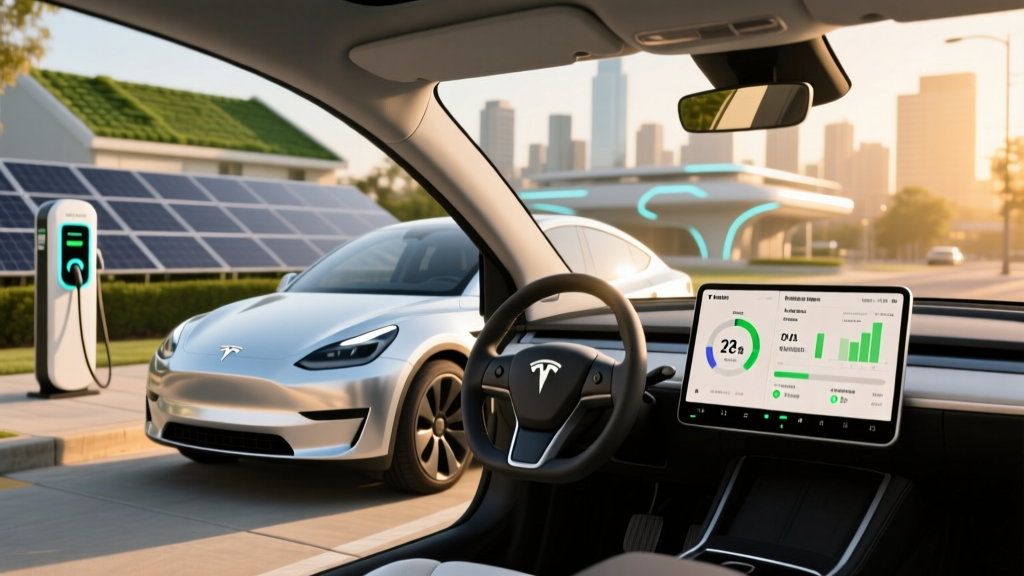
- No physical instrument cluster; all info is on the center screen.
- Turn-signal buttons on the steering wheel rim take time to master.
- FSD (Supervised) remains a Level 2 system, not a Level 4 robotaxi.
FAQ: Tesla Ownership in 2026
Does the Model 3 RWD still qualify for the $7,500 credit in 2026?
Yes, provided your income is below the IRS caps ($150k single / $300k joint) and the vehicle is for personal use. The credit is available as a point-of-sale rebate.
How does the LFP battery affect ownership?
LFP (Lithium Iron Phosphate) batteries are heavier but have a longer cycle life and are safer than NMC. Tesla recommends charging them to 100% regularly to maintain calibration.
Is it better than the Hyundai Ioniq 6?
The Ioniq 6 offers more range (360 mi) and faster charging, but the Tesla wins on cargo utility (hatchback vs. sedan trunk) and charging network reliability.