If you've typed "Tesla flying bike" into a search bar, you're not alone. The phrase trends periodically on social media, fueled by AI-generated concept art, clickbait videos, and Elon Musk's well-documented habit of teasing futuristic products. But let's cut through the noise with the precision this site is built on: Tesla does not make a flying bike, an e-bike, a motorcycle, or any two-wheeled vehicle as of 2026. No such product has been officially announced, no patent filings point to imminent production, and no Tesla investor day presentation has included one.
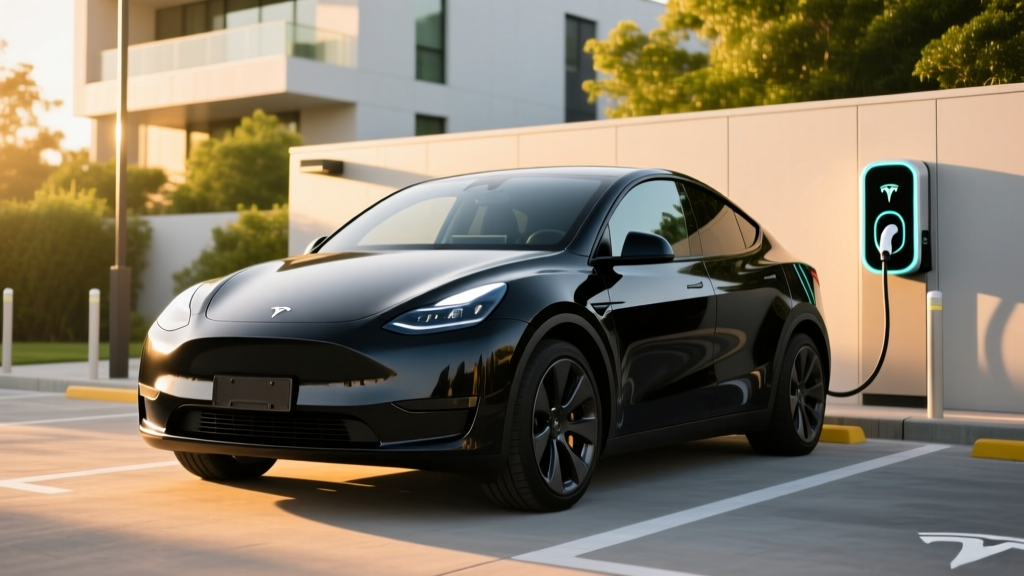
What Tesla does make is a tightly focused lineup of battery-electric vehicles that dominate the US EV market. If you landed here hoping for a hover-bike, we'll explain where that rumor came from — and then redirect your attention to the Tesla models you can actually buy, with the exact range, charging, pricing, and tax-credit data you need to make a smart purchase.
Where the "Tesla Flying Bike" Rumor Comes From
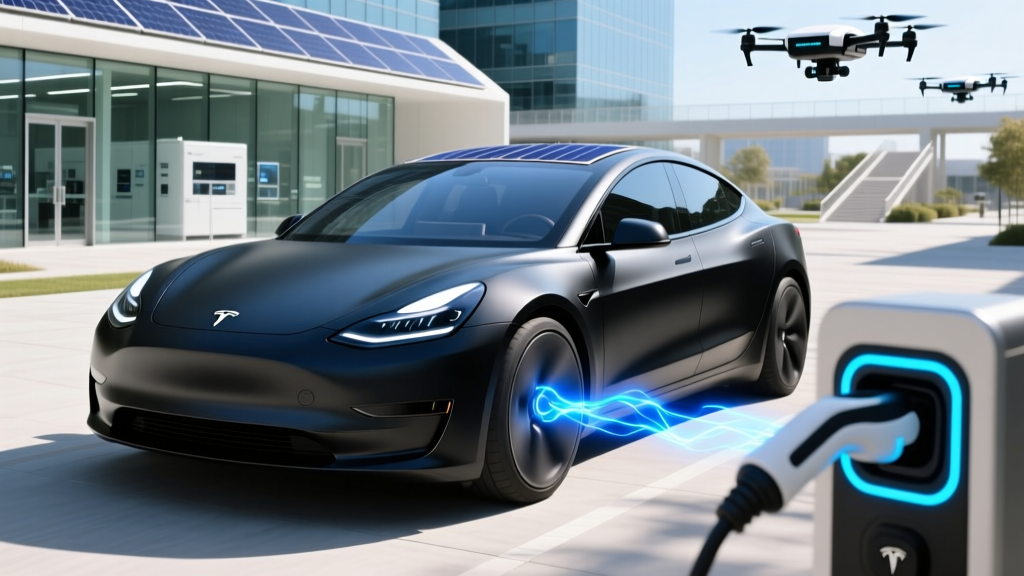
The myth has three main sources. First, Musk has occasionally joked about Tesla making an electric motorcycle or a "hoverboard" in interviews and on X (formerly Twitter), comments that get amplified into product announcements by fan accounts. Second, AI image generators have produced convincing fake renders of sleek Tesla-branded eVTOL bikes that circulate as "leaked" concepts. Third, unrelated companies like Jetson Aero, Xturismo, and A.L.I. Technologies have built real flying motorcycle prototypes, and headlines sometimes blur the brand attribution.
Tesla's actual product roadmap, confirmed at the 2025 Investor Day and reflected in the company's 2026 production lineup, includes the refreshed Model S, Model 3, Model X, Model Y, the Cybertruck, the next-generation compact platform (often called the Model 2 or Robotaxi), and the Semi. No aircraft, no motorcycle, no e-bike. If that changes, Tesla's own pressroom and SEC filings will be the first credible sources — not a viral TikTok.
The Real 2026 Tesla Lineup: Specs That Matter
Rather than chase a phantom product, here's a data-dense look at what Tesla actually sells in the US right now. Every figure below is sourced from the EPA's fueleconomy.gov database or Tesla's official specification pages, current for the 2026 model year.
| Model / Trim | EPA Range | Battery (kWh, Chem.) | Peak DC Charge | 10–80% Time | 0–60 mph | HP | Base MSRP |
|---|---|---|---|---|---|---|---|
| Model 3 RWD | 341 mi | 60 kWh, LFP | 170 kW | ~30 min | 5.8 s | 283 | $38,990 |
| Model 3 Long Range AWD | 363 mi | 79 kWh, NMC | 250 kW | ~25 min | 4.2 s | 366 | $44,990 |
| Model 3 Performance | 315 mi | 79 kWh, NMC | 250 kW | ~25 min | 2.9 s | 510 | $52,990 |
| Model Y Long Range AWD | 320 mi | 79 kWh, NMC | 250 kW | ~27 min | 4.8 s | 384 | $44,990 |
| Model Y Performance | 285 mi | 79 kWh, NMC | 250 kW | ~27 min | 3.5 s | 510 | $52,490 |
| Model S Long Range | 402 mi | 100 kWh, NMC | 250 kW | ~30 min | 3.1 s | 670 | $74,990 |
| Model S Plaid | 359 mi | 100 kWh, NMC | 250 kW | ~30 min | 1.99 s | 1,020 | $89,990 |
| Model X Long Range | 348 mi | 100 kWh, NMC | 250 kW | ~32 min | 3.8 s | 670 | $79,990 |
| Cybertruck AWD | 340 mi | 123 kWh, NMC | 250 kW | ~35 min | 4.1 s | 600 | $79,990 |
Charging: Supercharger Network vs. Home Level 2
Tesla's charging ecosystem remains its strongest competitive advantage. The Supercharger network now exceeds 6,500 stations and 70,000 connectors globally, with V4 cabinets delivering up to 350 kW (though current Tesla vehicles peak at 250 kW due to onboard architecture limits). For non-Tesla EVs gaining access via the NACS adapter, speeds vary by vehicle.
| Level | Power / Voltage | Miles of Range Added Per Hour | Typical Use Case |
|---|---|---|---|
| Level 1 (120V) | 1.4 kW | ~3–5 mi/hr | Overnight trickle, emergencies |
| Level 2 (240V, 48A) | 11.5 kW | ~35–44 mi/hr | Home daily charging |
| DC Fast (V3 Supercharger) | 250 kW peak | ~1,000 mi/hr (peak) | Road trips, rapid top-ups |
A critical ownership note: peak charge rate is not sustained rate. A Model 3 Long Range hitting a V3 Supercharger at 10% SoC will ramp to 250 kW briefly, then taper as the battery management system protects cell health. The 10–80% window is where most of the energy is added, and Tesla's ~25-minute 10–80% time remains competitive with the Hyundai Ioniq 5's 18-minute 800V architecture, though not class-leading. Above 80%, charging slows dramatically — plan to unplug at 80% on road trips unless you need the final stretch for your destination.
For home Level 2 charging, Tesla's Wall Connector ($420) delivers up to 11.5 kW on a 60A circuit (48A continuous). Most owners install on a 50A breaker for 9.6 kW / 37 mi/hr, which is plenty to refill overnight. Budget $500–$2,000 for professional installation depending on panel proximity and whether your home needs a service upgrade to 200A.
Federal Tax Credit: What's Actually Available in 2026
Under IRS §30D rules, the federal clean vehicle credit offers up to $7,500 for qualifying new EVs, but eligibility hinges on three moving targets: buyer income caps, vehicle MSRP caps, and battery critical-mineral sourcing requirements that tighten annually. As of 2026, the sourcing requirements are the most restrictive factor — many Tesla trims qualify for $3,750 (meeting the critical-minerals threshold but not the full battery-component requirement), while others may qualify for the full amount depending on supply-chain shifts.
| Model | MSRP Cap Met? | Est. Credit | Key Constraint |
|---|---|---|---|
| Model 3 RWD | Yes (sedan cap: $55k) | $3,750–$7,500 | Sourcing rules vary by batch |
| Model 3 LR / Perf | Yes | $3,750–$7,500 | Confirm at point of sale |
| Model Y (all trims) | Yes (SUV cap: $80k) | $3,750–$7,500 | Most batches qualify for $7,500 |
| Model S / X | No (MSRP exceeds cap) | $0 | Over $55k sedan / $80k SUV cap |
| Cybertruck | Borderline (SUV cap: $80k) | $0–$3,750 | AWD MSRP at $79,990; confirm |
Income caps apply: $150,000 single filer, $225,000 head of household, $300,000 joint. The point-of-sale transfer option lets you apply the credit as an immediate discount at the dealer rather than waiting for tax filing — Tesla's checkout flow supports this. Always verify current eligibility on the IRS clean vehicle credit page before ordering, as battery sourcing compliance can shift between production batches.
Who Should Actually Buy a Tesla in 2026?
Buy a Tesla If:
- You want the most reliable public charging network in North America
- You value over-the-air updates that add features post-purchase
- You want a minimalist interior with a single-screen interface
- Your commute or road-trip routes are well-served by Superchargers
- You want competitive efficiency (Model 3 achieves 132 MPGe combined)
Look Elsewhere If:
- You prefer physical buttons, stalks, and a traditional instrument cluster
- You need Apple CarPlay / Android Auto (Tesla uses proprietary software only)
- You want a dealership service network for in-person support
- You need a vehicle with proven towing capacity beyond 7,500 lbs
- You want 800V ultra-fast charging (Hyundai/Kia/Porsche lead here)
For daily commuters, the Model 3 RWD at ~$38,990 before credits is one of the most efficient sedans on the market, with its LFP battery offering excellent cycle life and the ability to charge to 100% daily without degradation concerns. For families, the Model Y Long Range provides 76 cu ft of cargo space with seats folded and optional third-row seating for small children. For road-trippers, Tesla's Supercharger network remains the gold standard for reliability and plug-and-charge simplicity.
ADAS and Autonomy: Level 2, Not Self-Driving
Tesla Autopilot and Full Self-Driving (Supervised) are Level 2 driver-assistance systems. The driver must remain attentive, keep hands available, and be prepared to take over at any moment. Despite the "Full Self-Driving" branding, these systems do not make the vehicle autonomous. Only Level 4 services like Waymo's driverless robotaxis operate without a human driver in defined geographic areas.
Tesla's FSD (Supervised) subscription at $99/month or $8,000 purchase offers impressive capability in mapped areas — smooth lane changes, traffic-light recognition, and navigation on city streets. However, NHTSA continues to scrutinize Tesla's Autopilot crash data, and nhtsa.gov maintains an active investigation into Autopilot-related incidents. Use it as an assist, not a replacement for your attention.
Warranty, Reliability, and Ownership Costs
Tesla's warranty structure is straightforward:
- Basic Vehicle: 4 years / 50,000 miles
- Battery & Drive Unit (Model 3/Y): 8 years / 120,000 miles (LR/AWD), 8 years / 100,000 miles (RWD)
- Battery & Drive Unit (Model S/X): 8 years / 150,000 miles
- Capacity Retention Guarantee: Minimum 70% battery capacity over the warranty period
Real-world degradation data from fleet analyses shows Tesla NMC packs typically retain 88–92% capacity at 100,000 miles, well above the warranty threshold. LFP packs in the Model 3 RWD show even slower degradation curves, though they start with lower energy density. Insurance premiums remain higher than average for Tesla vehicles — expect 20–40% above comparable non-Tesla EVs due to repair-cost data. Factor this into your total cost of ownership calculations.
Frequently Asked Questions
Does Tesla make a flying bike or electric motorcycle?
No. Tesla has never produced, announced, or officially teased a flying bike, eVTOL personal aircraft, electric motorcycle, or e-bike. All images and videos claiming to show a Tesla flying bike are AI-generated concepts, fan renders, or misattributed products from other manufacturers.
What's the cheapest Tesla I can buy in 2026?
The Model 3 RWD starts at $38,990 MSRP. With the maximum $7,500 federal tax credit (if your income and the vehicle's battery sourcing qualify), the effective price drops to approximately $31,490 before destination fees and state incentives. This makes it one of the most affordable long-range EVs in the US market.
How fast does a Tesla charge at home?
On a Level 2 Tesla Wall Connector at 48 amps / 11.5 kW, a Model 3 Long Range gains roughly 44 miles of range per hour, fully replenishing from empty in about 7 hours. Most owners charge overnight and wake up to a full battery every morning, eliminating the "refueling stop" entirely for daily driving.
Is Tesla's Supercharger network really better than competitors?
By reliability metrics, yes. Independent surveys consistently rate Tesla Superchargers above Electrify America, EVgo, and ChargePoint for uptime and plug-and-charge functionality. With the NACS standard now adopted by Ford, GM, Rivian, and others, Tesla's network is becoming the de facto North American standard — though this also means more congestion at popular stations.
Should I wait for a Tesla motorcycle or flying vehicle?
There is no credible evidence that Tesla is developing a motorcycle or flying vehicle for production. If personal electric aviation interests you, companies like Jetson Aero and Opener Aero are building eVTOL prototypes, but these are not Tesla products, are not road-legal in the traditional sense, and cost upwards of $90,000+. Your best Tesla purchase today is from their existing, proven vehicle lineup.