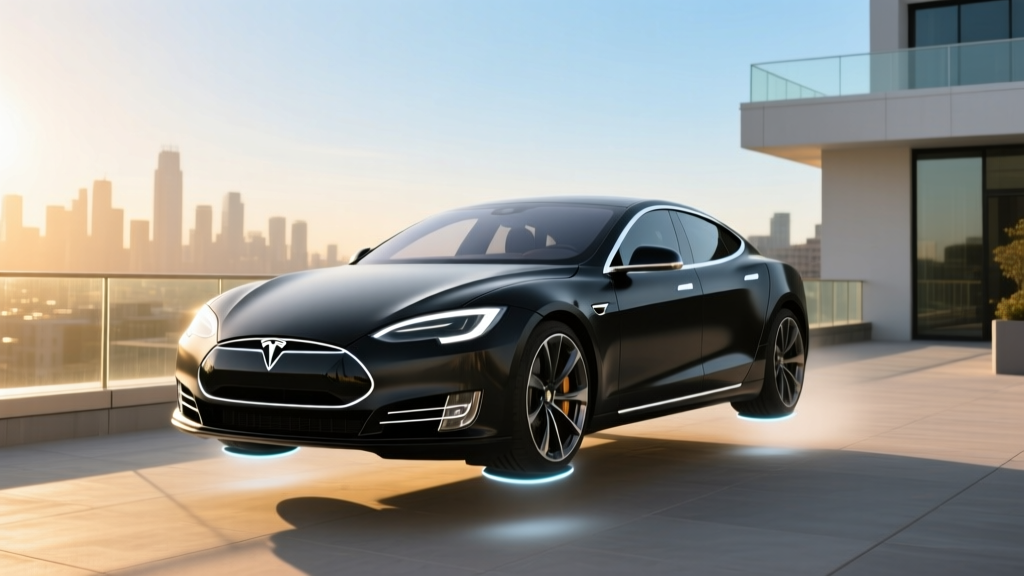
If you've typed "Tesla floating" into a search engine lately, you're not alone. The phrase has picked up steady search interest, fueled by a mix of viral videos showing Teslas wading through flooded streets, concept-render clickbait hinting at amphibious vehicles, and the genuinely cloud-like ride quality of Tesla's adaptive air suspension on the Model S and Model X. So let's clear the air immediately: Tesla does not sell a floating, amphibious, or water-driving mode on any 2026 production vehicle. What does exist is a lineup of four EVs with class-leading efficiency, a mature Supercharger network, and — in the case of the Model S and X — a suspension system that can make highway miles feel like you're hovering.
This guide unpacks what the "Tesla floating" curiosity is really about, then delivers the hard numbers on Tesla's 2026 lineup: EPA range, battery chemistry, DC fast-charge curves, real-world efficiency, pricing after the §30D federal tax credit, and which model actually fits your use case.
What People Actually Mean by 'Tesla Floating'
The search term clusters around three distinct phenomena:
- Flood wading videos: Teslas (particularly the Model Y and Model 3) have no traditional air intake, so owners in flash-flood zones have driven through 12–18 inches of standing water without stalling — something a gas car can't reliably do. Tesla does not rate any consumer vehicle for water fording, and doing so risks high-voltage system damage not covered under warranty.
- 'Hover' ride quality: The adaptive air suspension on the Model S and Model X, particularly in Comfort mode at highway speed, lowers the ride height and softens damping to a degree that reviewers and owners consistently describe as "floating" or "magic carpet." This is the most legitimate interpretation.
- Clickbait renders: YouTube and social channels periodically circulate CGI concepts of a "Tesla Amphibian" or "Tesla Boat." These are fan-made. Tesla has filed patents related to water propulsion, but no production amphibious vehicle exists or has been officially announced as of early 2026.
2026 Tesla Lineup: Real Specs at a Glance
Below are the four models Tesla currently sells in the U.S. for the 2026 model year, with the numbers buyers actually need. All range figures are EPA-estimated; real-world notes follow in the next section.
| Model | Trim | EPA Range | Battery (kWh, chem.) | 0–60 mph | HP | Drivetrain | Base MSRP |
|---|---|---|---|---|---|---|---|
| Model 3 | Long Range RWD | 363 mi | ~79 kWh, NMC | 5.8 s | ~271 | RWD | $42,380 |
| Model 3 | Long Range AWD | 346 mi | ~79 kWh, NMC | 4.2 s | ~346 | Dual-motor AWD | $47,380 |
| Model 3 | Performance | 315 mi | ~79 kWh, NMC | 2.9 s | ~510 | Dual-motor AWD | $54,380 |
| Model Y | Long Range AWD | 320 mi | ~78 kWh, NMC | 4.8 s | ~384 | Dual-motor AWD | $44,990 |
| Model Y | Performance | 298 mi | ~78 kWh, NMC | 3.5 s | ~456 | Dual-motor AWD | $51,490 |
| Model S | Long Range | 402 mi | ~100 kWh, NMC | 3.1 s | ~670 | Dual-motor AWD | $79,990 |
| Model S | Plaid | 359 mi | ~100 kWh, NMC | 1.99 s | 1,020 | Tri-motor AWD | $94,990 |
| Model X | Long Range | 348 mi | ~100 kWh, NMC | 3.8 s | ~670 | Dual-motor AWD | $84,990 |
| Model X | Plaid | 326 mi | ~100 kWh, NMC | 2.5 s | 1,020 | Tri-motor AWD | $99,990 |
Sources: fueleconomy.gov, Tesla.com configurator (2026 model year). Specs reflect current production; Tesla periodically adjusts mid-year.
Real-World Range: What the EPA Sticker Doesn't Tell You
Tesla's heat pump (standard on all 2026 models) significantly reduces cold-weather HVAC energy draw compared to resistive heaters, but physics still wins: a cold battery has higher internal resistance, and cabin heating at 20°F is a multi-kilowatt continuous load. Preconditioning via the Tesla app while the car is still plugged in recovers much of this loss by warming the pack on grid power rather than battery power.
The Model S Long Range's 402-mile EPA figure remains the highest of any production EV sold in the U.S. in 2026, and real-world highway tests by independent outlets have returned 340–360 miles at legal speeds — enough to drive LA to Las Vegas with a thin margin, or Boston to DC with one short Supercharger stop.
Charging Speed: Supercharger Network and Home Level 2
Charging is where Tesla's vertical integration still pays dividends. All 2026 Teslas ship with the North American Charging Standard (NACS) port natively — no adapter needed for the 17,000+ Supercharger stalls in North America. Here's what the charge curves actually look like:
| Model / Trim | Peak DC kW | 10–80% Time | Level 2 (11.5 kW) Rate | Level 1 (120V) Rate |
|---|---|---|---|---|
| Model 3 Long Range / Performance | 250 kW | ~25 min | ~44 mi/hr | ~3–4 mi/hr |
| Model Y Long Range / Performance | 250 kW | ~27 min | ~44 mi/hr | ~3–4 mi/hr |
| Model S / X Long Range | 250 kW | ~30 min | ~41 mi/hr | ~3 mi/hr |
| Model S / X Plaid | 250 kW | ~28 min | ~41 mi/hr | ~3 mi/hr |
Charge-curve reality check: The "250 kW peak" figure only holds roughly between 10–30% state of charge. Above 50%, the rate tapers to ~150 kW; above 80%, it drops sharply to ~60 kW and below. This is why Tesla (and every other OEM) quotes 10–80% times rather than 0–100%. Charging from 80–100% on DC fast charging can take as long as the 10–80% portion. On road trips, plan stops around the 15–80% window for the fastest throughput.
At home, Tesla's Wall Connector delivers up to 11.5 kW (48A) on a 60A circuit, adding roughly 44 miles of range per hour of charging — enough to fully replenish a Model 3 Long Range overnight in about 8 hours. Installation costs typically run $500–$2,000 depending on panel proximity and whether your home needs a service upgrade from 100A to 200A. Always get a quote from a licensed electrician; the final spec depends on your panel, conduit run length, and local permitting.
Efficiency: MPGe and kWh/100mi Compared
Tesla's drivetrain efficiency remains a benchmark. The company's silicon-carbide inverters, permanent-magnet/induction dual-motor pairing, and aggressive thermal management translate into more miles per kilowatt-hour than most competitors.
- Model 3 Long Range RWD: 132 MPGe combined / 25 kWh/100mi
- Model Y Long Range AWD: 122 MPGe combined / 27 kWh/100mi
- Model S Long Range: 120 MPGe combined / 28 kWh/100mi
- Model X Long Range: 109 MPGe combined / 31 kWh/100mi
For cost context, at the U.S. average residential electricity rate of ~$0.17/kWh, a Model 3 Long Range costs roughly $4.25 to drive 100 miles. A comparable gas sedan at 30 MPG and $3.40/gallon costs $11.33 for the same distance — a 62% fuel-cost advantage for the Tesla. (fueleconomy.gov offers a personalized calculator using your local utility rate.)
Pricing, Trims, and Federal Tax Credit Eligibility
Tesla's 2026 pricing has stabilized after years of volatility. Here's where the lineup lands and how the IRS §30D federal tax credit applies:
| Model / Trim | MSRP | §30D Eligible? | Effective Price (if eligible) |
|---|---|---|---|
| Model 3 Long Range RWD | $42,380 | Yes — up to $7,500 | ~$34,880 |
| Model 3 Long Range AWD | $47,380 | Yes — up to $7,500 | ~$39,880 |
| Model 3 Performance | $54,380 | Yes — up to $7,500 | ~$46,880 |
| Model Y Long Range AWD | $44,990 | Yes — up to $7,500 | ~$37,490 |
| Model Y Performance | $51,490 | Yes — up to $7,500 | ~$43,990 |
| Model S Long Range | $79,990 | No — exceeds $55K sedan cap | $79,990 |
| Model S Plaid | $94,990 | No — exceeds $55K sedan cap | $94,990 |
| Model X Long Range | $84,990 | No — exceeds $80K SUV cap | $84,990 |
| Model X Plaid | $99,990 | No — exceeds $80K SUV cap | $99,990 |
- MSRP caps: ≤$55,000 for sedans (Model 3); ≤$80,000 for SUVs/trucks/vans (Model Y qualifies).
- Buyer income caps (modified AGI): $150K single / $225K head of household / $300K joint.
- Battery sourcing: Increasing percentages of critical minerals and battery components must be sourced from the U.S. or FTA partners. Tesla's U.S.-built packs with diversified supply chains have generally met thresholds, but confirm at purchase — the rules tighten annually.
- Point-of-sale transfer: You can transfer the credit to the dealer at purchase to reduce the transaction price directly, rather than waiting to claim it on your tax return.
- Verify before you buy: Use the IRS VIN-check tool at fueleconomy.gov and consult a tax professional. Eligibility can shift with supply-chain changes and annual rule tightening.
Tech, Driver Assistance, and the 'Floating' Suspension
Every 2026 Tesla ships with the same core tech stack:
- Infotainment: 15.4-inch center touchscreen (Model 3/Y) or 17-inch tilting screen (Model S/X), native navigation with real-time Supercharger routing, streaming media, and Tesla's app ecosystem. No Apple CarPlay or Android Auto — a dealbreaker for some buyers.
- Autopilot (standard): SAE Level 2 driver assistance including adaptive cruise, lane centering, and automatic emergency braking. Requires continuous driver supervision — this is not self-driving.
- Full Self-Driving (Supervised): Optional $8,000 upgrade (or $99/month subscription) adding city-street navigation, traffic-light recognition, and autosteer on unmapped roads. Still SAE Level 2; still requires hands-on or eyes-on supervision. NHTSA continues to scrutinize FSD engagement data.
- Adaptive air suspension (Model S/X only): This is the hardware behind the "floating" reputation. Automatically lowers at highway speed for aero efficiency and raises for ground clearance; Comfort mode softens damping noticeably. The Model 3 and Y use conventional coil springs — competent but not cloud-like.
- Over-the-air updates: Tesla's OTA pipeline still leads the industry in scope, pushing everything from UI tweaks to suspension tuning and battery-management refinements post-purchase.
Cargo, Passenger Space, and Daily Practicality
| Model | Cargo (rear seats up) | Cargo (seats folded) | Frunk | Rear Legroom |
|---|---|---|---|---|
| Model 3 | 23 cu ft | ~56 cu ft | 3.1 cu ft | 35.3 in |
| Model Y | 30 cu ft | ~72 cu ft | 4.1 cu ft | 41.6 in |
| Model S | 28 cu ft | ~63 cu ft | 3.1 cu ft | 41.7 in |
| Model X | ~37 cu ft (5-seat) | ~82 cu ft | 3.3 cu ft | 41.9 in |
The Model Y remains the volume seller for a reason: it swallows a double stroller, a week of family luggage, or a Costco run with room to spare, all while fitting in a standard garage. The Model 3's rear seat is tighter — fine for kids and average-height adults on commutes, cramped for tall passengers on long trips. The Model X offers optional third-row seating (6- and 7-seat configs), though the third row is best reserved for children.
Warranty Coverage
Tesla's warranty structure is straightforward:
- New Vehicle Limited Warranty: 4 years / 50,000 miles, bumper to bumper.
- Battery and Drive Unit Warranty:
- Model 3 RWD: 8 years / 100,000 miles (70% minimum capacity retention)
- Model 3 LR / Model Y / Model S / Model X: 8 years / 120,000 miles (70% retention)
The 70% retention threshold is industry-standard. Real-world degradation data from high-mileage Teslas suggests most NMC packs lose roughly 10–12% capacity in the first 100,000 miles, then flatten — meaning most owners will never approach a warranty claim. Tesla's published fleet data supports this trajectory.
Pros, Cons, and the Verdict
- Class-leading efficiency and real-world range per kWh
- Supercharger network: 17,000+ stalls, highest reliability in U.S. public charging
- OTA updates that genuinely improve the vehicle post-purchase
- Model 3/Y eligible for up to $7,500 §30D credit (point-of-sale transfer)
- Strong resale value relative to most EV competitors
- Model S/X air suspension delivers legitimate "floating" ride quality
- No Apple CarPlay / Android Auto — Tesla's ecosystem is non-negotiable
- FSD (Supervised) remains Level 2 despite the name; $8K is a steep upsell
- Model S/X priced out of §30D eligibility entirely
- Build-quality consistency improved but still trails legacy German/Japanese OEMs
- Service-center capacity lags the sales volume; wait times can stretch weeks in some metros
- No true amphibious or water-fording mode — despite what the internet suggests
Look elsewhere if: You need CarPlay, want a traditional dealership experience, prioritize Level 3+ autonomy today (not available from any consumer OEM), or need a sub-$35K entry price without waiting for used-market depreciation.
Frequently Asked Questions
Can a Tesla actually float on water?
No. No production Tesla is rated for water fording or amphibious operation. Viral videos of Teslas pushing through floodwater reflect the absence of an air intake, not a designed capability. Attempting this risks high-voltage system damage that is explicitly excluded from Tesla's warranty.
What is the real-world range of the 2026 Tesla Model 3 Long Range?
EPA-rated at 363 miles. Expect ~310 miles on a warm-weather highway trip at legal speeds and ~260 miles in freezing conditions with cabin heat. Preconditioning while plugged in recovers meaningful range in cold weather.
How fast does a Tesla charge at a Supercharger?
All 2026 Teslas peak at 250 kW on V3/V4 Superchargers, delivering 10–80% in roughly 25–30 minutes depending on the model. The rate tapers sharply above 80%, so road-trip strategy should target 15–80% stops for maximum throughput.
Does the Tesla Model Y qualify for the $7,500 federal tax credit in 2026?
Yes — the Model Y's MSRP is under the $80,000 SUV cap, and it has generally met the §30D battery-sourcing thresholds. However, buyer income caps ($150K single / $300K joint) apply, and sourcing rules tighten annually. Confirm eligibility via the IRS VIN tool at purchase and consult a tax professional.
Is Tesla Autopilot or FSD actually self-driving?
No. Both are SAE Level 2 driver-assist systems that require continuous driver supervision. The "Full Self-Driving (Supervised)" name is a product label, not an engineering classification. True driverless Level 4 operation exists only in geofenced robotaxi services like Waymo, not in any consumer vehicle.
Is a Tesla worth buying vs. Hyundai Ioniq 6, BMW i4, or Ford Mustang Mach-E?
It depends on your priority. Tesla wins on efficiency, Supercharger access, and OTA capability. The Ioniq 6 offers 800V-class charging speed and CarPlay; the BMW i4 delivers superior interior materials and dealer service; the Mach-E provides a more traditional ownership experience. Test-drive all three before committing — the Tesla ecosystem is sticky, and you'll either love it or resent it within the first month.
Which Tesla has the 'floating' air suspension?
Only the Model S and Model X. The Model 3 and Model Y use conventional coil-spring suspensions — well-tuned but not adaptive. If the cloud-like highway ride is your primary draw, the Model S Long Range is the sweet spot at $79,990 (though it does not qualify for the federal tax credit).
Always verify current pricing, tax-credit eligibility, and specifications at Tesla.com and IRS.gov before purchasing — rules and MSRPs change, sometimes mid-model-year.