There Is No Tesla Float — Here's What You Need to Know
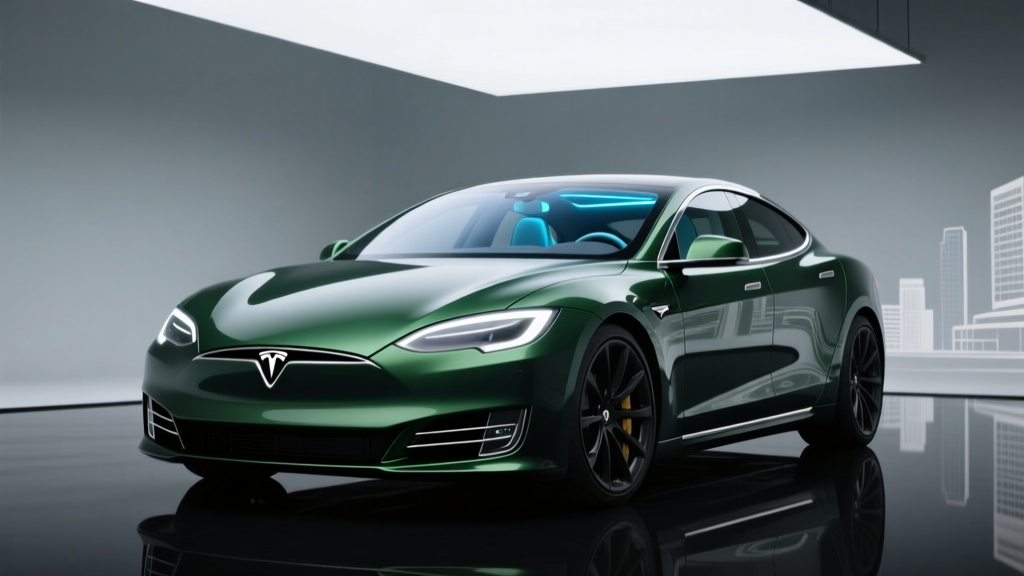
If you've been searching for the Tesla Float, you're not alone. The term has circulated across social media, forums, and AI-generated concept renders for years, often depicted as a futuristic, pod-like Tesla vehicle hovering above the ground or gliding autonomously through a city. Searches for "Tesla Float" continue to draw curious shoppers wondering if Elon Musk's company has quietly announced a revolutionary new model.
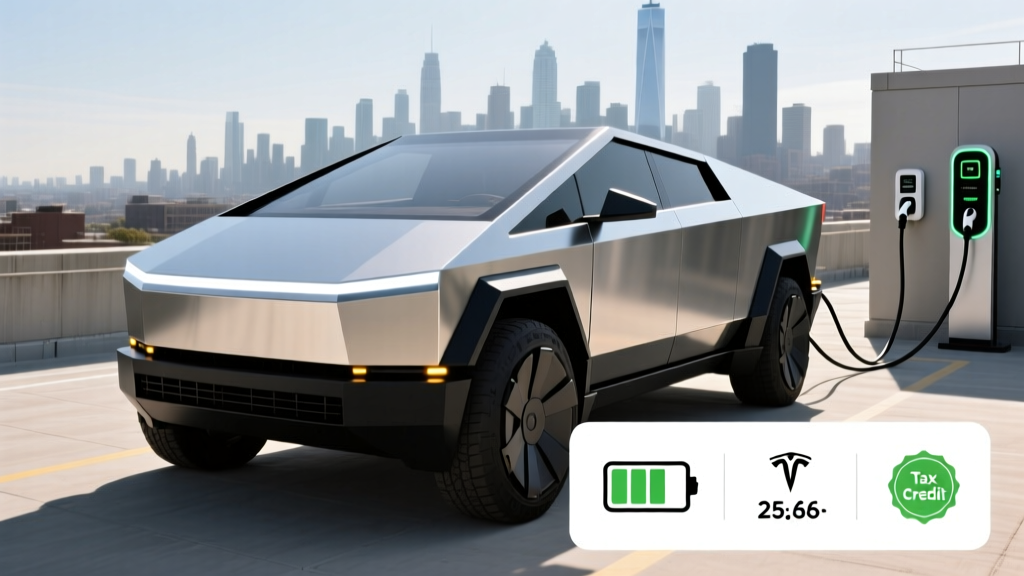
The reality, as of early 2026, is straightforward: the Tesla Float does not exist. It is not an announced, planned, or prototype vehicle from Tesla, Inc. It has never appeared in an earnings call, SEC filing, Tesla investor presentation, or press release. The concept originated from independent digital artists and speculative futurist content, not from Tesla's design studio in Hawthorne, California.
What does exist is Tesla's robust 2026 lineup of production electric vehicles — each with documented EPA range, verified charging speeds, and real-world ownership data. If you landed here looking for the Float, this guide will redirect that interest toward the Tesla models you can actually buy, lease, and drive today, with the exact numbers that matter for purchase decisions.
Tesla's Actual 2026 EV Lineup at a Glance
Rather than chase vaporware, let's look at what Tesla currently sells in the U.S. market for the 2026 model year. These are the vehicles available for order or delivery right now, with confirmed specifications from fueleconomy.gov and Tesla's official configuration pages.
| Model | Body Style | EPA Range (mi) | Battery (kWh usable) | 0–60 mph | Starting MSRP |
|---|---|---|---|---|---|
| Model 3 RWD | Sedan | 363 | ~60 (LFP) | 5.8 s | $38,990 |
| Model 3 Long Range AWD | Sedan | 363 | ~79 (NMC) | 4.2 s | $44,990 |
| Model Y RWD | Crossover SUV | 320 | ~60 (LFP) | 6.5 s | $44,990 |
| Model Y Long Range AWD | Crossover SUV | 330 | ~79 (NMC) | 4.8 s | $49,990 |
| Model S Long Range | Luxury Sedan | 402 | ~100 (NMC) | 3.1 s | $79,990 |
| Model X Long Range | Luxury SUV | 348 | ~100 (NMC) | 3.8 s | $84,990 |
| Cybertruck AWD | Pickup | 340 | ~123 (NMC) | 3.9 s | $79,990 |
Sources: EPA / fueleconomy.gov, Tesla.com configurator (2026 model year). Range figures reflect EPA combined estimates; real-world results vary by driving conditions.
Real-World Range vs. EPA Estimates: What Owners Actually See
For the best-selling Model Y Long Range AWD (EPA 330 miles), independent highway testing consistently yields 280–295 miles at 70 mph in moderate temperatures. In winter conditions across the northern U.S., owners report 230–265 miles before needing a charge. The Model 3 RWD with its LFP (lithium iron phosphate) battery shows slightly better cold-weather resilience than NMC packs, but its smaller 60 kWh capacity means absolute range drops proportionally.
This isn't a Tesla-specific issue — all EVs lose range in cold weather and at sustained highway speeds. But it's critical context if you're comparing a "Tesla Float" fantasy (which often depicted unlimited or magical range) against production reality. The EPA's official data remains the most reliable baseline for cross-shopping.
Charging Speed: Supercharger Network and Home Charging
Tesla's charging ecosystem is arguably its strongest competitive advantage in 2026. The Supercharger network now exceeds 6,500 stations and 70,000 individual connectors across North America, and with the industry-wide shift to the NACS (North American Charging Standard) connector, Tesla vehicles charge natively without adapters at every Supercharger stall.
| Charging Level | Power / Rate | Time or Miles Added | Connector |
|---|---|---|---|
| Level 1 (120V household) | ~1.4 kW | ~3–5 miles per hour | NACS / J1772 adapter |
| Level 2 (240V home / Wall Connector) | 11.5 kW (48A) | ~44 miles per hour | NACS |
| DC Fast Charge (V3 Supercharger) | Peak 250 kW | 10–80% in ~25–30 min | NACS (native) |
| DC Fast Charge (V4 Supercharger) | Peak 350 kW* | 10–80% in ~18–22 min* | NACS (native) |
*V4 Supercharger speeds depend on vehicle architecture. Model S/X and Cybertruck with newer battery packs can sustain higher charge rates; Model 3/Y peak around 250 kW even on V4 stalls. Charge curve tapers significantly above 80% SoC to protect battery health — plan stops to 80%, not 100%, for optimal road-trip speed.
Home charging is where most Tesla owners do 90%+ of their charging. Tesla's Wall Connector ($420, hardwired) delivers up to 11.5 kW on a 60A circuit (48A continuous). A typical overnight charge from 20% to 80% adds roughly 200+ miles in 6–8 hours — more than enough for daily commuting. Installation costs vary widely: expect $500–$2,000 for a straightforward install on an existing 200A panel, or $2,000–$5,000+ if a panel upgrade to 200A or higher is required. Always consult a licensed electrician for final specs.
Performance and Efficiency by the Numbers
Tesla vehicles have never been slow, but the 2026 lineup spans a wide performance envelope. The Model 3 RWD at 5.8 seconds to 60 mph is adequate for commuting and merging, while the Model S Plaid (not listed above, $89,990, 1,020 hp) hits 60 mph in an absurd 1.99 seconds — faster than most supercars at a fraction of the price.
Efficiency is where Tesla still leads much of the industry. The Model 3 Long Range achieves 132 MPGe combined (approximately 25 kWh per 100 miles), making it one of the most energy-efficient EVs on sale. The Model Y Long Range sits at 122 MPGe combined (~28 kWh/100 mi). For comparison, the Hyundai Ioniq 5 achieves 114 MPGe and the Ford Mustang Mach-E Extended Range hits 101 MPGe. Tesla's efficiency advantage translates directly to lower electricity costs per mile and more range from a given battery size.
All 2026 Teslas feature regenerative braking with one-pedal driving capability. The Cybertruck's steer-by-wire system and 48-volt electrical architecture represent Tesla's most significant engineering departure, but its 340-mile EPA range and 11,000-pound towing capacity make it a niche product rather than a mass-market choice.
Pricing, Tax Credits, and Total Cost of Ownership
| Model / Trim | Base MSRP | MSRP Cap Status | Max §30D Credit | Effective Price (if eligible) |
|---|---|---|---|---|
| Model 3 RWD | $38,990 | Under $55K cap ✓ | Up to $7,500 | ~$31,490 |
| Model 3 Long Range AWD | $44,990 | Under $55K cap ✓ | Up to $7,500 | ~$37,490 |
| Model Y RWD | $44,990 | Under $80K SUV cap ✓ | Up to $7,500 | ~$37,490 |
| Model Y Long Range AWD | $49,990 | Under $80K SUV cap ✓ | Up to $7,500 | ~$42,490 |
| Model S Long Range | $79,990 | Over $55K sedan cap ✗ | $0 | $79,990 |
| Model X Long Range | $84,990 | Over $80K SUV cap ✗ | $0 | $84,990 |
| Cybertruck AWD | $79,990 | Under $80K pickup cap ✓ | Up to $7,500 | ~$72,490 |
Credit eligibility depends on buyer income, battery sourcing compliance, and point-of-sale election. Consult IRS §30D guidance and a tax professional for your specific situation.
On total cost of ownership, Tesla models benefit from minimal maintenance (no oil changes, no transmission fluid, brake pad longevity extended by regen), low electricity costs versus gasoline, and strong resale values. Insurance premiums, however, tend to run 15–25% higher than comparable non-EVs due to repair costs and parts pricing. Factor that into your monthly budget.
Tech, Safety, and Driver Assistance
Every 2026 Tesla includes the company's latest hardware suite (HW4/AI4) supporting Basic Autopilot as standard — adaptive cruise control, lane-keeping, and automatic emergency braking. The optional Full Self-Driving (Supervised) package ($8,000 one-time or $99/month) adds city-street navigation, traffic-light recognition, and automated parking.
The Model 3 and Model Y earned IIHS Top Safety Pick+ ratings and 5-star NHTSA overall safety scores. The minimalist interior — dominated by a 15.4-inch center touchscreen with no physical buttons — remains polarizing. There is no traditional instrument cluster; all information (speed, range, navigation) appears on the central screen. Some buyers love the simplicity; others find it distracting. This is a test-drive decision, not a spec-sheet one.
Notable tech features include over-the-air (OTA) software updates that regularly add functionality, a built-in dashcam and Sentry Mode surveillance system, and access to Tesla's integrated navigation with real-time Supercharger routing and battery preconditioning — the car warms its battery en route to a charger to maximize charge speed upon arrival.
Interior Space and Practicality
For buyers comparing a hypothetical "Tesla Float" concept against reality, interior dimensions matter. The Model Y offers 76 cubic feet of cargo space (rear seats folded) and 41.6 inches of rear legroom — competitive with compact SUVs like the Toyota RAV4. The Model 3 provides 23 cubic feet of trunk space plus a small front trunk (frunk), with 35.3 inches of rear legroom that accommodates adults but feels tighter than the Model Y.
The Cybertruck has a 6.5-foot bed and 67 cubic feet of enclosed vault storage, but its angular stainless-steel design and $80K+ price limit its appeal. The Model S and Model X offer the most interior room and a hatchback/liftback design (Model S) or falcon-wing rear doors (Model X), but their prices place them in luxury territory where the federal credit no longer applies.
Pros and Cons of Buying Tesla in 2026
Pros
- Industry-leading Supercharger network (70,000+ connectors, NACS native)
- Best-in-class energy efficiency (MPGe) across Model 3/Y
- Strong OTA update pipeline adds features post-purchase
- Federal tax credit eligibility on Model 3 and Model Y (up to $7,500)
- Minimal scheduled maintenance vs. ICE vehicles
- High resale value relative to most EV competitors
Cons
- Minimalist interior not to everyone's taste; no physical buttons
- Insurance premiums 15–25% higher than segment average
- FSD (Supervised) is expensive ($8,000) and still requires full driver attention
- Model S/X exceed MSRP caps — no federal credit available
- Build quality has improved but panel-gap inconsistencies still reported
- Service center wait times can be lengthy in high-demand metro areas
Who Should Buy a Tesla (and Who Shouldn't)
Decision Framework
Choose a Tesla Model 3 or Model Y if: You want the most proven charging network, top efficiency, a strong tech ecosystem, and eligibility for the $7,500 federal credit. These are the default picks for tech-savvy commuters and small families who can charge at home.
Choose a competitor (Hyundai Ioniq 5, Ford Mach-E, Chevy Equinox EV) if: You prefer physical controls, want a more traditional dealership service experience, need a lower insurance baseline, or find Tesla's interior too sparse.
Choose the Model S or Model X if: Budget is not a primary concern, you want luxury-level performance and range, and you accept that the §30D credit won't apply due to MSRP caps.
Don't buy any Tesla if: You cannot install a Level 2 home charger and live in an area with sparse public charging. Even the best Supercharger network can't replace the convenience of overnight home charging for daily use.
Frequently Asked Questions
Is the Tesla Float a real car I can buy?
No. The "Tesla Float" is an internet concept and rumor — it has never been announced, prototyped, or produced by Tesla. It originated from third-party renders and speculative content. Tesla's actual 2026 lineup includes the Model 3, Model Y, Model S, Model X, and Cybertruck.
What is the real-world range of the Tesla Model Y?
The 2026 Model Y Long Range AWD has an EPA-estimated 330 miles. In real-world highway driving at 70 mph, expect 280–295 miles. In freezing winter conditions, expect 230–265 miles. The RWD variant with its smaller LFP battery delivers an EPA 320 miles with proportionally less real-world range.
How fast does a Tesla charge at a Supercharger?
On a V3 Supercharger (250 kW peak), the Model 3 and Model Y charge from 10% to 80% in approximately 25–30 minutes. Newer V4 Supercharger stalls (up to 350 kW) can reduce this to 18–22 minutes for compatible vehicles. Charging slows significantly above 80% to protect battery longevity — road-trip strategy should target 80% stops.
Does the Tesla Model 3 qualify for the $7,500 federal tax credit?
The 2026 Model 3 (both RWD at $38,990 and Long Range at $44,990) falls under the $55,000 sedan MSRP cap and is eligible for up to $7,500 under IRS §30D — provided the buyer meets income limits ($150K single / $300K joint MAGI) and the vehicle's battery meets critical-mineral and component sourcing requirements. The credit can be transferred at point of sale as a purchase-price reduction. Always verify current eligibility on the IRS website.
Is Tesla's FSD actually self-driving?
No. Full Self-Driving (Supervised) is an SAE Level 2 system. The driver must remain fully engaged, monitor the road, and be prepared to take control immediately. It does not make the vehicle autonomous. Tesla's own name for the feature is widely considered misleading by safety advocates and regulators.
What is Tesla's battery warranty?
Tesla provides an 8-year / 100,000-mile battery and drive unit warranty on the Model 3 RWD, and 8 years / 120,000 miles on Long Range variants, Model Y, Model S, and Model X. The warranty guarantees the battery will retain at least 70% of its original capacity during the coverage period. Real-world degradation data from high-mileage owners suggests most Tesla batteries retain 85–90% capacity at 100,000 miles.
Is a Tesla worth buying vs. competitors in 2026?
For most buyers seeking a mainstream EV, the Model 3 and Model Y remain segment benchmarks due to their efficiency, Supercharger access, and software ecosystem. However, competitors like the Hyundai Ioniq 5, Kia EV6, and Ford Mustang Mach-E have closed the gap significantly on range and charging speed while offering more conventional interiors and broader dealer service networks. The right choice depends on how much you value Tesla's charging network and software versus traditional automotive ergonomics and service access.