The Tesla Flamethrower Explained: Easter Egg, Not a Weapon
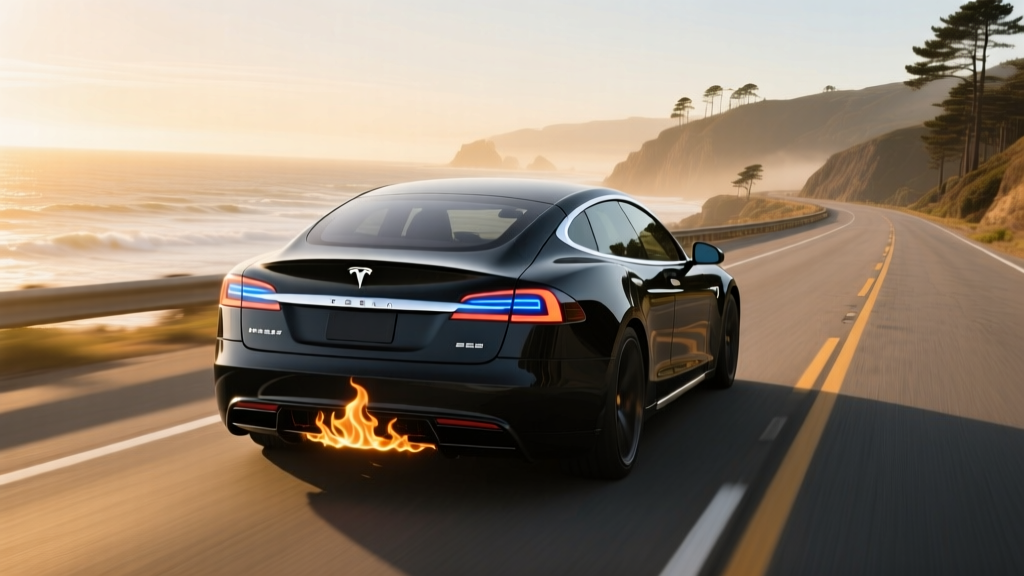
If you've searched "Tesla flamethrower" and landed here expecting a vehicle-mounted pyrotechnic system, let's clear the air immediately: Tesla does not sell a flamethrower on any production vehicle. The term refers to a viral software Easter Egg hidden in Tesla's HVAC climate controls — a joke feature that has generated millions of views on TikTok, YouTube, and Reddit since it first surfaced in 2023.
Here's what it actually does: when you set the cabin temperature to a specific value (reportedly 99°F / 37°C on certain software versions) and tap the temperature display in a particular sequence, the touchscreen briefly displays a flamethrower animation with the text "FLAMETHROWER" — accompanied by a blast of maximum hot air from the vents. It's a tongue-in-cheek reference to The Boring Company's now-discontinued "Not-a-Flamethrower" product that Elon Musk sold in 2018.
The Easter Egg has no effect on vehicle systems, battery, or performance. But it has become shorthand in EV forums for Tesla's software-first culture — and a gateway for shoppers researching what Tesla's actual 2026 lineup delivers in range, charging, and ownership value. That's what this guide covers.
2026 Tesla Model 3 Long Range AWD — Core Specs
| Spec | Value |
|---|---|
| EPA Range | 363 miles |
| Battery (usable) | ~75 kWh, NMC chemistry |
| Drivetrain | Dual-motor AWD |
| Horsepower | ~346 hp combined |
| 0-60 mph | 4.2 seconds |
| Peak DC Fast Charge | 250 kW (Supercharger V3) |
| 10-80% DC Charge | ~25 minutes |
| Level 2 Home Charge | 11.5 kW (~44 mi/hr) |
| MPGe (combined) | 132 MPGe |
| Efficiency | 25 kWh/100 mi |
| Base MSRP | $47,740 (before incentives) |
| Battery Warranty | 8 years / 120,000 miles |
Real-World Range: What the EPA Sticker Doesn't Tell You
The 2026 Tesla Model 3 Long Range AWD carries an EPA-estimated 363 miles of range — among the highest of any mass-market sedan. But EPA testing uses a blended city/highway cycle at moderate temperatures, which doesn't reflect how most owners actually drive.
Range Reality Check — Tesla Model 3 LR AWD
- EPA sticker: 363 miles
- Highway at 70-75 mph (70°F): Expect ~290-310 miles. Aerodynamic drag cuts efficiency roughly 15-20% versus the EPA blend.
- City / stop-and-go (70°F): 340-360 miles. Regenerative braking recovers energy in traffic.
- Cold weather (25°F, highway): ~220-260 miles. Battery chemistry slows, cabin heating draws power, and the heat pump helps but doesn't eliminate the loss.
- Mountain / high-speed driving: 250-280 miles depending on elevation gain.
Bottom line: plan trips around ~280 miles of usable range in mixed real-world driving, and ~230 miles in winter. The Tesla navigation system's trip planner accounts for these variables automatically when routing through Superchargers.
Charging Speed: Supercharger Network Advantage
Tesla's charging story in 2026 remains its strongest competitive moat. The Supercharger network now exceeds 60,000 connectors globally, and with NACS becoming the North American standard, Ford, GM, Rivian, and others now access the same network — but Tesla owners still enjoy seamless plug-and-charge integration with no adapter required.
Tesla Model 3 LR — Charging Speeds
| Level | Power | Speed | Typical Use |
|---|---|---|---|
| Level 1 (120V) | ~1.4 kW | ~5 mi/hr | Emergency / trickle |
| Level 2 (240V home) | 11.5 kW | ~44 mi/hr | Daily overnight charging |
| DC Fast (Supercharger V3) | 250 kW peak | 10-80% in ~25 min | Road trips |
| DC Fast (Supercharger V4) | Up to 350 kW (vehicle-limited) | Similar — Model 3 caps at ~250 kW | Future-proofing |
Charging curve reality: The Model 3 peaks near 250 kW only between roughly 10-30% state of charge. From 30-60%, it sustains around 150-180 kW. Above 80%, it tapers sharply to protect the NMC cells — dropping below 50 kW. This is why Tesla's navigation preconditions the battery when a Supercharger is your destination: arriving with a warm battery lets you hit peak rate immediately rather than ramping up slowly.
Performance, Interior, and the Software Experience
The dual-motor AWD Model 3 delivers 346 hp and a 4.2-second 0-60 time — brisk enough to embarrass most gas sports sedans at stoplights, while the low center of gravity (battery pack under the floor) keeps body roll minimal in corners. The "Highland" refresh that debuted for 2024 matured into the 2026 model with improved suspension tuning, acoustic glass, ventilated front seats, and ambient lighting that finally brought interior quality closer to BMW and Audi benchmarks.
Standout Tech Features
- 15.4-inch touchscreen with AMD Ryzen processor — fastest infotainment in the segment
- Autopilot standard (SAE Level 2): adaptive cruise + lane centering; FSD Supervised available as a $99/mo subscription or $8,000 purchase
- Sentry Mode, Dashcam, Dog Mode — software features competitors still can't match
- Over-the-air updates that add features monthly, including the Easter Eggs like the flamethrower animation
- 8-inch rear touchscreen for climate and media control
Notable Drawbacks
- No physical buttons — turn signals, wipers, and glove box are all screen-activated, which frustrates some drivers
- No Apple CarPlay / Android Auto — Tesla's ecosystem is closed
- FSD Supervised is Level 2, not self-driving — you must remain attentive, hands ready to intervene, at all times. It handles many scenarios well but requires constant supervision.
- Rear visibility is compromised by the sloping roofline; the digital rearview mirror option helps
Cargo and Passenger Space
| Dimension | Measurement |
|---|---|
| Front legroom | 42.7 in |
| Rear legroom | 35.2 in |
| Trunk (rear) | 23 cu ft |
| Frunk (front trunk) | 3.1 cu ft |
| Total cargo | ~26 cu ft (65 cu ft with rear seats folded) |
Pricing, Trims, and Federal Tax Credit Eligibility
Tesla's 2026 lineup has consolidated into fewer trims, simplifying the purchase decision but reducing customization. Here's where the Model 3 stands before and after potential incentives:
2026 Tesla Model 3 — Pricing by Trim
| Trim | MSRP | Est. After §30D Credit | Notes |
|---|---|---|---|
| RWD (Standard) | $38,990 | ~$31,490 | LFP battery, ~272 mi EPA; qualifies if sourcing rules met |
| Long Range AWD | $47,740 | ~$40,240 | NMC battery, 363 mi; most popular trim |
| Performance | $52,990 | ~$45,490 | 2.9s 0-60, track mode; below $55k sedan cap |
Federal §30D Tax Credit: The Rules That Actually Apply
The IRS §30D Clean Vehicle Credit offers up to $7,500 — but not every buyer or every Tesla qualifies automatically. The 2026 rules require:
- MSRP cap: Sedans must be priced at or below $55,000 (all 2026 Model 3 trims qualify)
- Buyer income cap: AGI ≤ $150,000 single / $225,000 head of household / $300,000 joint
- Battery sourcing: Critical minerals and battery components must meet escalating domestic/free-trade percentages — Tesla's US-built batteries currently satisfy this for most trims, but verify at purchase
- Point-of-sale transfer: You can now apply the $7,500 as an instant rebate at delivery rather than waiting for tax filing
- Final assembly: Must occur in North America (Model 3 is assembled in Fremont, CA — qualifies)
State incentives vary widely — California's CVRP, Colorado's tax credit, and utility rebates can stack on top. Check your state energy office for current amounts, as these change frequently.
How the Model 3 Stacks Against Competitors
The "Tesla flamethrower" search often leads shoppers to compare the Model 3 against its closest rivals. Here's how it measures up on the metrics that matter:
| Spec | Tesla Model 3 LR | BMW i4 eDrive40 | Hyundai Ioniq 6 SEL | Polestar 2 LRDM |
|---|---|---|---|---|
| EPA Range | 363 mi | 307 mi | 361 mi | 320 mi |
| Battery | ~75 kWh NMC | 83.9 kWh NMC | 77.4 kWh NMC | 82 kWh NMC |
| Peak DC Charge | 250 kW | 205 kW | 240 kW | 205 kW |
| 0-60 mph | 4.2s | 5.5s | 5.1s | 4.3s |
| MSRP | $47,740 | $57,900 | $46,500 | $53,300 |
| Charging Network | Native Supercharger | NACS adapter needed | NACS adapter needed | NACS adapter needed |
The Model 3 wins on range-per-dollar, Supercharger convenience, and software. The Ioniq 6 nearly matches range at a lower price but lacks the Supercharger ecosystem. The BMW i4 offers superior interior materials and a more traditional cockpit but costs $10,000 more for less range. The Polestar 2 is refined but trails on efficiency.
Who Should Buy the Model 3 — And Who Shouldn't
Choose the Tesla Model 3 if:
- You road-trip regularly and want the lowest-friction DC fast-charging experience
- You value over-the-air software updates and Easter Eggs (yes, including the flamethrower)
- You want 350+ miles of EPA range under $50,000
- You're comfortable with a screen-centric interface and no CarPlay
Look elsewhere if:
- You need a large rear seat for adult passengers or child seats (consider Model Y or Ioniq 5)
- You want physical buttons, a traditional gauge cluster, or Apple CarPlay
- You frequently tow (Model 3 isn't rated for towing; Model Y handles 3,500 lbs)
- You live in an apartment without home charging access and rely on public CCS-only infrastructure
Pros and Cons at a Glance
Pros
- Class-leading 363-mile EPA range at a competitive price
- Supercharger network — still the most reliable DC fast-charging ecosystem
- Quick 10-80% charging (~25 min) with battery preconditioning
- Best-in-class software, OTA updates, and feature depth
- Strong safety ratings (NHTSA 5-star overall)
- 8-year/120,000-mile battery warranty with 70% retention guarantee
Cons
- Screen-only controls (no physical turn signal stalk in latest refresh)
- No Apple CarPlay or Android Auto
- Rear seat is tighter than Model Y or Ioniq 5
- FSD Supervised is Level 2 only — expensive for what it delivers
- Insurance premiums run 15-30% above segment average
- Cold-weather range loss of 30-35% is typical for NMC chemistry
FAQ: The Tesla Flamethrower and Beyond
What is the Tesla flamethrower feature?
It's a hidden software Easter Egg in the climate controls. When triggered (specific temperature + tap sequence), the touchscreen displays a flamethrower animation and blasts maximum hot air from the vents. It's purely a joke — no actual fire, no vehicle modification, no safety risk.
Can I buy a real flamethrower from Tesla?
No. The Boring Company sold the "Not-a-Flamethrower" in 2018 — essentially a propane torch in a futuristic shell — but it was discontinued and is now a collector's item. Tesla vehicles have no flamethrower hardware.
What is the real-world range of the 2026 Tesla Model 3 Long Range?
EPA-rated at 363 miles, expect roughly 290-310 miles at highway speeds in mild weather, 340-360 in city driving, and 220-260 miles in cold winter conditions. Battery preconditioning and the heat pump help mitigate losses.
How fast does the Model 3 charge at home and on road trips?
At home on a 240V Level 2 charger, the Model 3 adds ~44 miles per hour (11.5 kW) — a full overnight charge from 20-80% takes about 5 hours. On Supercharger V3, it peaks at 250 kW and reaches 10-80% in roughly 25 minutes, though the curve tapers significantly above 80%.
Does the 2026 Tesla Model 3 qualify for the $7,500 federal tax credit?
All Model 3 trims fall under the $55,000 sedan MSRP cap and are assembled in Fremont, CA. Eligibility depends on buyer income (AGI ≤ $300k joint), battery sourcing compliance, and point-of-sale transfer availability at delivery. Verify current sourcing status on the IRS qualified vehicle list before purchasing.
Is the Model 3 worth buying over the Model Y or Hyundai Ioniq 5?
If you prioritize range, efficiency, and a sedan profile, the Model 3 LR is the strongest value in Tesla's lineup. If you need cargo space, towing, or easier rear-seat access, the Model Y or Ioniq 5 are better fits. The Ioniq 5 offers 800V charging and CarPlay but lacks Supercharger-native access.
Is Tesla's Full Self-Driving actually autonomous?
No. FSD Supervised is an SAE Level 2 driver-assistance system — it handles steering, acceleration, and braking in many scenarios but requires continuous driver supervision. You are legally and practically responsible for the vehicle at all times. Only Level 4 services like Waymo operate without a human driver, and those are limited to specific geofenced areas.
Final Verdict: Beyond the Meme
The "Tesla flamethrower" search trend reflects something real about Tesla's brand: it's as much a software company as an automaker, and its vehicles hide personality inside the code. But Easter Eggs don't charge your car or get you through a snowstorm.
The 2026 Model 3 Long Range AWD earns its place as one of the most efficient, longest-range, and best-supported EVs on the market — not because of a joke animation, but because of 363 EPA miles, 250 kW Supercharging, and a software platform that keeps improving after purchase. If you can charge at home, live within the income caps, and accept the screen-centric interface, it remains the default answer in the $40,000-$50,000 electric sedan segment. Just don't expect actual flames.