If you've been searching for a Tesla fire truck, you're not alone — the phrase pulls thousands of curious queries each year. But before we dive into specs, let's clear the air with the one fact every buyer needs: Tesla does not manufacture a fire truck, fire engine, or any dedicated emergency-response apparatus. There is no Tesla Model F, no Cybertruck fire variant, and no Tesla-branded ladder truck on any dealer lot in 2026.
What does exist is a rapidly evolving landscape of electric fire apparatus from specialized manufacturers, plus Tesla's own fleet vehicles that fire departments occasionally adapt for non-suppression roles. In this guide, we'll cover the real electric fire trucks hitting North American stations, explain why Tesla's consumer lineup falls short for fire service, and profile the closest electrified option a department or first-responder buyer could actually spec today.
Why Tesla Doesn't Make a Fire Truck (And Why That Matters)
Tesla's 2026 lineup consists of five consumer/commercial vehicles: the Model 3 sedan, Model Y crossover, Model S sedan, Model X SUV, and the Cybertruck pickup. None of these platforms are engineered for the extreme demands of fire suppression — which requires pump systems carrying 1,500+ GPM capacity, water tanks holding 500–1,000 gallons, aerial ladder mounts rated for 250+ lb tip loads, and NFPA 1901 compliance for structural fire apparatus.
Building a certified fire engine involves specialized upfitting by companies like Pierce Manufacturing (Oshkosh), Rosenbauer, E-One, Ferrara, and KME — firms that build on heavy-duty chassis from Freightliner, Spartan, and Seagrave. Tesla has never offered a commercial chassis program for emergency vehicle upfitters, and its unibody consumer platforms cannot support the 33,000+ lb gross vehicle weight rating (GVWR) typical of a Type 1 structural pumper.
Some departments have purchased Tesla Model Y or Model X vehicles for fire chief run cars, EMS first-response, and fire inspection duties — roles that don't require suppression equipment. But calling these a "Tesla fire truck" overstates what they are: standard consumer EVs with light-bar upfits.
The Real Electric Fire Trucks Departments Can Order in 2026
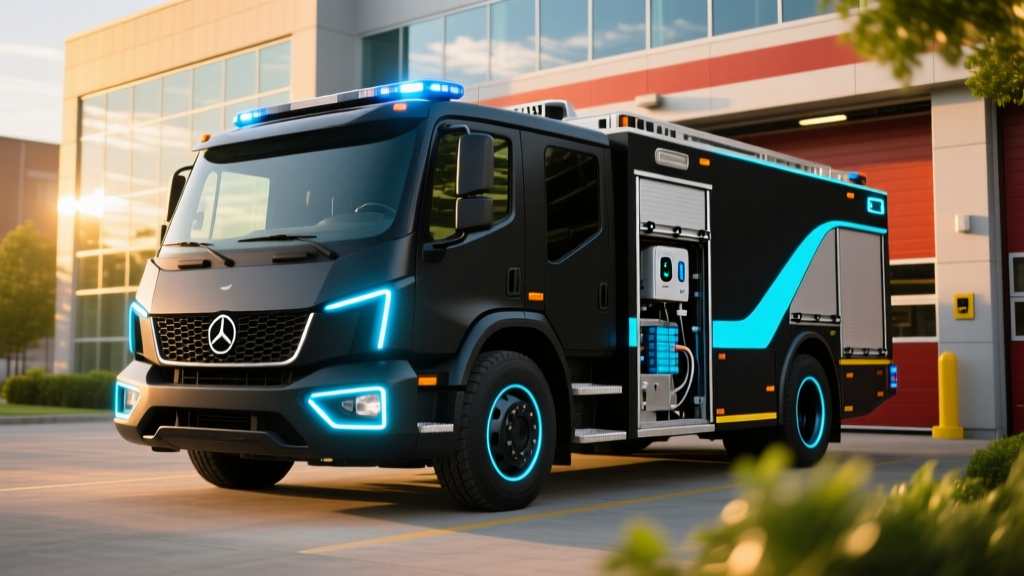
While Tesla sits out, purpose-built electric fire apparatus is very real. Here are the leading platforms fire departments are actually procuring:
| Manufacturer | Model | Type | Battery (kWh) | Estimated Range | Status |
|---|---|---|---|---|---|
| Rosenbauer | RT (Revolutionary Technology) | Pumper / Quint | ~100 kWh (drive) + range extender | ~60 mi electric-only | In production, multiple US deliveries |
| Pierce (Oshkosh) | Volterra™ | Pumper | ~200 kWh configurable | ~75–100 mi electric | Production since 2024 |
| E-One | eOne Typhoon | Pumper | ~150 kWh | ~80 mi | Limited production |
| REV Fire Group | Electric Pumper Platform | Custom pumper | Varies by spec | ~60–90 mi | Build-to-order |
These trucks pair large lithium-ion packs (typically NMC chemistry for energy density) with diesel range extenders or shore-power station charging. Most departments specify them for the 90% of calls that are EMS, false alarms, and minor incidents — where the truck can operate electric-only and return to the station to plug in, reserving diesel for extended fireground operations.
Closest Tesla Option: Cybertruck as Fire Department Utility Vehicle
The closest any Tesla product comes to fire-service utility is the Cybertruck AWD, which some rural and wildland-adjacent departments have evaluated as a brush-response or logistics vehicle. Below are the 2026 Cybertruck specs relevant to fleet buyers considering it for non-suppression roles.
| EPA Range | 340 miles (AWD Long Range) |
|---|---|
| Battery | ~123 kWh usable, NMC chemistry |
| Max DC Fast Charge | 250 kW peak (V3 Supercharger) |
| 10–80% DC Charge Time | ~28 minutes (with preconditioning) |
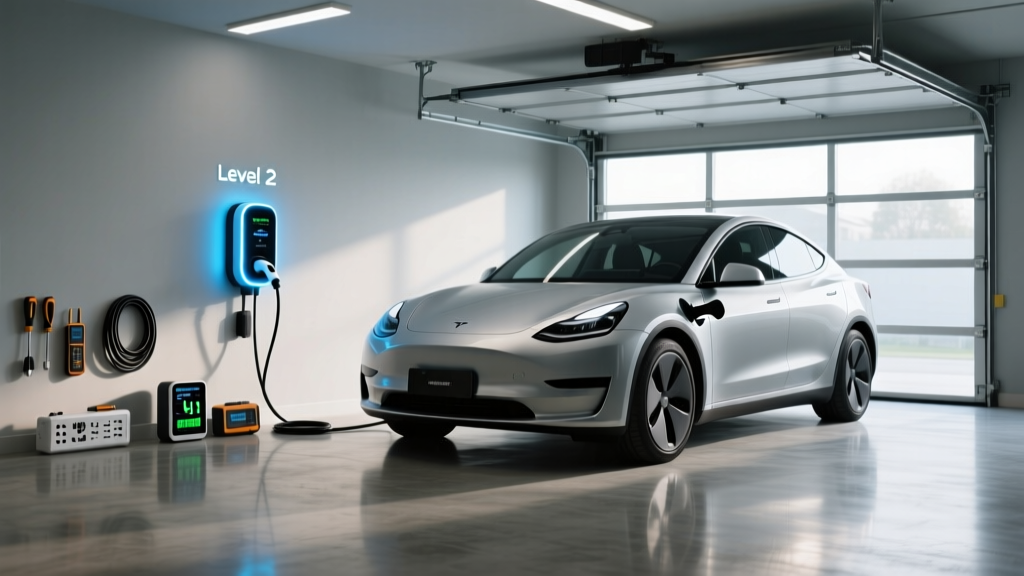
| Level 2 Home Charging | 11.5 kW / ~34 mi/hr (48A Wall Connector) |
| 0–60 mph | 3.9 seconds (AWD) |
| Horsepower | 600 hp (dual-motor AWD) |
| Towing Capacity | 7,500 lb (est. fleet config) |
| Bed Volume | ~67 cu ft (vault bed) |
| Efficiency | ~56 MPGe / ~60 kWh/100 mi |
| Base MSRP | $79,990 (AWD Long Range) |
| Battery Warranty | 8 years / 120,000 miles |
Charging Speed: DC Fast, Level 2, and Fleet Depot Reality
For a fire department considering the Cybertruck as a utility vehicle, charging infrastructure is the make-or-break factor. Here's what charging looks like across levels:
| Level | Power (kW) | Miles Added per Hour | Typical Use Case |
|---|---|---|---|
| Level 1 (120V) | 1.4 kW | ~3–4 mi/hr | Emergency trickle only |
| Level 2 (240V, 48A) | 11.5 kW | ~34 mi/hr | |
| DC Fast (V3 Supercharger) | 250 kW peak | ~13 mi/min at peak |
A critical note on the charging curve: The Cybertruck hits 250 kW only between roughly 10–30% state of charge (SoC). Above 50%, the rate tapers significantly, and above 80% it drops below 40 kW. This is standard lithium-ion behavior to protect the NMC cells from heat damage. Fleet managers planning depot charging should spec Level 2 chargers for overnight top-ups and rely on Superchargers only for mid-shift rapid replenishment.
For a department installing depot charging, expect $3,000–$8,000 per Level 2 station (charger + electrician + permit), with possible panel upgrades adding $2,000–$5,000 if the station's service is near capacity. Always have a licensed electrician assess the facility's 200A vs 400A service before committing.
Pricing, Tax Credits, and Fleet Procurement
| Base MSRP (AWD Long Range) | $79,990 |
|---|---|
| As-Tested (Fleet w/ tow, armor) | ~$89,000–$95,000 |
| Federal §30D Tax Credit | Up to $7,500 (if eligible) |
| Effective Price After Credit | ~$72,490 (if eligible) |
Tax credit caveats for fleet buyers: The IRS §30D credit has strict eligibility rules that frequently change. As of 2026, the credit requires:
- MSRP cap: Trucks/SUVs must be under $80,000 MSRP to qualify. The Cybertruck AWD at $79,990 squeaks under this threshold, but adding options that push MSRP above $80,000 eliminates eligibility.
- Buyer income cap: Adjusted gross income must not exceed $150,000 (single) or $300,000 (joint) for individual purchases. Municipal/government fleet purchases follow different rules under §45W (commercial clean vehicle credit).
- Battery sourcing: Critical minerals and battery components must meet escalating domestic-content thresholds. Tesla's battery supply chain has been evolving — confirm current-year compliance on IRS.gov's eligible vehicle list before procurement.
- Point-of-sale transfer: Buyers can now transfer the credit to the dealer at purchase, reducing the upfront price rather than waiting for tax filing.
For municipal fire departments, the §45W commercial clean vehicle credit may be more relevant — it offers up to $40,000 for vehicles over 14,000 lb GVWR, though the Cybertruck (at ~6,800 lb GVWR) falls below that threshold and would be limited to the $7,500 cap. Consult a tax professional and check current IRS guidance before finalizing any fleet purchase.
Tech, Driver Assists, and Fire-Service Limitations
The Cybertruck includes Tesla's standard tech suite: a 18.5-inch center touchscreen, over-the-air updates, Sentry Mode, and the available FSD (Supervised) package. However, fire-service buyers need critical context on the driver-assist systems:
Notable drawbacks for fire-service use:
- No upfitter integration program for emergency lighting, sirens, or radio systems
- Stainless exoskeleton body makes aftermarket light-bar and bumper mounting difficult
- No NFPA compliance or fire-apparatus certification available
- Ground clearance and approach angles are adequate for paved urban response but limited for wildland/brush use compared to dedicated Type 6 brush trucks
- Bed volume (67 cu ft) is insufficient for hose loads, SCBA, or rescue tools
Pros and Cons: Cybertruck as Fire Department Utility
- 340-mile EPA range covers most daily response patterns
- 250 kW DC fast charging enables mid-shift replenishment
- 600 hp and AWD provide rapid emergency response acceleration
- Low operating cost vs. gas/diesel pickups (~$0.06/mi electricity vs $0.25+/mi fuel)
- Frunk + bed offers flexible cargo for EMS bags and investigation gear
- OTA updates continuously improve vehicle software
- Not a fire engine — zero suppression, pump, or tank capability
- No NFPA 1901/1906 certification or apparatus upfitter support
- $80K+ price exceeds most light-utility fleet budgets
- Cold-weather range loss significant in northern climates
- FSD (Supervised) is Level 2 only — no autonomous response driving
- Repair turnaround times at Tesla service centers can exceed 2–4 weeks
Who Should Buy This — And Who Should Look Elsewhere
Choose the Cybertruck (or Tesla fleet vehicle) if: You're a fire chief, EMS captain, or fire inspector needing a fast, zero-emission response vehicle for non-suppression duties — run cars, investigations, community paramedicine, and administrative runs. The range, acceleration, and low per-mile cost make it viable for these roles where departments already have dedicated apparatus for fire calls.
Choose a purpose-built electric fire apparatus (Rosenbauer RT, Pierce Volterra) if: You need an actual fire engine with pump-and-roll capability, water tank, hose storage, SCBA mounting, and NFPA compliance. These vehicles cost $800,000–$1.5M+ but are engineered for the fireground.
Stick with diesel apparatus if: Your department operates in extreme cold climates, covers rural areas with no charging infrastructure, or requires unlimited run-time during multi-hour fireground operations where battery depletion is unacceptable.
Frequently Asked Questions
Does Tesla make a fire truck?
No. Tesla does not manufacture any fire truck, fire engine, or emergency apparatus. Tesla makes consumer and light-commercial vehicles (Model 3, Model Y, Model S, Model X, Cybertruck) that some departments use as response cars or administrative vehicles, but none are designed or certified for fire suppression.
What is the real-world range of the Cybertruck AWD?
The EPA rates the 2026 Cybertruck AWD Long Range at 340 miles. Real-world highway driving at 70 mph yields roughly 270–290 miles. In cold weather (below freezing), expect 220–250 miles. Towing reduces range by approximately 40–50%.
How fast does the Cybertruck charge at DC fast chargers and at home?
At a V3 Supercharger, the Cybertruck peaks at 250 kW and charges from 10–80% in approximately 28 minutes (with battery preconditioning enabled). On a Level 2 home or depot charger at 11.5 kW (48A), it adds about 34 miles of range per hour, requiring roughly 10–12 hours for a full charge from empty.
Does the Cybertruck qualify for the federal EV tax credit?
Potentially — but with strict conditions. The 2026 §30D credit offers up to $7,500 if the vehicle MSRP stays under $80,000 (trucks), buyer income is within IRS caps ($150K single / $300K joint), and battery sourcing meets current-year critical-mineral and component thresholds. Fleet/municipal buyers may qualify under §45W instead. Always verify current eligibility on IRS.gov and consult a tax professional.
Is the Cybertruck worth buying vs. a Ford F-150 Lightning for fire department use?
For fleet utility roles, the F-150 Lightning offers more established upfitter support, a larger bed (52.8 cu ft enclosed + front trunk), Pro Power Onboard for running scene lighting, and a lower starting price (~$55,000 for base). The Cybertruck wins on range (340 vs 320 mi), acceleration, and stainless durability, but loses on upfitter ecosystem and service network accessibility. Most departments will find the Lightning easier to integrate into existing fleet operations.
What are the biggest pros and cons of using a Tesla vehicle for fire service?
Pros: low operating cost, strong acceleration for response, zero tailpipe emissions at the station, long range, and continuous software improvements. Cons: no fire-apparatus capability, no NFPA certification, limited upfitter support, high purchase price, cold-weather range loss, and potential service delays. Tesla vehicles work as run cars and admin vehicles — not as fire trucks.
What electric fire trucks can departments actually buy in 2026?
Departments can order the Rosenbauer RT, Pierce Volterra, and E-One eOne Typhoon — all purpose-built electric or hybrid-electric fire apparatus with pump systems, water tanks, and NFPA compliance. Pricing typically ranges from $800,000 to $1.5 million depending on configuration. These are built by established fire apparatus manufacturers on heavy-duty commercial chassis, not by Tesla.
Sources: EPA range and efficiency data from fueleconomy.gov; IRS §30D and §45W credit rules from IRS.gov; Tesla Cybertruck specifications from Tesla's official specifications page.