Reports of a fire in Tesla vehicles tend to dominate headlines, but how does the real-world data stack up against public perception? As of early 2026, Tesla's lineup — the Model 3, Model Y, Model S, and Model X — continues to rank among the safest vehicles on the road according to both NHTSA and IIHS. Yet lithium-ion battery fires remain a legitimate concern that every current and prospective owner should understand with data, not fear.
This article digs into the actual fire statistics, the battery chemistries Tesla uses (and why they matter), what triggers thermal events, and practical steps to minimize risk — alongside a full review of the current Tesla fleet's specs, pricing, and ownership profile for 2026.
Tesla Fire Statistics: What the Data Actually Shows
Tesla publishes quarterly safety data in its Impact Report, and the numbers consistently show that EV fires are dramatically rarer than internal-combustion vehicle fires per mile driven. According to Tesla's 2024–2025 Impact Report data, the company recorded approximately one vehicle fire for every 130+ million miles traveled, compared to the U.S. national average of roughly one fire per 19 million miles for all vehicles (per NFPA and DOT data).
However, EV battery fires differ fundamentally from gas-vehicle fires in important ways:
- Severity: Lithium-ion thermal runaway events burn hotter (up to 2,000°F+), are harder to extinguish, and can reignite hours or days after the initial event.
- Suppression difficulty: Fire departments typically require 3,000–6,000+ gallons of water to cool a battery pack in thermal runaway, versus 300–500 gallons for an ICE vehicle fire.
- Stranded-energy risk: Even a "fully extinguished" battery pack can re-ignite if internal cell damage allows short-circuits to propagate.
NHTSA has investigated multiple Tesla fire incidents, particularly following high-speed crashes and undercarriage impacts. The agency has also tracked recall campaigns related to battery management system software and 12V battery issues that could indirectly contribute to thermal events.
Current Tesla Lineup: 2026 Specs and Safety Profile
Understanding fire risk means understanding what's under the floor. Here's a spec-by-spec breakdown of the 2026 Tesla models, including battery chemistry — a critical fire-safety variable.
| Spec | Model 3 (Long Range) | Model Y (Long Range) | Model S (Plaid) | Model X (Plaid) |
|---|---|---|---|---|
| EPA Range | 363 mi | 320 mi | 396 mi | 326 mi |
| Battery Capacity | ~79 kWh | ~79 kWh | ~100 kWh | ~100 kWh |
| Battery Chemistry | NMC (LG) | NMC (LG) | NMC (Panasonic) | NMC (Panasonic) |
| Drivetrain | Dual Motor AWD | Dual Motor AWD | Tri-Motor AWD | Tri-Motor AWD |
| Horsepower | ~384 hp | ~384 hp | 1,020 hp | 1,020 hp |
| 0-60 mph | 4.2 sec | 4.8 sec | 1.99 sec | 2.5 sec |
| Max DC Charge Rate | 250 kW | 250 kW | 250 kW | 250 kW |
| 10-80% DC Time | ~25 min | ~27 min | ~30 min | ~31 min |
| Level 2 Home Rate | 11.5 kW (~44 mi/hr) | 11.5 kW (~44 mi/hr) | 11.5 kW (~34 mi/hr) | 11.5 kW (~34 mi/hr) |
| MPGe (Combined) | 132 MPGe | 122 MPGe | 120 MPGe | 102 MPGe |
| Base MSRP | $42,630 | $44,630 | $89,990 | $94,990 |
| Battery Warranty | 8 yr / 120,000 mi | 8 yr / 120,000 mi | 8 yr / 150,000 mi | 8 yr / 150,000 mi |
Battery Chemistry and Fire Risk: LFP vs. NMC
This is where the fire in Tesla conversation gets technical — and where your trim choice matters. Tesla uses two primary lithium-ion chemistries across its fleet:
| Factor | NMC (Nickel Manganese Cobalt) | LFP (Lithium Iron Phosphate) |
|---|---|---|
| Thermal Runaway Onset | ~210°C (410°F) | ~270°C (518°F) |
| Oxygen Release During Failure | Yes — feeds fire internally | Minimal — more stable |
| Energy Density | Higher (more range per kg) | Lower (heavier pack) |
| Used In | Long Range, Performance, Model S/X | Standard Range / RWD Model 3/Y |
| Fire Propagation Risk | Higher if cell damage occurs | Lower — inherently safer chemistry |
| Cycle Life | ~1,500–2,000 cycles | ~3,000+ cycles |
If fire risk is a primary concern, the RWD Standard Range versions of the Model 3 and Model Y (equipped with LFP cells from CATL) offer inherently more stable chemistry. The trade-off: lower range (272 mi EPA for Model 3 RWD) and no DC fast-charge preconditioning optimization at the same speeds as the NMC Long Range variants.
Tesla's battery pack engineering includes firewalls between cell modules, venting systems to direct hot gases away from the cabin, and a Battery Management System (BMS) that monitors voltage, temperature, and current at the individual cell level. However, no engineering solution fully eliminates risk from severe crash intrusion into the pack.
Charging, Ownership, and Tax Credit Eligibility
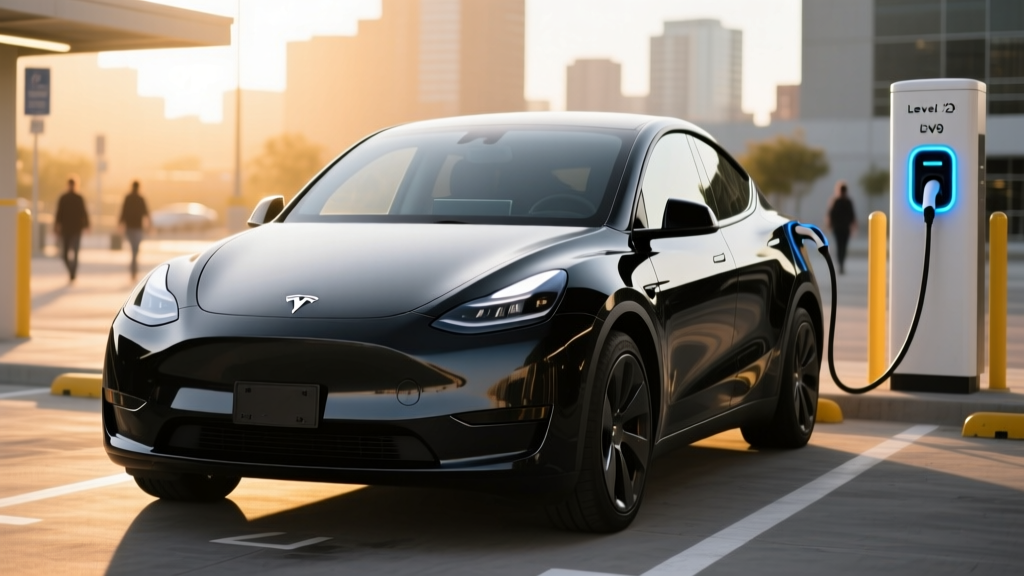
Charging a Tesla at home or on the road does not increase fire risk under normal conditions. The BMS carefully manages charge rates, cell balancing, and thermal regulation. That said, owners should be aware of the following:
- Supercharger network: Tesla's Superchargers peak at 250 kW (V3 stalls), with 10-80% sessions in approximately 25–31 minutes depending on the model. Charge speed tapers significantly above 80% — plan to unplug around 80–90% on road trips for optimal time efficiency.
- Home Level 2: Using a Tesla Wall Connector on a 60-amp circuit delivers up to 11.5 kW (44 miles of range per hour on the Model 3). Installation typically costs $800–$2,000 depending on panel proximity and local permitting. A panel upgrade to 200A may add $1,500–$3,000.
- Level 1 (120V): Adds roughly 3–5 miles per hour — adequate only for low-mileage commuters or overnight top-ups.
Federal Tax Credit (§30D) Eligibility — 2026 Rules
As of 2026, the IRS §30D federal tax credit provides up to $7,500 for qualifying new EVs, but strict rules apply:
- MSRP cap: Sedans (Model 3, Model S) must be under $55,000. SUVs/trucks (Model Y, Model X) must be under $80,000.
- Buyer income cap: AGI must not exceed $300,000 (married filing jointly), $225,000 (head of household), or $150,000 (single).
- Battery sourcing: Critical minerals and battery components must meet escalating domestic/free-trade-partner sourcing thresholds — these tighten annually.
- Point-of-sale transfer: Buyers can transfer the credit to the dealer for an immediate price reduction at purchase.
| Model | Base MSRP | Est. After $7,500 Credit | Qualifies? |
|---|---|---|---|
| Model 3 RWD | $38,990 | ~$31,490 | Yes (under $55K cap) |
| Model 3 Long Range | $42,630 | ~$35,130 | Yes (under $55K cap) |
| Model Y Long Range | $44,630 | ~$37,130 | Yes (under $80K SUV cap) |
| Model S | $89,990 | $89,990 | No (exceeds $55K sedan cap) |
| Model X | $94,990 | $94,990 | No (exceeds $80K SUV cap) |
Note: Battery sourcing requirements may disqualify specific trims or production batches. Always verify eligibility at fueleconomy.gov before purchasing.
What Causes Tesla Fires? Known Triggers and Recalls
Documented Tesla fire incidents generally fall into distinct categories:
- High-speed crash intrusion: When a collision deforms the battery pack structure, internal short circuits can trigger thermal runaway. This is the most common fire scenario and is not unique to Tesla — any EV with a floor-mounted pack faces similar risk.
- Undercarriage impact: Running over road debris or striking a curb at speed can puncture the pack's titanium/carbon-fiber skid plate. Tesla added enhanced underbody shielding after early Model S fires in 2013–2014.
- Manufacturing defects: Isolated incidents involving poor cell welds, module connector issues, or coolant leaks into the pack have prompted NHTSA investigations and recalls.
- Charging-related events: Extremely rare. Tesla's BMS and Supercharger hardware include redundant thermal and voltage cutoffs. Home charging fires are more often linked to improper wiring or damaged connectors than to the vehicle itself.
- 12V system failures: A failing 12V battery can cause erratic BMS behavior. Tesla's switch to lithium-ion 12V batteries in newer models has improved reliability but introduced new recall campaigns.
NHTSA's recall database (nhtsa.gov/recalls) is the best resource for checking whether a specific VIN has open recall campaigns. Enter any Tesla VIN to verify status before purchasing used.
Pros, Cons, and the Verdict
Pros
- Fire incidence rate far below ICE vehicles per mile driven
- Industry-leading Supercharger network reliability (17,000+ stalls in North America)
- Over-the-air updates continuously improve BMS and safety systems
- Model 3 and Model Y qualify for up to $7,500 federal credit
- Strong IIHS Top Safety Pick+ ratings across the lineup
- LFP option on RWD trims offers superior thermal stability
Cons
- When fires do occur, they are severe and difficult to suppress
- NMC packs (Long Range/Performance) carry higher thermal runaway risk than LFP
- Model S and Model X do not qualify for the federal tax credit
- Repair costs after battery damage can exceed $20,000
- Insurance premiums are 15–30% higher than comparable ICE vehicles
- Service center wait times remain a pain point in many metro areas
Who Should Buy a Tesla — and Who Should Look Elsewhere?
Choose Tesla if: You want the most mature public charging ecosystem, strong software integration, and you can charge at home. The Model 3 and Model Y remain the best-value EVs in their segments when the $7,500 credit applies. If fire risk weighs heavily on your decision, opt for the LFP-equipped RWD trims.
Look elsewhere if: You need a sub-$35K price point (even after credits), you want a truck or 3-row SUV, or you prefer dealer-based service. Competitors like the Hyundai Ioniq 5, Kia EV6, and Ford Mustang Mach-E offer comparable range with CCS/NACS charging access to the growing combined network.
- Lowest fire risk → Model 3/Y RWD (LFP chemistry)
- Best range + acceptable risk → Model 3/Y Long Range (NMC)
- Performance priority → Model S/X Plaid (NMC, higher energy density pack)
- Budget priority → Used Model 3 RWD (verify VIN for recalls, check battery SoH)
Frequently Asked Questions
How common is a fire in a Tesla compared to gas cars?
Based on Tesla's published Impact Report data and NFPA statistics, Tesla vehicles experience roughly 1 fire per 130+ million miles traveled, compared to approximately 1 fire per 19 million miles for all U.S. vehicles. EV fires are significantly rarer but tend to be more severe when they occur.
Does the Tesla battery catch fire while charging?
Charging-related fires are extremely rare. Tesla's Battery Management System monitors cell voltage, temperature, and current in real time during every charge session. Most home charging fire incidents trace to faulty wiring, damaged outlets, or aftermarket equipment — not the vehicle itself. Always have a licensed electrician install your Level 2 charger.
What should I do if my Tesla is involved in a crash?
Exit the vehicle immediately if safe to do so. Inform first responders that the vehicle is an EV — battery fires may require specialized suppression. Even if no fire is visible, have the vehicle towed to a Tesla Service Center for battery inspection. Thermal runaway can begin hours after impact damage.
Is LFP really safer than NMC?
Yes, from a thermal stability standpoint. LFP cells have a higher thermal runaway onset temperature (~270°C vs. ~210°C) and do not release oxygen during decomposition, which means a failing LFP cell is less likely to propagate fire to adjacent cells. The trade-off is lower energy density and less range.
Does my Tesla qualify for the $7,500 federal tax credit?
The Model 3 and Model Y generally qualify for up to $7,500 under the IRS §30D rules, provided your AGI falls under the income caps ($150K single / $300K joint) and the specific vehicle's battery sourcing meets current-year thresholds. The Model S and Model X exceed the MSRP cap and do not qualify. Always confirm at fueleconomy.gov and consult a tax professional.
What is the real-world range of a Tesla?
Expect 15–25% less than the EPA sticker on highway road trips and 20–35% less in cold weather. The Model 3 Long Range (363 mi EPA) delivers roughly 275–310 miles at highway speeds in moderate weather and 240–260 miles in winter. Preconditioning the battery before driving helps recover some cold-weather loss.
Is it worth buying a Tesla vs. competitors in 2026?
Tesla still leads in charging infrastructure and software. However, the Hyundai Ioniq 5, Kia EV6, and Chevrolet Equinox EV now offer competitive range, faster peak charging speeds (up to 350 kW on 800V architectures), and lower starting prices. If Supercharger access is your priority, Tesla remains the default choice — though other brands now access Superchargers via NACS adapters.