Tesla's Fatal Accident Rate: What the Data Actually Shows
Few EV topics generate more heated debate than Tesla's safety record. Search forums, social media, or news outlets and you'll find polarized claims — some insisting Tesla vehicles are the safest on the road, others pointing to high-profile Autopilot-related crashes. So what does the actual data say about the Tesla fatal accident rate, and how should it factor into your purchase decision for a vehicle like the 2026 Model Y?
Tesla publishes a quarterly Vehicle Safety Report claiming roughly one crash per 4+ million miles driven with Autopilot engaged, versus the U.S. average of approximately one crash per 670,000 miles (NHTSA data). However, these figures require scrutiny: Tesla's data includes all severity levels (not just fatalities), mixes highway and city driving contexts, and relies on self-reporting methodology that independent researchers have questioned.
More reliable context comes from the Insurance Institute for Highway Safety (IIHS) and NHTSA crash-test ratings. The 2026 Model Y earned IIHS Top Safety Pick+ status (when equipped with specific headlights) and a 5-Star Overall NHTSA rating. These controlled crash-test results reflect passive safety engineering — crumple zones, battery-pack structural rigidity, airbag coverage — and Tesla performs exceptionally well here.
For fatal accident rates specifically, NHTSA's FARS (Fatality Analysis Reporting System) data does not break out fatality rates per manufacturer per vehicle-miles-traveled in a publicly accessible, real-time format. Third-party analyses from the IIHS on partial automation systems have found that driver-assist features like Autopilot do not yet show a statistically significant reduction in fatal crashes compared to conventional vehicles when controlling for driver demographics and road types.
Tesla's Autopilot and Full Self-Driving (Supervised) are SAE Level 2 driver-assistance systems. The driver must remain fully engaged, hands on or near the wheel, and eyes on the road at all times. These systems do not make the vehicle autonomous. Only Level 4 services like Waymo operate without a human driver.
2026 Tesla Model Y: Range, Battery, and Efficiency
The 2026 Model Y Long Range AWD remains Tesla's highest-volume seller for good reason: it threads the needle between range, utility, and price. Here's what the numbers look like for the current model year.
| Spec | 2026 Model Y Long Range AWD | 2026 Model Y Performance |
|---|---|---|
| EPA Range | 320 miles | 295 miles |
| Battery (usable) | ~75 kWh (NMC) | ~75 kWh (NMC) |
| EPA Efficiency | 120 MPGe / 28 kWh/100mi | 111 MPGe / 30 kWh/100mi |
| 0-60 mph | 4.8 sec | 3.5 sec |
| Horsepower | 384 hp | 456 hp |
| Drivetrain | Dual-Motor AWD | Dual-Motor AWD |
| Base MSRP | $44,990 | $49,990 |
The EPA rates the Model Y Long Range at 320 miles. In real-world driving, expect:
- City/commute (mild weather): 300–320 mi — regenerative braking recovers energy in stop-and-go traffic
- Highway at 70-75 mph: 250–280 mi — aerodynamic drag dominates at sustained speed
- Cold weather (below 32°F): 210–250 mi — battery chemistry slows, cabin heating draws significant power (no heat pump penalty on 2026 models, as Tesla includes a standard heat pump)
- Towing (with hitch): 150–180 mi — towing up to 3,500 lbs roughly halves range
Preconditioning the battery before fast charging or departure recovers some of these losses.
The Model Y continues to use NMC (nickel manganese cobalt) chemistry in its Long Range and Performance trunks, which offers higher energy density than LFP (lithium iron phosphate). Tesla's base RWD variant uses LFP chemistry — which allows 100% daily charging without degradation concern — but sacrifices roughly 30 miles of range and adds weight. For buyers prioritizing maximum range and cold-weather performance, the NMC Long Range remains the better pick, though you should charge to 80% daily and only use 100% for longer trips.
Charging Speed: DC Fast Charge and Home Level 2
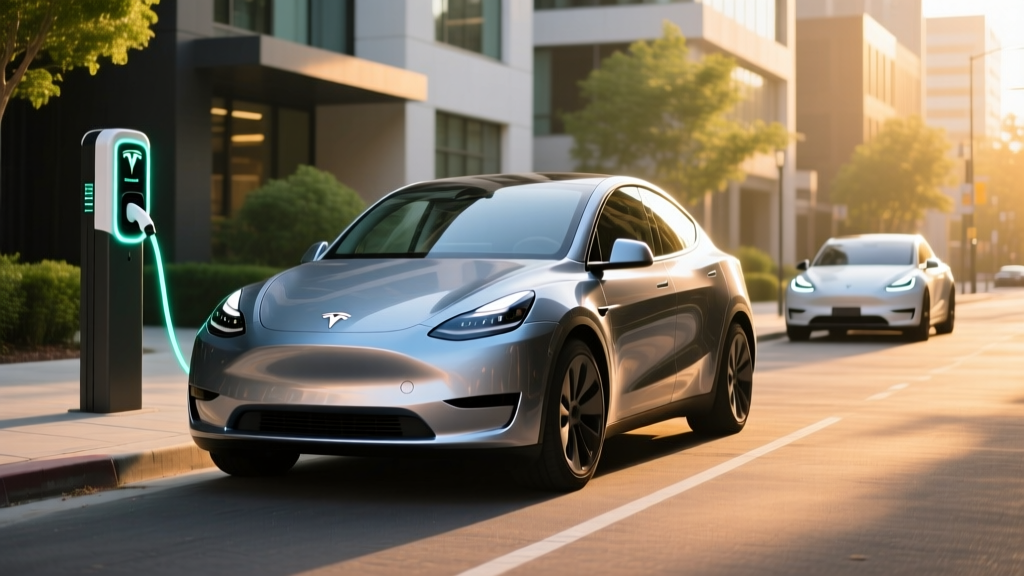
Charging speed is where the refreshed Model Y architecture shows its maturity. Tesla's V4 Supercharger compatibility and the vehicle's thermal management system deliver strong sustained charging rates — not just a brief peak number.
| Charging Level | Max Power (kW) | Speed / Time | Notes |
|---|---|---|---|
| Level 1 (120V) | 1.4 kW | ~3–4 mi/hr | Emergency/trickle only |
| Level 2 (240V/48A) | 11.5 kW | ~34 mi/hr | Full overnight charge in ~8 hrs |
| DC Fast (Supercharger V3/V4) | 250 kW peak | 10–80% in ~22 min | Tapers above 60%; precondition battery |
| DC Fast (CCS adapter, non-Tesla) | ~170 kW typical | 10–80% in ~30 min | Varies by network (EA, EVgo) |
The 250 kW peak rate is sustained between roughly 10% and 45% state of charge (SoC), after which the charge curve tapers progressively. By 80% SoC, charging drops to approximately 60–70 kW. This is why Tesla's navigation system preconditions the battery when you route to a Supercharger — arriving with a warm battery unlocks the full charge curve. Without preconditioning (for example, arriving at a third-party DC charger without navigation routing), expect peak rates closer to 150–170 kW even on a capable station.
At home on a Level 2 Tesla Wall Connector (48 amps / 11.5 kW), the Model Y adds roughly 34 miles of range per hour of charging. A full 0–100% charge takes approximately 8 hours — perfect for overnight top-ups. Home charging installation typically costs $800–$2,000 depending on panel proximity and whether a 200-amp service upgrade is needed.
Safety Ratings, Crash-Test Performance, and ADAS
The 2026 Model Y's passive safety credentials are outstanding. NHTSA awarded it a 5-Star Overall Rating, with 5 stars in frontal crash, side crash, and rollover categories. The IIHS named it a Top Safety Pick+ (with acceptable headlights on higher trims), earning "Good" ratings across all crashworthiness tests.
Tesla's low center of gravity — the battery pack sits beneath the floor — contributes to excellent rollover resistance and side-impact protection. The structural battery pack in newer Model Y variants further increases torsional rigidity, which helps manage crash energy.
- Does not drive the car autonomously — you are the driver at all times
- May fail to detect stationary emergency vehicles, construction zones, or unusual obstacles
- Lane changes on FSD (Supervised) require driver confirmation and monitoring
- Performance degrades in heavy rain, fog, snow, or poorly marked roads
- NHTSA has investigated multiple Autopilot-related incidents — always remain alert
Tesla's standard Autopilot includes Traffic-Aware Cruise Control and Autosteer (lane centering). The optional FSD (Supervised) package ($8,000 or $99/month) adds automatic lane changes, traffic light and stop sign recognition, and city-street navigation assistance. While FSD has improved substantially, it remains a Level 2 system requiring constant driver supervision. NHTSA's Standing General Order requires Tesla and other manufacturers to report crashes involving Level 2+ systems, and this data has shown that a significant number of reported incidents involve Tesla vehicles — though this partly reflects Tesla's market share and reporting compliance rather than a higher per-mile incident rate.
Pricing, Tax Credit Eligibility, and Trim Breakdown
| Trim | MSRP | Est. After §30D Credit | Credit Eligibility |
|---|---|---|---|
| RWD (LFP) | $39,990 | ~$32,490* | Likely $7,500 — meets MSRP + sourcing thresholds |
| Long Range AWD | $44,990 | ~$37,490* | Likely $7,500 — under $80K SUV cap |
| Performance | $49,990 | ~$42,490* | Likely $7,500 — under $80K SUV cap |
*Federal §30D tax credit eligibility depends on multiple factors that change regularly. As of 2026, the IRS clean vehicle credit requires:
- MSRP cap: Vehicle must be under $80,000 for SUVs/vans/pickups (Model Y qualifies as an SUV)
- Buyer income cap: AGI must not exceed $150,000 (single), $225,000 (head of household), or $300,000 (joint)
- Battery sourcing: Critical minerals and battery components must meet increasing domestic/free-trade-agreement thresholds — Tesla's North American supply chain generally satisfies current requirements, but verify at purchase
- Point-of-sale transfer: You can transfer the credit to the dealer at purchase, reducing your out-of-pocket cost immediately rather than waiting for tax filing
- VIN verification: Confirm eligibility on fueleconomy.gov before purchasing — battery sourcing rules can shift mid-year
Always consult a tax professional to confirm your personal eligibility. State and local incentives (California's CVRP, Colorado's state credit, utility rebates) may stack on top of the federal credit.
Interior, Cargo, Tech, and Daily Ownership
The 2026 Model Y interior follows Tesla's minimalist philosophy: a single 15.4-inch center touchscreen handles virtually all vehicle controls, navigation, media, and climate functions. There is no traditional instrument cluster — speed and driving information display on the upper-left corner of the center screen (a design choice that some drivers find requires an adjustment period).
Cargo and passenger dimensions:
- Cargo (rear seats up): 30.2 cu ft
- Cargo (rear seats folded): 72.1 cu ft
- Front trunk (frunk): 4.1 cu ft — useful for charging cables and small bags
- Rear legroom: 41.6 inches — generous for adults on longer trips
- Seating: 5-passenger standard; 7-seat option available (third row is best suited for small children)
Notable tech features include Tesla's over-the-air (OTA) update system — which regularly adds features and refines existing ones without a dealer visit — Sentry Mode (360-degree parking surveillance), Dashcam, and the Tesla app's remote climate control, location tracking, and charging management. The 2026 refresh added ventilated front seats, ambient lighting, and a rear-seat entertainment screen as standard on Long Range and Performance trims.
Drawbacks worth noting: the absence of physical buttons for climate and wipers frustrates some drivers; the panoramic glass roof can create significant cabin heat in direct summer sun (tinting or a sunshade is recommended); and Tesla's service center network, while growing, still has coverage gaps in rural areas compared to legacy automakers.
Warranty Coverage
Tesla's warranty package for the 2026 Model Y:
- Basic vehicle: 4 years / 50,000 miles
- Battery & drive unit: 8 years / 120,000 miles (Long Range/Performance), with a minimum 70% capacity retention guarantee
- Roadside assistance: 4 years / 50,000 miles
The 70% battery capacity retention threshold over 8 years is industry-standard. Real-world data from high-mileage Tesla owners suggests NMC packs typically retain 85–90% capacity at 100,000 miles when charged primarily to 80% on Level 2. LFP packs in the RWD variant show even slower degradation and can be charged to 100% regularly without concern.
Pros, Cons, and Verdict
Pros
- Class-leading Supercharger network access (17,000+ stalls in North America)
- Top Safety Pick+ / 5-Star NHTSA crashworthiness
- Strong real-world efficiency (28 kWh/100mi) reduces per-mile cost
- OTA updates continuously improve the vehicle post-purchase
- Spacious cargo area with frunk utility
- Excellent 0-60 performance even in Long Range trim
Cons
- No physical controls — everything through the touchscreen
- FSD (Supervised) is expensive ($8K) and still Level 2, not autonomous
- Service center availability lags in some regions
- Glass roof heat management requires aftermarket tinting or shade
- NMC battery requires 80% daily charge limit discipline
- Insurance premiums often 15–30% higher than comparable ICE SUVs
Who Should Buy the 2026 Model Y?
Choose the Model Y if:
- You have access to home Level 2 charging and want a daily-driver EV SUV
- Road trips are common — Tesla's Supercharger network remains the most reliable DC fast-charging option
- You value top crash-test ratings and a strong passive safety structure
- You want OTA software updates that add features over time
Consider competitors (Hyundai Ioniq 5, Ford Mustang Mach-E, Chevrolet Equinox EV) if:
- You prefer physical buttons and a more traditional interior layout
- You want to buy from a brand with a larger local dealer/service network
- You want CCS-native charging without relying on Tesla's network (though NACS adoption is spreading)
- Insurance costs in your area are prohibitive for Tesla vehicles
The Tesla fatal accident rate conversation ultimately comes down to distinguishing passive safety (where Tesla excels) from active driver-assist system reliability (where the data is still evolving and driver behavior is the dominant factor). The 2026 Model Y is one of the safest vehicles you can buy based on crash-test engineering. Its driver-assist systems are capable but require your full attention — treat them as convenience aids, not autonomy.
Frequently Asked Questions
What is the real-world range of the 2026 Tesla Model Y?
The EPA rates the Long Range AWD at 320 miles. Real-world highway driving at 70+ mph typically yields 250–280 miles. In cold weather (below freezing), expect 210–250 miles. City driving with regenerative braking can approach the EPA figure in mild conditions.
How fast does the Model Y charge at home and on road trips?
On a home Level 2 charger (11.5 kW / 48A), the Model Y adds ~34 miles of range per hour, fully charging overnight in about 8 hours. On a Tesla V3/V4 Supercharger (250 kW peak), a 10–80% charge takes approximately 22 minutes with battery preconditioning. Charging slows significantly above 80% SoC.
Does the 2026 Model Y qualify for the $7,500 federal EV tax credit?
The Model Y (all trims) is under the $80,000 MSRP cap for SUVs and Tesla's battery sourcing generally meets current §30D critical-mineral and component requirements. However, buyer income caps ($150K single / $300K joint) apply, and sourcing rules can change. Verify on fueleconomy.gov and consult a tax professional before purchasing.
Is the Tesla Model Y safer than competitors like the Hyundai Ioniq 5 or Ford Mach-E?
All three vehicles earned 5-Star NHTSA ratings and strong IIHS scores. The Model Y's low center of gravity and structural battery pack give it excellent crashworthiness. Differences in real-world fatality rates between these specific models are not statistically distinguishable in current public data — driver behavior, road conditions, and mileage mix are larger factors than vehicle brand.
What is Tesla's fatal accident rate compared to other brands?
Tesla does not publish independently verified fatality-per-billion-miles data. NHTSA's FARS database tracks fatalities but does not provide real-time per-manufacturer rates normalized by vehicle-miles-traveled. Tesla's quarterly safety report mixes all crash severities and driving conditions, making direct comparison to NHTSA's national averages unreliable. IIHS research on partial automation has not found statistically significant fatality reductions for Level 2 systems across any brand.
Is FSD (Supervised) worth the $8,000 cost?
FSD (Supervised) reduces driver fatigue on long highway trips and handles some city-street scenarios, but it remains a Level 2 system requiring constant attention. Most reviewers and owners find it impressive but not a substitute for an alert driver. Consider it a convenience feature, not a safety or autonomy upgrade. The $99/month subscription option allows you to try it before committing to the full purchase.