Acceleration defines the Tesla brand as much as its Supercharger network. But when buyers search for the Tesla 0-60 fastest model, the answer depends on whether they care about raw launch numbers, real-world usability, or total cost of ownership. Below, we rank every current-production Tesla by verified 0-60 mph times and pair each with the range, charging, pricing, and ownership data that actually matters once the launch-control bragging rights fade.
Every Current Tesla Ranked by 0-60 mph Time
Tesla's 2026 lineup spans five nameplates across sedans, SUVs, and a pickup. Performance trims push into hypercar territory, while base models still out-accelerate most gas-powered competitors. Here is the complete acceleration hierarchy with the powertrain specs that make it possible.
| Model & Trim | 0-60 mph | Horsepower | Drivetrain | EPA Range | Battery (kWh / Chemistry) | Base MSRP |
|---|---|---|---|---|---|---|
| Model S Plaid | 1.99 s | 1,020 hp | Tri-Motor AWD | 359 mi | ~100 kWh / NMC | $89,990 |
| Model 3 Performance | 2.9 s | 510 hp | Dual-Motor AWD | 315 mi | ~79 kWh / NMC | $54,990 |
| Model X Plaid | 2.5 s | 1,020 hp | Tri-Motor AWD | 311 mi | ~100 kWh / NMC | $94,990 |
| Model Y Performance | 3.5 s | 456 hp | Dual-Motor AWD | 285 mi | ~79 kWh / NMC | $52,490 |
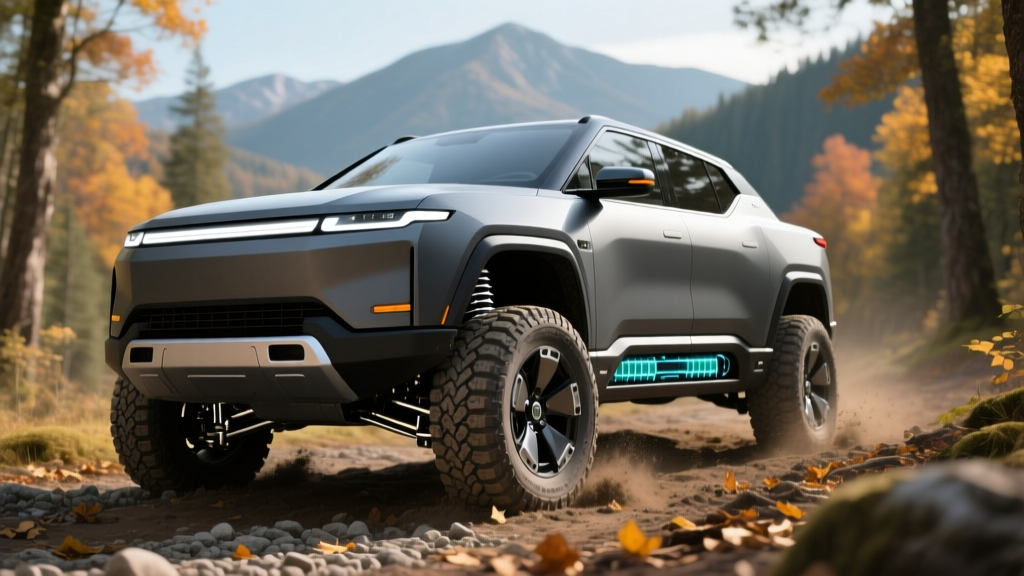
| Cyberbeast (Cybertruck) | 2.6 s | 845 hp | Tri-Motor AWD | 320 mi | ~123 kWh / NMC (est.) | $99,990 |
| Model S Long Range | 3.1 s | 670 hp | Dual-Motor AWD | 402 mi | ~100 kWh / NMC | $74,990 |
| Model 3 Long Range AWD | 4.2 s | 346 hp | Dual-Motor AWD | 363 mi | ~79 kWh / NMC | $45,240 |
| Model Y Long Range AWD | 4.8 s | 384 hp | Dual-Motor AWD | 320 mi | ~79 kWh / NMC | $47,740 |
| Model 3 RWD | 5.8 s | 271 hp | Rear-Wheel Drive | 363 mi | ~60 kWh / LFP | $38,990 |
| Cybertruck AWD | 3.9 s | 600 hp | Dual-Motor AWD | 340 mi | ~123 kWh / NMC (est.) | $79,990 |
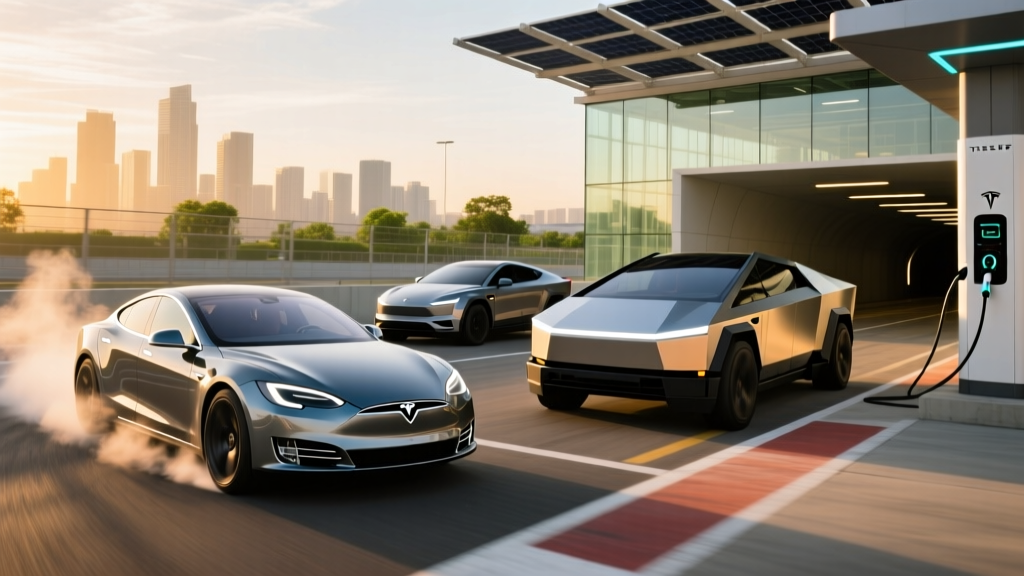
The Model S Plaid remains the undisputed king of Tesla's 0-60 times at a claimed 1.99 seconds (with rollout subtracted), making it the fastest-accelerating production Tesla and one of the quickest road-legal cars on the planet. But the Model 3 Performance at 2.9 seconds delivers supercar-level launches at roughly 40% of the Plaid's price, which is why it's the acceleration-per-dollar champion of the lineup.
Deep Dive: Model S Plaid — The Fastest Tesla You Can Buy
Since the search for the fastest Tesla 0-60 time inevitably leads here, the Model S Plaid deserves a thorough breakdown beyond its headline number.
Battery, Efficiency, and Drivetrain
The Plaid uses a ~100 kWh NMC (nickel manganese cobalt) battery pack feeding three permanent-magnet synchronous reluctance motors — one front, two rear. Tesla's carbon-sleeved rotors allow the rear motors to spin past 20,000 RPM without mechanical disintegration, which is what enables sustained 1,020 hp output rather than brief peak figures. Efficiency lands at approximately 120 MPGe combined (28 kWh/100 mi) per fueleconomy.gov, which is respectable for a 4,766-lb sedan with over 1,000 hp.
Charging Speed
| Charging Level | Power / Rate | Time or Miles Added |
|---|---|---|
| DC Fast Charge (Supercharger V4) | Peak 250 kW | 10-80% in ~27 minutes |
| DC Fast Charge (V3 Supercharger) | Peak 250 kW | 10-80% in ~27 minutes |
| Level 2 Home (Wall Connector, 48A) | 11.5 kW | ~30 miles of range per hour |
| Level 1 (120V standard outlet) | ~1.4 kW | ~3-4 miles per hour |
The Plaid's charging curve peaks at 250 kW from roughly 5-25% state of charge, then tapers progressively. Above 60% SoC, speeds drop to ~100 kW, and above 85%, expect under 50 kW. This is why Tesla recommends charging to 80% on road trips — the last 20% can take as long as the first 60%. Preconditioning the battery via the car's navigation-routed Supercharger prep is essential to hitting peak rates; arriving cold can add 10+ minutes to a session.
Interior, Cargo, and Tech
The refreshed Model S interior features a 17-inch center touchscreen, a rear-seat 8-inch display, a yoke-style steering wheel (a conventional round wheel is available at no cost), and a 22-speaker audio system. Cargo space measures 28 cu ft in the rear hatch area plus a 5.3 cu ft front trunk (frunk), totaling 33.3 cu ft — generous for a performance sedan. Rear legroom is 35.4 inches, adequate for adults on shorter trips but tighter than a Mercedes EQS.
On the tech front, the Plaid includes Tesla's basic Autopilot (lane centering, adaptive cruise) standard. Full Self-Driving (Supervised) is an $8,000 add-on or $99/month subscription. Important: FSD remains an SAE Level 2 driver-assistance system — the driver must remain fully engaged with hands on the wheel and eyes on the road at all times. It is not autonomous driving.
Pricing, Tax Credits, and Ownership Costs
Raw speed is thrilling, but the purchase decision hinges on what you actually pay after incentives and what it costs to own.
| Model | Base MSRP | Federal §30D Credit | Effective Price (if eligible) |
|---|---|---|---|
| Model S Plaid | $89,990 | $0 (exceeds MSRP cap) | $89,990 |
| Model 3 Performance | $54,990 | Up to $7,500 | ~$47,490 |
| Model X Plaid | $94,990 | $0 (exceeds MSRP cap) | $94,990 |
| Model Y Performance | $52,490 | Up to $7,500 | ~$44,990 |
| Model 3 Long Range AWD | $45,240 | Up to $7,500 | ~$37,740 |
| Model Y Long Range AWD | $47,740 | Up to $7,500 | ~$40,240 |
| Model 3 RWD | $38,990 | Up to $7,500 | ~$31,490 |
| Cyberbeast | $99,990 | $0 (exceeds MSRP cap) | $99,990 |
- MSRP Caps: Sedans (Model 3, Model S) must be under $55,000. SUVs, pickups, and vans (Model Y, Model X, Cybertruck) must be under $80,000. This disqualifies the Model S Plaid, Model X Plaid, and Cyberbeast entirely.
- Buyer Income Limits: Modified AGI must not exceed $300,000 (joint), $225,000 (head of household), or $150,000 (single).
- Battery Sourcing: The $7,500 credit splits into two halves — $3,750 for critical-minerals sourcing and $3,750 for battery-component manufacturing. Tesla's North American battery production qualifies most Model 3 and Model Y trims for the full amount, but confirm current-year eligibility at the point of sale.
Who Should Buy the Fastest Tesla — And Who Shouldn't
- Model S Plaid 1.99s 0-60 is hypercar-fast at a fraction of a Bugatti's price
- Access to Tesla's 30,000+ Supercharger network — the most reliable DC fast-charging ecosystem
- Over-the-air updates continuously add features and refine performance
- Model 3 Performance offers 2.9s acceleration under $55K (tax-credit eligible)
- Best-in-class energy efficiency across most trims
- Strong resale value relative to EV market average
- Model S/X Plaid exceed MSRP caps — no federal tax credit
- Yoke steering polarizing; learning curve for low-speed maneuvers
- No Apple CarPlay or Android Auto — Tesla's proprietary infotainment only
- Build quality inconsistency still reported (panel gaps, trim alignment)
- Insurance premiums 20-40% higher than comparable gas sedans (Plaid especially)
- FSD (Supervised) is Level 2 only — not a substitute for an attentive driver
- Cold-weather range loss is significant on all trims (15-30% reduction)
Best Use Cases by Model
- Model S Plaid: Enthusiast drivers who want the fastest Tesla 0-60 experience, have home Level 2 charging, and don't need the tax credit. Best for: performance-oriented commuters, track-day drivers, tech-forward executives.
- Model 3 Performance: The smartest acceleration-per-dollar pick. Qualifies for the $7,500 credit, fits in a standard garage, and daily-drives easily. Best for: driving enthusiasts on a sub-$55K budget, tech professionals, couples without large cargo needs.
- Model Y Performance: Family buyers who still want quick merge-and-pass acceleration. Best for: families of 3-4, those who need hatchback cargo versatility with sports-sedan snap.
- Cyberbeast: Truck buyers who want sports-car acceleration with a 11,000-lb towing rating. Best for: towing enthusiasts, off-road-capable truck buyers who prioritize straight-line speed.
- Model 3 RWD / Model Y LR: Efficiency-first commuters who don't need sub-3-second sprints. Best for: daily commuters, rideshare drivers, cost-conscious first-time EV buyers.
Warranty and Battery Longevity
Tesla covers all models with a 4-year/50,000-mile basic vehicle limited warranty. The battery and drive unit warranty varies:
- Model S / Model X: 8 years or 150,000 miles, whichever comes first, with minimum 70% battery capacity retention over the warranty period.
- Model 3 / Model Y (Long Range & Performance, NMC): 8 years or 120,000 miles, minimum 70% retention.
- Model 3 RWD (LFP battery): 8 years or 100,000 miles, minimum 70% retention.
- Cybertruck: 8 years or 120,000 miles, minimum 70% retention.
The 70% retention threshold is the warranty trigger — if your battery's state of health (SoH) drops below 70% of original capacity within the warranty window, Tesla will repair or replace it. In practice, Tesla fleet data shows most NMC packs retain 85-90% capacity at 100,000 miles when owners avoid frequent 100% charges and DC fast-charging to full. LFP packs (Model 3 RWD) tolerate regular 100% charges better and may degrade more slowly in calendar life, though they have lower energy density.
Tesla Fastest 0-60 vs. Key Competitors
The Model S Plaid's 1.99-second time competes with vehicles costing three to ten times as much:
| Vehicle | 0-60 mph | MSRP | Drivetrain |
|---|---|---|---|
| Tesla Model S Plaid | 1.99 s | $89,990 | Tri-Motor AWD (EV) |
| Lucid Air Sapphire | 1.89 s | $249,000 | Tri-Motor AWD (EV) |
| Porsche Taycan Turbo GT | 2.1 s | $230,000 | Dual-Motor AWD (EV) |
| Rimac Nevera | 1.85 s | ~$2,400,000 | Quad-Motor AWD (EV) |
| Ferrari SF90 Stradale | 2.5 s | ~$525,000 | PHEV V8 AWD |
The Plaid delivers 95% of a Lucid Sapphire's acceleration for 36% of the price. Where it falls short is luxury interior materials, ride comfort, and exclusivity. If you want the absolute fastest Tesla 0-60 without venturing into seven-figure hypercar territory, the Plaid is the answer. If you want the fastest EV sedan regardless of brand and budget is flexible, the Lucid Air Sapphire edges it by a tenth.
Frequently Asked Questions
What is the fastest Tesla 0-60 time in 2026?
The Tesla Model S Plaid achieves a manufacturer-claimed 0-60 mph time of 1.99 seconds (with 1-foot rollout subtracted). This makes it the fastest-accelerating Tesla currently in production and one of the quickest production cars ever built. Independent testing by outlets like Motor Trend has verified times in the 2.1-2.3 second range without rollout subtraction, which is the more comparable real-world figure.
Does the Tesla Model S Plaid qualify for the federal EV tax credit?
No. The Model S Plaid's MSRP of $89,990 exceeds the IRS §30D cap of $55,000 for sedans. The Model S Long Range at $74,990 also exceeds this cap. If you want a fast Tesla that qualifies for up to $7,500 in federal credits, the Model 3 Performance ($54,990 MSRP, 2.9s 0-60) is the best option — it sits just under the $55,000 sedan cap.
How does Tesla's 0-60 compare to gas supercars?
Electric motors deliver maximum torque at 0 RPM, which gives EVs an inherent launch advantage over internal-combustion cars that must build revs and manage clutch/gear engagement. The Model S Plaid's 1.99s time beats a Lamborghini Huracán (~2.9s), a Corvette Z06 (~2.6s), and a McLaren 720S (~2.8s). However, most gas supercars may close the gap or overtake at higher speeds (100+ mph roll-on) where the Plaid's single-speed gearing and weight work against it.
What is the real-world range of the Model S Plaid?
The EPA rates the Model S Plaid at 359 miles. Real-world highway driving at 70-75 mph typically yields 290-310 miles. In cold weather (below freezing), expect 240-270 miles due to increased battery internal resistance, cabin heating demands, and reduced regenerative braking efficiency. For road-trip planning, budgeting 250 miles between Supercharger stops in moderate weather is a safe approach.
Is the Model 3 Performance a better value than the Model S Plaid?
For most buyers, yes. The Model 3 Performance costs $35,000 less, qualifies for the $7,500 federal tax credit (effective price ~$47,490), and still hits 60 mph in 2.9 seconds — faster than a Porsche 911 Carrera. It's lighter, more efficient (132 MPGe vs. 120 MPGe), and easier to park. The Model S Plaid makes sense only if you need the extra space, the 1,020 hp tri-motor system, and the sub-2-second bragging rights — and can absorb the higher price without a tax credit.
How fast does the Model S Plaid charge at home and on the road?
On a Tesla V3 or V4 Supercharger, the Plaid peaks at 250 kW and charges from 10-80% in approximately 27 minutes. At home with a Tesla Wall Connector (48-amp, 240V circuit), it adds roughly 30 miles of range per hour — meaning a full overnight charge (8-10 hours) easily replenishes the entire battery. A standard 120V outlet adds only 3-4 miles per hour and is suitable only for emergency topping off.
Bottom Line: The Model S Plaid owns the title of fastest Tesla 0-60 at 1.99 seconds, and it's a legitimate engineering achievement at its price point. But the Model 3 Performance at 2.9 seconds and ~$47,490 after tax credits is the smarter buy for most acceleration-seeking EV shoppers. Decide what you actually need — pure launch dominance, or the best speed-per-dollar ratio in the EV market — and the right Tesla becomes obvious.