If you've searched for "Tesla fart noise," you've likely stumbled onto one of the most viral—and divisive—Easter eggs in the EV world. Buried in Tesla's Toybox menu is a feature that lets owners replace their turn-signal clicks, pedestrian warning sounds, and even the horn with flatulence effects. It's juvenile, it's hilarious, and it's become a genuine talking point for prospective buyers who want to know which Tesla models actually include it.
But beneath the novelty lies a serious purchase decision. This guide maps the fart noise feature to every current Tesla model in the 2025–2026 lineup and pairs it with the exact EV specs that matter: EPA range, battery chemistry, DC fast-charge speeds, real-world efficiency, pricing, and federal tax credit eligibility. Because no matter how funny the whoopee cushion sounds at a stoplight, you're still spending $40,000+ on a car.
What Is the Tesla Fart Noise Feature?
The Tesla fart noise lives inside the Tesla Toybox, a hidden menu of Easter eggs accessible from the car's touchscreen. Within Toybox, owners find the Emissions Testing Mode, which replaces standard vehicle sounds with a variety of comedic flatulence effects. Users can customize which triggers activate the sound:
- Turn signals — left, right, or both
- Pedestrian Warning System (PWS) — the low-speed external speaker
- Horn replacement — the steering wheel horn button
- Seat-specific targeting — trigger the sound from a specific passenger seat
Tesla introduced Toybox Easter eggs gradually via over-the-air (OTA) software updates, with Emissions Testing Mode appearing around 2021. It has persisted through subsequent software versions and remains available on current 2025–2026 builds. The feature requires no special hardware beyond Tesla's standard external pedestrian warning speaker (mandated by NHTSA on all EVs sold after 2020) and the cabin audio system.
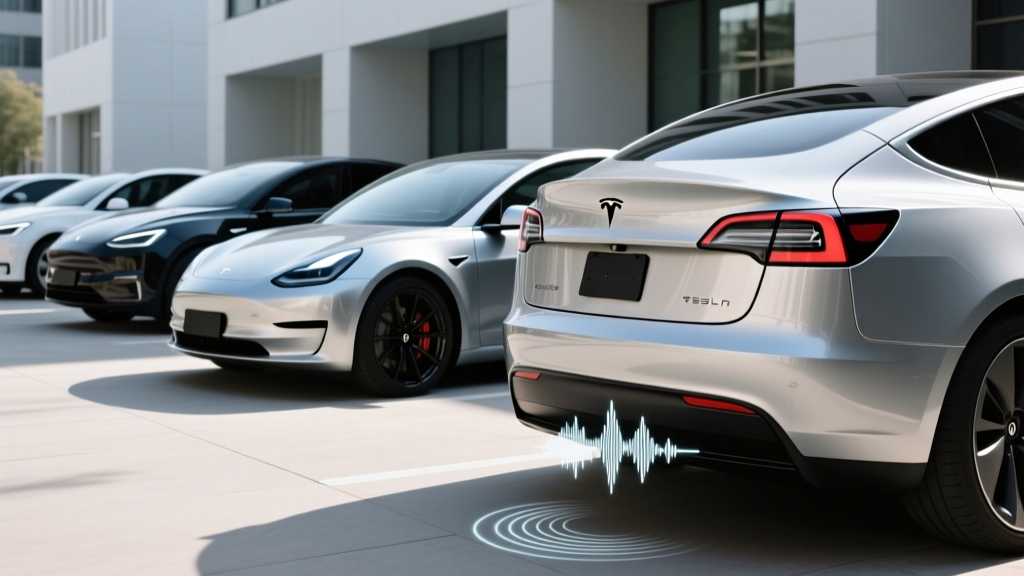
It's worth noting that while the fart noise is entertaining, the pedestrian warning speaker exists for safety. NHTSA requires EVs to emit audible sounds at low speeds (typically under 18.6 mph) because the absence of engine noise creates risk for visually impaired pedestrians. Replacing that sound with a fart effect is legal—the regulation specifies a minimum volume and frequency range, not a specific tone—but it may draw stares or complaints in certain settings.
Which Tesla Models Include the Fart Noise Easter Egg?
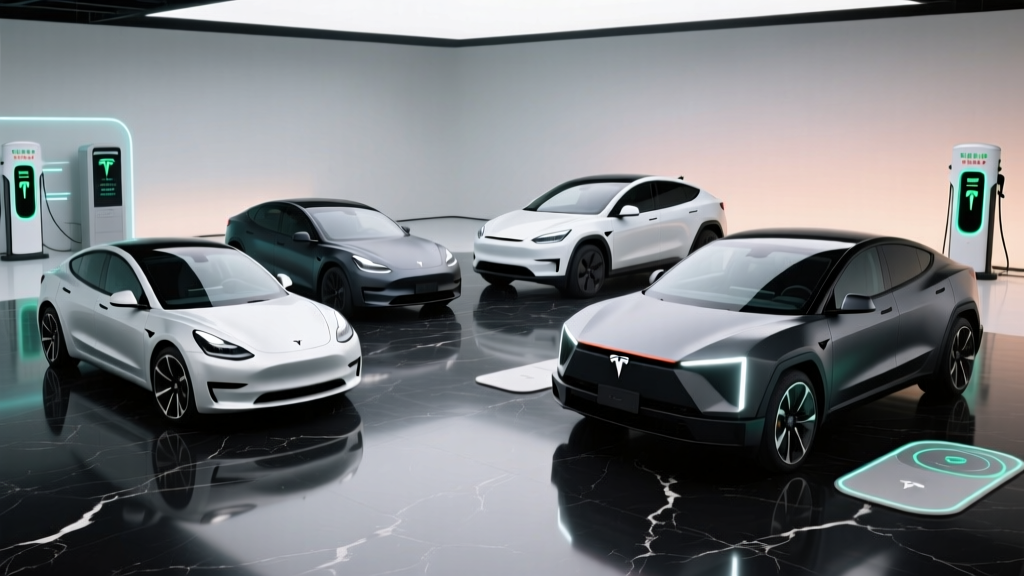
As of the current 2025–2026 Tesla software builds, Emissions Testing Mode is available across all four consumer Tesla models: Model 3, Model Y, Model S, and Model X. The feature ships as part of the standard software package—no premium subscription, no paid unlock, and no specific trim requirement.
Here's what that means in practice:
- Tesla Model 3 (Highland refresh, 2024–present): Full Toybox access, including Emissions Testing Mode. Available on both Rear-Wheel Drive and Long Range AWD trims.
- Tesla Model Y (Juniper refresh, 2025–present): Toybox included on all trims. The Juniper interior redesign did not remove the Easter egg menu.
- Tesla Model S (current generation): Toybox present on both Long Range and Plaid trims.
- Tesla Model X (current generation): Toybox present on Long Range and Plaid trims. The external PWS speaker on the Model X projects the fart noise outside the vehicle at low speeds.
The Cybertruck, Tesla's electric pickup, also includes Toybox features in its software, though its angular design and distinct PWS speaker configuration produce a slightly different acoustic experience. The discontinued Tesla Roadster (first generation) predates Toybox entirely and does not include it.
Tesla Model Lineup: Full EV Specs at a Glance
Since the fart noise feature spans the entire lineup, the real question becomes which Tesla you should actually buy. Here are the precise specifications for every current 2025–2026 consumer Tesla, sourced from fueleconomy.gov and Tesla's official specifications.
| Spec | Model 3 RWD | Model 3 Long Range AWD | Model Y Long Range AWD | Model S Long Range | Model X Long Range |
|---|---|---|---|---|---|
| EPA Range | 363 mi | 341 mi | 320 mi | 402 mi | 335 mi |
| Battery (usable, est.) | ~60 kWh (LFP) | ~75 kWh (NMC) | ~75 kWh (NMC) | ~95 kWh (NMC) | ~95 kWh (NMC) |
| Max DC Fast Charge | 170 kW | 250 kW | 250 kW | 250 kW | 250 kW |
| 10–80% DCFC Time | ~25 min | ~28 min | ~27 min | ~30 min | ~31 min |
| Level 2 Home Charge | 11.5 kW (~44 mi/hr) | 11.5 kW (~44 mi/hr) | 11.5 kW (~44 mi/hr) | 11.5 kW (~44 mi/hr) | 11.5 kW (~44 mi/hr) |
| 0–60 mph | 5.8 sec | 4.2 sec | 4.8 sec | 3.1 sec | 3.8 sec |
| Horsepower | 271 hp | 346 hp | 384 hp | 670 hp | 670 hp |
| Drivetrain | RWD | Dual-Motor AWD | Dual-Motor AWD | Dual-Motor AWD | Dual-Motor AWD |
| MPGe (combined) | 132 MPGe | 125 MPGe | 122 MPGe | 124 MPGe | 116 MPGe |
| EPA Efficiency | 25 kWh/100 mi | 27 kWh/100 mi | 28 kWh/100 mi | 28 kWh/100 mi | 30 kWh/100 mi |
| Cargo Volume | 23 cu ft (trunk + frunk) | 23 cu ft (trunk + frunk) | 72 cu ft (rear seats folded) | 28 cu ft + frunk | 88 cu ft (rear seats folded) |
| Base MSRP | $42,380 | $47,380 | $46,380 | $79,990 | $84,990 |
| Battery Warranty | 8 yr / 100,000 mi | 8 yr / 120,000 mi | 8 yr / 120,000 mi | 8 yr / 150,000 mi | 8 yr / 150,000 mi |
Real-World Range: What the EPA Sticker Doesn't Tell You
EPA estimates assume a mix of city and highway driving at moderate temperatures. Here's what to actually expect:
- Highway driving (70–80 mph): Expect 85–90% of EPA range. A Model 3 Long Range rated at 341 mi EPA will deliver ~290–310 mi at sustained highway speeds.
- Cold weather (below 32°F / 0°C): Range drops 20–30% depending on severity. That same Model 3 Long Range may return 240–270 mi in freezing conditions without preconditioning.
- City driving with regen: You can often match or slightly exceed EPA range in stop-and-go traffic, where regenerative braking recovers energy.
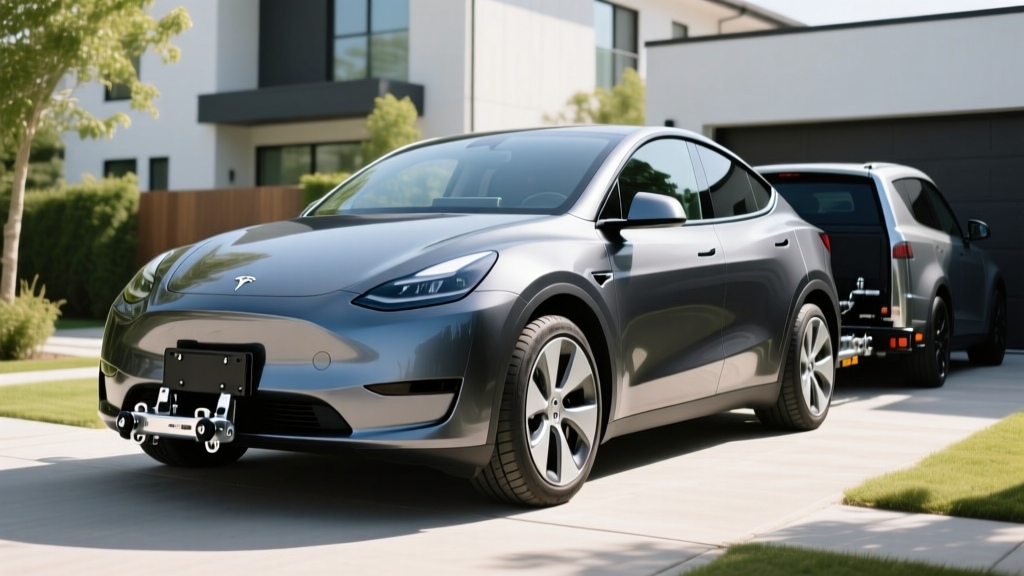
- Towing (Model Y/X): Range drops 40–50% when towing near max capacity. A Model X rated at 335 mi may return under 180 mi while towing a 5,000-lb trailer.
Tesla's LFP (lithium iron phosphate) batteries, used in the Model 3 RWD, offer a distinct advantage: Tesla recommends charging them to 100% daily, unlike NMC batteries which are best kept between 20–80% for longevity. This means the Model 3 RWD's 60 kWh pack gives you the full 363 mi EPA range in daily use, whereas the 75 kWh NMC pack in the Model 3 Long Range is best used at ~60 kWh (80%) for daily commuting, yielding roughly 270 usable daily miles.
Charging Speed and Infrastructure
Tesla's Supercharger network remains the most reliable DC fast-charging infrastructure in North America, with over 6,500 Supercharger stalls in the U.S. alone. Here's what charging looks like across the lineup:
| Charging Level | Power (kW) | Miles Added per Hour | Best For |
|---|---|---|---|
| Level 1 (120V household) | ~1.4 kW | ~3–5 mi/hr | Emergency / overnight trickle |
| Level 2 (240V home) | 11.5 kW | ~44 mi/hr | Daily home charging |
| DC Fast (Supercharger V3) | Up to 250 kW | ~1,000 mi/hr (peak) | Road trips |
| DC Fast (Supercharger V4) | Up to 350 kW (future) | TBD | Next-gen rapid stops |
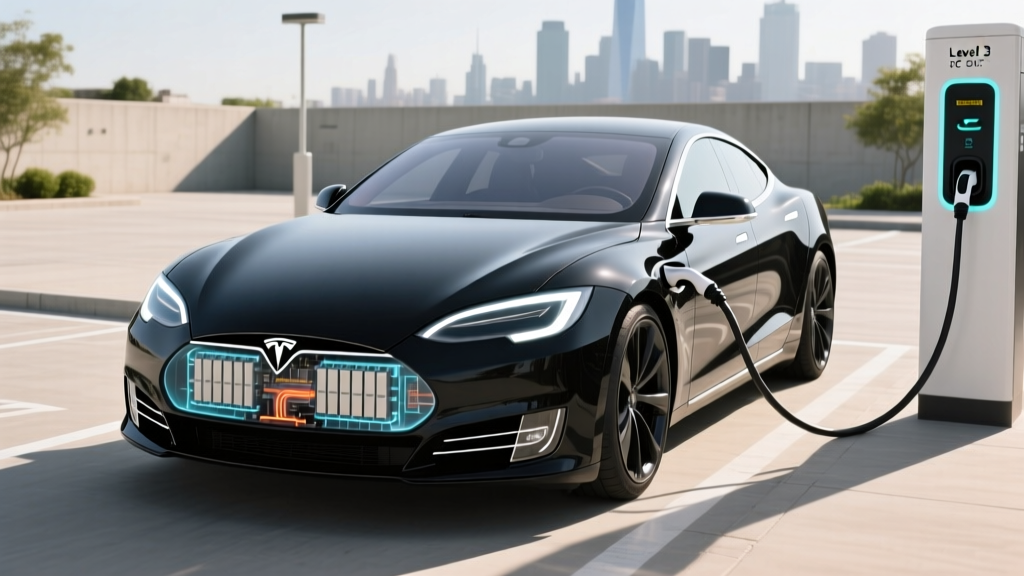
Charging curve reality check: Tesla's advertised "250 kW peak" is exactly that—a peak. The Model 3 Long Range will hit 250 kW only between roughly 10–20% State of Charge (SoC) under ideal thermal conditions. By 50% SoC, the rate tapers to ~150 kW; by 80%, it drops to ~60 kW. The 10–80% time of ~28 minutes reflects this integrated average, not a sustained 250 kW rate. This is why the 10–80% metric is more useful than peak kW for trip planning.
For home Level 2 charging, Tesla's Wall Connector ($475) delivers up to 11.5 kW on a 60-amp circuit (48-amp continuous draw). Installation typically runs $500–$2,000 depending on your electrical panel capacity and the distance from panel to charger. Homes with older 100-amp panels may need a $1,500–$3,000 panel upgrade to support a dedicated 60-amp circuit.
Pricing, Trims, and Federal Tax Credit Eligibility
Tesla's pricing has shifted frequently, but as of early 2026, here's where the lineup stands alongside federal tax credit eligibility under IRS §30D Clean Vehicle Credit:
| Model / Trim | Base MSRP | §30D Credit (est.) | Effective Price | Credit Eligibility Notes |
|---|---|---|---|---|
| Model 3 RWD | $42,380 | Up to $7,500 | ~$34,880 | Eligible (MSRP under $55K cap, LFP sourcing qualifies) |
| Model 3 Long Range AWD | $47,380 | Up to $7,500 | ~$39,880 | Eligible (MSRP under $55K cap) |
| Model Y Long Range AWD | $46,380 | Up to $7,500 | ~$38,880 | Eligible (SUV MSRP cap is $80K) |
| Model S Long Range | $79,990 | $0 | $79,990 | Exceeds $55K sedan MSRP cap |
| Model X Long Range | $84,990 | Up to $7,500 | ~$77,490 | Eligible (SUV MSRP cap is $80K; verify current pricing) |
The federal EV tax credit is subject to multiple restrictions that change frequently. Key rules include:
- Income caps: Modified AGI must not exceed $150,000 (single), $225,000 (head of household), or $300,000 (joint filers).
- MSRP caps: Sedans must be under $55,000; SUVs, pickups, and vans under $80,000.
- Battery sourcing: Increasing percentages of critical minerals and battery components must be sourced from the U.S. or free-trade-agreement countries. This requirement tightens annually and can reduce or eliminate the credit for certain battery configurations.
- Point-of-sale transfer: As of 2024, buyers can transfer the credit to the dealer at purchase, reducing the sale price directly rather than waiting to claim it on their tax return.
Always verify current eligibility at fueleconomy.gov and consult a tax professional before relying on credit estimates.
Driver Assistance: Autopilot and FSD (Supervised)
Tesla's Autopilot and Full Self-Driving (Supervised) are classified as SAE Level 2 driver-assistance systems. This means the vehicle can manage steering, acceleration, and braking under certain conditions, but the driver must remain fully engaged, hands on or near the wheel, and eyes on the road at all times. These systems do NOT make the vehicle self-driving. Only SAE Level 4 systems (like Waymo's robotaxi service) operate without a human driver.
Tesla's driver-assistance stack includes:
- Basic Autopilot (standard): Traffic-aware cruise control and lane centering on highways.
- Enhanced Autopilot ($6,000 option): Adds automatic lane changes, Navigate on Autopilot (highway interchanges), Autopark, and Summon.
- Full Self-Driving (Supervised) ($8,000 option or $99/month): Adds traffic light and stop sign recognition, city street autosteer, and more aggressive route navigation. Despite the name, FSD still requires active driver supervision.
Tesla's vision-only approach (no lidar, no radar on current models) has drawn scrutiny. The company removed ultrasonic sensors from new vehicles starting in late 2022, relying entirely on cameras and neural networks for Tesla Vision. Real-world performance has improved significantly through OTA updates, but drivers report inconsistent behavior in construction zones, heavy rain, and poorly marked roads. NHTSA has opened multiple investigations into Tesla's Autopilot and FSD systems, and buyers should treat these as convenience features—not autonomous driving replacements.
Interior, Tech, and the Easter Eggs Beyond Fart Noises
Tesla's cabin design philosophy is unapologetically minimalist. The Model 3 Highland and Model Y Juniper refreshes have improved material quality substantially—soft-touch surfaces, ventilated front seats, ambient lighting, and a rear touchscreen for passengers (Model 3/Y). But the defining feature remains the 15.4-inch central touchscreen (Model 3/Y) or 17-inch screen (Model S/X) that controls virtually every vehicle function.
Beyond Emissions Testing Mode, Tesla's Toybox includes:
- Light Show: Synchronized headlight, taillight, and mirror-light choreography set to music.
- Boombox: Replace the pedestrian warning speaker with custom sounds (including the infamous fart) while parked or in motion at low speeds.
- Romance Mode: A crackling fireplace animation on the main display with ambient sounds.
- Sketchpad: A touchscreen drawing application.
- Arcade: Full games including Stardew Valley, Cyberpunk 2077 (Model S/X), and racing titles playable while parked.
Notable drawbacks across the lineup include the absence of Apple CarPlay and Android Auto (Tesla uses its proprietary infotainment system), limited physical button controls (even the glovebox opens via touchscreen), and a rearward visibility compromise in the Model 3 due to its sloping roofline. The Model 3 Highland refresh eliminated the traditional turn signal stalk, replacing it with steering-wheel-mounted buttons—a change that polarizes owners.
Pros, Cons, and Who Should Buy a Tesla
✅ Pros
- Class-leading efficiency (25–30 kWh/100 mi)
- Supercharger network reliability
- OTA updates add features post-purchase
- LFP battery option allows daily 100% charging
- Strong resale value relative to competitors
- Toybox Easter eggs add personality
- Spacious cargo area (Model Y: 72 cu ft)
❌ Cons
- No Apple CarPlay or Android Auto
- Minimalist interior not for everyone
- Vision-only Autopilot has limitations in adverse weather
- Model 3 Highland turn signal buttons are divisive
- Panel gaps and build consistency still vary
- FSD ($8,000) remains Level 2, not autonomous
- Model S/X exceed tax credit MSRP caps
- Choose Model 3 RWD if: You want the most affordable Tesla with the longest daily-usable range thanks to LFP chemistry, and you commute under 50 miles round-trip with home charging. Effective price after tax credit: ~$34,880.
- Choose Model 3 Long Range if: You need AWD for snow climates, want faster 0–60 performance (4.2 sec), and regularly drive 250+ miles between charges. The NMC battery requires more careful SoC management for longevity.
- Choose Model Y Long Range if: You need crossover cargo space (72 cu ft), occasional third-row seating for small children, and family-friendly practicality. It's Tesla's best-selling model for a reason.
- Choose Model S/X if: Budget is flexible, you want flagship performance (Model S Plaid: 1,020 hp, 1.99 sec 0–60), and you value the larger touchscreen and air suspension. Note: Model S does not qualify for the federal tax credit.
- Look elsewhere if: You need Apple CarPlay, prefer physical controls, want a dealership service network, or require Level 4 autonomous driving (consider Waymo in available cities instead).
Frequently Asked Questions
Can I turn off the Tesla fart noise if I get tired of it?
Yes. Emissions Testing Mode can be disabled at any time through the Toybox menu. You can also selectively disable specific triggers (e.g., keep the turn signal fart but restore the standard horn). Changes take effect immediately—no reboot required.
Does the Tesla fart noise work outside the car?
Yes, if you assign it to the Pedestrian Warning System (PWS). The PWS speaker is mounted externally and emits sound at low speeds (under ~19 mph). This means pedestrians will hear the fart noise when you're pulling out of a parking space or creeping through a drive-through. At higher speeds, the PWS disengages and only the cabin audio plays the sound.
Will using the fart noise void my Tesla warranty?
No. Emissions Testing Mode is an official Tesla software feature included in production firmware. Using it does not modify any vehicle systems, does not constitute a "jailbreak," and has no impact on the battery or powertrain warranty (8 years / 100,000–150,000 miles depending on model). Tesla's own engineers programmed it.
How does Tesla's efficiency compare to competitors?
Tesla remains among the most efficient EVs on the market. The Model 3 RWD achieves 132 MPGe combined (25 kWh/100 mi), which outperforms the Hyundai Ioniq 6 (140 MPGe but with a different test cycle advantage), BMW i4 (109 MPGe), and Ford Mustang Mach-E (101 MPGe for the Extended Range RWD). This efficiency translates directly to lower electricity costs and longer real-world range from a smaller battery.
Is the Tesla fart noise available on used Teslas?
Yes, as long as the vehicle is running a software version from 2021 or later that includes Toybox. Since Tesla pushes OTA updates to all vehicles regardless of model year, most used Teslas from 2018 onward (Model 3) and 2021 onward (Model S/X refresh) will have access. You can verify by tapping the Tesla "T" logo on the touchscreen and navigating to the Toybox or Easter Eggs section in the software menu.
Does the Tesla Model 3 or Model Y qualify for the $7,500 federal tax credit?
Both the Model 3 (RWD and Long Range) and Model Y (Long Range AWD) currently qualify for up to $7,500 under the IRS §30D Clean Vehicle Credit, provided the buyer meets income requirements (up to $150K single / $300K joint) and the vehicle's battery sourcing meets the current-year critical mineral and component thresholds. The credit can be applied as a point-of-sale discount. Always verify at fueleconomy.gov before purchasing, as sourcing rules tighten annually.