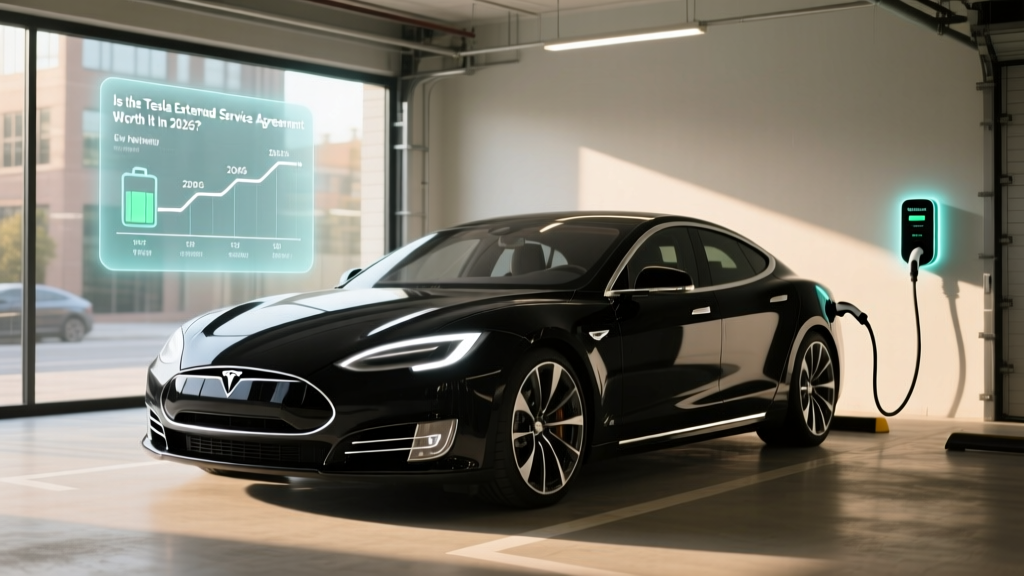
Owning a Tesla beyond its factory warranty period raises a question every EV buyer eventually faces: should you buy an extended warranty? Tesla's Extended Service Agreement (ESA) is the company's official coverage extension, but whether it's worth the premium depends on your model, mileage, driving habits, and risk tolerance. This guide dissects what the ESA covers, what it excludes, what it costs, and how it compares to third-party alternatives — so you can make a data-driven decision.
What Is the Tesla Extended Service Agreement?
The Tesla Extended Service Agreement is an optional protection plan that extends mechanical and electrical coverage beyond the original New Vehicle Limited Warranty. Tesla offers the ESA for Model S, Model 3, Model X, and Model Y, though availability and pricing vary by model year and trim. You must purchase the ESA before the original 4-year/50,000-mile basic warranty expires — once that window closes, the option is gone.
Tesla structures the ESA as a continuation of the bumper-to-bumper warranty, covering most components that fail due to defects in materials or workmanship. Critically, the ESA does not extend the separate Battery and Drive Unit Limited Warranty, which already runs 8 years/100,000–150,000 miles depending on the model. Understanding this distinction is essential to evaluating whether the ESA adds value for your situation.
Tesla Factory Warranty Baseline: What You Already Get
Before evaluating the ESA, you need to know exactly what Tesla covers from the factory. Here's the breakdown for current 2025–2026 models:
| Component | Model 3 / Model Y | Model S / Model X |
|---|---|---|
| Basic Vehicle Limited Warranty | 4 yr / 50,000 mi | 4 yr / 50,000 mi |
| Battery & Drive Unit (RWD Model 3) | 8 yr / 100,000 mi | — |
| Battery & Drive Unit (AWD / Long Range / Performance) | 8 yr / 120,000 mi | 8 yr / 150,000 mi |
| Battery Capacity Retention Threshold | 70% minimum SoH | 70% minimum SoH |
Source: Tesla New Vehicle Limited Warranty
The battery warranty's 70% State of Health (SoH) retention threshold means Tesla will repair or replace the battery if it degrades below 70% of its original capacity within the warranty period. For most owners, real-world Tesla fleet data shows batteries retain roughly 88% capacity after 200,000 miles, making out-of-warranty battery failure statistically uncommon.
What the Tesla ESA Covers (and What It Doesn't)
The ESA extends the basic vehicle warranty, meaning it covers the same components the original 4-year/50,000-mile warranty protects. Here's a practical breakdown:
Components Covered Under the ESA
- Infotainment & MCU: The touchscreen, media control unit, and associated electronics — one of the more expensive non-battery repairs on a Tesla
- HVAC system: Heat pump, compressor, cabin heating elements (resistive or heat-pump depending on model year)
- Suspension: Control arms, bushings, adaptive dampers (Model S/X with air suspension)
- Power windows, mirrors, and door mechanisms
- 12V lithium auxiliary battery (on 2021+ models that switched from lead-acid)
- Electric power steering rack
- Charge port and onboard charger
- Glass: Some ESA plans include windshield and panoramic roof glass coverage — check your specific agreement
Components Excluded From the ESA
- High-voltage traction battery (already covered under separate 8-year warranty)
- Drive unit / electric motors (already covered under separate 8-year warranty)
- Wear items: Brake pads, rotors, wiper blades, cabin air filters, tires
- Cosmetic damage: Paint chips, interior wear, seat leather creasing
- Damage from accidents, misuse, flooding, or modifications
- Autopilot/FSD hardware — coverage terms for cameras and the HW4 computer have been ambiguous in some ESA contracts; confirm in writing before purchasing
Tesla ESA Pricing: What You'll Actually Pay
Tesla does not publish ESA pricing on its website — the quote is VIN-specific and varies by model, model year, mileage at purchase, and coverage term. Based on owner reports and service center data from 2024–2026, here are typical price ranges:
| Model | Coverage Extension | Estimated Cost | Deductible |
|---|---|---|---|
| Model 3 (RWD / Long Range) | +2 yr / 25,000 mi | $2,500 – $3,500 | $0 – $100 |
| Model Y (Long Range / Performance) | +2 yr / 25,000 mi | $2,800 – $3,800 | $0 – $100 |
| Model S / Model X | +2 yr / 25,000 mi | $3,500 – $5,000 | $0 – $100 |
| Model 3 / Model Y | +4 yr / 50,000 mi | $4,000 – $5,500 | $0 – $100 |
Pricing is based on aggregated owner reports and is subject to change. Request a quote through your Tesla account for your specific VIN.
ESA vs. Third-Party Extended Warranties: How They Compare
Tesla's ESA isn't the only option. Several third-party warranty companies now offer EV-specific plans. Here's how they stack up against the OEM agreement:
| Factor | Tesla ESA | Third-Party (e.g., CarShield, Endurance) |
|---|---|---|
| Repair facility | Tesla Service Centers and approved mobile service only | Any ASE-certified shop (but few independent shops service HV Tesla components) |
| Parts sourcing | OEM Tesla parts guaranteed | May allow aftermarket or refurbished parts |
| Tesla-specific expertise | Factory-trained technicians | Variable; many shops lack Tesla HV training |
| Claim disputes | Handled directly by Tesla | Third-party adjuster; more frequent denial reports |
| Transferability | Transferable to next private-party owner | Varies by provider; often transferable for a fee |
| Cost | $2,500 – $5,500 | $1,500 – $4,000 (but coverage often narrower) |
The practical reality: because Tesla tightly controls its parts supply chain and diagnostic software, most independent shops cannot perform major Tesla repairs even if a third-party warranty approves the claim. This gives the Tesla ESA a structural advantage for powertrain-adjacent electronics and proprietary components.
Real Repair Costs: What Tesla Owners Actually Pay Out of Warranty
To evaluate whether the ESA is worth the premium, you need to know what repairs cost without it. Based on owner-reported data from Tesla service forums and repair aggregators:
- MCU / touchscreen replacement: $1,500 – $2,500 (a known failure point on 2018–2021 Model 3 units with the older Intel Atom processor; HW4-era MCUs appear more reliable)
- Heat pump assembly: $1,200 – $2,000 (introduced on 2021+ Model Y and refreshed Model 3; early units had higher failure rates)
- Air suspension compressor (Model S/X): $1,500 – $3,000 per corner
- Onboard charger: $800 – $1,500
- Electric power steering rack: $1,200 – $2,200
- Drive unit replacement: $5,000 – $8,000 (but covered under the 8-year battery/drive unit warranty)
- 12V lithium battery: $500 – $800
A single MCU or heat pump failure during the ESA coverage period can recover most or all of the agreement's cost. The question is probability: how likely are these failures between years 4–8 of ownership?
Who Should Buy the Tesla ESA?
The ESA Makes Sense If You...
- Plan to keep the vehicle past 50,000 miles and beyond year 4
- Own a Model S or Model X with air suspension (higher-cost components)
- Drive in extreme climates that stress HVAC and thermal systems
- Want predictable ownership costs with no surprise repair bills
- Plan to sell the car privately — a transferable ESA adds resale value
- Prefer OEM-only repairs with factory-trained technicians
Skip the ESA If You...
- Plan to sell or trade the vehicle before 50,000 miles
- Own a Model 3 RWD with the LFP battery (simpler powertrain, lower repair risk)
- Are comfortable self-insuring by setting aside $200–$300/month for repairs
- Already have overlapping coverage through a premium credit card or insurance rider
- Drive a 2024+ model with improved build quality and the HW4 computer
The Battery Question: Why the ESA Doesn't Cover Your Biggest Expense
The most common misconception about the Tesla ESA is that it protects you against battery failure. It does not. Your high-voltage traction battery is covered under Tesla's separate Battery and Drive Unit Limited Warranty for 8 years and 100,000 to 150,000 miles — far longer than the ESA extends.
For context on battery longevity, Tesla's fleet data indicates that Model 3 and Model Y batteries with NMC chemistry lose approximately 12% of their capacity over the first 200,000 miles. LFP batteries (used in the Model 3 RWD) show even slower degradation curves, with some fleet data suggesting less than 10% loss over the same distance. Out-of-warranty battery replacement costs range from $10,000 to $16,000 depending on the pack size, but the statistical likelihood of needing one before 200,000 miles remains low based on current degradation data.
If battery longevity is your primary concern, the ESA won't help. Instead, focus on proper battery care: avoid sustained 100% State of Charge on NMC packs, use scheduled charging to minimize time at high SoC, and precondition the battery in cold weather.
Frequently Asked Questions
Can I buy the Tesla ESA after my basic warranty expires?
No. Tesla requires the ESA to be purchased while the original 4-year/50,000-mile New Vehicle Limited Warranty is still active. Once it expires, the ESA purchase option disappears from your Tesla account. Some owners report being able to purchase up to 30 days before expiration, but this is not guaranteed — don't wait.
Is the Tesla ESA transferable if I sell my car?
Yes, the Tesla ESA is transferable to the next private-party owner at no additional cost. This can add value to your resale, particularly for buyers who are nervous about out-of-warranty EV repair costs. However, the ESA does not transfer if the vehicle is sold to a dealer or salvaged.
Does the ESA cover Autopilot or FSD hardware failures?
This is a gray area in Tesla's ESA contract. Cameras and the HW4 (Hardware 4) computer are technically electronic components, but Tesla has classified some driver-assistance hardware separately in past warranty disputes. Before purchasing, request written confirmation from Tesla that Autopilot/FSD sensors and compute hardware are covered under the ESA for your specific VIN.
What's the deductible on a Tesla ESA claim?
Tesla typically offers the ESA with either a $0 or $100 per-visit deductible, depending on the plan you select. The $0-deductible plans cost more upfront but eliminate out-of-pocket expense at each service visit.
Can I cancel the Tesla ESA and get a refund?
Yes. Tesla allows prorated cancellation of the ESA. If you sell the vehicle or simply decide you no longer want coverage, you can request a refund for the unused portion. The refund is prorated based on time and mileage elapsed. Check your specific agreement for cancellation terms and any administrative fees.
Does the ESA cover the panoramic glass roof?
Glass coverage varies by ESA plan. Some agreements include comprehensive glass coverage (windshield, panoramic roof, windows), while others exclude glass or cover it only under specific conditions. If glass is a priority — particularly on Model Y or Model 3 where the panoramic roof replacement costs $1,500–$2,500 — confirm glass coverage in writing before purchasing.
Bottom Line: Is the Tesla Extended Service Agreement Worth It?
The Tesla ESA is a calculated risk-management product, not a necessity. For Model S and Model X owners with air suspension, complex thermal systems, and higher-cost components, the ESA offers meaningful protection and typically pays for itself with a single major repair. For Model 3 and Model Y owners, the math is tighter: the vehicles have fewer complex mechanical systems, build quality has improved significantly since 2023, and the most expensive components (battery and drive unit) are already covered for 8 years.
If you plan to keep your Tesla past 75,000 miles and value predictable costs, the ESA provides peace of mind backed by OEM parts and factory-trained service. If you're a lower-mileage driver or plan to trade in before year 5, self-insuring by setting aside $150–$250 per month in a dedicated repair fund will likely cost less than the ESA premium over the same period.
Before deciding, pull up your Tesla account, request a VIN-specific ESA quote, and compare it against the repair cost data above. The right answer depends on your model, your mileage trajectory, and how much uncertainty you're comfortable carrying.