If you're a first responder, healthcare worker, military service member, or educator eyeing a Tesla, the Tesla Everyday Heroes program is designed to lower the barrier to entry with exclusive pricing, referral perks, and streamlined ordering. But how much do you actually save, which models qualify, and how does the discount stack with the federal §30D EV tax credit? This guide breaks down the program and pairs it with hard specs on the Tesla models most Everyday Heroes buyers choose.
What Is the Tesla Everyday Heroes Program?
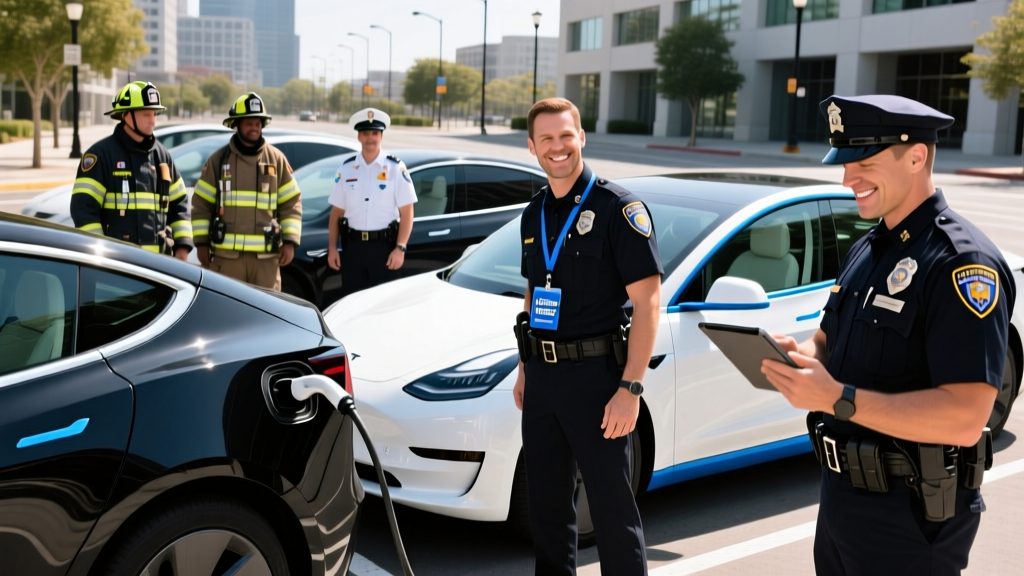
The Tesla Everyday Heroes program is a targeted discount and recognition initiative for professionals in public service and essential roles. Eligible participants typically include:
- First responders — police, firefighters, EMTs, paramedics
- Military — active duty, veterans, reservists, National Guard
- Healthcare workers — nurses, physicians, hospital staff
- Educators — K-12 teachers, school administrators
- Government employees — federal, state, and local
Benefits vary by promotion window but generally include a direct price reduction (historically $500–$1,500 off the vehicle purchase price), priority delivery scheduling, and occasionally complimentary Supercharging credits or accessory bundles. Verification is handled through ID.me or a similar credentialing partner at checkout on Tesla's website.
Important caveat: Tesla adjusts Everyday Heroes promotions frequently. Discount amounts, eligible trims, and delivery timelines can change quarter to quarter. Always confirm current terms on Tesla's Everyday Heroes page before ordering.
Which Tesla Models Do Everyday Heroes Buyers Choose Most?
The two most popular models among program participants are the Model Y Long Range AWD and the Model 3 Long Range AWD. Both offer strong range, Supercharger network access, and prices that can fall under the IRS §30D MSRP caps when configured carefully. Here's how they stack up for 2026:
| Spec | Model Y Long Range AWD | Model 3 Long Range AWD |
|---|---|---|
| EPA Range | 320 miles | 341 miles |
| Battery (usable) | ~75 kWh (NMC) | ~75 kWh (NMC) |
| Max DC Fast Charge | 250 kW | 250 kW |
| 10–80% DC Time | ~27 min | ~25 min |
| Level 2 Home Charge | 11.5 kW (~44 mi/hr) | 11.5 kW (~48 mi/hr) |
| 0–60 mph | 4.8 sec | 4.2 sec |
| Horsepower | 384 hp | 346 hp |
| Drivetrain | Dual Motor AWD | Dual Motor AWD |
| MPGe (combined) | 117 MPGe | 130 MPGe |
| Cargo Volume | 76 cu ft (rear seats folded) | 23 cu ft trunk + frunk |
| Base MSRP | $44,990 | $42,490 |
| Battery Warranty | 8 yr / 120,000 mi | 8 yr / 120,000 mi |
Source: fueleconomy.gov, Tesla spec sheets. Figures reflect 2026 model year.
Real-World Range: What to Actually Expect
EPA sticker: 320 miles
Real-world highway (70 mph, moderate temps): ~265–285 miles
Real-world cold weather (below 32°F): ~220–250 miles
City/regenerative driving: ~290–310 miles
Tesla's thermal management and heat pump help mitigate winter losses, but expect a 20–30% reduction in freezing conditions, especially at highway speeds. The Model 3 Long Range posts similar percentages off its 341-mile sticker.
For first responders commuting 30–50 miles round trip with occasional longer runs, both models deliver ample daily buffer. However, if you regularly drive rural routes in sub-freezing climates — common for volunteer firefighters or rural EMTs — plan charging stops around 200–220 miles of usable range in winter.
Charging Speed: DC Fast and Home Level 2
Tesla's Supercharger network remains the most reliable public DC fast-charging ecosystem in the U.S., and Everyday Heroes buyers get full native access without adapters. Both the Model Y and Model 3 Long Range peak at 250 kW on V3 Superchargers.
| Charging Level | Power (kW) | Speed | Notes |
|---|---|---|---|
| Level 1 (120V) | ~1.4 kW | ~3–5 mi/hr | Emergency/trickle only |
| Level 2 (240V, 48A) | 11.5 kW | ~44–48 mi/hr | Full overnight charge in ~7–8 hr |
| DC Fast (V3 Supercharger) | 250 kW peak | 10–80% in ~25–27 min | Tapers significantly above 80% |
| DC Fast (CCS adapter) | Up to 250 kW | Varies by station | Use Tesla CCS adapter for non-Tesla networks |
Charging curve reality: The 250 kW peak is only sustained between roughly 10–30% state of charge. From 50–80%, expect rates to drop to 80–120 kW. Planning a road trip? Budget 25–30 minutes per stop for a 10–80% fill, not the 15 minutes Tesla sometimes advertises under ideal conditions.
For home charging, a Tesla Wall Connector on a 60-amp circuit delivers the full 11.5 kW (48 amps continuous). Most Everyday Heroes buyers will need a 240V outlet or hardwired install — budget $800–$2,000 for a licensed electrician, depending on panel capacity and run length.
Pricing, Everyday Heroes Savings, and the §30D Tax Credit
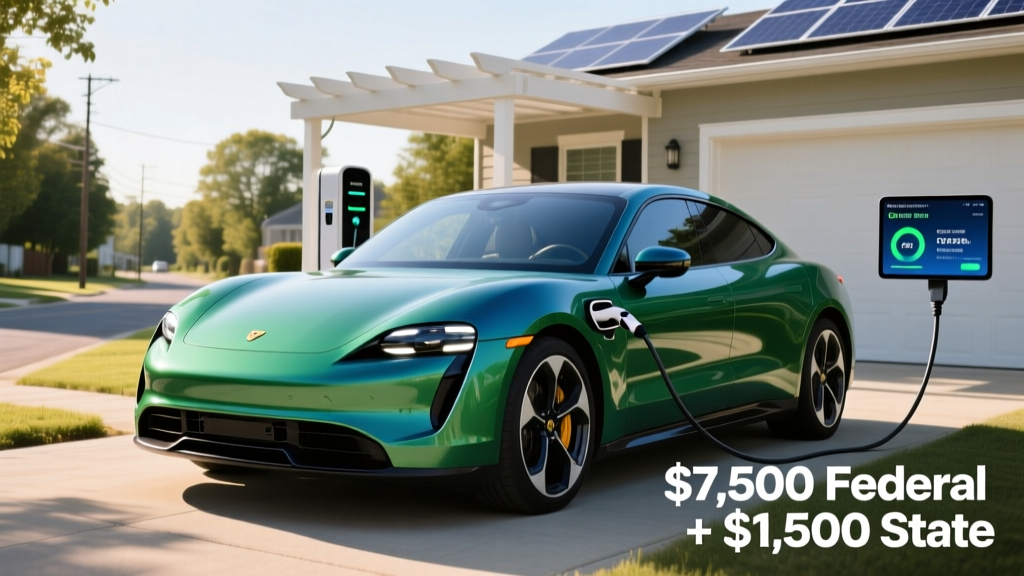
Here's where the Everyday Heroes program intersects with federal incentives. Under current IRS §30D rules, new EV buyers can claim up to $7,500 in federal tax credits — or transfer the credit to the dealer at point of sale for an immediate price reduction. But eligibility depends on three moving targets:
- MSRP cap: SUVs/pickups ≤ $80,000; sedans ≤ $55,000 — both Model Y and Model 3 qualify at base
- Buyer income cap: AGI ≤ $150,000 (single), $225,000 (head of household), $300,000 (joint)
- Battery sourcing: Critical minerals and battery components must meet phased-in domestic/FHA-content thresholds — verify current-year compliance on irs.gov
- Point-of-sale transfer: Available — reduces your out-of-pocket at delivery
- VIN registration: Must be registered in the U.S. for personal use
| Model / Trim | Base MSRP | Everyday Heroes Est. | §30D Credit | Effective Price |
|---|---|---|---|---|
| Model 3 Long Range AWD | $42,490 | -$1,000 | -$7,500 | ~$33,990 |
| Model Y Long Range AWD | $44,990 | -$1,000 | -$7,500 | ~$36,490 |
| Model Y Performance | $49,990 | -$1,000 | -$7,500 | ~$41,490 |
Everyday Heroes discount is estimated at $1,000 based on recent promotion windows — confirm exact amount at time of order. Tax credit eligibility varies by buyer income and current battery-sourcing rules. Consult a tax professional or IRS.gov for your specific situation.
Tech, Driver Assistance, and What Sets Tesla Apart
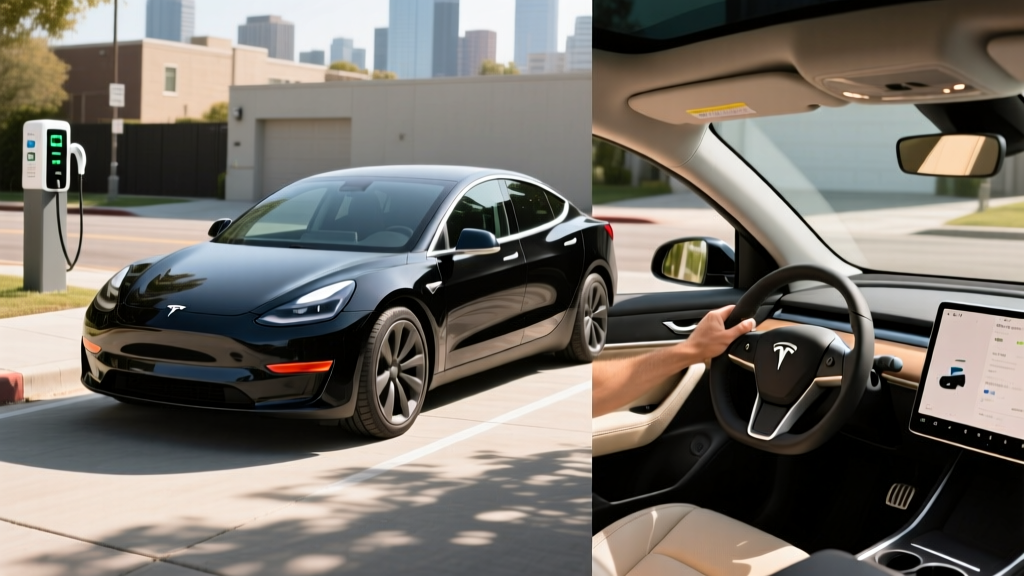
Both the Model Y and Model 3 ship with Tesla's 15.4-inch touchscreen running the latest Tesla software, which handles navigation, media, climate, and vehicle settings in a single interface. Key tech features relevant to Everyday Heroes buyers:
- Basic Autopilot (included): Lane-centering and traffic-aware cruise — an SAE Level 2 driver-assist system. You must remain engaged at all times.
- FSD Supervised ($8,000 option or $99/mo subscription): Adds automatic lane changes, intersection handling, and parking assist. Still Level 2 — not self-driving.
- Sentry Mode: Cameras record surroundings while parked — useful for first responders parking in high-traffic or unfamiliar areas.
- Dog Mode / Camp Mode: Maintains cabin climate for passengers or pets during long shifts.
- Over-the-air updates: Regular software improvements without dealer visits.
Neither Autopilot nor FSD Supervised is autonomous. Tesla's systems are SAE Level 2, meaning the driver is fully responsible for steering, braking, and situational awareness at all times. Hands-on-wheel monitoring is enforced. Do not treat these systems as a substitute for attentive driving, especially during fatigue after long shifts.
Pros, Cons, and Who Should Buy
- Supercharger network — best-in-class reliability for road trips
- Strong real-world efficiency (117–130 MPGe combined)
- Over-the-air updates keep the car current
- Everyday Heroes discount stacks with §30D credit
- Excellent cargo versatility (Model Y: 76 cu ft with seats folded)
- Standard heat pump reduces winter range loss
- No physical buttons — all controls through touchscreen
- FSD Supervised costs extra and remains Level 2
- Rear visibility in Model Y is limited (no rear wiper on earlier builds)
- Insurance premiums can be 15–30% higher than comparable ICE vehicles
- Build quality inconsistencies still reported by some owners
- CCS adapter required for non-Tesla DC fast chargers
Choose the Model Y if: You need cargo space for gear, family, or equipment. The 76 cu ft with seats folded accommodates bulky first-responder bags, camping gear, or weekly Costco runs. AWD provides confidence in inclement weather for rural responders.
Choose the Model 3 if: You prioritize efficiency and driving dynamics over cargo. The 341-mile EPA range and 130 MPGe make it the most cost-effective daily commuter in Tesla's lineup, ideal for educators or healthcare workers with predictable commutes.
Look elsewhere if: You need a truck bed for work (consider the Rivian R1T or Ford F-150 Lightning), require third-row seating (Kia EV9 or Tesla Model X), or prefer physical buttons and traditional dealership service.
How the Model Y and Model 3 Compare to Key Competitors
For Everyday Heroes buyers cross-shopping, the closest competitors are the Hyundai Ioniq 5 (305 mi range, ~$45,000, 800V architecture for faster charging), the Ford Mustang Mach-E (320 mi Extended Range, ~$43,000), and the Chevrolet Equinox EV (315 mi range, ~$35,000 base, potentially lower after credit).
Tesla's advantages remain the Supercharger network and software ecosystem. Hyundai's 800V platform charges faster at compatible 350 kW stations (10–80% in ~18 min vs Tesla's ~27 min), but those stations are less common than V3 Superchargers. The Mach-E offers a more traditional interior with physical controls. The Equinox EV undercuts on price but sacrifices performance and charging speed.
For a first responder or educator who values charging convenience and a mature software experience — and who can verify §30D eligibility — the Tesla Everyday Heroes program makes the Model Y and Model 3 compelling at the $33,990–$36,490 effective price point.
Frequently Asked Questions
How do I verify eligibility for the Tesla Everyday Heroes program?
Tesla uses ID.me (or a similar verification partner) during the online ordering process. You'll upload credentials — military ID, first responder certification, teaching credential, or healthcare employer verification — before the discount is applied to your order.
Can I combine the Everyday Heroes discount with the federal §30D tax credit?
Yes. The Everyday Heroes discount is a Tesla-applied price reduction, while the §30D credit is a federal tax incentive (or point-of-sale reduction). They stack. However, §30D eligibility depends on your income, the vehicle's MSRP, and current battery-sourcing rules — always confirm on irs.gov.
Does the Everyday Heroes program apply to used Teslas?
Historically, the program applies to new vehicle orders only. Used Tesla inventory may qualify for the separate §25E used EV credit (up to $4,000 for vehicles under $25,000), but Everyday Heroes pricing is typically limited to new orders.
What's the real-world range of the Model Y in winter?
Expect roughly 220–250 miles from the 320-mile EPA sticker in sustained sub-32°F driving, depending on speed and cabin heat usage. Tesla's heat pump helps, but cold chemistry and heating loads still reduce usable range by 20–30%.
Is Tesla Autopilot self-driving?
No. Autopilot and FSD Supervised are SAE Level 2 driver-assist systems. You must keep your hands on the wheel and eyes on the road at all times. Full self-driving capability (Level 4+) is not available on any consumer Tesla as of 2026.
What is the battery warranty on the Model Y and Model 3?
Both carry an 8-year / 120,000-mile battery and drive unit warranty (Long Range AWD trims). Tesla guarantees at least 70% capacity retention over the warranty period. If degradation exceeds 30%, Tesla will repair or replace the battery to bring it above the threshold.
Final Verdict
The Tesla Everyday Heroes program meaningfully reduces the cost of entry for first responders, military, educators, and healthcare workers — especially when stacked with the §30D federal tax credit. At an effective price of roughly $34,000–$36,500, the Model 3 and Model Y Long Range AWD deliver class-leading efficiency, Supercharger access, and practical daily range. Confirm your §30D eligibility, verify the current Everyday Heroes promotion window, and test-drive both models before committing. The savings are real, but the right model depends on whether you need the Model Y's cargo space or the Model 3's efficiency edge.