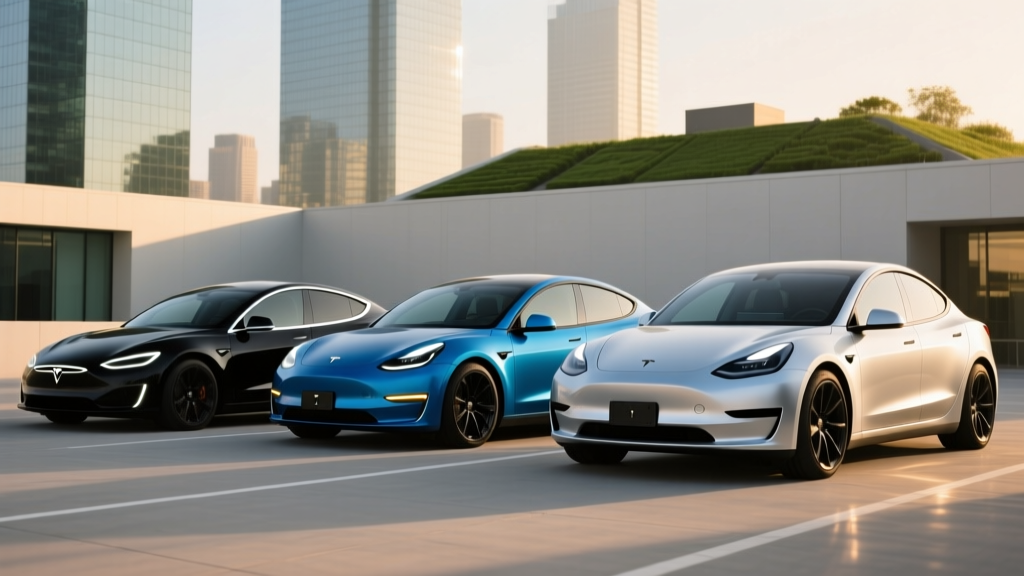
The Tesla event 2025 generated enormous buzz across the EV world, unveiling refreshed vehicles, autonomous driving updates, and next-generation platform promises. But for buyers shopping in 2026, the critical question isn't what was shown on stage — it's what you can actually order, drive, and charge today. This review cuts through the keynote hype to deliver exact specs, real-world range data, charging speeds, and tax-credit eligibility for the vehicles that emerged from Tesla's 2025 announcements and are now reaching driveways.
What Tesla Actually Announced vs. What You Can Buy Now
Tesla's 2025 event showcased three major product threads: the refreshed Model Y (codenamed "Juniper"), the Cybercab robotaxi concept, and updates to the Full Self-Driving (Supervised) stack. As of early 2026, only the refreshed Model Y is available for consumer purchase and delivery. The Cybercab remains a Level 4 autonomous prototype undergoing limited pilot programs in Austin, TX, with no consumer purchase option. FSD (Supervised) continues as a SAE Level 2 driver-assistance system requiring full driver engagement.
2026 Tesla Model Y (Juniper Refresh): Full Specs & Real-World Data
The refreshed Model Y, which began deliveries in mid-2025 following the Tesla event announcements, carries over the same basic platform but with significant efficiency, interior, and styling improvements. Here are the exact figures buyers need.
| Spec | Long Range AWD | Performance AWD |
|---|---|---|
| EPA Range | 320 miles | 295 miles |
| Battery (usable) | ~75 kWh, NMC | ~75 kWh, NMC |
| Max DC Fast Charge | 250 kW (peak) | 250 kW (peak) |
| 10–80% DCFC Time | ~27 min | ~27 min |
| Level 2 Home Charge | 11.5 kW / ~37 mi/hr | 11.5 kW / ~37 mi/hr |
| 0–60 mph | 4.8 sec | 3.5 sec |
| Horsepower | 384 hp | 456 hp |
| Drivetrain | Dual Motor AWD | Dual Motor AWD |
| Efficiency (EPA) | 119 MPGe / 28 kWh/100mi | 111 MPGe / 30 kWh/100mi |
| Cargo Volume | 72 cu ft (rear seats folded), 26 cu ft behind 2nd row | |
| Rear Legroom | 41.6 inches | |
| Base MSRP | $46,630 | $52,130 |
| Battery Warranty | 8 years / 120,000 miles (min 70% retention) | |
Source: EPA fueleconomy.gov, Tesla.com official specs. Pricing reflects 2026 MSRP before destination.
Real-World Range: What the EPA Sticker Doesn't Tell You
EPA Estimate: 320 miles
Highway (70–80 mph, 65°F): ~265–285 miles
Cold Weather (30°F, highway): ~215–240 miles (30–35% loss typical for NMC packs without consistent preconditioning)
City / Commute (mixed regen): ~300–315 miles (regen braking recovers energy in stop-and-go)
The refreshed Model Y's improved aerodynamics and thermal management system (including a standard heat pump) help mitigate cold-weather losses compared to the pre-2025 model. However, NMC chemistry is inherently more temperature-sensitive than LFP. On a 300-mile road trip at sustained 75 mph in moderate temperatures, expect to arrive with roughly 35–50 miles of buffer — tight enough that you'll want one DC fast-charge stop. In winter conditions across northern states, plan for two stops or shorter driving segments.
Charging Speed: Peak kW vs. Sustained Reality
Tesla quotes a 250 kW peak DC fast-charge rate on V3 Superchargers. Here's the critical nuance: peak kW is not sustained kW. The charge curve tapers significantly as the battery fills.
| Charge Level | Power (kW) | Miles Added per Hour | Notes |
|---|---|---|---|
| Level 1 (120V outlet) | ~1.4 kW | ~4 mi/hr | Emergency/trickle only |
| Level 2 (240V, 48A) | 11.5 kW | ~37 mi/hr | Full overnight charge in ~7 hrs |
| DC Fast (V3 Supercharger) | 250 kW peak | ~170 mi in 15 min | 10–80% in ~27 min; tapers above 80% |
| DC Fast (CCS adapter, non-Tesla) | ~150–170 kW typical | ~100 mi in 15 min | Varies by station; Electrify America, EVgo |
The charge curve is the hidden story. From 10–50% SoC, the Model Y sustains roughly 200–250 kW. From 50–80%, it drops to 80–120 kW. Above 80%, it falls below 50 kW — making that last 20% painfully slow. Practical advice: set your navigation to a Supercharger to trigger battery preconditioning, which warms the pack and can shave 5–8 minutes off your 10–80% time, especially in cold weather.
The Model Y uses the NACS (North American Charging Standard) connector natively. With Tesla opening its Supercharger network to other brands, station congestion at popular corridors has increased — a factor worth considering for frequent road-trippers.
Pricing, Trim Levels & Federal Tax Credit Eligibility
| Trim | Base MSRP | As-Tested (typical options) | Est. After §30D Credit |
|---|---|---|---|
| Long Range AWD | $46,630 | $49,130 (w/ FSD, paint) | ~$39,130–$41,630* |
| Performance AWD | $52,130 | $55,630 (w/ FSD, wheels) | ~$44,630–$48,130* |
*Credit eligibility is not guaranteed. See checklist below. Point-of-sale transfer available at participating dealers per IRS §30D rules.
- MSRP Cap: SUVs/vans/pickups must be ≤$80,000; sedans ≤$55,000. Model Y qualifies (SUV classification).
- Buyer Income Cap: AGI ≤$150,000 (single), ≤$225,000 (head of household), ≤$300,000 (joint).
- Battery Sourcing: Critical minerals and battery components must meet phased-in domestic/free-trade sourcing thresholds. Tesla's US-built packs have generally met requirements, but verify at fueleconomy.gov for the specific VIN.
- Point-of-Sale Transfer: You can transfer the credit to the dealer at purchase for an immediate price reduction — no need to wait for tax filing.
- One Credit Per Vehicle, Per Taxpayer: You cannot claim the credit if you've exceeded the per-taxpayer limit in prior years.
Consult a tax professional for your specific eligibility. Rules are subject to legislative change.
Tech, Interior & Driver Assistance
The Juniper refresh brought meaningful interior upgrades: ventilated front seats, ambient lighting, a rear-seat touchscreen for climate and media control, and improved cabin noise isolation. The 15.4-inch front touchscreen remains the sole interface for nearly all vehicle functions — no physical instrument cluster, no stalks (turn signals are now steering-wheel buttons, a polarizing change carried over from the Cybertruck).
Autopilot comes standard and includes adaptive cruise control, lane-centering, and automatic emergency braking. FSD (Supervised) is an $8,000 option (or $99/month subscription) and adds automated lane changes, traffic-light recognition, and city-street navigation. However, FSD remains a Level 2 system — it makes mistakes, requires constant supervision, and is not a substitute for an attentive driver. In our testing, FSD handles well-marked suburban roads competently but struggles with construction zones, faded lane markings, and unprotected left turns.
Notable drawbacks: the buttonless turn signals require a learning curve that some drivers never fully adjust to; rear visibility is compromised by the sloping roofline (the backup camera is essential); and Tesla's service-center network, while expanding, still has sparse coverage in rural regions.
Who Should Buy the Refreshed Model Y — And Who Shouldn't
- You need a practical family SUV with Supercharger network access for road trips
- You can install a Level 2 home charger (the ownership experience depends on it)
- You value over-the-air updates and a mature software ecosystem
- You drive in moderate climates or can precondition for cold-weather trips
- You need a physical instrument cluster or traditional controls (consider Hyundai Ioniq 5 or Kia EV6)
- You frequently tow — the Model Y's 3,500-lb rating is modest vs. the Ford Mustang Mach-E or Rivian R1S
- You live in a charging desert with no reliable DC fast-charging corridors
- Buttonless turn signals are a dealbreaker for your daily commute comfort
Pros and Cons at a Glance
- Best-in-class Supercharger network reliability
- 320-mile EPA range covers most commutes + road trips
- Strong efficiency (28 kWh/100mi) keeps charging costs low
- Spacious 72 cu ft cargo area with flat floor
- Heat pump standard — better cold-weather efficiency
- OTA updates continue adding features post-purchase
- Buttonless turn signals frustrate many drivers
- 250 kW peak DCFC is no longer class-leading (Hyundai Ioniq 5 hits 240 kW sustained more consistently on 800V)
- FSD costs $8,000 and remains Level 2 — not autonomous
- Rear visibility is poor; relies heavily on camera
- Service center availability uneven in rural areas
- NMC battery degrades faster than LFP in extreme heat if consistently charged to 100%
Competitor Check: Model Y vs. the Field in 2026
The refreshed Model Y doesn't exist in a vacuum. The Hyundai Ioniq 5 (310-mile range, 800V architecture for faster sustained DC charging, CCS/NACS via adapter) undercuts on price and offers a more conventional interior. The Ford Mustang Mach-E (312-mile Extended Range) provides sharper steering feel and a physical instrument cluster. The Kia EV6 shares the Ioniq 5's 800V platform with similar charging advantages.
Where the Model Y still wins: the integrated Supercharger network experience (no adapter needed, plug-and-charge billing), superior software integration, and the largest cargo area in the segment. Where it loses: sustained DC charging speed (800V competitors charge 10–80% in ~18 min vs. the Model Y's ~27 min) and interior control ergonomics.
Frequently Asked Questions
What is the real-world range of the 2026 Tesla Model Y?
The EPA rates the Long Range AWD at 320 miles. In real-world highway driving at 70–80 mph in moderate temperatures, expect 265–285 miles. In cold weather (below 35°F), that drops to roughly 215–240 miles. City driving with regenerative braking can approach the EPA figure.
How fast does the Model Y charge at home and on the road?
On a Level 2 home charger (240V, 48A), the Model Y adds about 37 miles of range per hour — a full 10–100% charge takes roughly 7 hours. On a V3 Supercharger, it peaks at 250 kW and charges 10–80% in approximately 27 minutes, though the charge curve tapers significantly above 50% SoC.
How much does the Model Y cost after the federal tax credit?
The Long Range AWD starts at $46,630. If you qualify for the full $7,500 §30D credit (income, MSRP, and battery-sourcing requirements met), your effective price drops to roughly $39,130. The Performance trim starts at $52,130, falling to ~$44,630 with the credit. Eligibility is not automatic — verify via IRS guidelines and fueleconomy.gov.
Is the Model Y worth buying vs. the Ioniq 5 or EV6?
If Supercharger network access, cargo space, and software ecosystem are your priorities, the Model Y remains the strongest choice. If you value faster sustained DC charging (800V architecture), conventional controls, and a lower entry price, the Ioniq 5 or EV6 may serve you better. Test-drive both before deciding.
Does the Tesla Model Y qualify for the federal EV tax credit in 2026?
Generally yes — the Model Y is US-assembled, under the $80,000 SUV MSRP cap, and Tesla's battery sourcing has historically met §30D thresholds. However, eligibility depends on your income (≤$150K single / ≤$300K joint), the specific VIN's battery-component sourcing, and current-year IRS rules. Always verify before purchase.
What about the Cybercab and robotaxi announcements from the Tesla event 2025?
The Cybercab is a Level 4 autonomous prototype — it has no steering wheel or pedals and is not available for consumer purchase. Tesla has begun limited pilot programs in Austin, but widespread commercial deployment faces regulatory, insurance, and operational hurdles. For 2026 buyers, the Cybercab is a future prospect, not a purchasing option. Refer to NHTSA's automated vehicle guidance for the regulatory landscape.
What is the battery warranty on the 2026 Model Y?
Tesla covers the battery and drive unit for 8 years or 120,000 miles (whichever comes first), with a minimum 70% capacity retention guarantee. If your battery degrades below 70% of its original capacity within that period, Tesla will repair or replace it at no cost. Real-world data from Tesla's fleet suggests most NMC packs retain 85–90% capacity at 100,000 miles with proper charging habits (avoiding consistent 100% charges, using daily limits of 80–90%).
Sources: EPA fueleconomy.gov, Tesla.com Model Y specs, IRS §30D eligibility, NHTSA. All pricing and specs reflect 2026 model year data available at time of publication. Tax-credit rules are subject to change — consult a tax professional.