The California Registration Slide: What's Happening to Tesla?
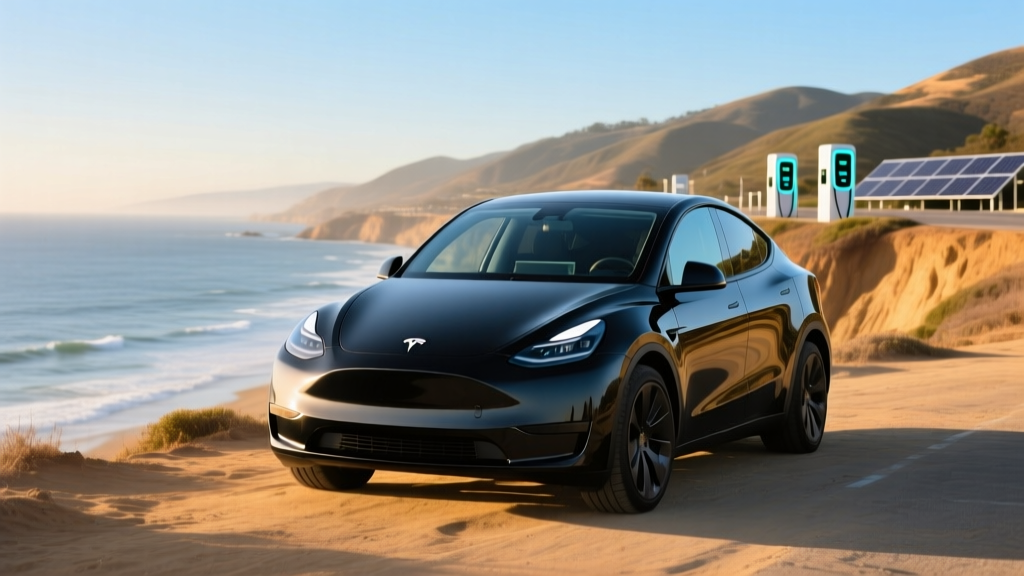
California has long been Tesla's home turf — the state where the Model 3 and Model Y became default choices for tech commuters, suburban families, and rideshare drivers alike. But recent data from the California Energy Commission and DMV registration records show a measurable trend: tesla ev registrations california decline is no longer a blip, it's a pattern. In 2025, Tesla's share of new EV registrations in California dipped below 50% for the first time in years, pressured by a wave of compelling alternatives from Hyundai, Ford, BMW, Rivian, and Chevrolet.
The question for buyers in 2026 isn't whether Tesla still makes a good EV — it does. The question is whether the Model Y, Tesla's best-selling vehicle globally, still represents the smartest buy in a market that has finally caught up. This review dissects the 2026 Tesla Model Y Long Range AWD with the exact numbers, real-world caveats, and ownership economics you need to decide.
2026 Model Y Long Range: Spec Sheet at a Glance
| Spec | Value |
|---|---|
| EPA Range | 320 miles |
| Battery (usable) | ~75 kWh, NMC (nickel manganese cobalt) |
| Efficiency | 122 MPGe combined / 28 kWh per 100 mi |
| Peak DC Fast Charge | 250 kW (Supercharger V3/V4) |
| 10–80% DC Charge Time | ~25 minutes |
| Level 2 Home Charge Rate | 11.5 kW (44 mi/hr) |
| 0–60 mph | 4.8 seconds |
| Horsepower | 384 hp (dual-motor AWD) |
| Drivetrain | Dual-motor all-wheel drive |
| Cargo Volume | 30.2 cu ft (rear seats up) / 72.1 cu ft (folded) |
| Front Trunk (Frunk) | 4.1 cu ft |
| Rear Legroom | 38.4 inches |
| Battery Warranty | 8 years / 120,000 miles (70% capacity retention) |
| Base MSRP | $44,990 |
| Federal Tax Credit (§30D) | Up to $7,500 (eligibility varies) |
Real-World Range: Beyond the EPA Sticker
Tesla's NMC battery chemistry delivers strong energy density, which is why the Model Y achieves 320 miles from a relatively compact ~75 kWh usable pack. However, NMC cells are more sensitive to extreme cold than LFP (lithium iron phosphate) chemistries used in the base RWD Model Y. If you live in the Sierras, Mountain West, or plan frequent winter road trips, preconditioning the battery via the Tesla app before departure is essential — it warms the pack to optimize both range and charging speed.
On a fueleconomy.gov comparison basis, the Model Y's 28 kWh/100mi efficiency remains class-leading among dual-motor electric SUVs, edging out the Hyundai Ioniq 5 AWD (30 kWh/100mi) and Ford Mustang Mach-E AWD (31 kWh/100mi).
Charging Speed: Supercharger Network vs. the Competition
| Charge Level | Power | Miles Added per Hour | Notes |
|---|---|---|---|
| Level 1 (120V outlet) | ~1.4 kW | ~4–5 mi/hr | Emergency/trickle only |
| Level 2 (240V home) | 11.5 kW | ~44 mi/hr | Full charge in ~7 hours |
| DC Fast (Supercharger V3/V4) | Peak 250 kW | ~1,000 mi/hr (peak) | 10–80% in ~25 min |
The Model Y's peak 250 kW DC fast-charging rate is no longer class-leading — Hyundai's E-GMP platform (Ioniq 5/6) hits 233 kW but sustains a flatter charge curve thanks to its 800V architecture, achieving 10–80% in roughly 18 minutes. Tesla's 400V system ramps aggressively to 250 kW but tapers noticeably above 50% state of charge (SoC). On a typical road trip, you'll see sustained rates of 150–180 kW in the 20–60% window, dropping to under 80 kW past 70%.
Where Tesla still holds a decisive edge is the Supercharger network. With over 6,500 V3/V4 stalls across California alone, the plug-and-charge experience — no apps, no RFID cards, no broken stalls — remains the gold standard. Competitors relying on Electrify America or EVgo still face 10–15% downtime at public stations, a friction point that keeps many California buyers in the Tesla ecosystem despite the registration slide.
One important note: Tesla now offers a NACS-to-CCS adapter, and most new non-Tesla EVs are shipping with native NACS ports starting in 2025–2026, meaning the Supercharger moat is narrowing. The registration decline partly reflects this — the charging network is no longer a Tesla-exclusive advantage.
Performance and Driving Dynamics
The 2026 Model Y Long Range AWD uses a dual-motor setup producing a combined 384 horsepower. The 0–60 mph sprint takes 4.8 seconds — quick by any measure and faster than most buyers will ever need. Acceleration is linear and immediate, with no turbo lag or gear-hunt hesitation.
Ride quality has improved meaningfully since the 2025 "Juniper" refresh, which added frequency-selective dampers, acoustic glass, and revised suspension bushings. The cabin is noticeably quieter at highway speed than pre-2025 models. That said, the Model Y still rides on the firmer side compared to a Hyundai Ioniq 5 or Ford Mustang Mach-E — you'll feel sharp pavement imperfections more than you would in those competitors.
Regenerative braking offers two modes: Standard (strong enough for near one-pedal driving in most conditions) and Low (more natural coasting). Tesla removed the controversial "stop mode" one-pedal setting that held the car at a complete stop, requiring a brake press to hold — a welcome change for drivers transitioning from ICE vehicles.
Interior, Tech, and Cargo Practicality
The Juniper-refreshed interior is a step above the minimalist austerity of earlier Model Y builds. The 15.4-inch center touchscreen remains the command hub for everything — climate, media, navigation, vehicle settings — and now runs a faster processor with snappier response times. A rear 8-inch touchscreen for passengers controls rear climate and entertainment, addressing a long-standing complaint.
Tesla's Autopilot comes standard and includes Traffic-Aware Cruise Control and Autosteer (lane centering). This is a SAE Level 2 driver-assistance system — you must keep your hands on the wheel and remain attentive at all times. Full Self-Driving (Supervised), available as an $8,000 add-on or $99/month subscription, adds automatic lane changes, traffic light/stop sign recognition, and navigate-on-autopilot. Despite the name, FSD remains Level 2 and requires active driver supervision. It is not a Level 4 autonomous system like Waymo's driverless robotaxis.
Cargo practicality is where the Model Y justifies its crossover pricing. With rear seats upright, you get 30.2 cubic feet — enough for a week's groceries or two large suitcases. Fold the 60/40 rear bench and capacity expands to 72.1 cubic feet, rivaling midsize SUVs. The 4.1-cubic-foot frunk is useful for charging cables or a small bag. Rear legroom at 38.4 inches is adequate for adults on shorter trips, though taller passengers may find the sloping roofline limiting on longer rides.
Pricing, Tax Credits, and What You'll Actually Pay
| Trim | MSRP | Est. After §30D Credit | Notes |
|---|---|---|---|
| Long Range AWD | $44,990 | ~$37,490 | If full $7,500 credit applies |
| Performance AWD | $49,990 | ~$42,490 | If full $7,500 credit applies |
| Long Range AWD + FSD | $52,990 | ~$45,490 | FSD adds $8,000 |
The IRS §30D federal tax credit offers up to $7,500 for qualifying new EVs, but eligibility is not automatic. For the 2026 Model Y, you must meet all of the following:
- MSRP cap: The vehicle must be under $80,000 (SUVs/vans). All Model Y trims qualify.
- Buyer income cap: Modified AGI must not exceed $150,000 (single), $225,000 (head of household), or $300,000 (joint filers).
- Battery sourcing: A percentage of critical minerals and battery components must be sourced from the U.S. or free-trade-agreement partners. Tesla's Fremont-built Model Y has progressively improved domestic sourcing, but the exact qualifying amount can shift — verify current eligibility on the IRS clean vehicle credit page or through Tesla's point-of-sale transfer tool at purchase.
- Point-of-sale transfer: As of 2024, you can transfer the credit to the dealer at purchase, reducing your out-of-pocket cost immediately rather than waiting for tax filing.
The California registration decline partly reflects the fact that competitors like the Hyundai Ioniq 5, Chevrolet Equinox EV, and Ford Mustang Mach-E also qualify for the full $7,500 credit — often at lower starting prices. A well-equipped Equinox EV RS at ~$38,000 after the credit undercuts the Model Y by nearly $10,000, pulling budget-conscious California buyers away.
Pros, Cons, and the Competition
✓ Pros
- Best-in-class Supercharger network access
- Top-tier efficiency (122 MPGe combined)
- Excellent cargo versatility (72.1 cu ft max)
- Strong over-the-air update track record
- Improved Juniper ride quality and NVH
- Comprehensive 8-yr/120,000-mi battery warranty
✗ Cons
- No Apple CarPlay or Android Auto
- FSD ($8,000) remains Level 2, not autonomous
- Firm ride vs. Ioniq 5 and Mach-E
- 250 kW peak charge rate trails 800V competitors
- Insurance costs 15–25% above segment average
- Rear headroom limited by coupe-like roofline
Against the Hyundai Ioniq 5 AWD (320 mi EPA, 10–80% in ~18 min, ~$52,000), the Model Y trades faster charging for a more mature charging network and better cargo space. The Ford Mustang Mach-E Extended Range AWD (312 mi EPA, ~$48,000) offers a more engaging drive but less rear-seat room. The Chevrolet Equinox EV (319 mi EPA, ~$36,000 after credit) is the value disruptor pulling price-sensitive California registrations away from Tesla.
Who Should Buy the 2026 Model Y?
The Model Y Long Range AWD remains the right choice for California buyers who prioritize charging-network reliability, efficiency, and cargo versatility above all else. It's ideal for:
- Frequent road-trippers who rely on the Supercharger network across California, Nevada, and the Pacific Northwest
- Two-adult households who need SUV cargo space without the footprint of a full-size crossover
- Tech-forward buyers who value over-the-air updates and Tesla's software ecosystem
It's less compelling for buyers who want the fastest possible DC charging (look to Hyundai/Kia's 800V platform), need Apple CarPlay integration, or are shopping strictly on price after incentives (the Equinox EV and Ioniq 5 undercut it).
Frequently Asked Questions
What is the real-world range of the 2026 Tesla Model Y?
The EPA rates it at 320 miles. Real-world highway driving yields 265–285 miles; cold weather (below 30°F) can reduce that to 220–245 miles. City driving with regen braking often achieves 300+ miles.
How fast does the Model Y charge at home and on DC fast chargers?
At home on a 240V Level 2 charger, it adds about 44 miles per hour (11.5 kW), fully charging in roughly 7 hours. On a Tesla Supercharger, it peaks at 250 kW and charges from 10–80% in about 25 minutes, though the rate tapers significantly above 50% SoC.
Does the 2026 Model Y qualify for the $7,500 federal EV tax credit?
It can, but eligibility depends on your income (capped at $300,000 for joint filers), the vehicle's MSRP (under $80,000 — all trims qualify), and current battery-sourcing requirements. The credit can be transferred at the point of sale. Always verify on IRS.gov before purchasing.
Why are Tesla EV registrations declining in California?
The decline reflects increased competition from similarly capable EVs (Ioniq 5, Equinox EV, Mach-E) that now offer comparable range, qualify for the same tax credits, and — with NACS adoption — are gaining Supercharger access. Tesla's market share is normalizing as the EV market matures, not necessarily a sign of product failure.
Is the Model Y worth buying over competitors in 2026?
Yes, if charging-network reliability and efficiency are your top priorities. If you value faster DC charging, a softer ride, or a lower price after incentives, the Hyundai Ioniq 5 or Chevrolet Equinox EV may serve you better. Test-drive both before deciding.