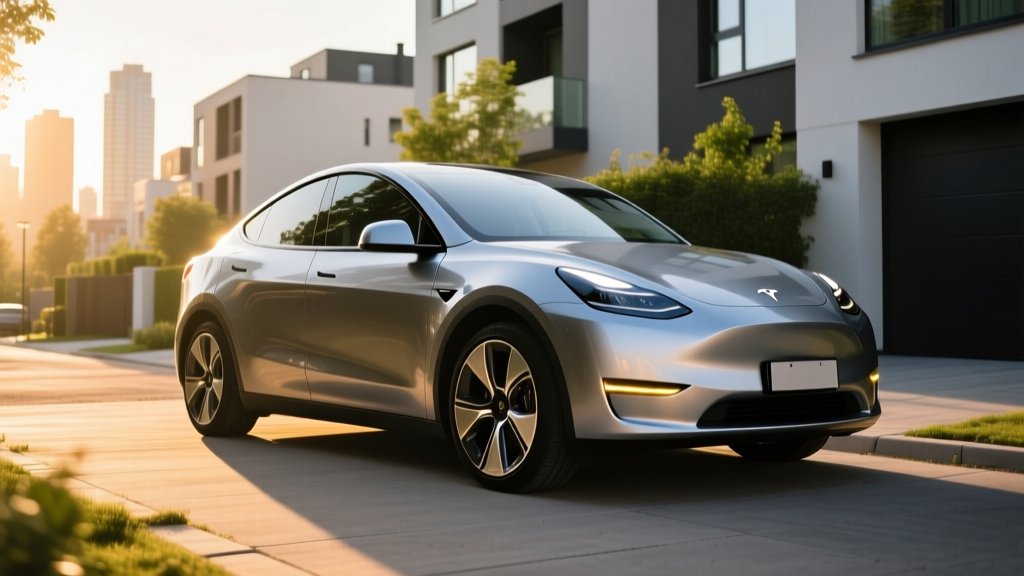
If you've followed EV headlines recently, you've likely seen the chatter around the Tesla Europe May sales drop — a notable decline in registrations across key markets like Germany, France, and the Netherlands. While some of that is attributable to shifting incentive structures abroad and ramped-up competition from BYD, Volkswagen, and Hyundai, the story stateside is different. The refreshed 2026 Tesla Model Y Long Range AWD remains one of the most capable and best-selling electric SUVs in the U.S. market. Below, we break down exactly what you get for the money — with real numbers, not marketing fluff.
Quick Verdict: Still the Benchmark, but the Gap Is Closing
The 2026 Model Y Long Range AWD delivers 320 miles of EPA range, a refined Juniper-refresh interior, and access to Tesla's unmatched Supercharger network. It's the default pick for tech-forward buyers who want a practical family EV with strong efficiency and fast DC charging. But rivals like the Hyundai Ioniq 5, Kia EV6, and Ford Mustang Mach-E have narrowed the gap significantly — and some undercut it on price while matching or exceeding its real-world comfort. If brand cachet, software polish, and charging infrastructure are your top priorities, the Model Y still wins. If you want more interior space, quieter ride quality, or a head-up display, shop the competition.
Range, Battery, and Efficiency: The Real Numbers
The 2026 Model Y Long Range AWD is equipped with a 78.1 kWh usable battery pack using NMC (nickel-manganese-cobalt) chemistry. NMC offers higher energy density than LFP (lithium iron phosphate), which translates to more range in a lighter package — but it also means Tesla recommends daily charging to 80% for long-term battery health, unlike the LFP packs in the RWD trim that can be charged to 100% daily without degradation concerns.
Real-World Expectation: Expect ~270–290 miles on mixed highway driving at 70–75 mph. In cold weather (below 32°F), plan for a 20–30% reduction, bringing usable range to roughly 220–250 miles without preconditioning. City driving with regen braking can push range closer to or slightly above the EPA sticker.
| Spec | Value |
|---|---|
| EPA Range | 320 miles |
| Battery (usable) | 78.1 kWh, NMC |
| Efficiency | 122 MPGe combined / 27 kWh/100 mi |
| Max DC Fast Charge | 250 kW (peak) |
| 10–80% DC Charge Time | ~25 minutes |
| Level 2 Home Charge Rate | 11.5 kW (~44 mi/hr) |
| 0–60 mph | 4.8 seconds |
| Horsepower | 384 hp (dual motor) |
| Drivetrain | AWD (dual motor) |
| Cargo (rear seats up) | 30.2 cu ft |
| Cargo (rear seats folded) | 72.1 cu ft |
| Front Trunk (frunk) | 4.1 cu ft |
| Rear Legroom | 41.6 in |
| Base MSRP | $48,590 (incl. destination) |
| Battery Warranty | 8 years / 120,000 miles (70% retention) |
Efficiency is a Tesla strong suit. At 122 MPGe combined (27 kWh per 100 miles), the Model Y Long Range sips electrons more frugally than most competitors in its class. For context, the Hyundai Ioniq 5 Long Range AWD returns 113 MPGe combined, and the Ford Mach-E Extended Range AWD lands at 101 MPGe. Over 12,000 miles of annual driving at $0.16/kWh (national average), the Model Y costs roughly $518 per year in electricity — versus about $1,800 in gasoline for a comparable 25 MPG gas SUV.
Charging Speed: DC Fast, Level 2, and the Supercharger Advantage
The Model Y Long Range AWD peaks at 250 kW on DC fast chargers — specifically Tesla V3 and V4 Superchargers. On the CCS adapter (included since late 2024 on all North American Teslas), it can also use Electrify America, EVgo, and other CCS networks, though charge rates on non-Tesla hardware may peak slightly lower due to communication-handshake differences.
| Level | Power | Speed (mi/hr added) | Notes |
|---|---|---|---|
| Level 1 (120V) | ~1.4 kW | ~3–5 mi/hr | Emergency/top-up only |
| Level 2 (240V, 48A) | 11.5 kW | ~44 mi/hr | Full charge in ~7 hours; overnight ready |
| DC Fast (Tesla V3/V4) | 250 kW peak | ~162 mi in 15 min | 10–80% in ~25 min; tapers above 80% |
| DC Fast (CCS adapter) | ~190–220 kW peak | Varies | Non-Tesla networks; adapter included |
Charging-curve reality check: The 250 kW peak is sustained only between roughly 10–30% state of charge. From 30–60%, expect ~170–200 kW; from 60–80%, the rate tapers to ~90–120 kW. This is normal for NMC packs with aggressive thermal management, and Tesla's curve is among the best-managed in the industry. Still, your real-world 10–80% stop will take about 25 minutes, not the "15 minutes to 80%" some marketing materials imply.
For home charging, a 48-amp Level 2 wall connector on a 60-amp circuit delivers the full 11.5 kW, adding about 44 miles per hour of charging. Most owners will wake up to a full battery every morning. Installation costs for a dedicated 240V/60A circuit typically range from $500 to $2,000 depending on panel proximity and local permitting — factor in a potential $1,500–$3,000 panel upgrade if your home has a 100-amp service panel that's already near capacity.
Performance and Driving Dynamics
The dual-motor AWD powertrain produces 384 horsepower and launches the Model Y to 60 mph in 4.8 seconds. That's quick by any measure — quicker than a base Porsche Macan and most V6 luxury crossovers. The instant torque delivery makes highway merging and city gap-filling effortless.
Ride quality saw meaningful improvement with the Juniper refresh: revised suspension tuning, acoustic glass, and additional sound deadening have addressed the two most common complaints about the pre-2025 Model Y — a harsh ride over broken pavement and noticeable road noise at highway speed. The 2026 model is genuinely comfortable on long road trips, though the steering remains on the numb side compared to, say, a BMW iX or even the Hyundai Ioniq 5.
Towing: The Model Y is rated for 3,500 lbs when properly equipped with the factory tow hitch ($1,000 option). That covers a small utility trailer or a pair of jet skis, but it's not a serious tow rig. Range drops significantly when towing — plan for roughly 50–60% of rated range under load.
Pricing, Trims, and Federal Tax Credit Eligibility
The 2026 Model Y is available in three trims for the U.S. market:
| Trim | MSRP (incl. dest.) | Est. After §30D Credit | Credit Eligible? |
|---|---|---|---|
| Long Range RWD | $44,990 | ~$37,490 | Yes — if sourcing & income rules met |
| Long Range AWD | $48,590 | ~$41,090 | Yes — if sourcing & income rules met |
| Performance AWD | $53,990 | ~$46,490 | Yes — if sourcing & income rules met |
Federal tax credit (§30D) — the fine print: The Model Y qualifies for the full $7,500 credit as of early 2026, but only if you also qualify. Per IRS rules, eligibility requires:
- MSRP cap: Vehicle must be under $80,000 for SUVs — all Model Y trims clear this easily.
- Buyer income cap: Modified AGI must not exceed $150,000 (single), $225,000 (head of household), or $300,000 (joint). You can use the prior year's income if it's lower.
- Battery sourcing: A percentage of critical minerals must be sourced from the U.S. or FTA-partner countries, and battery components must not be sourced from a "foreign entity of concern" (primarily Chinese suppliers). Tesla has restructured its supply chain to meet these thresholds for 2026, but always verify the VIN on fueleconomy.gov before purchasing.
- Point-of-sale transfer: Since 2024, you can transfer the credit to the dealer at purchase, reducing your out-of-pocket cost immediately rather than waiting for tax filing. Tesla supports this at delivery.
Consult a tax professional to confirm your personal eligibility — income situations vary, and the credit is non-refundable (it can reduce your tax liability to zero but won't generate a refund beyond that).
Interior, Tech, and Driver Assistance
The Juniper-refreshed interior is a meaningful step up. The minimalist dashboard now features ventilated front seats, ambient lighting, power-folding second-row seats, a rear-seat touchscreen for climate and media, and substantially improved material quality. The 15.4-inch center touchscreen runs Tesla's latest software with responsive navigation, streaming apps, and over-the-air updates that continue to add features post-purchase.
Notable tech features:
- Tesla Vision-based Autopilot (SAE Level 2) with adaptive cruise, lane centering, and auto lane change
- Full Self-Driving (Supervised) — $8,000 option or $99/month — adds navigate-on-autopilot, traffic light/stop sign recognition, and city street steering. This remains a Level 2 driver-assist system requiring full driver attention at all times.
- Dashcam and Sentry Mode (uses external cameras for security recording)
- Phone-as-key with automatic walk-up unlock
- Heat pump standard — critical for cold-climate efficiency, reducing winter range loss versus resistive heating
Autopilot and FSD (Supervised) are driver-assistance systems, not self-driving. The driver must keep hands on the wheel (or demonstrate attentiveness via the cabin camera) and eyes on the road at all times. Tesla's system is capable and improving, but it is not Level 4 autonomy like Waymo's driverless robotaxi service.
Notable drawbacks:
- No traditional instrument cluster or head-up display — all info is on the center screen, which requires glancing right
- Turn signal stalks have been replaced by steering-wheel-mounted buttons (post-refresh), which many drivers find unintuitive, especially in roundabouts
- No Apple CarPlay or Android Auto — Tesla's native infotainment is capable but locked to Tesla's ecosystem
- Visibility to the rear is compromised by the sloping roofline; the digital rearview mirror option helps but costs extra
Pros and Cons at a Glance
Pros
- Best-in-class efficiency (122 MPGe combined)
- Access to 6,000+ Tesla Supercharger stalls in North America — still the most reliable DC network
- Strong real-world range (270–290 mi highway) with excellent cold-weather heat pump
- Over-the-air updates continuously improve the vehicle post-purchase
- Spacious cargo area (72.1 cu ft max) with usable frunk
- $7,500 federal tax credit eligible (with income/sourcing caveats)
Cons
- Steering-wheel turn signal buttons are divisive and take weeks to adjust to
- No Apple CarPlay/Android Auto
- Ride quality, while improved, still trails Hyundai Ioniq 5 and Kia EV6 on rough roads
- Insurance premiums run 15–25% higher than segment average
- FSD (Supervised) is expensive ($8,000) and still requires constant supervision
- Brand sentiment headwinds may affect resale values — the Europe sales dip is one signal
Who Should Buy the 2026 Model Y?
Choose the Model Y Long Range AWD if: You prioritize charging-network reliability, software integration, and efficiency above all else. It's ideal for tech-savvy commuters and small families who road-trip 2–4 times a year and want minimal charging hassle on the highway. The Supercharger network remains a genuine competitive moat, especially in rural corridors where CCS infrastructure is still sparse.
Look elsewhere if: You want a more traditional driving experience with physical controls, a head-up display, or a quieter, softer ride. The Hyundai Ioniq 5 offers a more spacious rear seat and a more intuitive control layout. The Kia EV6 GT-Line delivers sharper handling. The Ford Mach-E provides a more car-like driving position and available BlueCruise hands-free driving on mapped highways.
Consider the Europe sales drop in context: The Tesla Europe May sales drop reflects a combination of factors — reduced subsidies in Germany, rising competition from Chinese and Korean brands, and brand-politics headwinds. For U.S. buyers, this actually creates a potential opportunity: Tesla has been more aggressive with referral incentives, free Supercharging credits, and lease deals to maintain domestic momentum. If you've been on the fence, mid-2026 may offer better deal leverage than usual.
Warranty and Long-Term Ownership
Tesla covers the Model Y's battery and drive unit for 8 years or 120,000 miles, whichever comes first, with a minimum 70% capacity retention guarantee. The basic vehicle limited warranty is 4 years / 50,000 miles. These terms are competitive with the segment (Hyundai/Kia offer 10 years / 100,000 miles on the battery, which is better).
Real-world degradation data from Tesla's fleet suggests NMC packs in the Model Y lose roughly 8–12% capacity over the first 100,000 miles, with the steepest drop in the first 10,000–15,000 miles before leveling off. Following Tesla's recommended charging practices (daily limit of 80%, occasional 100% for trips) should keep you well within warranty thresholds.
Insurance note: Model Y insurance premiums average $1,800–$2,400 annually for a 40-year-old driver with a clean record — roughly 15–25% above the segment average for electric SUVs. Tesla's own insurance product (available in most states) can sometimes undercut third-party quotes, so always compare.
Frequently Asked Questions
What is the real-world range of the 2026 Tesla Model Y Long Range AWD?
The EPA rates it at 320 miles. In real-world mixed highway driving at 70–75 mph, expect 270–290 miles. In freezing temperatures without preconditioning, plan for 220–250 miles. Preconditioning the battery while navigating to a Supercharger helps restore some of that cold-weather loss.
How fast does the Model Y charge at home and on the road?
At home on a 48-amp Level 2 charger, it adds ~44 miles per hour and fully charges in about 7 hours. On a Tesla V3/V4 Supercharger, it peaks at 250 kW and charges from 10–80% in approximately 25 minutes, though the rate tapers significantly above 80% SoC.
How much does the Model Y cost after the federal tax credit?
The Long Range AWD starts at $48,590. If you qualify for the full $7,500 §30D credit (income under $300k joint, vehicle MSRP under $80k, battery sourcing requirements met), the effective price drops to ~$41,090. The credit can now be applied at point of sale, reducing your upfront cost immediately.
Is the Model Y worth buying versus the Hyundai Ioniq 5 or Kia EV6?
It depends on priorities. The Model Y wins on efficiency, Supercharger access, cargo space, and software. The Ioniq 5 and EV6 win on ride comfort, physical controls, Apple CarPlay, and (with Hyundai/Kia) a longer battery warranty. Test-drive all three — the right choice is the one that feels best in your daily routine.
Does the 2026 Model Y qualify for the $7,500 federal EV tax credit?
Yes, the vehicle itself qualifies. However, you must also meet IRS income caps ($150k single / $300k joint), the vehicle must be under the $80k MSRP cap (it is), and battery critical-mineral sourcing requirements must be satisfied. Always verify the specific VIN on fueleconomy.gov and consult a tax professional before relying on the credit.
What caused the Tesla Europe May sales drop, and should it concern U.S. buyers?
The decline was driven by reduced government subsidies in key European markets, intensifying competition from BYD and European legacy brands, and some brand-sentiment headwinds. For U.S. buyers, the impact is indirect: potential softening of resale values and more aggressive domestic pricing/incentives from Tesla to maintain volume. It may actually be a favorable buying window.