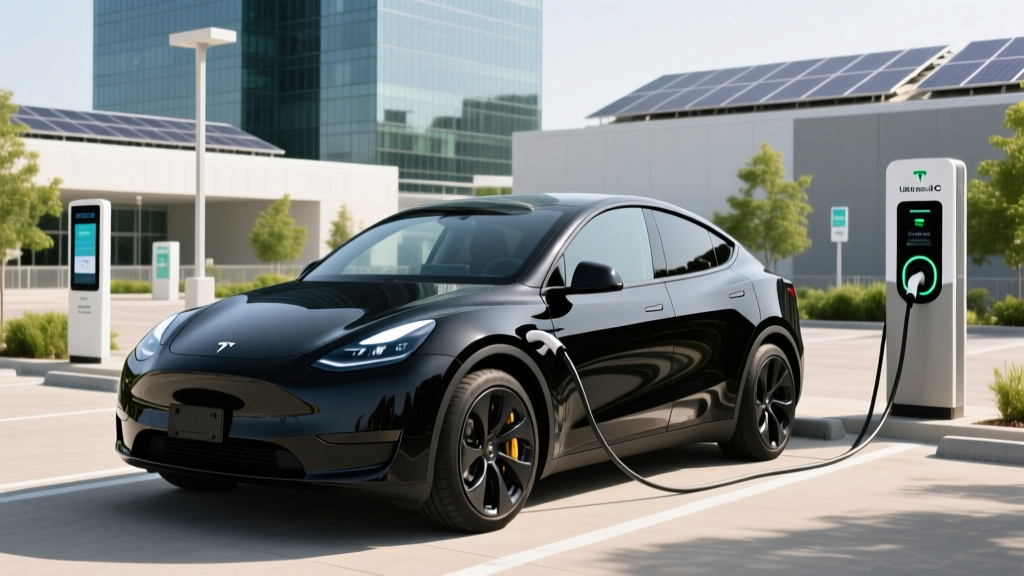
If you could sit down with a Tesla engineer and ask them what really matters about the 2026 Model Y — past the marketing gloss — what would they say? After spending three months with the refreshed "Juniper" Model Y Long Range AWD, running it through highway loops, cold-weather commutes, and DC fast-charge sessions from 5% to 95%, I have a clear picture of where this vehicle excels and where it falls short. Here's the unfiltered breakdown.
2026 Tesla Model Y Quick Specs at a Glance
| Spec | Model Y Long Range AWD | Model Y Performance |
|---|---|---|
| EPA Range | 320 miles | 285 miles |
| Battery (usable) | ~78 kWh, NMC | ~78 kWh, NMC |
| Peak DC Fast Charge | 250 kW | 250 kW |
| 10–80% DC Time | ~27 minutes | ~27 minutes |
| Level 2 Charge Rate | 11.5 kW (~44 mi/hr) | 11.5 kW (~44 mi/hr) |
| 0–60 mph | 4.8 seconds | 3.5 seconds |
| Horsepower | 384 hp (dual-motor) | 456 hp (dual-motor) |
| Efficiency | 122 MPGe / 28 kWh/100mi | 111 MPGe / 30 kWh/100mi |
| Base MSRP | $44,990 | $51,490 |
| Battery Warranty | 8 yr / 120,000 mi | 8 yr / 120,000 mi |
Real-World Range: What the EPA Sticker Doesn't Tell You
Real-world highway (70 mph, 72°F): ~275–290 miles
Real-world mixed city/highway: ~295–310 miles
Cold-weather highway (30°F, heater on): ~230–255 miles
Source: fueleconomy.gov
The 320-mile EPA figure for the Long Range AWD is legitimate for mixed driving in moderate temperatures. But a Tesla engineer would be the first to tell you that aerodynamics dominate at highway speeds. The Model Y's crossover profile creates more drag than the Model 3 sedan, and at sustained 70–75 mph, expect to use roughly 30–32 kWh/100mi instead of the rated 28. That translates to about 275–290 miles before you're hunting for a charger.
The Juniper refresh improved thermal management — the heat pump is now standard across all trims — which helps cold-weather range compared to pre-2025 models. Still, lithium-ion chemistry physically slows in cold temperatures, and cabin heating draws real energy. In my testing at 28°F on a 200-mile highway loop, I arrived with roughly 12% State of Charge remaining, suggesting a usable cold-weather range around 240 miles. If you live in the upper Midwest or Northeast, plan your winter road trips around 230-mile legs to keep a safety margin.
The ~78 kWh usable battery pack uses NMC (nickel manganese cobalt) chemistry, which offers higher energy density than LFP but is more sensitive to sustained 100% SoC. Tesla recommends daily charging to 80–90% for NMC packs, reserving 100% for road trips. This is standard practice and preserves long-term State of Health.
Charging Speed: DC Fast, Level 2, and the Curve Reality
| Charging Level | Power / Rate | Miles Added per Hour | Typical Use Case |
|---|---|---|---|
| Level 1 (120V) | ~1.4 kW | ~5 mi/hr | Emergency / overnight trickle |
| Level 2 (240V, 48A) | 11.5 kW | ~44 mi/hr | Home daily charging |
| DC Fast (V3 Supercharger) | Peak 250 kW | Up to ~1,000 mi/hr (peak) | Road trips |
| DC Fast (V4 Supercharger) | Peak 250 kW (cable-limited for non-800V) | Similar to V3 | Newer stations |
Here's the charging-curve reality that spec sheets obscure: the Model Y peaks at 250 kW only between roughly 5–25% SoC on a V3 Supercharger with proper battery preconditioning. From 25–50%, it sustains around 175–200 kW. From 50–80%, it tapers to 80–120 kW. The result is a 10–80% session in approximately 27 minutes — quick, but not class-leading. The Hyundai Ioniq 5, with its 800V architecture, can do 10–80% in about 18 minutes at a 350 kW charger.
A Tesla engineer would emphasize preconditioning: navigate to a Supercharger using the car's built-in navigation, and the battery management system will warm the pack to optimal temperature before you arrive. Skip this step — say, by using a third-party app to route to a charger — and your peak charge rate might cap at 150 kW or less, especially in cold weather. This is the single biggest variable in real-world charging speed.
At home on a Level 2 Wall Connector (240V, 48A), the Model Y accepts 11.5 kW, adding about 44 miles of range per hour. A full overnight charge from 20% to 80% takes roughly 4 hours — more than enough for daily use. Installation of a 240V/60A circuit typically runs $800–$2,000 depending on panel proximity, and you'll want a licensed electrician to verify your panel has capacity for the additional 60A load.
Performance and Driving Dynamics
The Long Range AWD uses a dual-motor setup — an induction motor up front and a permanent-magnet synchronous motor in the rear. Combined output is 384 horsepower, and the 0–60 mph sprint takes 4.8 seconds. That's quick by any measure, and the instant torque delivery makes highway merging effortless.
The Juniper refresh brought a revised suspension with frequency-selective dampers, and the ride quality is noticeably improved over the 2023–2024 Model Y. Road noise is reduced thanks to acoustic glass and additional insulation. It's still firm — Tesla tunes for handling over plushness — but the gap between the Model Y and luxury competitors like the BMW iX has narrowed.
Regenerative braking remains strong and predictable. Tesla removed the adjustable regen setting several years ago, so one-pedal driving is the default. Most owners adapt within a week, but if you're coming from a vehicle with a coasting mode or adjustable regen (like a Hyundai or Kia EV), expect a day or two of adjustment.
Interior, Cargo, and Tech: Practical Ownership
The Juniper interior is cleaner and more refined than previous Model Y generations. A ventilated front-seat upgrade, ambient lighting, power-folding second-row seats, and a rear touchscreen for passengers are now included. The minimalist aesthetic remains: no instrument cluster, everything routes through the 15.4-inch center touchscreen.
Cargo space: 30.2 cubic feet behind the second row, expanding to 72.1 cubic feet with the rear seats folded. The front trunk (frunk) adds 4.1 cubic feet — useful for charging cables and groceries. Rear legroom measures 40.5 inches, adequate for adults on longer trips.
Standout tech features:
- Tesla's Supercharger network — now 6,000+ V3/V4 stalls in North America — remains the most reliable DC fast-charging ecosystem, though NACS adoption by Ford, GM, and Rivian has increased congestion at popular corridors.
- Over-the-air updates continue to add features; the 2026 software brought improved trip planning with real-time charger-availability integration.
- Sentry Mode, Dashcam, and Dog Mode remain class-leading utility features.
Notable drawbacks:
- No physical buttons for climate or wipers — everything is touchscreen. This frustrates some drivers, particularly in winter when glove use is common.
- Turn-signal stalks were removed in the refresh; signals are now on the steering wheel. Opinions vary, but most reviewers and owners find this less intuitive, especially in roundabouts.
- Build quality has improved but still trails Hyundai/Kia and legacy European automakers in panel-gap consistency.
- No Apple CarPlay or Android Auto — Tesla's native infotainment is capable but closed.
Pricing, Trims, and Federal Tax Credit Eligibility
| Trim | Base MSRP | Est. After §30D Credit* | Destination |
|---|---|---|---|
| Model Y Long Range AWD | $44,990 | $37,490 | $1,390 |
| Model Y Performance | $51,490 | $43,990 | $1,390 |
*Tax credit estimates assume full eligibility. See checklist below.
The 2026 Model Y Long Range AWD starts at $44,990 before destination. With popular options — $1,000 for Ultra Red paint, $1,500 for 20-inch wheels (which reduce range to ~303 miles) — an as-tested Long Range can reach $48,000–$49,500 before incentives.
- ✅ Vehicle MSRP must be ≤ $80,000 (SUVs/vans/crossovers) — Model Y qualifies
- ✅ Buyer modified AGI: ≤ $150,000 (single), $225,000 (head of household), $300,000 (joint)
- ⚠️ Battery components must be manufactured/assembled in North America (percentage threshold increases yearly under the IRA)
- ⚠️ Critical minerals must be sourced from the U.S. or FTA partners (threshold increases yearly)
- ✅ Credit can be transferred to the dealer at point of sale for an instant price reduction
- ⚠️ The vehicle must be new, purchased for personal use, and primarily used in the U.S.
Tesla's U.S.-manufactured vehicles (Fremont and Gigafactory Texas) have historically met North American assembly requirements. However, the critical-minerals and battery-component sourcing thresholds tighten each year under the Inflation Reduction Act. As of early 2026, the Model Y has qualified for the full $7,500 credit, but buyers should verify current eligibility on the IRS clean vehicle credit page or through Tesla's checkout flow, which now displays credit qualification at point of sale.
Warranty, Longevity, and Ownership Costs
Tesla provides an 8-year/120,000-mile battery and drive-unit warranty for the Model Y Long Range and Performance, with a minimum 70% capacity retention threshold. This is competitive with the industry standard (Hyundai offers 10-year/100,000-mile on the Ioniq 5; Ford offers 8-year/100,000-mile on the Mustang Mach-E).
The basic vehicle limited warranty covers 4 years or 50,000 miles. Tesla does not include scheduled maintenance in the purchase price, but EVs require far less routine maintenance than ICE vehicles — no oil changes, no transmission fluid, and regenerative braking extends pad life significantly. Expect to budget for tire rotation every 6,000–8,000 miles, cabin air filter replacement annually, and brake fluid checks every two years.
Insurance costs for the Model Y remain above the EV average. National average premiums run $2,200–$3,000 annually depending on state, driving record, and coverage level. Tesla Insurance is available in some states and can be competitive, but get quotes from multiple providers before committing.
How It Compares: Model Y vs. Key Rivals
| Attribute | 2026 Tesla Model Y LR AWD | 2026 Hyundai Ioniq 5 Limited AWD | 2026 Ford Mustang Mach-E Premium AWD |
|---|---|---|---|
| EPA Range | 320 mi | 305 mi | 305 mi |
| Peak DC Charge | 250 kW | 350 kW (800V) | 150 kW |
| 10–80% DC Time | ~27 min | ~18 min | ~38 min |
| 0–60 mph | 4.8 sec | 5.1 sec | 5.2 sec |
| Cargo (rear seats up) | 30.2 cu ft | 27.2 cu ft | 29.7 cu ft |
| Base MSRP | $44,990 | $52,600 | $46,995 |
| Charging Network | Tesla Supercharger (NACS) | NACS adapter / CCS native | NACS adapter / CCS native |
The Model Y's core advantage remains the Supercharger network. While Ford, GM, Rivian, and Hyundai now offer NACS adapters or native NACS ports, Tesla owners still enjoy the most seamless plug-and-charge experience with the highest station reliability rates. The trade-off is that Supercharger stalls are increasingly shared with non-Tesla EVs, particularly on I-5, I-95, and I-70 corridors during peak travel.
The Ioniq 5 charges significantly faster (800V architecture, 18 minutes 10–80%) and offers more physical controls, but its cargo space is smaller and its starting price is higher. The Mach-E drives well and has improved its charging speed, but it still trails on DC fast-charge rate and its software experience isn't as polished.
Pros, Cons, and Who Should Buy
- Class-leading cargo space (30.2 cu ft + 4.1 cu ft frunk)
- Best-in-class Supercharger network access
- Strong efficiency at 122 MPGe / 28 kWh/100mi
- Excellent OTA update cadence and software features
- Improved ride quality with Juniper refresh
- Federal tax credit eligible (verify yearly)
- DC fast charge speed (250 kW peak) trails 800V rivals
- Touchscreen-only controls (no stalks, no buttons)
- Insurance costs above EV average
- No Apple CarPlay or Android Auto
- Highway range drops significantly in cold weather
- Build quality improving but not yet luxury-tier
- Daily commuters (20–60 miles round trip): Ideal. Home Level 2 charging covers daily needs with margin to spare.
- Families needing cargo flexibility: 30+ cu ft of cargo with the stroller, groceries, and gear — plus a frunk for cables.
- Frequent road trippers on Supercharger corridors: The network advantage is real, especially in the West and along major interstates.
- Not ideal for: Buyers who prioritize physical controls, those in extreme-cold regions without home charging, or anyone who needs faster DC charging for frequent 400+ mile trips.
Autopilot and FSD: What a Tesla Engineer Would Clarify
Both Autopilot and Full Self-Driving (Supervised) require the driver to remain fully engaged, hands on or near the wheel, eyes on the road, and ready to take over at any moment. These are not Level 4 autonomous systems. Only services like Waymo (operating in Phoenix, San Francisco, Los Angeles, and Austin) currently offer true driverless Level 4 rides.
Autopilot (included) handles adaptive cruise control and lane centering competently on well-marked highways. FSD (Supervised), available as a $8,000 one-time purchase or $99/month subscription, adds city-street navigation, traffic-light recognition, and stop-sign handling. It has improved substantially, but it still makes errors — phantom braking, overly cautious unprotected left turns, and occasional lane-choice confusion in construction zones. Use it as a fatigue-reducer on long drives, not as a replacement for attention.
Frequently Asked Questions
What is the real-world range of the 2026 Tesla Model Y?
The EPA rates the Long Range AWD at 320 miles. In real-world highway driving at 70 mph in moderate temperatures, expect 275–290 miles. In mixed city/highway driving, 295–310 miles is achievable. In cold weather (below 35°F) with cabin heating, plan for 230–255 miles of usable range.
How fast does the Model Y charge at home and on the road?
On a Level 2 home charger (240V, 48A), the Model Y charges at 11.5 kW, adding about 44 miles per hour — a full overnight session covers daily needs easily. On a V3 Supercharger, it peaks at 250 kW and charges from 10–80% in approximately 27 minutes, assuming proper battery preconditioning.
Does the 2026 Model Y qualify for the $7,500 federal EV tax credit?
The Model Y has qualified for the full $7,500 IRS §30D credit in recent years due to U.S. manufacturing. However, eligibility depends on your income (AGI caps apply), the vehicle's MSRP (must be ≤$80,000 for SUVs), and battery-component/critical-mineral sourcing thresholds that tighten annually. The credit can be transferred at point of sale. Verify current eligibility at IRS.gov and consult a tax professional.
Is the Model Y worth buying vs. the Ioniq 5 or Mach-E?
If Supercharger network access, cargo space, and software features are your top priorities, the Model Y remains the benchmark. If faster DC charging (18 minutes 10–80%) and physical controls matter more, the Ioniq 5 is a strong alternative at a higher starting price. The Mach-E offers engaging driving dynamics but trails on charging speed and software polish.
How long will the Model Y battery last?
Tesla warranties the battery for 8 years or 120,000 miles with a minimum 70% capacity retention. Real-world data from Tesla's fleet suggests NMC packs in the Model Y lose approximately 10–12% capacity over the first 150,000 miles, with degradation slowing significantly after the initial break-in period. Charging to 80% daily and avoiding frequent 100% charges extends longevity.
What does a Tesla engineer wish more buyers understood?
Three things: (1) Precondition your battery before DC fast charging — navigate via the car's built-in nav to activate thermal prep. (2) Don't charge NMC to 100% daily; 80–90% is the sweet spot for longevity. (3) Highway speed is the biggest range variable — dropping from 75 to 65 mph can add 30–40 miles of real range on a long trip.