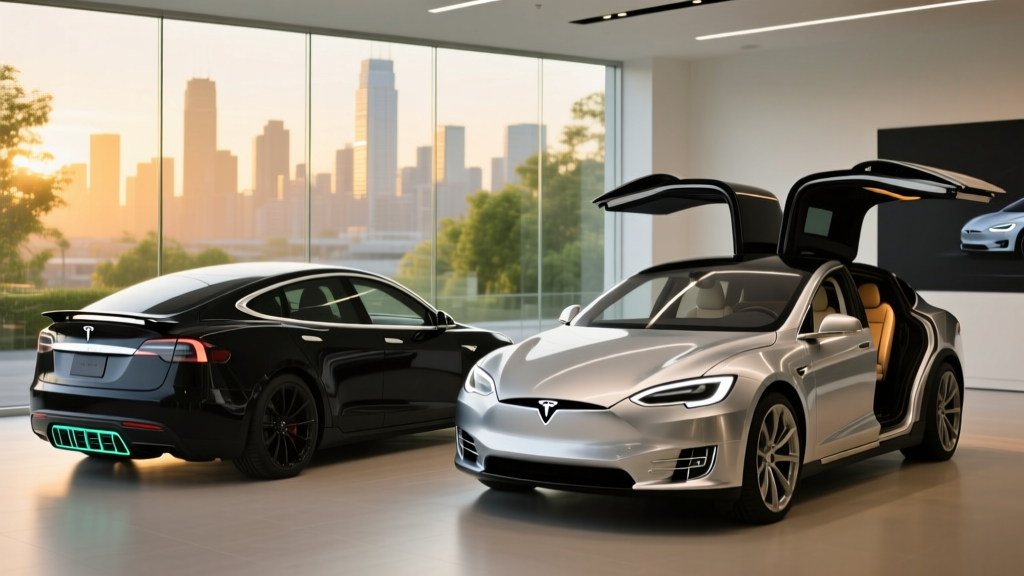
The End of an Era: Tesla Winds Down Model S and Model X
After more than a decade defining the premium electric sedan and SUV segments, Tesla has confirmed it will end Model S and Model X production. The Fremont, California assembly lines that built Tesla's flagship vehicles are being retooled for next-generation platforms, including the company's long-teased lower-cost vehicle architecture. For buyers who have had the Model S or Model X on their shortlist, this raises urgent questions: Should you grab remaining inventory now? What does the phase-out mean for long-term support, resale value, and warranty service? And which competitors actually fill the gap?
This guide breaks down everything current and prospective owners need to know as Tesla ends S X production, including the final 2026 model-year specifications, real-world range data, charging performance, tax-credit eligibility, and a clear-eyed comparison against the luxury EVs stepping in to replace them.
Final 2026 Model S and Model X Specifications
Before diving into the implications of the production shutdown, here are the definitive specs for the final model year. Tesla made minimal changes for 2026, essentially carrying over the 2025 refresh with minor software and interior trim updates.
| Specification | Model S Long Range | Model S Plaid | Model X Long Range | Model X Plaid |
|---|---|---|---|---|
| EPA Range | 402 mi | 359 mi | 335 mi | 320 mi |
| Battery (usable) | ~95 kWh (NMC) | ~95 kWh (NMC) | ~95 kWh (NMC) | ~95 kWh (NMC) |
| Drivetrain | Dual-Motor AWD | Tri-Motor AWD | Dual-Motor AWD | Tri-Motor AWD |
| Horsepower | 670 hp | 1,020 hp | 670 hp | 1,020 hp |
| 0-60 mph | 3.1 sec | 1.99 sec | 3.8 sec | 2.5 sec |
| Peak DC Charge Rate | 250 kW | 250 kW | 250 kW | 250 kW |
| 10-80% DCFC Time | ~27 min | ~27 min | ~29 min | ~29 min |
| Level 2 Home Charging | 11.5 kW (44 mi/hr) | 11.5 kW (44 mi/hr) | 11.5 kW (36 mi/hr) | 11.5 kW (36 mi/hr) |
| MPGe (combined) | 120 MPGe | 116 MPGe | 102 MPGe | 98 MPGe |
| Base MSRP | $74,990 | $89,990 | $79,990 | $94,990 |
| Cargo Volume (rear seats up) | 28 cu ft + 5.3 cu ft frunk | 28 cu ft + 5.3 cu ft frunk | 37.1 cu ft + 6.5 cu ft frunk | 37.1 cu ft + 6.5 cu ft frunk |
| Battery Warranty | 8 yr / 150,000 mi | 8 yr / 150,000 mi | 8 yr / 150,000 mi | 8 yr / 150,000 mi |
Source: Tesla.com and fueleconomy.gov. Specs reflect final 2026 model year.
Real-World Range: What the EPA Number Doesn't Tell You
EPA Sticker vs. Reality
The Model S Long Range carries an EPA-estimated 402 miles of range — one of the highest of any production EV sold in the U.S. But real-world results depend heavily on how and where you drive.
- Highway driving (75 mph): Expect ~320-340 miles in mild weather. Tesla's aerodynamic efficiency helps, but sustained high speeds consume energy faster than the EPA mixed cycle assumes.
- Cold weather (below 32°F): Range can drop 20-30%, bringing the Model S LR down to roughly 280-320 miles. The heat pump helps, but battery chemistry and cabin heating still take a toll.
- City / stop-and-go: This is where the Model S shines — regenerative braking recovers energy, and you may exceed the EPA figure in warm-weather urban driving.
For the Model X Long Range (EPA 335 mi), subtract about 15% for highway driving (~285 mi) and up to 25% in winter conditions (~250 mi). The X's larger frontal area and heavier curb weight (~5,100 lbs) work against it at speed.
Both vehicles use NMC (nickel manganese cobalt) lithium-ion cells in a structural pack. NMC offers higher energy density than LFP (lithium iron phosphate), which is why Tesla reserves it for its long-range and performance models. The trade-off: NMC degrades slightly faster over time and shouldn't be routinely held at 100% State of Charge. Tesla recommends daily charging to 80-90% for NMC packs and 100% only for road trips.
Charging Performance: Still Fast, but No Longer Class-Leading
One of the more disappointing aspects of the final Model S and Model X is that neither adopted Tesla's newer 4680-cell architecture capable of faster charge rates. Both remain capped at 250 kW peak on DC fast chargers — the same limit they've had since the 2021 refresh.
| Charging Level | Power | Model S Range Added | Model X Range Added | Notes |
|---|---|---|---|---|
| Level 1 (120V) | ~1.4 kW | ~3 mi/hr | ~3 mi/hr | Emergency trickle only |
| Level 2 (240V, 48A) | 11.5 kW | 44 mi/hr | 36 mi/hr | Home Wall Connector; full charge in ~8-10 hrs |
| DC Fast Charge | 250 kW peak | 200 mi in 15 min | 175 mi in 15 min | Peak only below 40% SoC; tapers sharply above 80% |
Charging-curve reality: The 250 kW peak is achievable only when the battery is preconditioned (via navigation to a Supercharger) and at a low State of Charge — typically below 35-40%. By the time you reach 60% SoC, the rate drops to roughly 150 kW, and above 80% it falls below 60 kW. This is why the 10-80% time of ~27 minutes is the meaningful metric, not the peak kW figure. Competitors like the Hyundai Ioniq 5 and Porsche Taycan (with 800V architecture) can sustain higher rates deeper into the charge session.
On the plus side, Tesla's Supercharger network remains the most reliable and widespread DC fast-charging ecosystem in North America, with over 6,000 stations and 28,000+ stalls in the U.S. alone. As other OEMs gain NACS access, Supercharger congestion at popular corridors may increase — something to factor into long-term ownership.
Who Should Buy the Model S or X — And Who Shouldn't
With production ending, remaining new inventory will be sold on a first-come, first-served basis. Tesla typically doesn't offer traditional dealer negotiation, so pricing is what's listed on the configurator until the lot clears.
Reasons to Buy Now
- Best-in-class range: 402 mi EPA (Model S LR) is still unmatched among luxury sedans
- Supercharger access: Native NACS connector; no adapter needed at Tesla stalls
- Performance: Plaid models remain among the quickest production cars ever made
- OTA updates: Tesla's software pipeline has historically supported vehicles for 8+ years
- Cargo versatility: Model X offers 37.1 cu ft behind the second row plus available third-row seating for up to 7
- Frunk: Front trunk adds 5-6 cu ft of secure, weatherproof storage
Reasons to Look Elsewhere
- Production ending: Long-term parts availability and resale uncertainty
- Dated interior: Despite the 2021 refresh, materials and build quality lag Mercedes, BMW, and Lucid
- No 800V architecture: 250 kW charge cap is falling behind 350 kW-capable rivals
- Phantom braking: NHTSA investigations into Autopilot-related incidents remain unresolved
- Yoke steering: The optional yoke remains polarizing and is not ideal for low-speed maneuvering
- Panel gaps and service: Tesla service center capacity may be strained as resources shift to new models
Best Use Cases
- Model S Long Range: High-mile commuters (40+ miles each way), road-trip enthusiasts who value maximum range, and tech-forward buyers who prioritize software and Supercharger access over traditional luxury finishes.
- Model X Long Range: Families needing three-row seating (up to 7 passengers), falcon-wing doors that make car-seat loading easier in tight garages, and those who want SUV practicality with electric powertrain benefits.
- Plaid variants: Track-day enthusiasts and performance buyers who want supercar acceleration with daily-driver usability. The tri-motor setup delivers exceptional traction and torque vectoring.
Competitors Stepping Into the Gap
With Tesla's flagship sedan and SUV departing, several vehicles compete for the same buyer. Here's how the key alternatives compare:
| Vehicle | EPA Range | Peak DC kW | 0-60 mph | Base MSRP | Key Advantage |
|---|---|---|---|---|---|
| Tesla Model S LR | 402 mi | 250 kW | 3.1 sec | $74,990 | Range + Supercharger network |
| Lucid Air Pure | 419 mi | 200 kW | 3.5 sec | $69,900 | Superior range + interior quality |
| BMW i5 M60 | 295 mi | 205 kW | 3.7 sec | $84,100 | Build quality + driving dynamics |
| Mercedes EQS 450+ | 390 mi | 200 kW | 5.9 sec | $104,400 | Luxury refinement + ride comfort |
| Tesla Model X LR | 335 mi | 250 kW | 3.8 sec | $79,990 | 3-row EV SUV + falcon doors |
| BMW iX xDrive50 | 324 mi | 195 kW | 4.4 sec | $87,250 | Interior luxury + ride quality |
| Rivian R1S (Dual-Motor) | 352 mi | 200 kW | 4.5 sec | $75,900 | Off-road capability + 3-row SUV |
The verdict: If maximum range is your priority, the Lucid Air Pure actually edges out the Model S at 419 miles EPA — and costs $5,090 less. For families wanting a three-row electric SUV, the Rivian R1S offers genuine off-road capability and more adventurous styling, though it sacrifices some on-road refinement versus the Model X. The BMW iX is the strongest luxury alternative for buyers who value interior materials and traditional dealership service.
Tax Credits, Pricing, and Total Cost of Ownership
Federal EV tax credit eligibility for the Model S and Model X has been one of the most contentious topics in Tesla ownership. Under current IRS §30D rules, here's what buyers need to know:
IRS §30D Federal Tax Credit Requirements (2026):
- MSRP Cap: Sedans must be under $55,000; SUVs/pickups/vans under $80,000. The Model S ($74,990+) exceeds the sedan cap. The Model X ($79,990 base) sits right at the SUV cap — but only the base Long Range trim qualifies, and only if no options push it over $80,000.
- Buyer Income Cap: Modified adjusted gross income must not exceed $300,000 (joint filers), $225,000 (head of household), or $150,000 (individual).
- Battery Sourcing: Critical minerals and battery components must meet escalating North American/free-trade-partner thresholds. Tesla's supply chain has progressively met these requirements, but eligibility can change by delivery date.
- Point-of-Sale Transfer: Eligible buyers can transfer the credit to the dealer (Tesla) at purchase, reducing the purchase price directly rather than waiting for a tax refund.
Bottom line: The Model S does not qualify for the federal $7,500 tax credit due to the $55,000 sedan MSRP cap. The Model X base Long Range may qualify if your income is within limits and the vehicle's final configuration stays under $80,000 — but add any premium paint, wheels, or the yoke steering option and you'll likely push past the cap. Always verify current eligibility on IRS.gov before ordering.
| Trim | Base MSRP | Est. As-Tested | Federal Credit | Effective Price |
|---|---|---|---|---|
| Model S Long Range | $74,990 | $78,490 | $0 (exceeds sedan cap) | $74,990+ |
| Model S Plaid | $89,990 | $93,990 | $0 | $89,990+ |
| Model X Long Range | $79,990 | $83,490 | Up to $7,500* | ~$72,490* |
| Model X Plaid | $94,990 | $98,990 | $0 (exceeds SUV cap) | $94,990+ |
*Model X LR credit eligibility depends on income limits, battery-sourcing compliance, and final configuration staying under $80,000 MSRP. Consult a tax professional and verify at IRS.gov.
What Production End Means for Long-Term Ownership
When a manufacturer discontinues a model, the immediate concern is parts availability and service support. Here's what history and Tesla's specific situation tell us:
Federal parts mandate: Under U.S. law, automakers must maintain parts availability for a minimum of 10 model years after production ends. Tesla has also committed to continued software support for all vehicles on the road. The Model S and Model X share many components (battery modules, drive units, suspension parts, interior hardware) with vehicles still in production, which should ease supply.
Battery warranty remains in effect: The 8-year/150,000-mile battery and drive unit warranty (with a minimum 70% capacity retention threshold) is a contractual obligation that survives production end. Tesla cannot void this warranty simply because the model is discontinued.
Resale value uncertainty: Discontinued models typically see accelerated depreciation in the first 2-3 years after production ends, as the market prices in uncertainty. However, low-production final-year models sometimes stabilize or appreciate among collectors — particularly Plaid variants. Expect the Model S and X to depreciate more steeply than the Model 3 and Model Y in the near term.
Autopilot and FSD (Supervised): Tesla's driver-assistance systems remain SAE Level 2 — meaning the driver must remain fully engaged and responsible at all times. Despite the "Full Self-Driving" name, FSD Supervised is not autonomous driving. Only Level 4 services like Waymo operate without a human driver. Tesla's commitment to continued OTA updates means FSD should continue receiving improvements, but the discontinuation of the hardware platform may eventually limit how far the software can evolve on these vehicles.
Final Verdict: Buy Now or Move On?
Buy the Model S if:
- You need maximum range (402 mi EPA) and road-trip frequently on Supercharger corridors
- You value native NACS charging without adapters
- You can accept the tax-credit ineligibility at this price point
- You're comfortable with Tesla's direct-service model vs. traditional dealerships
Buy the Model X if:
- You need three-row seating in an EV and want falcon-wing door practicality
- The base Long Range qualifies for the $7,500 credit under your specific circumstances
- You prioritize performance (2.5 sec 0-60 in Plaid) in a family hauler
Look at competitors if:
- Interior luxury and build quality are top priorities (consider Lucid Air, BMW i5/iX, Mercedes EQS)
- You want the latest 800V charging architecture for faster sustained DC charging
- Long-term resale certainty matters and you'd prefer a model mid-lifecycle
- You want traditional dealership service infrastructure (BMW, Mercedes, Audi)
The end of Model S and Model X production marks a genuine milestone. These vehicles proved that electric cars could be fast, desirable, and practical — reshaping the entire auto industry. But in 2026, the competition has caught up in many areas, and Tesla's own newer platforms (4680 cells, structural battery packs, 800V-class charging) are reserved for upcoming models. If you've always wanted an S or X, remaining inventory represents your last chance at a new one. If you're flexible, the alternatives have never been stronger.
Frequently Asked Questions
What is the real-world range of the Tesla Model S and Model X?
The Model S Long Range is EPA-rated at 402 miles, but expect ~320-340 miles in real-world highway driving at 75 mph and ~280-320 miles in freezing temperatures. The Model X Long Range (EPA 335 mi) delivers roughly 285 miles on the highway and around 250 miles in cold weather. City driving with frequent regenerative braking can approach or slightly exceed EPA estimates in mild conditions.
How fast do the Model S and Model X charge at home and on the road?
At home on a Level 2 Tesla Wall Connector (11.5 kW / 48A), the Model S adds about 44 miles of range per hour, while the Model X adds about 36 mi/hr — a full charge takes 8-10 hours overnight. On DC fast chargers, both peak at 250 kW, but this rate is only sustained briefly below 40% State of Charge. The realistic 10-80% charging time is approximately 27 minutes for the Model S and 29 minutes for the Model X, with significant tapering above 80%.
Does the Tesla Model S or Model X qualify for the federal EV tax credit?
The Model S does not qualify because it exceeds the $55,000 MSRP cap for sedans under IRS §30D rules. The Model X Long Range may qualify for up to $7,500 because it is classified as an SUV (with an $80,000 cap), but only if the buyer's income is under the limit ($300,000 joint / $150,000 individual), the battery sourcing requirements are met, and the vehicle's configured MSRP does not exceed $80,000. Any options that push the price above $80,000 eliminate eligibility. Always verify at IRS.gov before ordering.
Is the Model S or X worth buying now that production is ending?
It depends on your priorities. If you need class-leading range, Supercharger network access, and proven EV tech, the Model S LR remains compelling. If you need a three-row electric SUV, the Model X is one of very few options. However, competitors like the Lucid Air, BMW i5, Rivian R1S, and BMW iX now match or exceed the Teslas in interior quality, charging architecture, and long-term resale certainty. Production end also introduces depreciation risk and potential service delays as Tesla reallocates resources.
Will Tesla still service the Model S and X after production ends?
Yes. Tesla is contractually obligated to honor all existing warranties, including the 8-year/150,000-mile battery and drive unit warranty. U.S. law requires parts availability for at least 10 model years. Tesla has also stated it will continue providing over-the-air software updates. However, as Tesla's service network shifts focus to higher-volume models (Model 3, Model Y, and future platforms), wait times for Model S/X-specific service may increase in some markets.
What happens to Autopilot and FSD on discontinued models?
Tesla has historically continued delivering OTA software updates to discontinued vehicles for many years. Autopilot and FSD (Supervised) should continue receiving improvements, though the older hardware platform (HW4) may eventually limit new feature rollouts. Remember: FSD Supervised remains SAE Level 2 driver assistance — it is not self-driving. The driver must remain fully attentive and is legally responsible for the vehicle at all times.