Why "Tesla Doors Opening Up" Is a Search Trend
If you've typed tesla doors opening up into a search bar, you're not alone. The phrase captures a genuinely confusing first encounter with Tesla's entry systems, which vary widely across the lineup. Model S uses electronic push-button handles that auto-present. Model 3 and Model Y rely on a manual pull-tab hidden inside a flush handle recess. Model X features power-falcon-wing rear doors and auto-present front doors. Each system has distinct failure modes, cold-weather quirks, and maintenance realities that matter to buyers and owners.
This guide breaks down exactly how every current Tesla door opens, what can go wrong, and how it affects the ownership experience — paired with the core EV specs (range, charging, price) you need to evaluate the vehicle behind the door.
How Tesla Doors Open: Model-by-Model Breakdown
Model S (2026 Refresh): Auto-Present Electronic Handles
The Model S uses fully electronic door handles that extend automatically when the phone key or key fob is detected within roughly six feet. Pressing the wide end of the handle unlatches the door electrically; there is no mechanical linkage to pull. Inside, a button on the armrest releases the latch. This is the most "premium" entry system Tesla offers, but it depends entirely on 12V auxiliary power — a dead 12V battery means the doors won't unlatch without accessing the emergency mechanical release hidden behind the front wheel-well cover (documented in the owner's manual).
Model 3 (Highland / 2026): Manual Flush Pull-Tab
Model 3's door handle is a flush-mounted paddle. You press the wide end with your thumb, which pivots the narrow end outward, then pull. It is purely mechanical — no motors, no auto-present. This makes it more reliable than Model S/X handles but less convenient with groceries in hand. Rear doors operate the same way. The interior release is an electronic button on the door panel, with a manual override lever above the window switch for emergencies.
Model Y (Juniper / 2026): Same Flush System, Slightly Refined
The refreshed Juniper Model Y retains the Model 3-style flush pull-tab but with a wider paddle and improved weather sealing around the recess. Owners report less ice-binding in winter compared to pre-2025 builds. The interior electronic release and manual override remain identical in concept.
Model X: Auto-Present Front + Falcon Wing Rear
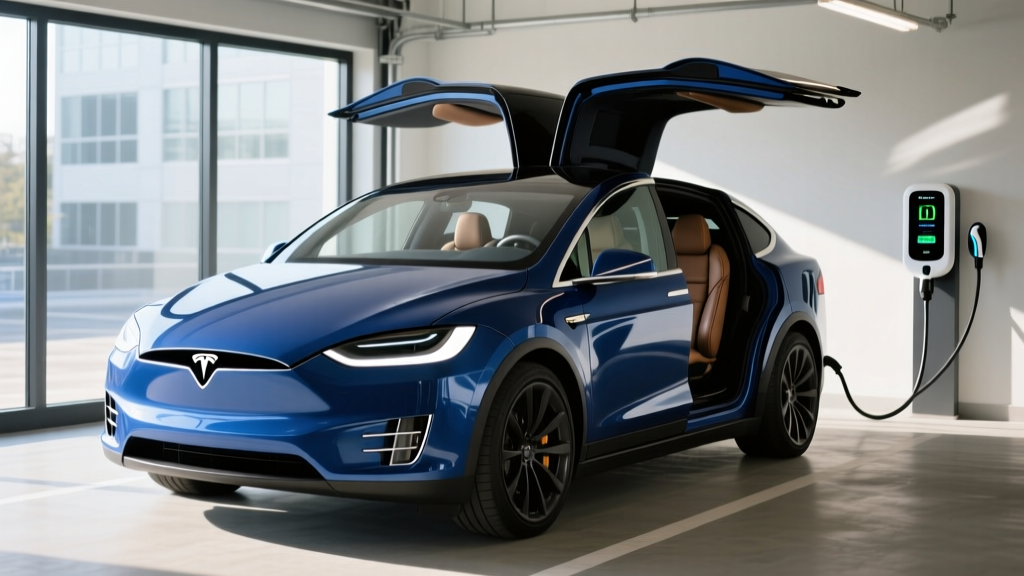
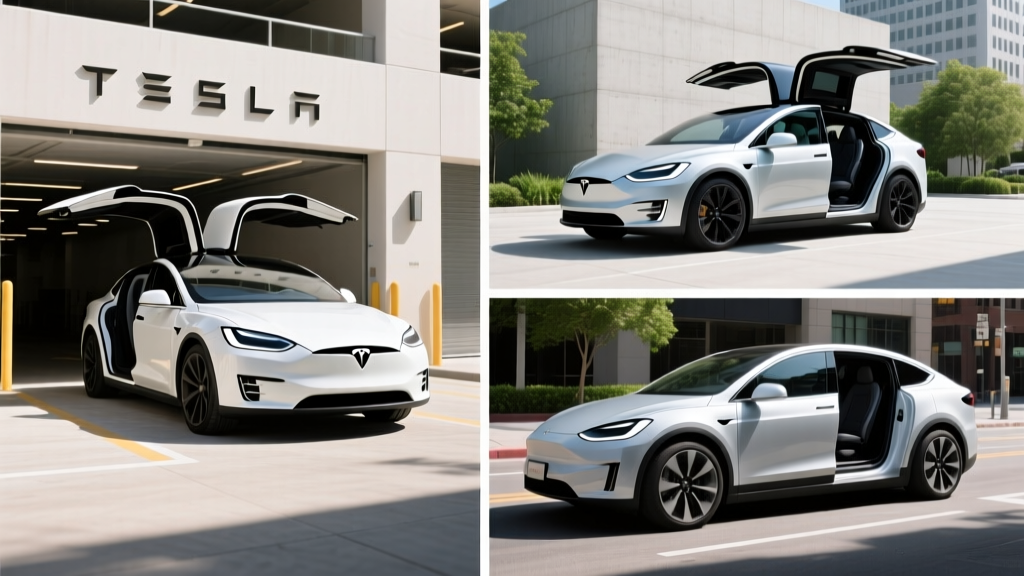
Model X front doors auto-present like the Model S but add obstacle-sensing ultrasonic sensors that limit how far the door swings open near walls or curbs. The rear falcon-wing doors are the headline feature: double-hinged, power-operated, with ultrasonic clearance detection. They require significant overhead clearance (roughly 8 feet) and are slower to open (~4 seconds) than conventional doors. In tight parking spaces they are genuinely useful — the opening arc is narrower than a sliding minivan door — but they add weight, complexity, and potential seal-leak issues that long-term owners track closely.
Common Issues and Real-World Quirks
The search intent behind tesla doors opening up often reflects a problem. Here are the most reported issues across owner forums and NHTSA complaint databases:
- Ice binding (all models): Flush handles freeze shut in sub-25°F weather. Tesla's app includes a "defrost" mode that warms the handle area via cabin heat, but it takes 3–5 minutes. Pre-2025 Model 3/Y handles were particularly prone; Juniper Y improved the seal.
- 12V battery failure (S and X): A dead 12V lithium auxiliary battery prevents electronic latch release. Tesla switched to a 16V lithium auxiliary pack in 2022+ builds with better longevity, but failures still occur. The emergency release procedure is non-obvious — practice it before you need it.
- Phone key lag (all models): BLE handshake can take 1–3 seconds on first approach, especially with phones in bags or pockets. Auto-present handles on S/X may not extend immediately. Carrying the fob eliminates this.
- Falcon wing seal leaks (X): The double-hinge design has more rubber seal surface area than any conventional door. Owners in rainy climates report occasional drips at the B-pillar junction after 60,000+ miles. Warranty covers seal replacement during the 4-year/50,000-mile basic period.
- Interior electronic release confusion: First-time passengers often cannot find the exit button. This is a recurring ride-share and taxi complaint. The manual override lever is small and poorly labeled.
2026 Tesla Lineup: Core EV Specs Behind the Door
Door mechanics matter, but the vehicle behind them matters more. Here's the 2026 spec matrix for all four consumer models, sourced from Tesla's official spec pages and fueleconomy.gov.
| Spec | Model 3 LR AWD | Model Y LR AWD | Model S LR | Model X LR |
|---|---|---|---|---|
| EPA Range | 363 mi | 320 mi | 402 mi | 348 mi |
| Battery (usable) | ~79 kWh (NMC) | ~79 kWh (NMC) | ~100 kWh (NMC) | ~100 kWh (NMC) |
| RWD Std Range Battery | ~60 kWh LFP | ~60 kWh LFP | N/A | N/A |
| Peak DC Charge | 250 kW | 250 kW | 250 kW | 250 kW |
| 10–80% DC Time | ~28 min | ~28 min | ~32 min | ~32 min |
| Level 2 Home Rate | 11.5 kW (~44 mi/hr) | 11.5 kW (~44 mi/hr) | 11.5 kW (~34 mi/hr) | 11.5 kW (~30 mi/hr) |
| 0–60 mph | 4.2 sec | 4.8 sec | 3.1 sec | 3.8 sec |
| Horsepower | 346 hp | 384 hp | 670 hp | 670 hp |
| MPGe (combined) | 134 MPGe | 122 MPGe | 124 MPGe | 102 MPGe |
| Efficiency (kWh/100mi) | 25 | 28 | 27 | 33 |
| Cargo (rear seats up) | 23 cu ft | 30 cu ft | 28 cu ft | 88 cu ft (fwd seats) |
| Rear Legroom | 35.3 in | 40.5 in | 35.4 in | 40.9 in |
| Base MSRP | $47,740 | $49,990 | $79,990 | $84,990 |
| Drivetrain | Dual-motor AWD | Dual-motor AWD | Dual-motor AWD | Dual-motor AWD |
| Warranty (battery) | 8 yr / 120,000 mi | 8 yr / 120,000 mi | 8 yr / 150,000 mi | 8 yr / 150,000 mi |
Charging Speed: What the Numbers Actually Mean
All 2026 Teslas peak at 250 kW on V3 Superchargers, but peak is not sustained. The charge curve tapers significantly above 60% State of Charge. A 10–80% session takes 28–32 minutes, but 80–100% can add another 25+ minutes at declining kW. For road trips, plan stops at 15–20% SoC and depart at 70–80% for optimal time efficiency.
| Charging Level | Power | Miles Added/Hour (Model 3) |
|---|---|---|
| Level 1 (120V outlet) | ~1.4 kW | ~4 mi/hr |
| Level 2 (240V, 48A) | 11.5 kW | ~44 mi/hr |
| DC Fast (V3 Supercharger) | 250 kW peak | ~1,000 mi/hr (peak, first 10 min) |
| DC Fast (V4 Supercharger) | Up to 350 kW* | Model 3/Y currently capped at 250 kW by vehicle |
*V4 Supercharger cabinets can deliver 350 kW, but 2026 Tesla vehicles accept a maximum of 250 kW. Future vehicle-side upgrades may unlock higher rates.
For home Level 2 installation, expect $800–$2,500 total cost (charger + electrician + permit) depending on panel capacity and run distance. A 200-amp panel with spare capacity handles a 48A circuit without upgrade; older 100-amp panels may require a $2,000–$4,000 service upgrade.
Pricing, Tax Credits, and Total Cost
Federal tax credit eligibility under IRS §30D has tightened significantly. For 2026, the full $7,500 credit requires:
- MSRP caps: Vans/SUVs/pickups ≤ $80,000; sedans ≤ $55,000
- Buyer income caps: AGI ≤ $150,000 single / $300,000 joint
- Battery sourcing: Increasingly strict critical-mineral and battery-component requirements from FEOC (Foreign Entity of Concern) countries — primarily restricting Chinese-sourced materials
- Point-of-sale transfer: Eligible buyers can apply the credit as a down-payment reduction at purchase rather than waiting for tax filing
| Model | Base MSRP | Vehicle Class | MSRP Cap Met? | Likely Credit Eligibility* |
|---|---|---|---|---|
| Model 3 RWD | $38,990 | Sedan | Yes (≤$55k) | $7,500 (if sourcing rules met) |
| Model 3 LR AWD | $47,740 | Sedan | Yes (≤$55k) | $7,500 (if sourcing rules met) |
| Model Y LR AWD | $49,990 | SUV | Yes (≤$80k) | $7,500 (if sourcing rules met) |
| Model S LR | $79,990 | Sedan | No (>$55k) | $0 |
| Model X LR | $84,990 | SUV | No (>$80k) | $0 |
*Eligibility depends on buyer AGI, battery sourcing compliance, and final IRS guidance for 2026 model year. Always verify at fueleconomy.gov before purchase. Tesla's own checkout page displays current credit eligibility per configuration.
Driver Assistance: Autopilot and FSD (Supervised)
All 2026 Teslas ship with basic Autopilot (traffic-aware cruise + lane centering). FSD (Supervised) adds city-street navigation, stop-sign/light recognition, and automatic lane changes, but real-world reliability varies significantly by region and road-marking quality. For most buyers, basic Autopilot is sufficient; FSD is worth trialing via the monthly subscription before committing $8,000.
Pros, Cons, and Who Should Buy
Pros
- Supercharger network — most reliable DC fast-charging ecosystem in North America, now open to NACS-equipped non-Teslas but still optimized for Tesla vehicles
- Class-leading efficiency (kWh/100mi) translates to more real-world miles per charge
- Over-the-air updates continuously add features post-purchase
- Strong resale value relative to non-Tesla EVs (though depreciation has increased 2024–2026)
- Phone-key entry eliminates fob dependency (when BLE cooperates)
Cons
- Flush handles freeze in cold climates — a real daily annoyance
- Interior electronic door releases confuse passengers and raise safety concerns
- No Apple CarPlay / Android Auto — Tesla's native infotainment only
- Build-quality variance (panel gaps, trim alignment) still reported on Fremont and Shanghai builds
- FSD (Supervised) remains Level 2 despite the name — marketing outpaces capability
- Model S/X pricing excludes them from federal tax credits entirely
Best Fit by Use Case
- Daily commuter (sub-80 mi round trip): Model 3 RWD with LFP battery — lowest cost, LFP chemistry tolerates daily 100% charging without degradation concern.
- Family road-tripper: Model Y LR AWD — best cargo space, Supercharger access, adequate range for 250-mile legs between stops.
- Luxury/performance buyer: Model S Plaid — if budget allows and tax-credit ineligibility is acceptable.
- Three-row family hauler: Model X — falcon wings are genuinely useful in tight school-dropoff lanes, but expect higher maintenance on door mechanisms.
Frequently Asked Questions
What happens if the 12V battery dies on a Model S or X?
The electronic door latches will not release. You must access the emergency mechanical release — for front doors, this involves removing a small cover near the front wheel well and pulling a cable. The procedure is documented in the owner's manual but rarely practiced. Keep a printed copy in the glovebox. A dead 12V also disables the touchscreen, lights, and phone-key detection, so the car cannot be driven until the 12V is jump-started or replaced.
Do Tesla doors open automatically when you approach?
Only on Model S and Model X (front doors). Model 3 and Model Y require you to manually press and pull the flush handle. All models unlock automatically when the phone key or fob is detected, but the physical opening is manual on 3/Y.
Can I open my Tesla doors from the phone app?
Yes. The Tesla app includes an "unlock" command that unlatches all doors remotely via cellular connection. This is useful for letting someone into the car when you're not present. However, it does not physically open the door — someone must still pull the handle.
Are falcon wing doors on Model X reliable long-term?
They are more complex than conventional doors, with two powered hinges, multiple ultrasonic sensors, and extensive rubber seals. Failures are uncommon within the warranty period (4 yr / 50,000 mi basic), but out-of-warranty repairs are expensive — a single hinge motor replacement can exceed $1,500. Seal degradation and minor water ingress are the most common long-term complaints reported on owner forums.
Does the 2026 Model 3 or Y qualify for the $7,500 federal tax credit?
Both models meet the MSRP cap ($55,000 for sedans, $80,000 for SUVs). Eligibility depends on your adjusted gross income (≤$150k single / ≤$300k joint) and whether the specific battery pack in your configuration meets 2026 critical-mineral and FEOC sourcing thresholds. Tesla's configurator displays credit eligibility per build. Verify independently at fueleconomy.gov and consult a tax professional for your specific situation.
How do I prevent Tesla door handles from freezing?
Use the Tesla app's climate preconditioning ("Defrost" mode) 10–15 minutes before departure. This warms the cabin and handle area. Some owners in extreme-cold climates (below 10°F) apply a thin coat of silicone spray to the handle pivot point. Parking in a garage eliminates the issue entirely. The Juniper Model Y (2025+) improved handle weather sealing, reducing ice-binding frequency compared to earlier builds.