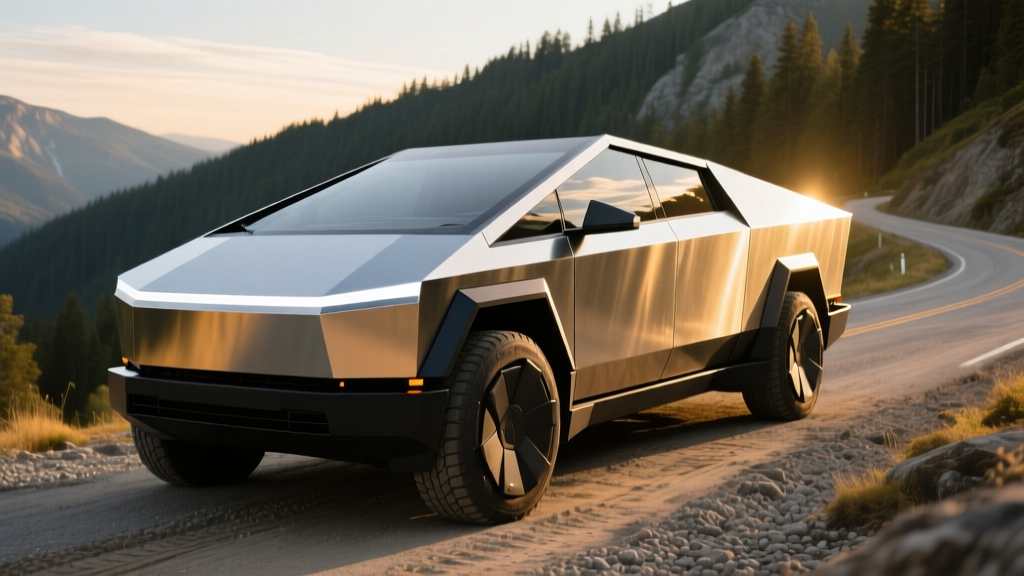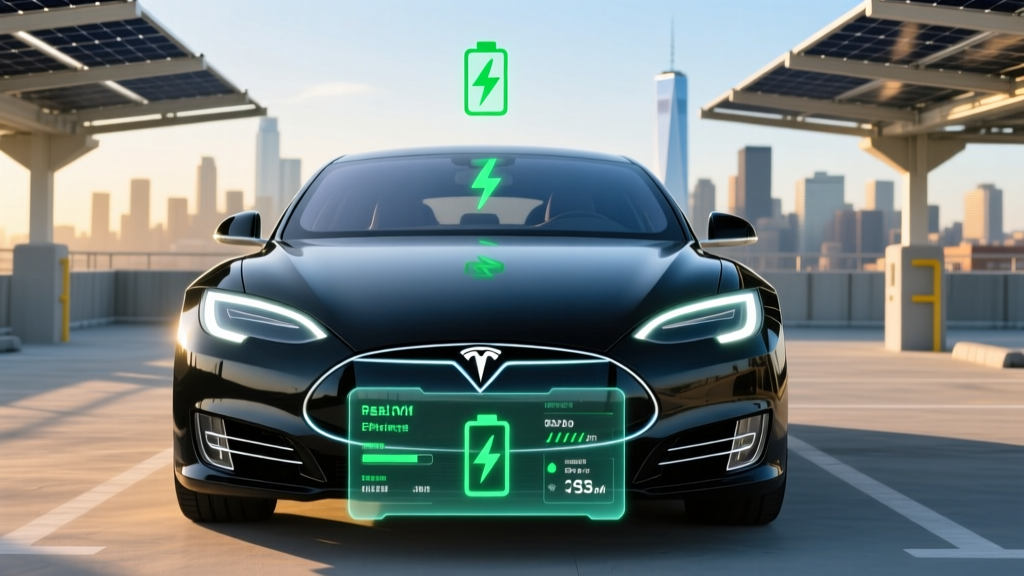
If you have been following Tesla's technology roadmap, you have likely encountered the term Dojo — and wondered whether it is a new vehicle, a battery breakthrough, or something else entirely. The short answer: Tesla Dojo is not a car. It is Tesla's in-house, purpose-built supercomputer designed to train the neural networks that power Full Self-Driving (FSD) Supervised and the company's broader AI ambitions. But for anyone shopping for a Tesla Model Y, Model 3, Cybertruck, or the upcoming next-generation platform, understanding Dojo matters because it directly influences the driver-assistance features you will actually use.
This guide cuts through the hype. We explain exactly what Dojo is, how it connects to the Tesla vehicles you can buy today, what it means for FSD capability in 2026, and whether it should factor into your next EV purchase decision.
What Is Tesla Dojo and Why Does It Exist?
Dojo is a supercomputer architecture that Tesla designed from the silicon up, specifically for machine-learning training workloads. Unlike general-purpose data centers that rely on thousands of NVIDIA GPUs, Dojo uses Tesla's custom D1 chip, organized into training tiles and ExaPOD clusters, to process the enormous volumes of video data captured by Tesla's fleet of vehicles on the road.
The core problem Dojo solves: Tesla's FSD neural network needs to learn from billions of miles of real-world driving footage — identifying lane markings, predicting pedestrian behavior, navigating construction zones, handling edge cases like unusual road debris or adverse weather. Training models on this scale requires staggering compute power. Dojo is Tesla's answer to doing this in-house, at speed, and at lower cost than renting cloud GPU clusters.
How Dojo Connects to the Tesla You Can Buy Today
Dojo does not change the hardware in your Tesla. The vehicle you drive off the lot has the same cameras, the same HW4 (Hardware 4) computer, and the same battery and powertrain regardless of what happens in Tesla's data centers. What Dojo changes is the software — specifically, how quickly and effectively Tesla can train and deploy improved FSD neural networks via over-the-air (OTA) updates.
Here is the practical chain:
- Data collection: Tesla's fleet (millions of vehicles) captures real-world driving video through their camera arrays.
- Training on Dojo: That video data is ingested into Dojo ExaPODs, where neural networks are trained to recognize driving scenarios, predict outcomes, and generate driving policies.
- Validation and deployment: Trained models are validated in simulation, then pushed to customer vehicles as FSD (Supervised) OTA updates.
The result: faster iteration cycles on FSD capability. Where training a new model version might have taken weeks on conventional GPU clusters, Dojo is designed to compress that timeline, meaning Tesla owners could receive meaningfully improved driver-assist performance more frequently.
What This Means for FSD (Supervised) in 2026
As of early 2026, Tesla's FSD (Supervised) has evolved significantly from its earlier iterations. The system uses an end-to-end neural network architecture — rather than hand-coded rules for specific scenarios, the network learns driving behavior directly from video examples. Dojo's compute capacity is central to scaling this approach.
Real-world improvements attributable to this training pipeline include:
- Smoother lane changes and merges in dense traffic
- Better handling of unprotected left turns and complex intersections
- Improved recognition of temporary construction-zone lane shifts
- More natural speed modulation in school zones and residential areas
Should Dojo Influence Your Tesla Purchase Decision?
If you are deciding between a Tesla and a competitor — say, a Hyundai Ioniq 5, Ford Mustang Mach-E, BMW iX, or Chevrolet Equinox EV — Dojo should be a secondary factor at most. Here is why:
The case for caring about Dojo: You plan to subscribe to or purchase FSD (Supervised) and value receiving frequent, meaningful capability improvements. You believe Tesla's data advantage (billions of fleet miles) plus Dojo's compute advantage will compound into a meaningfully superior driver-assist experience over the years you own the car.
The case for not over-weighting Dojo: FSD (Supervised) remains Level 2, and competitors like GM's Super Cruise and Ford's BlueCruise offer hands-free driving on mapped divided highways today — something Tesla's system does not formally permit. The fundamental value of a Tesla — range, charging network access, performance, software UX — does not depend on Dojo. And Tesla has acknowledged that scaling Dojo to full production capacity has faced engineering and timeline challenges; the system's real-world throughput advantage versus NVIDIA H100-based clusters remains partially unproven at scale.
Tesla Vehicle Lineup: Range, Charging, Pricing, and Tax Credits (2026)
Regardless of Dojo's back-end role, here are the numbers that matter for the Tesla models you can actually order today:
| Spec | Model 3 Long Range | Model Y Long Range | Cybertruck AWD |
|---|---|---|---|
| EPA Range | 363 mi | 320 mi | 340 mi |
| Real-World Highway | ~290–310 mi | ~260–280 mi | ~250–270 mi |
| Battery (usable) | ~75 kWh (NMC) | ~75 kWh (NMC) | ~123 kWh (NMC) |
| Max DC Fast Charge | 250 kW | 250 kW | 350 kW (est.) |
| 10–80% DC Time | ~25 min | ~27 min | ~28 min |
| Level 2 Home Rate | 11.5 kW (~44 mi/hr) | 11.5 kW (~44 mi/hr) | 11.5 kW (~37 mi/hr) |
| 0–60 mph | 4.2 sec | 4.8 sec | 3.9 sec |
| Drivetrain | Dual-Motor AWD | Dual-Motor AWD | Dual-Motor AWD |
| MPGe (combined) | 132 MPGe | 117 MPGe | ~100 MPGe (est.) |
| Base MSRP | $47,740 | $48,590 | $79,990 |
| §30D Tax Credit Eligible? | Yes (if income/MSRP caps met) | Yes (if income/MSRP caps met) | No (over $80K MSRP cap for trucks) |
| Battery Warranty | 8 yr / 120,000 mi | 8 yr / 120,000 mi | 8 yr / 150,000 mi |
Sources: fueleconomy.gov, Tesla.com. Real-world highway range reflects 70–80 mph sustained driving in moderate temperatures. Cold weather (below 32°F) can reduce range an additional 15–30% depending on cabin heating use and battery preconditioning.
Federal Tax Credit Eligibility for Tesla Vehicles (2026)
The federal EV tax credit under IRS §30D remains a key purchase factor, but eligibility is not automatic. Here is the framework:
- MSRP caps: Vans, SUVs, and pickup trucks must have an MSRP ≤ $80,000; sedans and other vehicles ≤ $55,000. The Model 3 Long Range ($47,740) qualifies on MSRP. The Model Y Long Range ($48,590, classified as SUV) qualifies. The Cybertruck AWD ($79,990) falls under the truck cap and narrowly qualifies on MSRP alone.
- Buyer income caps: Adjusted gross income must not exceed $300,000 (married filing jointly), $225,000 (head of household), or $150,000 (single). These thresholds have not been indexed for inflation as of 2026.
- Battery sourcing requirements: A percentage of critical minerals and battery components must be sourced from the U.S. or free-trade-agreement partners. Tesla's battery supply chain has been adapting, but specific eligibility can vary by production batch and model year. Always confirm with the dealer at point of sale.
- Point-of-sale transfer: You can transfer the credit to the dealer at purchase, reducing your out-of-pocket cost immediately rather than waiting to claim it on your tax return.
Bottom line: A Model 3 Long Range buyer meeting income requirements could see up to $7,500 off the purchase price at point of sale, bringing effective cost below $41,000. Always verify current eligibility on IRS.gov before committing, as battery-sourcing rules continue to tighten.
Pros and Cons: Tesla Ownership in the Dojo Era
Pros
- Access to the Tesla Supercharger network — the most reliable and extensive DC fast-charging network in North America, now opening to NACS-equipped competitors
- Over-the-air software updates that meaningfully improve vehicle function over time — including FSD iterations trained on Dojo
- Class-leading efficiency (kWh/100mi) in the Model 3 sedan segment
- Strong resale value relative to most EV competitors
- Minimalist interior with excellent cargo space (Model Y: 76 cu ft with seats folded)
Cons
- FSD (Supervised) is Level 2 only — not self-driving, and the $8,000 purchase or $99/month subscription is hard to justify for many buyers
- No traditional instrument cluster; all information funnels through the center screen, which frustrates some drivers
- Service center wait times can be lengthy in high-density Tesla markets
- Build quality inconsistency (panel gaps, trim alignment) has improved but still draws complaints versus legacy luxury brands
- Cybertruck is polarizing, and its real-world range falls notably short of EPA estimates at highway speeds
Dojo's Competitive Context: How Others Train Their Systems
Tesla is not the only automaker investing heavily in AI training infrastructure for driver-assistance systems:
- Waymo (Alphabet): Operates Level 4 robotaxi services in Phoenix, San Francisco, Los Angeles, and Austin. Trains on its own custom TPU hardware and has logged tens of millions of fully driverless miles. Waymo's approach uses LiDAR plus cameras and operates only within geofenced areas — fundamentally different from Tesla's camera-only, anywhere-driving ambition.
- GM/Cruise: Cruise's robotaxi operations have scaled back significantly following safety incidents in late 2023 and 2024. GM's consumer-facing Super Cruise (Level 2, hands-free on mapped highways) uses a different, more constrained architecture that does not require Dojo-scale training.
- Mobileye (used by multiple OEMs): Supplies the SuperVision system to brands like Zeekr and Porsche, trained on Mobileye's own data infrastructure. Offers a compelling middle ground between Tesla's full-stack ambition and legacy OEM outsourcing.
The honest assessment: Dojo gives Tesla a potential cost and speed advantage in training vision-based neural networks at massive scale. But "potential" is the operative word — the company has faced well-documented challenges in bringing Dojo to full operational capacity, and the real-world FSD improvements attributable specifically to Dojo (versus conventional GPU clusters) are difficult to isolate from the outside.
Frequently Asked Questions
Can I buy a Tesla Dojo?
No. Dojo is not a vehicle or a consumer product. It is a supercomputer located in Tesla's data centers, used exclusively for training AI models. You cannot purchase it, install it in your car, or subscribe to it directly.
Does Dojo make my Tesla self-driving?
No. Dojo accelerates the training of FSD (Supervised) neural networks, but FSD remains a Level 2 driver-assistance system. You must remain fully engaged as the driver at all times. No Tesla sold to consumers is capable of unsupervised self-driving.
Will Dojo-trained FSD updates work on older Teslas?
Vehicles equipped with Hardware 3 (HW3) or Hardware 4 (HW4) receive FSD (Supervised) updates. Older vehicles with Hardware 2.5 or earlier do not support the current FSD stack. If your Tesla was built from approximately mid-2019 onward, it likely has compatible hardware — but confirm via your vehicle's Software menu.
How does Tesla's charging speed compare to competitors?
Tesla's 250 kW peak DC fast-charge rate is competitive but not class-leading in 2026. The Hyundai Ioniq 5 and Kia EV6 can peak at 350 kW on 800V architecture, achieving 10–80% in approximately 18 minutes. However, Tesla's advantage is the Supercharger network's reliability and geographic coverage — peak kW matters less when the chargers you actually encounter are consistently operational.
Should I wait for Dojo to mature before buying a Tesla?
Dojo's maturity primarily affects FSD capability, not the core vehicle. If you are buying a Tesla for its range, efficiency, Supercharger access, and performance, Dojo's development timeline is irrelevant. If you are buying specifically for FSD and expect rapid, transformative improvements, understand that FSD progress has historically been slower and more incremental than Tesla's public timelines suggest.
What is the total cost of ownership for a Tesla Model 3 Long Range?
Over five years and 75,000 miles, a Model 3 Long Range (purchased at ~$40,240 after the §30D credit) will cost approximately $4,500–$5,500 in electricity (home charging at $0.14/kWh national average), $0 in oil changes or emissions maintenance, and roughly $6,000–$8,500 in insurance (varies significantly by state and driver profile). Total estimated 5-year cost: approximately $50,000–$54,000 including depreciation. Compare this to a similarly equipped BMW 3 Series, which will spend $7,000–$9,000 on gasoline alone over the same period.
Sources consulted: EPA fueleconomy.gov, IRS §30D Clean Vehicle Credits, NHTSA, Tesla.com official specifications. All pricing and specs reflect 2026 model year information available at time of publication. Tax credit eligibility is subject to change — verify with a tax professional and IRS.gov before purchase.