If you've researched Tesla's Full Self-Driving (FSD) capability, you've likely encountered the term Tesla Dojo — the company's custom-built AI training supercomputer. Unlike a vehicle you can buy, Dojo is infrastructure: a massive compute cluster designed to process billions of miles of driving video and train the neural networks behind Tesla's driver-assistance systems. Understanding what Dojo actually does — and what it doesn't do — is essential for any buyer evaluating Tesla's tech claims in 2026.
SAE Automation Level: Level 2
Despite the "Full Self-Driving" branding, Tesla Autopilot and FSD (Supervised) remain SAE Level 2 driver-assistance systems. The driver must remain fully engaged, hands on or near the wheel, and eyes on the road at all times. Dojo trains the software, but the driver is still responsible for every mile. Only robotaxi services like Waymo operate at Level 4.
What Is Tesla Dojo, Exactly?
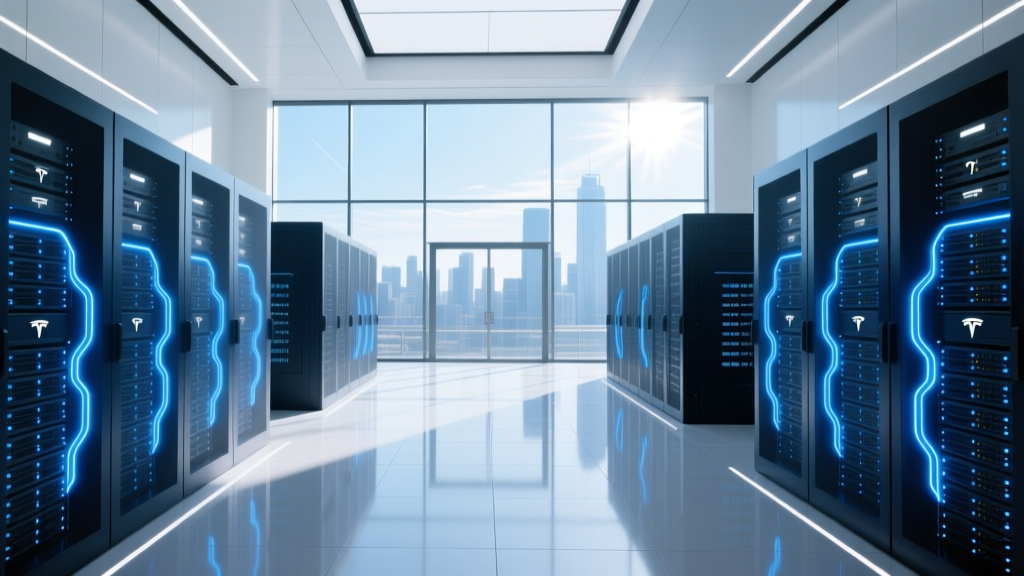
Dojo is Tesla's in-house supercomputer purpose-built for machine learning at scale. Rather than relying solely on off-the-shelf NVIDIA GPUs (as most AI labs do), Tesla designed its own custom silicon — the D1 chip — optimized specifically for processing video data and training vision-based neural networks. The name "Dojo" references a training hall, which is fitting: the system's sole purpose is to train Tesla's driving AI models faster and more efficiently than conventional GPU clusters.
The architecture groups D1 chips into "training tiles," which are then networked into larger modules called "ExaPODs." Tesla's stated goal was to build an ExaPOD capable of delivering an exaFLOP (one quintillion floating-point operations per second) of compute power, purpose-built for video ingestion and neural-network training.
Dojo's Role in Autopilot and FSD Development
Tesla's approach to autonomous driving differs fundamentally from competitors like Waymo and Cruise. While those companies rely on LiDAR, HD maps, and geofenced service areas, Tesla uses a vision-only system — cameras and neural networks — trained on data from its fleet of millions of vehicles on the road. Every Tesla equipped with FSD hardware can upload anonymized driving scenarios (edge cases, disengagements, unusual road configurations) back to Tesla's servers.
Dojo's job is to digest this enormous dataset — billions of video frames — and train increasingly capable neural networks that handle lane changes, intersection navigation, construction zones, and adverse weather. The faster Tesla can iterate on these models, the faster FSD (Supervised) can improve. In practice, this means FSD software updates that demonstrate progressively smoother behavior on complex roads.
However, training speed does not equal driving capability. A faster supercomputer accelerates model development, but the resulting software must still prove safe across an effectively infinite variety of real-world scenarios. This is why, even with Dojo running at scale, FSD remains a supervised Level 2 system in 2026.
Dojo's Current Status and Known Specifications
Tesla first unveiled the Dojo concept at AI Day in August 2021 and provided deeper technical details at AI Day 2022. The D1 chip was fabricated on TSMC's 7nm process, featuring 50 billion transistors and 362 teraflops of FP32 compute per chip. A full ExaPOD was designed to contain 3,000 D1 chips, delivering approximately 1.1 exaFLOPS of BF16/CFP8 compute.
| Specification | Detail |
|---|---|
| Custom Chip | Tesla D1 (TSMC 7nm, 50B transistors) |
| Per-Chip Compute | ~362 TFLOPS (FP32) |
| Training Tile | 25 D1 chips, integrated on a single package |
| ExaPOD Target | ~3,000 D1 chips; ~1.1 exaFLOPS (BF16) |
| Primary Use | Video-based neural-network training for FSD |
| Location | Palo Alto, CA (Tesla engineering HQ) |
| Available to Consumers? | No — internal R&D infrastructure only |
It's important to note that Tesla's public disclosures about Dojo's operational scale have been limited. While the company confirmed it had operational Dojo clusters by 2023–2024, independent verification of full ExaPOD deployment is scarce. Reports in 2025 from outlets like Reuters indicated Tesla had also significantly expanded its NVIDIA H100 GPU clusters, suggesting Dojo operates alongside — rather than fully replacing — conventional GPU infrastructure.
What Dojo Means for Tesla Vehicle Buyers
If you're shopping for a Tesla Model 3, Model Y, Model S, or Model X in 2026, Dojo matters indirectly. It's the engine behind the software updates you'll receive over the air. Here's how it connects to your ownership experience:
FSD (Supervised) Software Quality
Dojo's training throughput theoretically enables Tesla to release more refined FSD versions more frequently. Owners who purchase the FSD capability (currently priced at $8,000 as a one-time purchase or $99/month) receive periodic updates that improve the system's handling of complex scenarios. The practical result: an FSD-equipped Tesla may improve meaningfully over the years you own it — but it will not become a self-driving car during that time.
Autopilot Baseline
Every new Tesla comes with basic Autopilot (traffic-aware cruise control and autosteer) at no additional cost. Enhanced Autopilot ($6,000) adds features like auto lane change and Navigate on Autopilot. Dojo's training improvements benefit these lower-tier features as well, since they share the same neural-network foundation.
Hardware Compatibility
All Teslas sold since late 2022 ship with Hardware 4 (HW4), featuring higher-resolution cameras and a more powerful onboard computer. Dojo-trained models are designed to run on HW4. If you buy a used Tesla with older Hardware 3, some future FSD features may not be fully supported — a consideration for the used market.
What Dojo Cannot Do
- Make your Tesla self-driving — the driver remains legally and practically responsible
- Guarantee FSD will ever reach full autonomy (SAE Level 4/5)
- Eliminate the need for driver attention in construction zones, adverse weather, or unmapped areas
- Provide real-time over-the-air driving improvements — Dojo trains models offline; updates are pushed periodically
Dojo vs. Competitors' AI Infrastructure
Tesla isn't the only company building massive AI training clusters. Here's how Dojo compares to what competitors use to train their autonomous driving systems:
| Company | AI Training Approach | Primary Hardware | Driving System Level |
|---|---|---|---|
| Tesla | Custom Dojo + NVIDIA GPU clusters | D1 chips + H100 GPUs | Level 2 (FSD Supervised) |
| Waymo (Alphabet) | Google Cloud TPU + GPU farms | TPU v5p, NVIDIA H100 | Level 4 (driverless robotaxi) |
| Cruise (GM) | Cloud GPU clusters | NVIDIA A100/H100 | Level 4 (limited, paused in some cities) |
| Mobileye | Intel-based compute + fleet data | Intel Gaudi + custom SoC | Level 2–3 (varies by OEM) |
| Mercedes (w/ NVIDIA) | NVIDIA DRIVE Orin + cloud training | NVIDIA DGX/HGX clusters | Level 3 (Drive Pilot, highway only) |
The critical distinction: Waymo and Cruise use their AI infrastructure to train Level 4 systems that operate without a human driver in geofenced areas. Tesla uses Dojo to improve a Level 2 system that requires constant driver supervision across a far broader operational domain. More compute power doesn't automatically translate to higher automation levels — the engineering challenges of generalizing vision-only AI to all driving conditions remain substantial.
Should Dojo Influence Your Tesla Purchase Decision?
For most EV buyers, Dojo should be a secondary consideration — not a primary reason to buy or avoid a Tesla. Here's a practical framework:
Choose Tesla if:
- You want access to the Tesla Supercharger network (the most reliable DC fast-charging ecosystem in the US)
- You value frequent over-the-air software updates that may improve driver-assist features over time
- You're comfortable with a camera-only driver-assist system and understand its limitations
- You want the option to purchase FSD (Supervised) and are willing to pay $8,000 or $99/month with the understanding that full autonomy is not guaranteed
Look elsewhere if:
- You want a proven Level 3 or Level 4 autonomous driving experience today (consider Mercedes Drive Pilot or Waymo in available cities)
- You prefer LiDAR-equipped driver-assist systems (Ford BlueCruise, GM Super Cruise, and many Chinese-market EVs use LiDAR fusion)
- You're uncomfortable being the test driver for continuously evolving beta software
- You need guaranteed hands-off driving for your daily commute
The Bottom Line on Tesla Dojo
Tesla Dojo is a serious engineering achievement — a custom AI supercomputer that gives Tesla a unique advantage in training vision-based driving models at scale. But it is infrastructure, not a product. It doesn't change the fact that every Tesla sold in 2026 requires an attentive human driver at all times. Buyers should evaluate Teslas based on concrete factors — range, charging speed, price, build quality, and current driver-assist capability — rather than speculative promises about what Dojo-trained AI might achieve in the future.
Frequently Asked Questions
Can I buy Tesla Dojo or access it for my own AI projects?
No. Dojo is proprietary Tesla infrastructure used exclusively for internal FSD and robotics training. Tesla has not offered Dojo as a cloud service to external customers as of 2026, unlike NVIDIA's GPU cloud or Google's TPU cloud offerings.
Does Dojo make Tesla's FSD safer than competitors' driver-assist systems?
Not necessarily. Dojo accelerates model training, but safety depends on the quality and generalization of the resulting software. NHTSA has investigated multiple Tesla Autopilot/FSD incidents, and Tesla's vision-only approach remains more controversial than LiDAR-fusion systems used by competitors. Always evaluate current safety data, not future promises.
Will Dojo eventually enable full self-driving (no steering wheel)?
Tesla CEO Elon Musk has predicted full autonomy for years, but those timelines have consistently slipped. As of 2026, FSD remains SAE Level 2 with mandatory driver supervision. There is no confirmed timeline — or guarantee — that Dojo-trained models will achieve Level 4 or Level 5 autonomy.
Does the Tesla Model Y or Model 3 benefit from Dojo training?
Yes, indirectly. Every Tesla with HW4 hardware receives FSD software updates that were trained using Dojo (alongside conventional GPU clusters). This includes Model 3, Model Y, Model S, and Model X vehicles. Improvements manifest as smoother lane changes, better intersection handling, and more confident navigation in complex scenarios.
How does Dojo compare to NVIDIA's superchips for AI training?
Tesla's D1 chip is optimized specifically for video processing and vision-model training, giving it an efficiency advantage for Tesla's specific workload. However, NVIDIA's H100 and upcoming B200 chips are general-purpose AI accelerators used across the industry. Tesla itself supplements Dojo with large NVIDIA GPU clusters, suggesting both approaches have complementary strengths.